
A tall feeding station looks comfortable in a product photo, but a raised dog bowl stand for large dogs is not automatically the safest way to serve dinner. Veterinary literature associates elevated feeding with greater risk of gastric dilatation-volvulus (GDV) in some large dogs. Ask your veterinarian before changing a dog’s feeding height, especially for a deep-chested breed. See our veterinary information disclaimer.
This guide is not a recommendation to elevate every large dog’s bowl. It is a buying framework for households weighing an individual medical or mobility need against stability, hygiene, and possible bloat concerns. Start by checking whether a regular floor-level bowl already works; a taller stand should solve an identifiable problem rather than follow a trend.
Start with the dog, not the furniture
Observe one normal meal with the bowl on a non-slip floor. Note whether your dog walks to the bowl willingly, places paws securely, and eats without repeated awkward repositioning. A lower bowl may be perfectly comfortable. Household convenience, such as keeping a bowl away from a robot vacuum, does not by itself justify a new feeding height.
A dog with neck pain, orthopedic disease, swallowing difficulty, or recovery restrictions needs individualized veterinary advice. Do not infer a diagnosis from the way your dog bends down. Ask what height, if any, the clinician recommends, whether the change is temporary, and what other feeding accommodations might be more appropriate.
Understand GDV before considering elevation
Large and giant breeds, especially deep-chested dogs, can develop GDV, a life-threatening stomach distension and twist. VCA identifies elevated food bowls among factors associated with increased GDV risk. Some reports and opinions differ on the precise size of the effect, so a raised stand is not a proven prevention strategy.
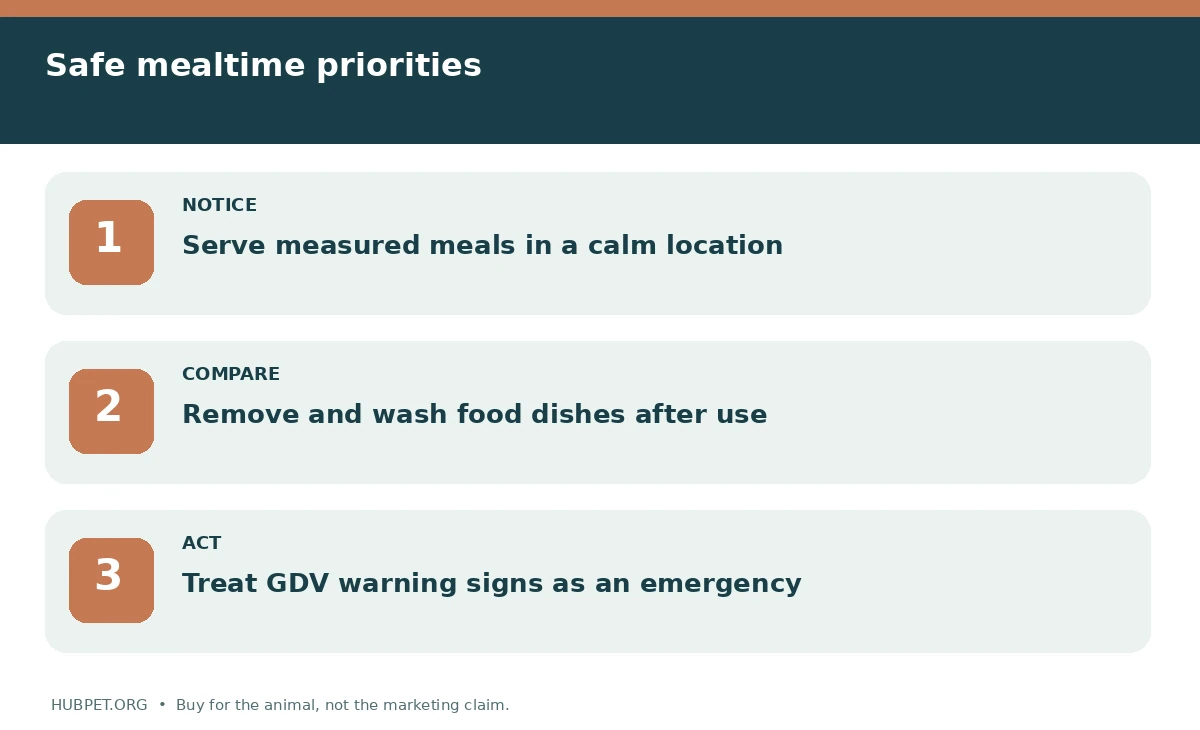
Watch for unproductive retching, a suddenly swollen abdomen, severe restlessness, or collapse. Those signs require emergency veterinary care, not a feeder adjustment. For an otherwise healthy large dog, discuss feeding height with your own veterinarian and avoid marketing claims that a stand prevents bloating.

Measure a stable footprint first
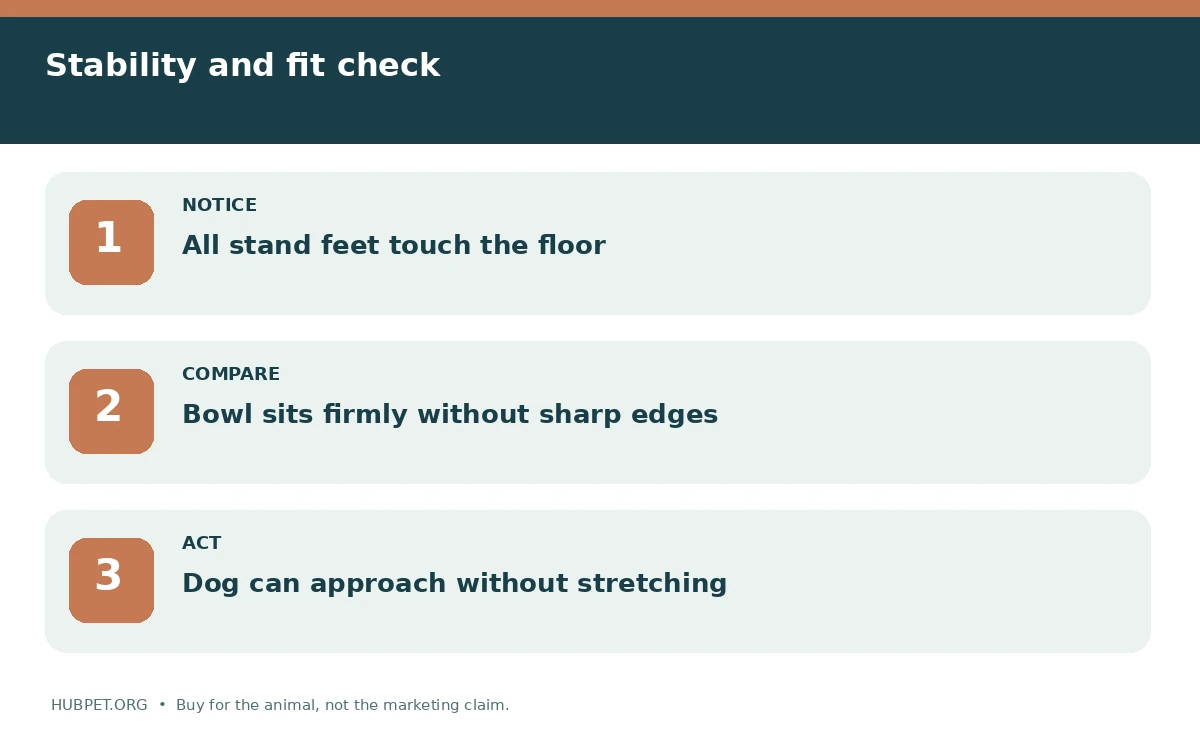
Measure the dog’s stance during a calm meal and the floor area where the station will stay. Check whether the stand can sit level without one foot resting on a rug edge. A broad, low center of gravity matters because heavy dogs can push a narrow frame sideways while eating.
Try a light hand pressure test on a display sample or at home before adding food. The legs should not wobble, fold, or rock against the floor. Look for grip pads that stay attached after cleaning. Place the station outside door swings and busy walking routes.
Only choose height with an individual reason
Avoid rigid charts that set one feeding height by weight or shoulder measurement alone. If your veterinarian recommends raising the food, ask for a practical starting range and observe whether the dog can stand naturally without stretching the neck or lifting the chin excessively.
Adjustable stands can make a supervised trial easier, but every locking mechanism adds another point to inspect. Recheck the chosen setting after cleaning. Keep a floor-level water option available unless a veterinarian advises a different setup, and never force a dog to use a height it resists.
Compare bowl retention and material
Look for a smooth bowl seat that lets you remove the insert without pulling the whole stand across the floor. Rings should secure the dish while leaving no sharp edge against the rim. Removable stainless-steel inserts are often practical to wash, but the material label is not proof of a particular product’s durability.
Test whether the bowl can spin or rattle when the dog licks near one edge. A noisy loose insert may discourage a sensitive eater. If the dog chews stand parts, avoid accessible rubber rings, coatings, or loose fasteners that could break off and be swallowed.
Plan washing around actual meals
A decorative wooden top may trap moisture where the bowl meets the frame. Inspect exposed screw holes, joints, and underside surfaces for places food can collect. Smooth washable surfaces reduce maintenance burden, while sealed finishes still need regular inspection for chips and peeling.
FDA advises washing and drying food bowls after each use and washing water bowls daily. Remove the insert instead of wiping only the visible top of the stand. Dry both bowl and frame before reassembly, and keep cleaning products away from pets until surfaces are safe.
Do not mistake elevation for slower eating
A raised station does not reliably control meal pace. If your dog gulps food, discuss meal frequency and safe ways to slow eating rather than adding height. VCA discusses floor-level slow feeders as one option for large and giant breeds in the context of GDV risk management.
Try appropriate measured portions and a calm, separate feeding space before purchasing more equipment. Avoid placing loose stones or small objects in a bowl to slow eating: they can create choking or tooth risks. Monitor behavior across several ordinary meals instead of judging one rushed dinner.
Use a cautious, observable trial
When a clinician has recommended elevation, introduce the stand without suddenly changing food, schedule, and location at the same time. Let the dog investigate it first. Record any slipping, awkward reach, guarding behavior, or refusal to eat. Stop and reassess if the setup makes meals more stressful.
Keep the packaging and return terms until you know the frame fits your space. A stand that passes a size chart but rocks on your flooring is a poor match. Replace damaged fasteners promptly and never use a bent frame just because the bowl still sits inside it.
Choose the simplest setup that solves the problem
Before checkout, ask whether the stand addresses an actual mobility accommodation, prevents a specific spill, or merely changes appearance. Separate evidence about medical outcomes from manufacturer claims about posture. For many large dogs, a stable ground-level dish remains the more conservative option.
Discuss individual GDV risk, eating speed, and meal structure with a veterinarian. No feeder prevents every emergency. A measured, quiet mealtime with clean bowls is more important than paying extra for a tall, complicated station that your dog does not need.
How We Research
HubPet reviewed published veterinary, animal-welfare, and public-health guidance relevant to raised dog bowl stand for large dogs. We separated established safety and hygiene recommendations from product features that have not been independently measured. These are desk-researched criteria, not hands-on product tests or professional endorsements. Sources were checked October 26, 2026. See About HubPet and our editorial approach. This information does not replace individualized veterinary care.
Sources
VCA Animal Hospitals: Nutritional Considerations for Large and Giant Breed Dogs. Accessed October 26, 2026.
American Kennel Club: Bloat (GDV) in Dogs: Risks and Veterinary Care. Accessed October 26, 2026.
U.S. Food and Drug Administration: Proper Storage of Pet Food and Treats. Accessed October 26, 2026.
Centers for Disease Control and Prevention: Cleaning and Disinfecting Pet Supplies (2026). Accessed October 26, 2026.
No. VCA associates elevated feeding with GDV risk in some large dogs. Ask your veterinarian before changing bowl height.
There is no universal height. Use an individual veterinary recommendation if raising food is medically indicated.
No reliable evidence supports presenting raised bowls as GDV prevention. GDV signs require immediate veterinary care.
A broad footprint, level contact with the floor, secure bowl rings, and intact non-slip feet help limit rocking.
FDA recommends washing and drying food bowls after every use and water bowls daily.