
A personalized dog collar can display a phone number without a dangling tag, but engraving only helps if the text remains readable and the collar fits safely. Flat metal plates, slide-on sleeves and embroidered bands each have different attachment details. Choose the design by how it sits against the neck, whether the information survives daily wear and how reliably the collar closes. The goal is fast identification if the dog gets separated from the family, not a substitute for a registered microchip. Check the finished collar on the dog rather than trusting the customization preview alone. See our veterinary disclaimer if pain, injury or mobility affects equipment use.
Decide what information belongs on the collar
A current phone number is often more useful than a long decorative phrase when someone finds a lost dog. Follow local licensing requirements as well as any microchip registration obligations. Consider whether a second contact number is practical, but leave enough space to keep digits large and legible. Check each digit before ordering and again when the collar arrives. Avoid publishing sensitive address details unless there is a clear need. Update the collar when contact information changes; a beautiful plate with an obsolete phone number cannot help reunite a dog quickly.
Compare engraved plates, slide-on sleeves and embroidery
A flat plate is typically fixed with rivets or screws, while a slide-on sleeve passes over the collar strap and may move along it. Embroidery places the information directly into the fabric but can become obscured by wear or long fur. Each option has tradeoffs in profile, cleaning and visibility. A bulky raised plate may snag more easily on furniture or a playmate’s collar. Select a style with smooth edges and enough room for clear digits. Do not judge from product photography that hides the side or underside attachment.

Measure neck fit after adding the plate
A collar should sit comfortably around the neck without restricting breathing or slipping off over the head. Follow the maker’s fit directions, then recheck once the nameplate is in place. A rigid plate can make a flexible strap sit differently. Slide fingers around the full circumference rather than checking only behind the buckle. Inspect whether the plate presses into the skin or bends sharply at the throat. Growing puppies require more frequent checks. Do not treat a collar used for identification as a safe place for harsh leash corrections.
Look at rivets, screws and plate edges
Run a fingertip carefully around the finished plate and fasteners before putting the collar on the dog. The surface should feel smooth, with no sharp corners, exposed metal burrs or protruding screw ends. Tug each fastener lightly with the collar off the dog to see whether it moves. Verify that a sleeve cannot slide over the buckle or escape through an open end. Check for corrosion after swimming or rain. Do not add a homemade metal plate with sharp hardware to a collar and assume it is secure. Replace components that loosen repeatedly.
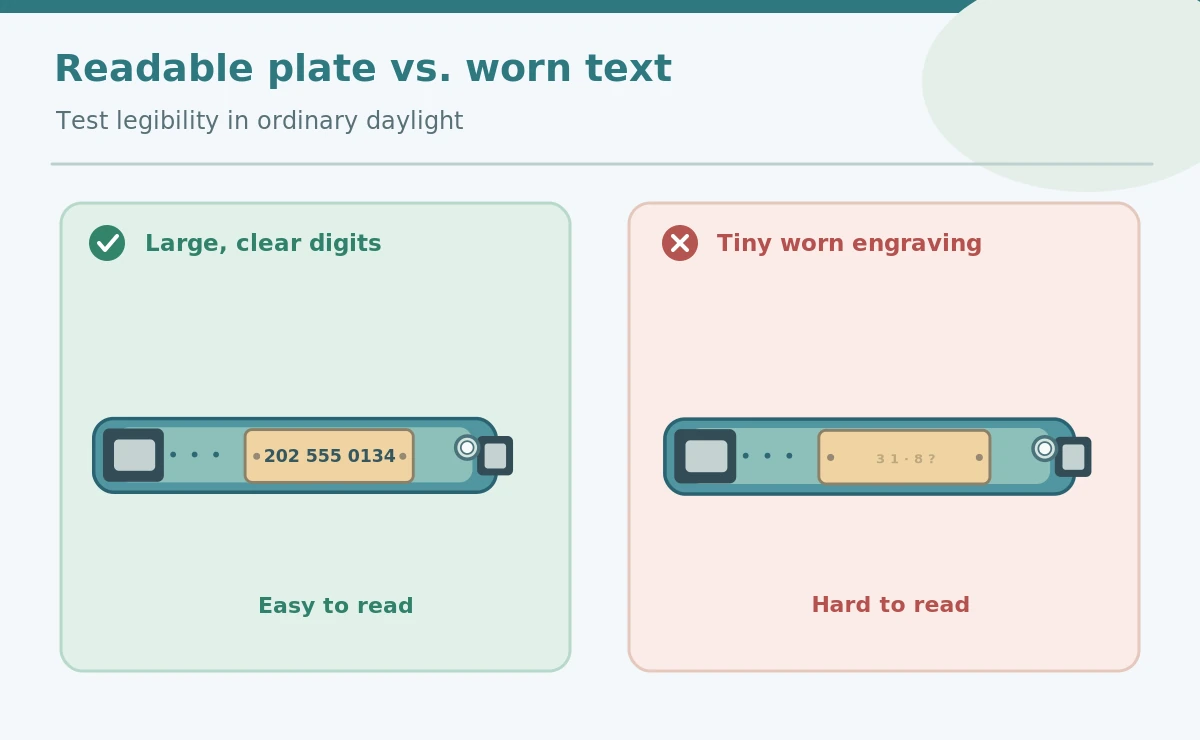
Test text legibility at arm’s length
Hold the unworn collar in ordinary daylight and try reading the full number without turning it toward a bright light. Decorative cursive fonts, tiny letters and low-contrast finishes can make emergency information slow to read. A simple high-contrast font is often easier to interpret. Check the engraving after cleaning because grime may fill shallow cuts. If a plate turns inward when the dog moves, change the placement or design. Keep the number visible when the dog stands, sits and lowers the head. Readability matters more than how much text fits.
Understand identification versus control
A named collar helps a person identify the dog, but it does not teach recall, prevent escape or locate the dog electronically. Use an appropriately fitted harness or walking collar according to the dog’s needs, and make sure the leash connects to the manufacturer’s designated ring. A plate or decorative sleeve is not a leash attachment point. Dogs who pull hard may need a body harness and gradual training to avoid neck pressure. Keep microchip registration current as a separate identification layer. No single device guarantees a lost dog will return.
Watch for collar snagging during play and rest
Any collar can catch on another dog’s jaw, crate hardware, a branch or furniture. VCA notes that unsupervised collar use can create serious entanglement risks. Remove collars when appropriate for safe supervised settings and follow facility rules for crates or group play. A fixed nameplate reduces dangling components but does not eliminate snag hazards. Check whether a plate end, buckle or slide-on sleeve protrudes beyond the strap. Never leave a newly fitted collar on an unattended puppy before you know how it behaves during ordinary movement.

Clean without erasing the important details
Wipe a plate and strap using the method recommended for the materials. Pay attention to the area behind the plate, where moisture, fur and debris can accumulate. Avoid abrasive polishing if it removes printed or shallow engraving. Dry the collar fully before refitting it, and check that fasteners did not loosen during cleaning. If letters have faded beyond easy reading, replace the tag or collar rather than guessing that strangers can decipher it. Recheck skin under the plate for irritation. Long-haired dogs may need the fur moved aside to reveal the text.
Make a monthly information and fit check
Call the number shown on the finished collar from another phone to verify that it reaches the right person. Check the digits, read the engraving under normal light and inspect fasteners. Fit the collar again while the dog stands, especially after grooming or changes in body size. Confirm the buckle remains secure, the plate lies flat and the leash connection is separate from the personalization hardware. Update microchip registration and local license records whenever contact details change. Repeating these checks takes little time and makes the visible identification more dependable.
How We Research
We reviewed veterinary and humane handling guidance alongside product construction principles. We reviewed these sources on October 28, 2026. Our original diagrams show specific fit checks and equipment limitations; they are not manufacturer certifications or load tests. Individual products differ, so the maker’s instructions and a veterinarian’s advice when health or mobility affects fit take priority. Our About page explains the editorial approach.
Sources
VCA Animal Hospitals, Collar and Harness Options for Dogs. Read source.
Edmonton Humane Society, Selecting Walking Gear. Read source.
Safety note: This guide gives general equipment information, not veterinary diagnosis or a guarantee of product safety. Stop using any gear that causes pain, injury, escape risk or damaged hardware. Seek veterinary or qualified reward-based training help when needed.
Include a current, clearly readable contact number and any information required by local rules.
No. A registered microchip adds a separate identification layer if the collar is lost.
They may reduce dangling parts but can still snag; check smooth edges, attachment and collar fit.
No. Use only the collar or harness ring designed for leash attachment.
Check it when contact details change and during a regular monthly collar inspection.