
Kitten litter training often starts with the environment, not a complicated lesson. Many kittens naturally seek a loose surface and can learn where the tray is quickly, but a new home adds unfamiliar rooms, noises and schedules. Give your kitten one clear, easy-to-reach option and make every trip calm. This first-week plan covers a low entrance, a quiet location, gentle reminders after normal daily activities and what to do when the routine stalls. Very young or orphaned kittens have different toileting needs; ask a veterinarian or experienced rescue caregiver for age-appropriate guidance rather than applying this plan to a newborn. General guidance does not replace veterinary care; see our veterinary disclaimer for health and safety concerns.
Start in one safe room
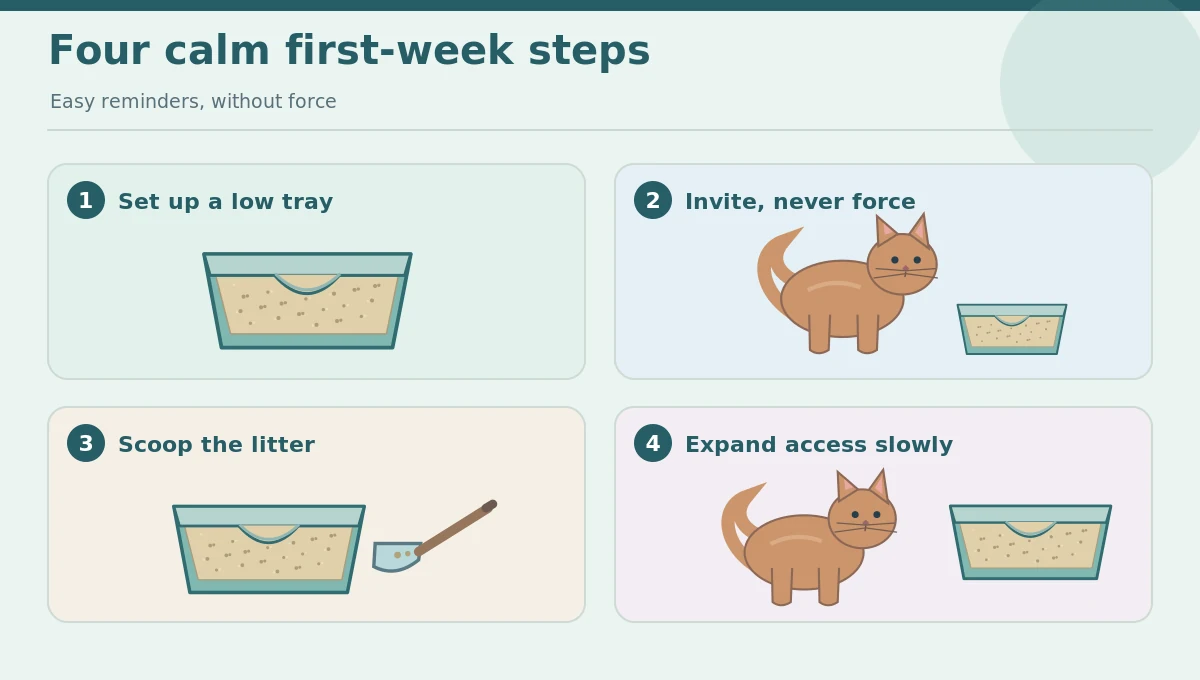
Choose a quiet room where your kitten can sleep, explore, drink and find the litter tray without crossing a hallway or passing a resident dog. Put the tray away from food and water, but keep it obvious and accessible. Check that the door cannot close accidentally and block the route. A low-entry, uncovered tray generally makes first attempts easier. As the kitten grows confident, expand access gradually while leaving the original box in place. Moving a successful box too early can turn a simple route into a confusing search.
Choose a tray the kitten can actually enter
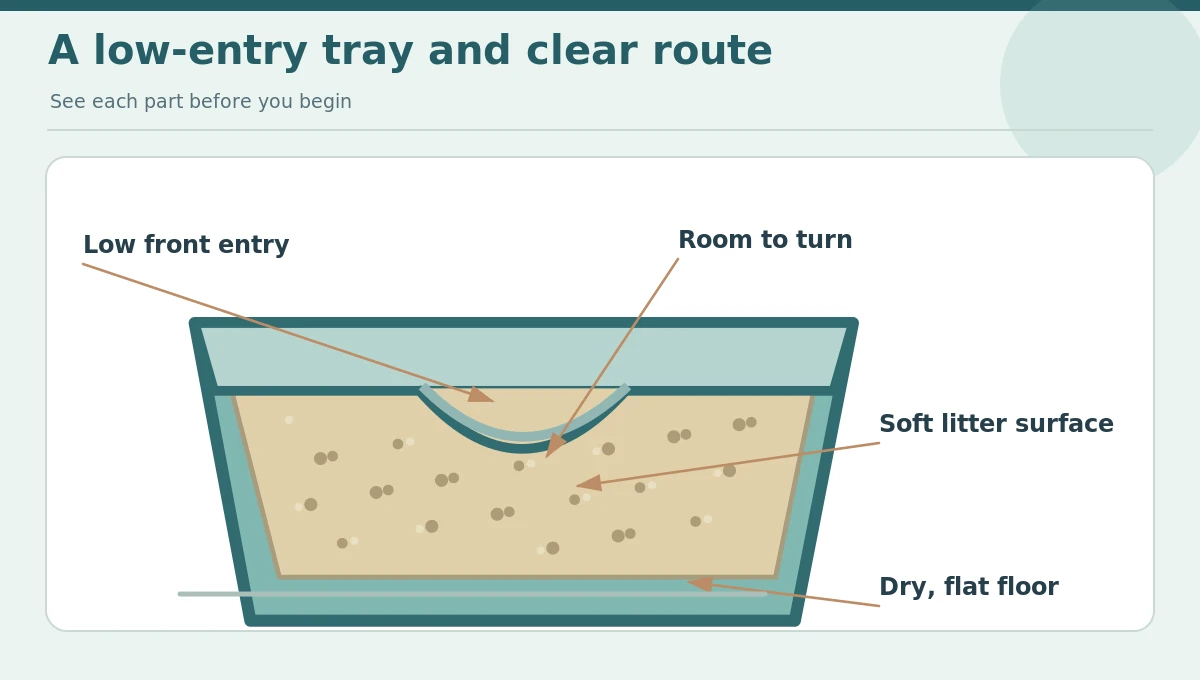
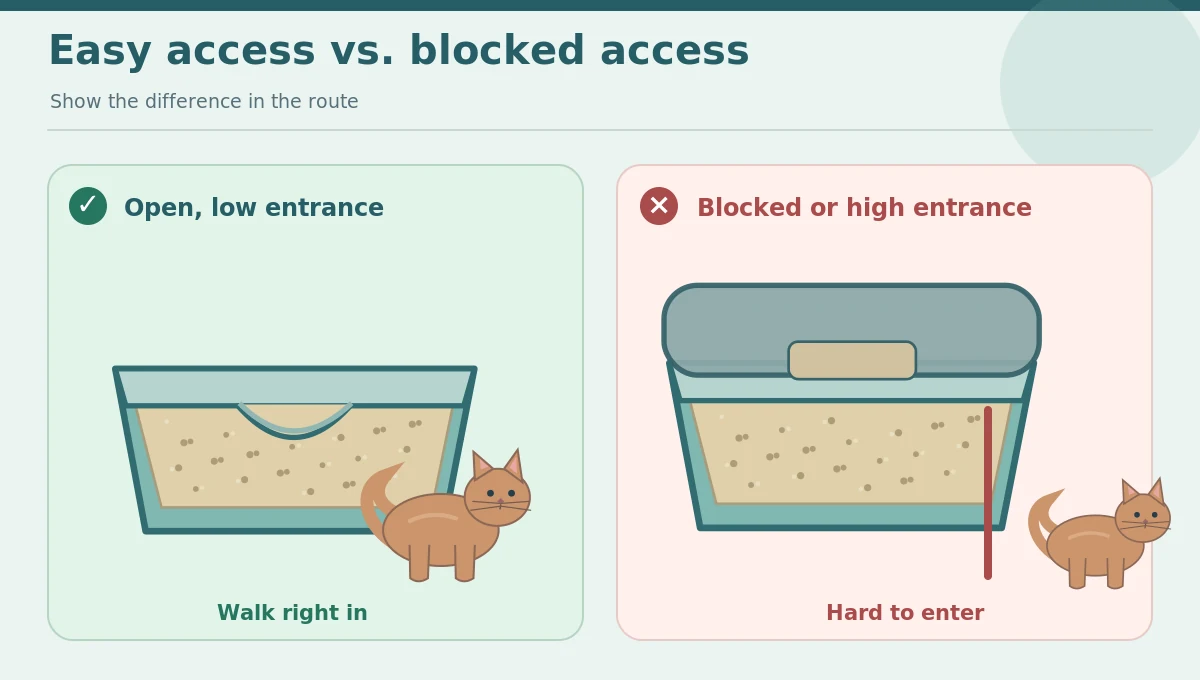
The opening should be low enough for a small kitten to step over without climbing or jumping. Test the tray on a stable, dry floor, then watch whether the kitten can turn around and dig without bumping the rim. A shallow box that tips during exit may be worse than a larger one with a low cutout. Skip enclosed lids and complicated moving mechanisms during early learning. Follow age, weight and litter restrictions on any automated product; many are not appropriate for tiny kittens. An ordinary open tray is easier to observe and clean.
Keep the litter familiar and comfortable
If the shelter or breeder used a particular litter, continue it initially when possible. Abrupt changes in scent, texture or depth can make a new box feel unfamiliar. A soft, unscented surface is often easier to accept than a strong fragrance. For very young kittens that mouth or eat granules, consult a veterinarian about a suitable non-clumping option. Do not assume that a product called natural or kitten-safe removes ingestion risk. Scoop promptly, refill gently and avoid changing every variable at once. The goal is a predictable surface under the paws.
Offer a reminder after natural transitions
Show the kitten the box after waking, playing and eating, when a trip may be useful. Set the kitten near the entrance and let them choose to step in; never force paws to scratch or hold the kitten down. Pause and give privacy if they investigate. If they use the tray, allow them to finish without interruption and offer a quiet reward afterward. If nothing happens, simply return to normal activities and try again later. A repeated invitation is helpful; a crowded audience, loud praise or prolonged handling beside the box can be counterproductive.
Watch the route and learn from misses
Note where accidents happen and what was happening immediately beforehand. A kitten may have been exploring too far from the tray or may have found a door closed. Add a second low tray in a remote area rather than expecting a tiny kitten to cross the whole home. Clean the accident promptly with a pet-appropriate enzymatic cleaner according to its label. Do not punish, scold or rub the kitten’s nose in the spot. That can make people and toileting feel frightening while leaving the accessibility problem unsolved.
Use cleanliness as part of teaching
Remove waste at least daily and more often when possible; a small tray can become unpleasant quickly. Keep a dedicated scoop nearby and wash your hands after cleanup. Follow the litter maker’s guidance for replacing the contents and clean the box with mild, cat-appropriate products. Rinse and dry thoroughly before refilling. Avoid strong-smelling household cleaners and never mix cleaning chemicals. If a child helps with feeding or play, assign litter cleanup to an adult who can follow hygienic handling practices. A clean tray supports consistency, but it does not replace enough boxes.
Expand space without moving the goalposts
Once the kitten consistently finds the tray, open one additional room and supervise exploration. Keep the original route clear, especially at night. If the new area contains a closed door, stairs or a busy family path, consider another box there. Observe what the kitten actually does instead of assuming a larger range is manageable. When you eventually want a different permanent location, move the box gradually and preserve an accessible backup while the kitten learns the new route. A stable location is easier for the kitten to remember than a tray that changes places daily.
Know when an accident needs a veterinarian
One isolated mistake in a new environment may reflect confusing access. Repeated accidents, straining, crying, blood, diarrhea, unusually frequent trips, little or no urine, or sudden avoidance after prior success deserve veterinary advice. Inability to urinate can be an emergency. Do not treat a possible medical problem as stubbornness. For orphaned kittens that cannot eliminate independently, ask a veterinarian or experienced foster team for immediate age-specific care. This article addresses learning the location of a box, not diagnosing urinary or digestive disease.
A simple daily record beats a strict clock
For the first several days, jot down the locations and circumstances of successful trips and misses. Record whether the kitten was asleep, playing or exploring, plus whether the tray was accessible. This short log reveals practical obstacles without turning every bathroom visit into a training session. Keep meals, play and rest reasonably predictable, but do not restrict water or ignore the kitten’s cues to impose a schedule. A kitten that uses the box confidently and can find it from every open room is showing meaningful progress.
How We Research
We reviewed current veterinary and animal-welfare guidance alongside practical construction and layout checks. Sources were accessed October 29, 2026. Our original illustrations describe safe-use principles rather than product certifications or a substitute for individual veterinary advice. Manufacturer directions take priority for specific equipment. The HubPet About page describes our editorial approach.
Sources
VCA Animal Hospitals, How To Litter Train Your Kitten. Read source.
Cats Protection, Bringing a New Kitten Home. Read source.
Cornell Feline Health Center, Feline Behavior Problems: House Soiling. Read source.
Safety note: This is general kitten-care information, not a diagnosis or guarantee of product safety. Stop using damaged equipment, seek veterinary care for pain or suspected ingestion, and follow a veterinarian’s instructions for very young, ill or recovering kittens.
Many kittens recognize a suitable tray quickly, but the first week in a new home may bring accidents. Focus on easy access and a consistent setup instead of a deadline.
You can place a kitten near the entrance after rest or play, then let them approach voluntarily. Do not hold the kitten inside or force a digging motion.
An uncovered low-entry tray usually makes access and observation easier. Try alternatives only if the kitten is comfortable and the route remains simple.
Check entrance height, distance, cleanliness and blocked routes. Clean the spot with a suitable enzymatic product, and ask a veterinarian about repeated accidents.
Some automatic models have minimum age or weight requirements and moving parts. Follow the manufacturer restrictions; a simple manual low-entry box is a safer learning baseline.