
Wide dog collars appeal to owners who want a substantial-looking band or a broad area for identification, especially on large dogs. Width alone does not establish comfort or safety. The collar still needs a suitable neck fit, a reliable buckle, and smooth edges. It must permit movement without sliding over the head. A broad collar may spread contact differently than a narrow one. It cannot eliminate neck strain when a dog pulls. This guide shows how to evaluate the actual band and decide when a well-fitted walking harness is the more appropriate choice.

Measure the neck where the band will sit
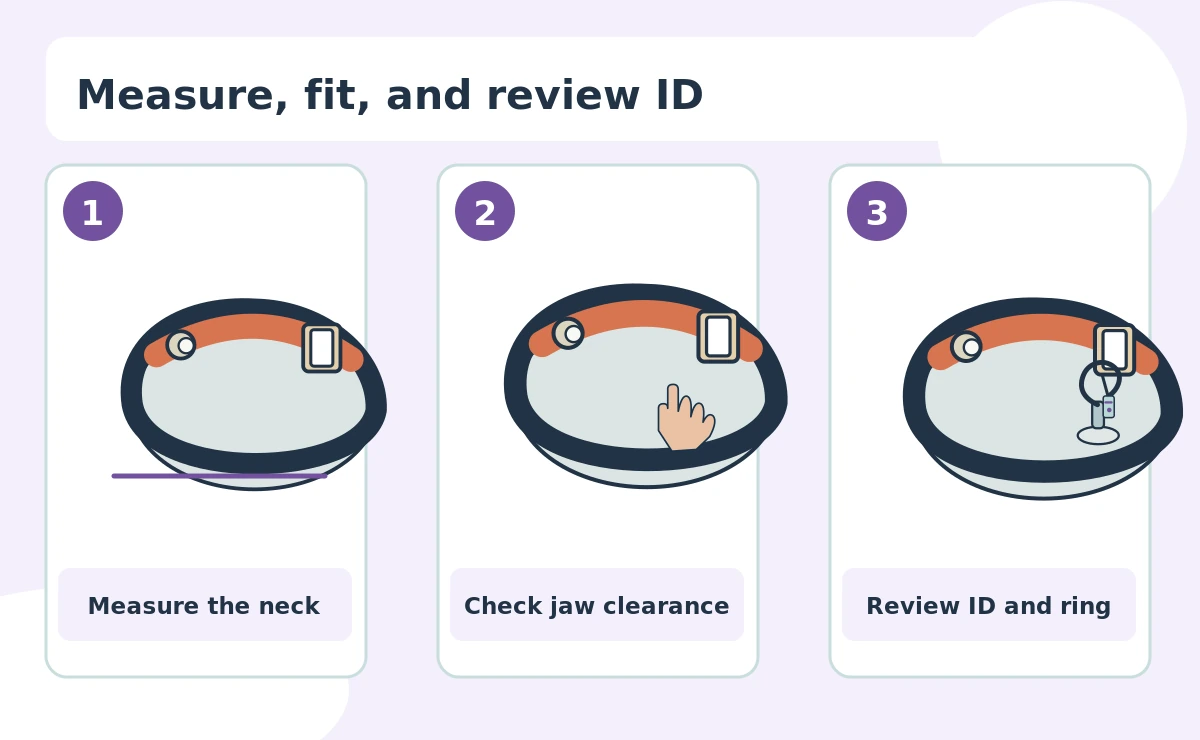
Use a soft measuring tape around the part of the dog’s neck where the collar normally rests, without squeezing the coat flat. Compare the measurement with the brand’s exact size chart and available adjustment range. Avoid choosing by breed name. Product photos can misrepresent the width. A thick-coated dog’s neck can change in apparent size with grooming and seasonal shedding. Check the fit on the dog rather than accepting the last buckle hole as proof the collar is correct. Growth and weight changes require new measurements.
Check width against neck length and movement
A very broad band may run into the jaw when a dog lowers its head or rub the shoulder area when it turns. Measure the usable length of the neck, not simply overall body size. Watch the dog look down, sniff the ground, and turn both ways with the collar on. If the band buckles or folds, it may be too wide or too stiff for that individual. Large dogs do not automatically need the widest collar. Comfort requires room for natural head and neck movement.
Use a careful fit check, not an arbitrary gap
American Humane recommends regular collar checks and room for fingers. The band must also stay secure enough not to slip over the head. Use the brand’s fitting directions and inspect the actual band after adjustment. The two-finger shorthand is not a substitute for checking escape risk on a dog with a narrow head or thick coat. Look for skin pinching at the buckle, a loose strap tail, and a band that rotates excessively. Recheck with the dog standing normally, not with the neck stretched upward.
Place the buckle where it will not press
Wide collars often carry large side-release buckles or metal hardware. Put the collar on, then note where the buckle settles when the dog turns and lies down. A hard piece should not dig into the throat or press against the jaw. It must not create a sore spot on the neck. Check for cracks in plastic, bent prongs in metal buckles, and rough rivet backs. Smooth edges and sturdy stitching matter more than a decorative plate. Replace a collar with unreliable closure hardware.

Keep identification readable without crowding
A flat ID plate can sit neatly on a wide band, but its corners, screws, or rivets may create a rough patch against the neck. If tags hang from a D-ring, check that they are readable and do not catch in a buckle or snag during supervised movement. Use current contact information and keep the collar comfortable enough for daily wear. Identification does not replace a microchip, and the width of a collar cannot guarantee a lost dog will remain contained. Check tag fasteners after cleaning or rough play.
Understand the limits during leash pulling
VCA explains that hard pulling on a neck collar can put pressure on sensitive structures. A broad band may spread some surface contact, but the force still acts on the neck. Consider a comfortable body harness for walking, particularly if the dog pulls, coughs, or has neck sensitivity. Do not use a wide collar to deliver corrections, jerks, or prolonged tension. Reward-based leash training and better route planning address behavior more directly than changing collar width. Talk with a veterinarian about persistent coughing or pain.
Compare soft lining with stiff decorative edges
A soft backing may reduce friction. Yet a thick seam or stiff leather edge can still rub. Inspect both the inside and outside of the band. Fold it gently to see whether a sharp crease forms near the buckle; do not forcibly deform the hardware. Check whether padding traps moisture after rain and whether leather care products are appropriate around animals. Avoid collars with protruding studs or pieces that could catch on household objects. A plain well-finished band is often easier to inspect than a heavily decorated design.
Know when the collar should come off
An ordinary collar can snag on crates, fencing, branches, or play equipment. VCA advises supervision for collars and harnesses because entanglement can injure an animal. Follow the safety guidance for the specific equipment and remove it when appropriate for unsupervised confinement or play. Never assume a wide collar’s size prevents snagging. Check sleeping areas for protruding hardware and consider how identification will be maintained safely if the collar is removed. Discuss escape or containment needs with a qualified professional rather than leaving risky equipment on continuously.
Inspect webbing and stitching after wet walks
Water, mud, and grit collect near buckle slots, rivets, and folded webbing. Rinse and dry the collar according to the manufacturer’s directions, then inspect the strap for fraying and odor. Check that the band has not stiffened or warped. Run a finger over the inside edge to locate abrasive spots. If a liner separates from the outer shell, a buckle starts slipping, or a D-ring pulls loose, replace the collar. Do not rely on an appearance of thickness to judge the strength of a damaged seam.
Reassess comfort after a change in coat or weight
A new haircut can make a once-snug collar noticeably loose; a growing puppy or a winter coat can have the opposite effect. American Humane recommends frequent checks as dogs grow and throughout adult life. Inspect the fit after grooming, weight changes, and seasonal shedding. Observe movement and skin condition, not just whether a fastening hole still fits. Remove the collar if it restricts breathing, irritates skin, or slips toward the ears. Choose a more suitable size before the next outing.
How We Research
We compared veterinary and animal-welfare guidance with the physical shape of clips, straps, buckles, rings, and the movement of a walking dog. Because fit differs by breed, body proportions, and manufacturer, our drawings illustrate what to inspect instead of inventing universal dimensions or product tests. For more on our approach see our editorial information and veterinary disclaimer. Seek veterinary help for pain, persistent coughing, skin injury, or sudden mobility changes.
Sources
VCA Animal Hospitals — Collar and Harness Options for Dogs — external guidance on fit, comfortable walking, humane handling, and equipment risks.
American Humane — Choosing a Dog Collar — external guidance on fit, comfortable walking, humane handling, and equipment risks.
Calgary Humane Society — Dog Walking Equipment — external guidance on fit, comfortable walking, humane handling, and equipment risks.
FOUR PAWS — The Right Harness for Your Dog — external guidance on fit, comfortable walking, humane handling, and equipment risks.
Not automatically. Width changes contact area, but leash tension still acts on the neck; a well-fitted harness is often more appropriate.
Yes. The band can interfere with the jaw or shoulder when the dog sniffs, turns, and lowers its head.
Close it completely, look for cracks or bent parts, and check that no hard edge presses against the throat or skin.
They may reduce swinging tags but must be checked for rough corners, screws, and secure placement.
Check after growth, weight changes, grooming, and seasonal coat changes, and inspect comfort regularly between those times.