
Reflective trim can help a dog show up in headlights, but it does not glow on its own or replace safe leash control. We focus on fit and practical handling rather than untested brand rankings. The diagrams illustrate general principles; use the actual manufacturer instructions for your specific equipment.
Know the difference between reflective and illuminated
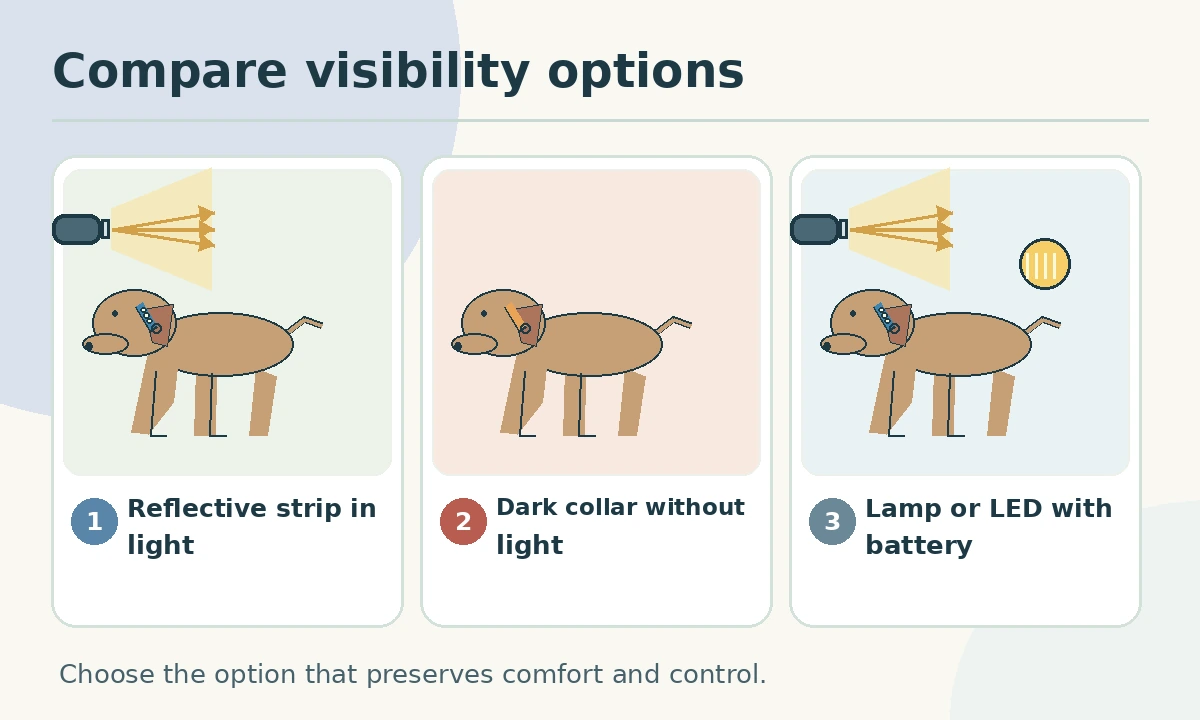
Reflective tape works by sending some incoming light back toward the source. A car headlamp, bike light, or flashlight can therefore make a reflective section easier to notice. It does not produce its own light and will not create a glowing outline on an unlit road. An LED collar, by contrast, has powered lights and its own battery limitations. This distinction prevents unrealistic safety expectations. When comparing products, ask how much of the collar surface is reflective, whether the trim remains visible under fur, and what direction light must arrive from to reach it.

Check visibility from different viewing angles
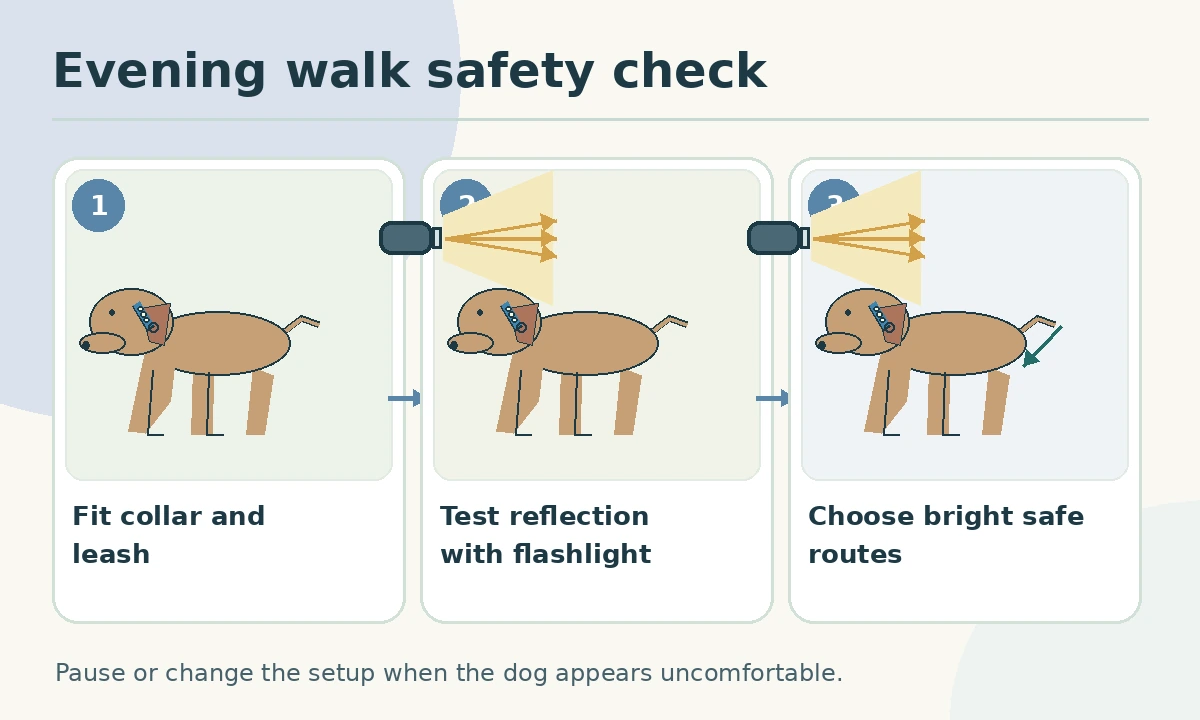
A narrow reflective stripe may look bright when photographed straight on with a flash but disappear when the dog turns its head. Test the collar from the front, both sides, and the rear at a safe distance using a flashlight. Note whether the dog’s coat covers the strip or the buckle interrupts the reflective section. A reflective harness or leash offers more visible surfaces when thick fur hides the neck band. Do not conduct tests close to traffic. The point is to understand coverage in an ordinary walk, not to simulate perfect visibility from a single product photo.
Fit the collar for comfort and security first
Measure the dog’s neck according to the product directions and confirm the collar is neither constricting nor able to slip off easily. Reflective trim should not create rough seams that rub against the skin or pull out coat. Check the buckle, adjustment slide, and D-ring with the same attention you would give a plain collar. If your dog pulls heavily, consider a comfortable fitted harness to handle leash tension. A bright reflective material cannot compensate for an unreliable fastener or unsafe neck pressure. Recheck fit after grooming, weight change, or puppy growth.
Treat reflection as one layer of a safe route
Keep a dog on a secure lead where traffic or local regulations require it, and select routes with sidewalks and good visibility. Wear reflective or bright clothing yourself. Carry a flashlight where suitable and keep your attention on approaching vehicles, bicycles, and obstacles. Avoid assuming that a driver has seen your dog even when the collar reflects light. Parked cars, curves, rain, and tall vegetation can obstruct a driver’s view. Cross roads at designated points when practical, and wait for a clear safe gap. Equipment enhances but does not replace active risk management.
Compare reflective fabric, printed trim, and LED add-ons
Reflective piping may outline the collar, but long fur can cover narrow reflective sections. Wide bands may be more noticeable but also bulkier. Printed reflective patterns can wear differently from woven or sewn tape. An LED attachment emits light, yet requires batteries, a watertight enclosure, and safe charging or battery replacement. Never let a dog chew accessible batteries or dangling light modules. If using a light, secure it so it cannot swing into the mouth or block leash hardware. Consider whether a separate reflective leash and handler clothing better suit your walking conditions.
Examine wear and contamination after real use
Mud, salt, grime, and abrasion can reduce the usefulness of reflective surfaces. Clean the collar as directed, then check it after drying with an ordinary light source. Look for peeling strips, frayed reflective piping, stiff edges, or cracked surfaces. Test the buckle and leash ring separately. Washability claims apply to specific products; not every reflective film survives machine washing or high heat. Replace a collar with rough edges or detaching trim before those pieces snag or tempt chewing. Safety depends on the collar continuing to fit and function, not looking bright on day one.
Understand the limitations in fog, rain, and darkness
Reflective materials need incoming light, and their effectiveness changes with illumination angle, distance, obstruction, and weather. Fog or heavy rain may limit what drivers see; roadside objects can also obscure a low collar. Do not assume that a reflective accessory makes unlit roads safe. Shorten the route or walk during daylight when conditions are poor. Dogs with dark coats may benefit from multiple visible items, but human judgment and safe infrastructure remain the primary controls. Keep your pace measured and avoid retractable cords that are difficult to see near other road users.
Keep identification and walking function separate
A reflective collar may carry an ID tag, while a properly fitted harness handles the leash load. That combination can make sense for dogs whose necks are vulnerable to pulling. Maintain current contact information on tags and microchip registrations where applicable. Check that tags and lights cannot snag on crate wires or furniture, and remove gear during risky unsupervised play when appropriate. Reflective decoration should not obstruct the buckle or change the collar’s intended behavior. If the collar is a breakaway model, follow its specific leash instructions; visibility is not a reason to defeat its safety mechanism.
Do a five-minute dusk test before relying on new gear
Fit the collar in daylight and inspect all hardware. At dusk, keep your dog safely beside you and view the reflective sections using a flashlight from several directions. Try looking from walking height and from a car-passenger-like angle while off the road; check whether long fur hides the material. Walk a short familiar route with a secure leash and reflective clothing. If the collar disappears when the dog turns, add a visible harness or leash rather than pretending the product is visible all around. Recheck periodically, especially after washing or seasonal coat changes.
How We Research
We compare the physical design of walking equipment with veterinary safety guidance and established humane handling advice. Our framework weighs secure fit, realistic movement, hardware condition, a handler’s control, and the dog’s comfort before convenience or advertising claims. We have not independently crash-tested, strength-tested, or field-tested a specific commercial model. Illustration labels are teaching examples, not manufacturer specifications, guarantees, or certifications. For our editorial approach see About HubPet.
Sources
American Kennel Club, Finding and Choosing the Right Dog Collar: Read source. Accessed October 27, 2026.
American Kennel Club, Dog Leashes 101: Read source. Accessed October 27, 2026.
VCA Animal Hospitals, Collar and Harness Options for Dogs: Read source. Accessed October 27, 2026.
Safety note: Stop using equipment that slips, squeezes the neck, restricts movement, or causes visible discomfort. For coughing, breathing changes, injury, or persistent skin irritation, contact your veterinarian; this general buying guide does not replace individual professional advice. See our veterinary disclaimer.
No. Retroreflective material returns incoming light toward its source; it does not produce light and offers no illumination in complete darkness.
No. Use a secure leash, alert handling, safer routes, and additional visibility for the handler. Treat reflective trim as a useful layer, not a guarantee.
The coat or the dog’s posture may hide the reflective strip. Check from several angles at walking distance before relying on the visible area.
No. LEDs require a power source and emit light; reflective trim responds to outside light. Battery safety and waterproofing are additional LED considerations.
No. The collar must remain comfortable and secure. A bright but poorly fitted collar can rub, snag, or slip off, defeating its purpose.