
This article is general information, not veterinary advice. If your pet seems unwell, is in pain or may have eaten something harmful, contact your vet or an animal poison control line right away. Read our vet disclaimer.
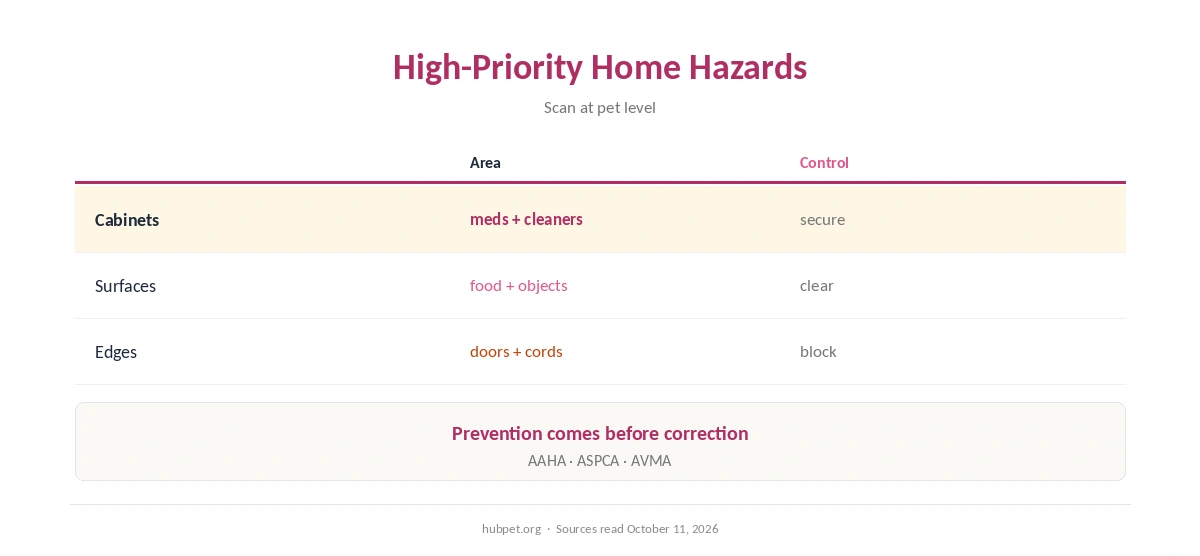
A pet-proofing checklist for homes should remove access to the hazards pets can reach, not just the hazards people notice. AAHA recommends looking at the home from a pet’s point of view, setting off-limits areas, supervising, and redirecting unwanted behavior rather than punishing it (AAHA, 2024). ASPCA also warns that medications, cleaners, and other household products can cause serious exposures (ASPCA, accessed 2026).
Use this pet-proofing checklist for homes room by room and repeat it whenever furniture, plants, medications, cleaners, food storage, or pet access changes. AVMA specifically advises keeping electrical wires and cords out of reach of curious mouths (AVMA, accessed 2026). Therefore, the checklist is a maintenance routine, not a one-time setup. A pet-proofing checklist for homes should also be repeated after repairs, visitors, deliveries, or new household items.
Pet-Proofing Checklist for Homes: 12 Things to Check
- Store human and pet medications in closed storage that your pet cannot open or reach.
- Keep cleaners, detergents, concentrated household products, and garage chemicals secured during storage and use.
- Move electrical cords, chargers, batteries, and small electronics out of chewing range.
- Secure trash, recycling, food bags, and kitchen items that contain unsafe foods or sharp packaging.
- Check every accessible plant against a reliable toxic-plant source before bringing it into the pet’s living area.
- Pick up string, ribbon, thread, small toys, socks, and other objects that can be swallowed or tangled.
- Close or block unsafe windows, balconies, stair gaps, pools, utility spaces, and rooms you cannot supervise safely.
- Keep breakables, candles, hot liquids, and heavy objects away from edges a pet can bump or climb onto.
- Give dogs and cats safe chewing, scratching, resting, and play options so the legal choice is easy to find.
- Check doors, gates, screens, and fences for escape points before leaving a pet unsupervised.
- Keep emergency numbers and your veterinary contact information where everyone in the home can find them.
- Repeat the safety scan after visitors, deliveries, home repairs, holidays, or any change in household setup.
Pet-Proofing Checklist for Homes: Kitchen and Toxic Exposures
The kitchen deserves its own pass because food, medication, trash, and cleaners can overlap there. Use foods toxic to dogs and foods toxic to cats for the food layer. Also, keeping pets off kitchen counters can reduce access, but management still comes first.
| Area | Common access problem | Safer setup |
|---|---|---|
| Kitchen | Food, trash, cleaners | Closed storage and clear counters |
| Living room | Cords, plants, small objects | Route cords and clear reachable surfaces |
| Bathroom | Medication, toiletries, trash | Closed cabinets and lidded waste |
| Entry / yard | Doors, gates, escape routes | Check barriers before access |

Plants deserve a deliberate check because “natural” does not mean pet-safe. The published houseplants toxic to pets guide gives a starting list and poison-control sources. Likewise, stopping furniture chewing works better when tempting and dangerous items are physically unavailable while appropriate chewing options are easy to reach.
Make the Safe Choice Easy
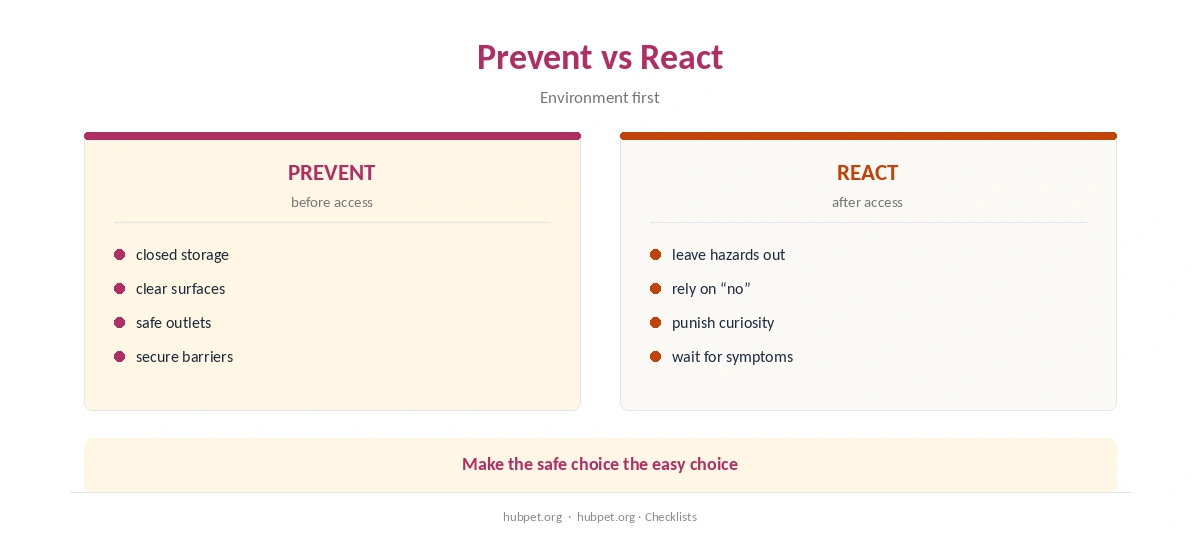
AAHA advises supervision and redirection instead of punishment when a pet finds something you missed (AAHA, 2024). Therefore, pair barriers with legal outlets: scratching surfaces for cats, safe chew items for dogs, comfortable resting spots, and simple reward-based cues. The broader pet-proof your home guide explains that environment-first approach, while the new pet owner checklist covers setup beyond household hazards.
When to Call Your Vet
If you suspect exposure to a medication, chemical, toxic food, or toxic plant, contact your veterinarian or an animal poison control line right away rather than waiting for symptoms (ASPCA, accessed 2026).
If your pet swallowed a sock, string, or another object that may obstruct or injure the digestive tract, contact your veterinarian. AAHA notes that swallowed socks and similar items can cause intestinal obstruction (AAHA, 2024).
AVMA lists trouble breathing, collapse, seizures, and suspected poisoning among reasons for urgent veterinary action (AVMA, 2025). Go now for these, a swollen abdomen in a dog, or another sign in pet emergency signs.
How We Research
HubPet uses veterinary, welfare, and behavior sources rather than personal anecdotes. We read these sources on October 11, 2026: AAHA pet-proofing guidance, 2024, ASPCA Poison Control household products, AVMA home-safety guidance for new dogs. AVMA Pet First Aid, 2025. See How We Research for our method.
Pet-Proofing Checklist for Homes FAQ
Start with medications, cleaners, unsafe foods, cords, toxic plants, small swallowable objects, and escape routes because access to these can create urgent safety problems.
Yes. Training supports safety, but management prevents access when you are absent, distracted, or dealing with a new situation.
Repeat it whenever access or household setup changes, including visitors, deliveries, repairs, holidays, new furniture, plants, medications, or cleaners.
No. AAHA recommends supervision and redirection, while AVSAB supports reward-based training rather than aversive methods.
Contact your veterinarian or an animal poison control line right away. Do not wait for symptoms or try to create a home treatment plan.
The Bottom Line
A pet-proofing checklist for homes works when it removes access before curiosity becomes an emergency. Secure medications, chemicals, food, cords, plants, small objects, and escape routes, then provide safe alternatives. AAHA, ASPCA, and AVMA all support prevention-first household safety (2024–2026 sources).