
A cat food bowl looks simple until you compare the space inside the rim, the surface finish, and where it sits. Some cats eat comfortably from deep dishes. Others pull pieces onto the floor or prefer a wide, shallow plate. Material alone cannot tell you which cat will use the bowl willingly. See the HubPet veterinary disclaimer for health and safety limits.
This guide focuses on feeding comfort and upkeep, not decorative trends. Begin with the cat’s normal habits and food texture, and contact your veterinarian about sudden refusal to eat, pain while chewing, or changes in weight.
Observe your cat at the present bowl
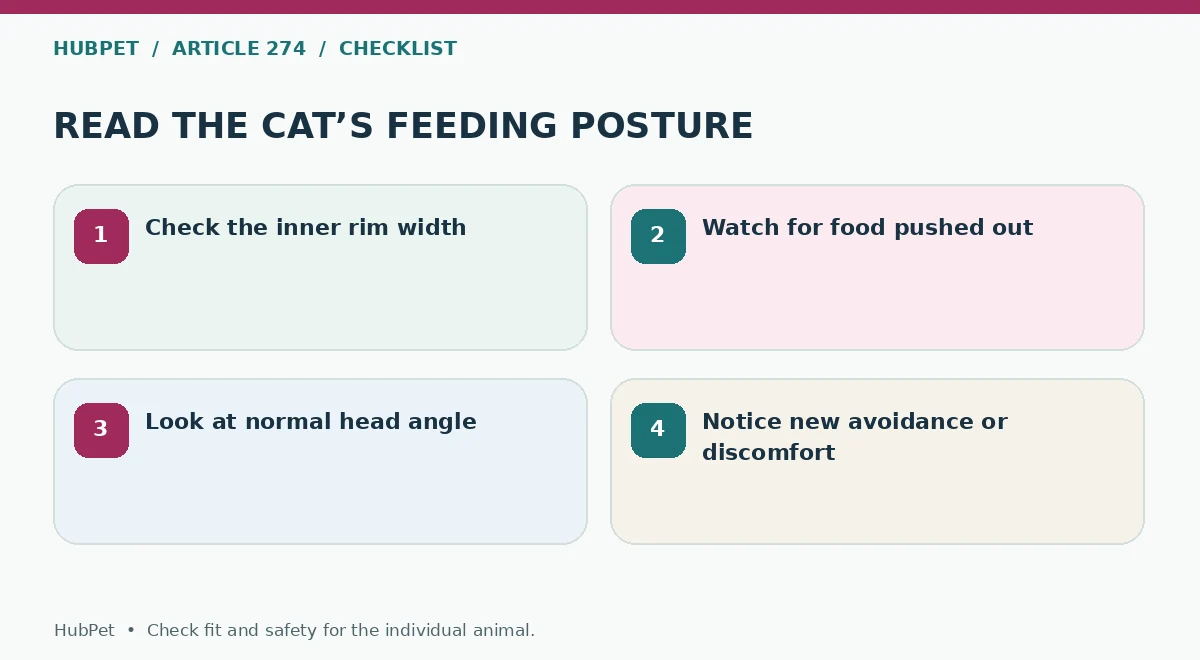
Watch a normal meal from a distance. Does the cat lean in easily, drop pieces, circle the dish, or stop when food reaches the edges? Notice whether the cat returns later to finish or avoids a busy corner while other pets pass.
These signs help form a practical starting point, not a diagnosis. A cat can simply prefer a familiar shape. Yet discomfort while eating, weight loss, or new food refusal deserves veterinary attention. Do not buy a new dish to postpone a needed health assessment.
Choose the inner width and rim profile first
A broad dish gives the muzzle room to approach from different angles. International Cat Care suggests trying a wider bowl or flat plate when a cat resists an existing container. Some cats react to contact with the sides; others do not appear bothered.
Check the usable opening beneath any flared decorative lip. Food should remain accessible when the portion becomes small. A bowl with tall straight walls may retain dry kibble neatly but make the final pieces awkward to collect. The cat’s response matters more than generic claims about whiskers.
Match depth and shape to the food served
Wet food can spread across a shallow plate, allowing easy licking and simpler washing. Dry food may scatter from a very flat surface when a cat bats at it. A modest raised edge can help without forcing a deep head position.
Compare whether the bowl supports the portion you actually serve. Excessively tall dishes can hide leftover food and make intake harder to judge. For cats with mobility limits, discuss feeding posture with the veterinary team rather than guessing that a tall stand is always helpful.
Understand ceramic, stainless steel, and plastic trade-offs
Stainless steel often handles washing well and tolerates routine movement, though thin examples may rattle. Ceramic feels heavier and can be stable, but check for glaze damage and chips. Plastic may be lightweight and inexpensive, yet scratches create areas that need careful inspection.
None of these material labels proves a food bowl will suit every cat. Favor intact food-contact surfaces, smooth edges, clear manufacturer care instructions, and a form you can clean daily. Avoid rough home repairs to a cracked dish; replace damaged surfaces instead.
Place food where the cat can relax
A cat may dislike eating beside a noisy machine, in a narrow doorway, or where another pet blocks escape. Choose a quiet accessible place with a clear route out. Keep the bowl separated from litter boxes and consider how the home changes during busy hours.
In multi-cat homes, the Feline Veterinary Medical Association encourages separate feeding locations and attention to social tension. Some cats willingly share a room while others need visual separation. More decorative matching bowls do not solve access or competition problems.
Include water placement without confusing the roles
Provide clean drinking water independently of the food dish, and watch where your cat chooses to drink. Cornell emphasizes continuous access to clean fresh water. Some cats prefer a separate water area away from feeding traffic.
A convenient matching set is not automatically a suitable feeding station. Consider multiple water options in a large or multi-level home. Wash water dishes regularly and replace water as needed. Changes in drinking habits deserve attention rather than being blamed on bowl design.

Clean the entire bowl and mat properly
CDC advises cleaning wet-food dishes after every use and dry-food or water bowls daily. Remove leftovers, wash all food-contact surfaces, rinse, and dry the bowl. A dishwasher-safe symbol only applies to the product and parts the manufacturer identifies.
Inspect the underside of suction pads, rubber feet, stands, and feeding mats. These areas can trap moisture and food. A textured decorative bowl may take much longer to clean than a simple open plate. Choose upkeep you can actually sustain every day.
Introduce a new bowl with familiar food
Place the new bowl near the established feeding station and offer a familiar meal. Avoid changing diet, feeding time, and dish shape all at once. Observe whether the cat approaches willingly before deciding the purchase works.
If the cat refuses the new bowl, restore the familiar one. Try a shallower plate in a calmer location without pressuring the animal. Persistent appetite loss is not an opportunity for prolonged experimentation; seek veterinary guidance promptly.
Budget for practical replacement and durability
A bowl can fit a cat well yet become irritating to own if it chips, slides, or needs complicated cleaning. Compare replacement availability, stacking, how dishes store after washing, and whether you can see leftovers at a glance.
Avoid treating large price differences as proof of animal preference. Look for quality you can inspect: intact edges, stable base, smooth surface, and reliable cleaning instructions. If your cat comfortably eats from an ordinary clean plate, a specialized branded dish may add little benefit.

Make the final decision about this individual cat
Record the current width, preferred food, feeding location, and any concerns about other animals. Then compare new bowls against that short list. Prioritize a wide usable opening, a sound surface, and uncomplicated washing.
After purchasing, continue monitoring ordinary intake and body condition. A suitable bowl makes access easy without introducing avoidable stress. It cannot substitute for assessment of illness or a tailored nutritional plan from your veterinarian.
How We Research
We checked this guide against the authoritative sources listed below on October 26, 2026. We reviewed practical differences, safety limits, and relevant home conditions rather than drawing conclusions from brand advertising. Specifications, warranty policies, and device capabilities change; check the manufacturer’s current manual. We did not purchase, laboratory-test, rank, or endorse individual products. Where a pet has pain, skin concerns, or fear, seek individual veterinary advice. See our approach at About HubPet.
Sources
International Cat Care: Managing the cat that won’t eat. Accessed October 26, 2026.
Feline Veterinary Medical Association: Feline Feeding Programs: Addressing Behavioral Needs. Accessed October 26, 2026.
CDC: About Cleaning and Disinfecting Pet Supplies. Accessed October 26, 2026.
Many cats find a wide, shallow dish easy to use, but preferences vary. Watch how your individual cat approaches and finishes food.
Both can work when intact and easy to clean. Ceramic can chip, while lightweight steel can rattle or slide. Inspect the actual product.
The phrase does not describe every cat’s experience. A wider dish can be a useful option when a cat seems uncomfortable at a narrow rim.
Separate bowls and stations make intake and social pressure easier to manage, particularly when cats compete or avoid one another.
Restore a familiar easy dish and monitor intake. Seek veterinary help for persistent refusal, pain, or other changes rather than waiting for adaptation.