
Stainless-steel dog bowls are common because they can be durable and easy to wash. Yet the word stainless does not guarantee a smooth finish, stable placement, or a comfortable size. Thin metal may rattle on hard floors, and rolled rims can hide residue when poorly constructed. See the HubPet veterinary disclaimer for health and safety limits.
Instead of relying on material alone, inspect the rim, base, and cleaning workflow. This guide compares steel with other bowl types and explains when a conventional open dish is a better match than an elaborate accessory.
Understand the real advantage of an open steel bowl
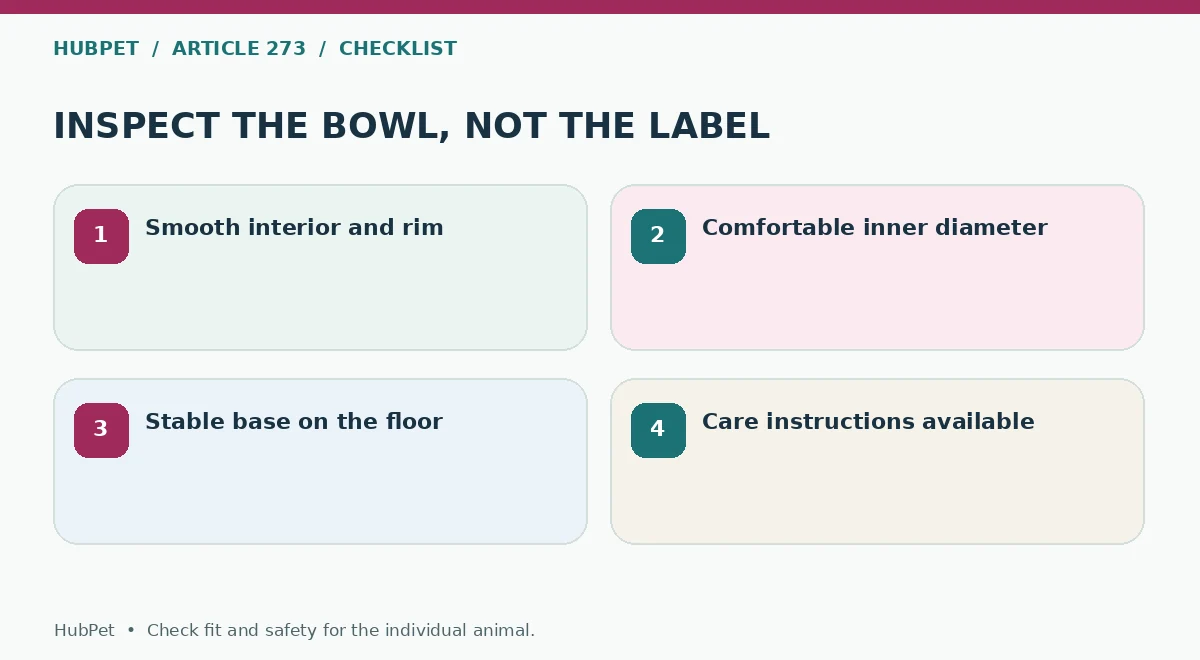
A plain stainless-steel bowl often has fewer grooves than decorative feeders. Smooth interior walls allow routine scrubbing and may tolerate a dishwasher if the maker allows it. These practical traits matter in a home that serves wet food or washes bowls frequently.
However, hygiene depends on cleaning habits as well as material. Food can accumulate under rolled edges, in rubber rings, or where a separate pedestal joins the dish. A shiny exterior does not prove the underside is simple to wash. Inspect the complete assembly before buying.
Check the grade claim without treating it as a safety stamp
Sellers may advertise steel grades or terms such as food-grade and rustproof. These words can describe material specifications but tell you little about sharp seams, weak welds, or how a finish survives real use. Look for clear product construction and care information.
Avoid unsupported claims that one steel alloy automatically makes an animal healthier. Compare documented food-contact suitability, the manufacturer’s identification, and whether the finish remains intact after repeated cleaning. If you cannot find credible care details, select a simpler well-documented product.
Measure usable bowl space, not decorative diameter
Take note of the dog’s current eating posture, muzzle width, and normal food volume. The inner surface must permit comfortable movement without piling food too high. For a dog that splashes water, consider a wider opening with a sensible wall height.
An excessively deep bowl can be awkward for a short-faced dog. A very shallow saucer may spill when a large animal drinks. Observe the existing bowl first, then compare capacity and inner dimensions rather than buying a size based only on breed pictures.
Make stability part of the selection decision
Lightweight steel bowls sometimes skate across tile or laminate. A secure non-slip ring may reduce movement, but detachable rubber can trap moisture or attract chewing. A heavy, broad base offers another approach if the dog’s size and handling permit it.
Test whether the bowl rocks when empty and whether its rim catches against the floor. Place it where people do not trip. If you have a dog that carries its bowl, manage the environment rather than adding unsafe weights or improvised attachments.
Think through noise and temperature in use
Steel can ring against dog tags or a metal feeding stand. Noise-sensitive dogs may hesitate around clattering equipment. A mat underneath can soften contact, provided it stays clean and does not slip.
The bowl can also feel warm or cold when exposed to extreme environments. Avoid leaving water dishes in direct intense sun or conditions where contents can freeze. A steel material label does not replace an accessible, fresh water supply and a comfortable feeding area.
Learn a realistic hygiene routine
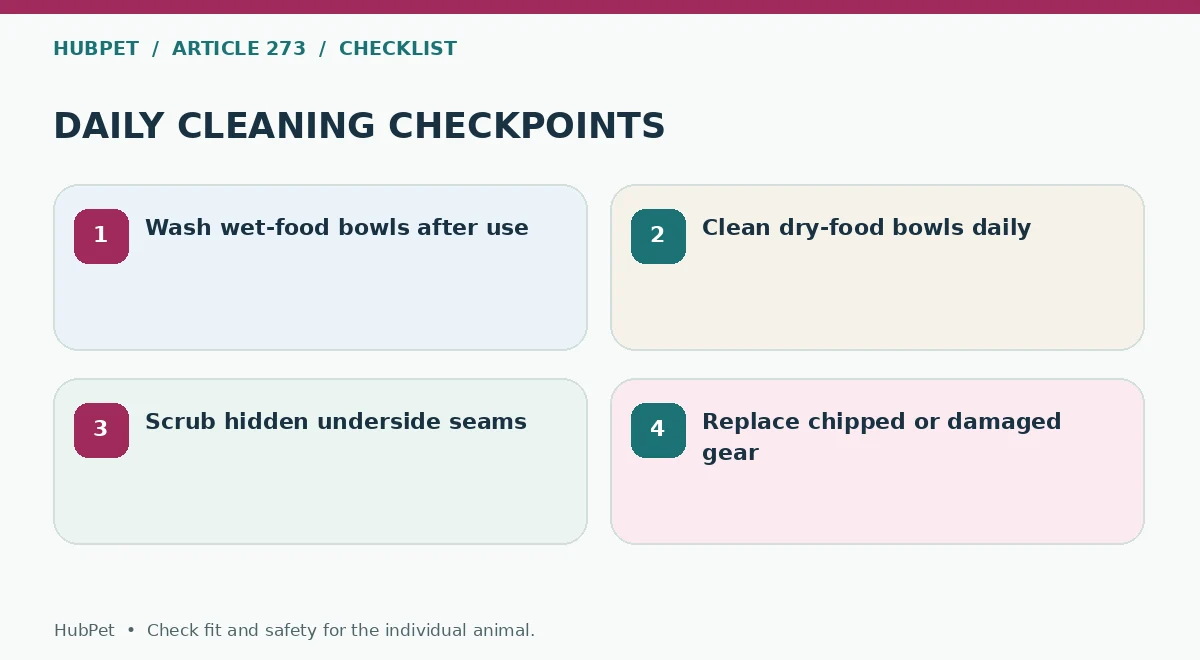
CDC recommends washing wet-food bowls after every use and dry-food and water bowls daily. Use detergent and water, reach the underside, rinse according to instructions, and dry well. A dishwasher can help when the specific bowl carries a dishwasher-safe label.
Inspect the rim, the base ring, and any fixed rubber gasket. Remove food films promptly. If corrosion, sharp damage, or a seam defect appears, replace the bowl. Cleaning does not restore a damaged feeding surface to its original condition.

Compare steel against ceramic and plastic fairly
Ceramic may feel heavier and quieter, but chips or cracks can create rough spots. Plastic tends to be light and can scratch with use. Steel resists many everyday bumps yet may dent, clatter, and slide on smooth flooring.
Select for the dog and household rather than declaring one material universally superior. A safe, intact bowl that your dog accepts and you wash consistently is more useful than an expensive bowl that tips or becomes neglected. Consider replacement needs and local disposal options.
Decide whether the dog needs a raised stand
Raised stands may help a particular owner handle dishes, but bowl elevation is not a universal health upgrade. VCA identifies elevated feeding among factors associated with bloat risk for susceptible dogs. Discuss unusual posture, mobility issues, or feeding changes with your veterinarian.
Avoid using a raised dish as a self-prescribed treatment. For most shopping decisions, a stable bowl at a comfortable level offers a clear place to start. A dog with pain or difficulty lowering the head deserves an individual veterinary plan.
Account for multi-pet and outdoor environments
Multiple dogs may crowd one water dish even when several bowls sit nearby. Provide separate feeding areas when pets compete for food. Keep water accessible, wash bowls regularly, and check for dirt or insects in outdoor locations.
Steel alone does not prevent sharing conflict or contamination. Move bowls away from litter areas and garden chemicals. In outdoor use, inspect the water and temperature frequently. Secure loose dishes against tipping without adding objects that an animal can swallow.
Finish with a seven-point inspection
Check inner width, depth, rim finish, stability, gasket access, maintenance directions, and the dog’s willingness to use it. Ask whether the bowl will remain easy to clean when it contains sticky meals rather than dry showroom samples.
Buy based on inspectable traits, not phrases such as surgical quality or lifetime healthy. Wash it before first use, place it calmly, and monitor eating and drinking as usual. The strongest everyday value is a dish that works reliably within a sensible feeding routine.
How We Research
We checked this guide against the authoritative sources listed below on October 26, 2026. We reviewed practical differences, safety limits, and relevant home conditions rather than drawing conclusions from brand advertising. Specifications, warranty policies, and device capabilities change; check the manufacturer’s current manual. We did not purchase, laboratory-test, rank, or endorse individual products. Where a pet has pain, skin concerns, or fear, seek individual veterinary advice. See our approach at About HubPet.
Sources
CDC: About Cleaning and Disinfecting Pet Supplies. Accessed October 26, 2026.
VCA Animal Hospitals: Nutritional Considerations for Large and Giant Breed Dogs. Accessed October 26, 2026.
Cornell Feline Health Center: Feeding Your Cat. Accessed October 26, 2026.
No. Smooth steel can be convenient to wash, but cleanliness depends on regular cleaning and attention to rims, undersides, and removable rings.
Some can develop spots or damage depending on construction and use. Follow care directions and replace a bowl with rough corrosion or sharp defects.
Not automatically. Elevation is not a universal benefit. Ask your veterinarian before changing feeding height for a dog with mobility or bloat-related concerns.
It can help on smooth floors, but check that the ring stays secure and does not create a hard-to-clean seam or a chew hazard.
CDC suggests washing bowls after each wet-food use and daily for dry food or water. Follow any extra care directions from the manufacturer.