
A useful cat scratcher is not chosen by color or living-room style alone. Cats scratch for normal movement, claw-sheath maintenance, and marking; they may prefer vertical posts, horizontal pads, or angled surfaces. The correct shape also needs stable support and a location the cat actually visits. This buying guide helps you choose and place scratching surfaces rather than repeating step-by-step behavioral training. If scratching changes abruptly along with pain or mobility signs, consult a veterinarian and our veterinary information disclaimer.
Observe the surface your cat already chooses
A cat scratching the side of a couch is giving you useful information about vertical reach and texture. Scratching a rug suggests a horizontal surface may feel more natural. Watch whether the cat makes long overhead stretches or short paw strokes near the floor. The Ohio State Indoor Pet Initiative recommends matching acceptable surfaces to the cat’s existing preference rather than simply putting any post in a corner. Record the preferred angle and nearby location before shopping.
Choose vertical height and stability together
A post that is too short may prevent a full stretch, while a tall post on a light narrow base can wobble. When selecting a vertical scratcher, consider the cat’s extended reach, base footprint, and whether the surface feels secure under a strong pull. A post tipping during use can frighten a cat and reduce future interest. If a model requires anchoring, follow manufacturer guidance and avoid unreliable improvised fasteners. The scratch surface should remain firm even when the cat leans its weight onto it.

Compare cardboard, sisal, carpet, and mixed textures
Corrugated cardboard offers a shreddable horizontal option and needs replacement as it wears. Sisal rope or woven sisal can offer a rough gripping surface on posts. Carpet may suit a cat that already targets carpeting, though some households prefer a clearly different texture from protected floor coverings. No one material wins for all cats. Evaluate loose fibers, staples, peeling glue, exposed fasteners, and whether debris will be easy to remove from the place where the scratcher sits.
Consider horizontal and angled pads as real options
A stable floor pad can be the right primary choice, not merely a backup for a post. Angled cardboard surfaces may suit a cat that scratches while moving between floor and furniture. Confirm that a wedge cannot collapse, slide, or trap a paw. For older cats or cats with limited reach, a low, easy-access surface may be preferable to a tall tower. Place nonslip support underneath where needed, as long as it does not create edges that the cat can pull loose.
Put scratchers near the routes cats already use
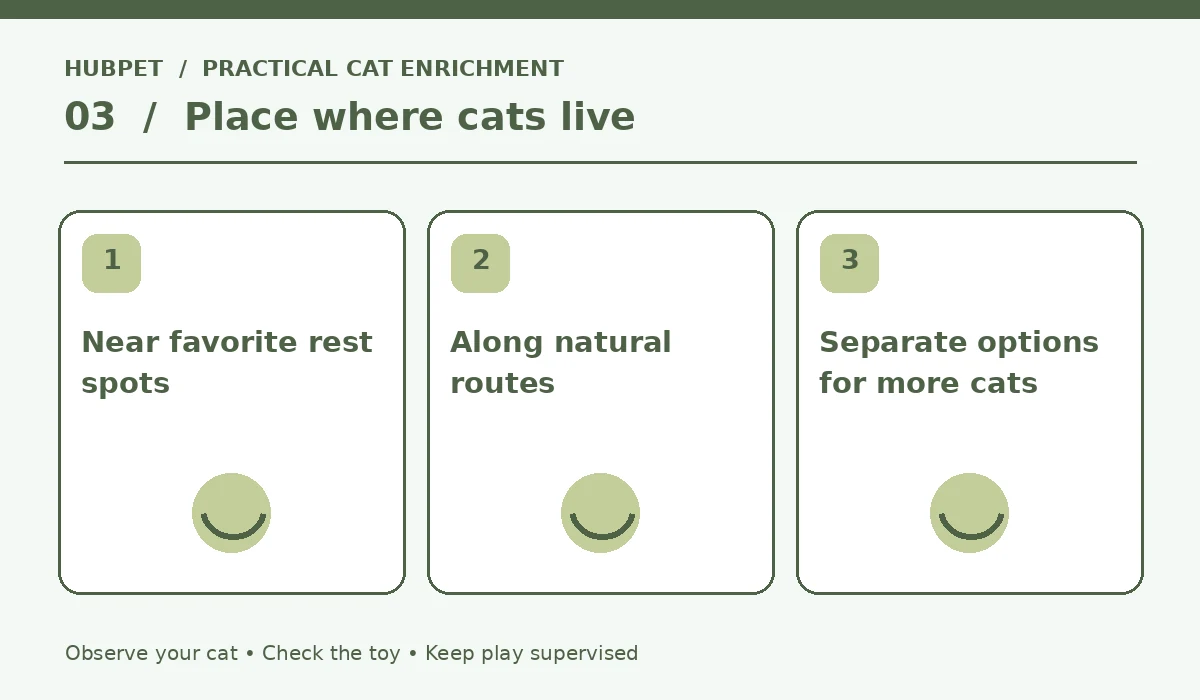
Cats often scratch after waking up, passing through rooms, and marking familiar spaces. A pad hidden behind stored boxes may receive less attention than one near a regular resting place or doorway. Ohio State suggests placing posts near preferred scratching locations and along travel routes. In multiple-cat homes, one isolated shared post may create conflict. Spread options through the living space, offering different orientations so cats need not compete for a single appealing spot.

Check mounting hardware for wall and door models
Wall-mounted scratchers can save floor space but introduce installation risk. Verify the supporting wall material, required fasteners, mounting height, and clearance from moving doors. A door-hanging panel must not swing unpredictably, rub on a cat, or block escape routes. Never rely on adhesive claims alone when a device will face repeated pulling. Test the mounting before the cat uses it, then inspect fittings regularly. If you cannot install it reliably, a weighted freestanding option may be safer.
Expect normal wear and plan replacement
Cats naturally wear down scratching surfaces, so loose cardboard bits or flattened fibers are not necessarily product failure. The question is whether the structure remains safe. Replace a pad when it disintegrates into chunks your cat tries to eat, and retire posts with exposed staples or unraveling rope that can be swallowed. Vacuum debris near the surface and clean the base as directed. Replacement inserts can reduce waste, but only if they fit securely and do not wobble.
Invite use without forcing paws onto the surface
Place a preferred texture in an accessible location and let the cat explore on its own. Praise and reward voluntary scratches. Do not grasp the cat’s paws and drag them over the material, and do not rely on startling or punishing the cat around protected furniture. Cornell notes that identifying preferences and providing suitable alternatives supports constructive behavior changes. For a step-by-step training process, use an established reward-based scratching-post guide rather than expecting the new product alone to solve a habit.
Compare cost by footprint and useful surface area
A huge tower can cost much more without being the best scratching solution in a small home. Calculate how much secure scratching area the cat actually receives, whether you can replace pads, and how easily the item can be cleaned or moved. If your cat favors a horizontal pad, paying for a tall post may add little benefit. For shared rooms, consider a tidy, sturdy pad in each high-use zone before purchasing a decorative statement piece.
Make a room-by-room scratcher plan
Identify one resting area, one regular transit route, and any location where unwanted scratching already occurs. Offer an appropriate stable surface at the most important spot first. Notice whether your cat prefers standing high or leaning low, then add another orientation if needed. Inspect mounting hardware, rough edges, and wear monthly and after heavy use. The goal is to make normal scratching easy and safe, not to suppress an instinct your cat needs to express.
How We Research
Our editorial team selected these criteria from veterinary and animal-welfare materials about play, normal feline behavior, and household safety. Those recommendations inform our comparisons with common construction choices such as fabrics, fasteners, wear points, and play supervision. We did not laboratory-test individual brands or verify seller claims. This is an editorial selection guide, not a product endorsement or a substitute for your veterinarian’s assessment. Learn about the site at About HubPet.
Sources
Ohio State University Indoor Pet Initiative: Scratching. Accessed October 26, 2026.
Cornell University College of Veterinary Medicine: Feline Behavior Problems: Destructive Behavior. Accessed October 26, 2026.
American Animal Hospital Association: Purrfectly Entertained: Indoor Enrichment for Cats. Accessed October 26, 2026.
VCA Animal Hospitals: Cat Behavior and Training: Play and Play Toys. Accessed October 26, 2026.
No. Cats have individual texture and orientation preferences. Cardboard may work well for horizontal scratching, while sisal often works well on stable posts.
It should let your cat comfortably reach up and stretch while remaining steady under pulling force; use the cat’s size and reach, not a universal height.
Start near a favorite rest area or a location where the cat already scratches, rather than hiding the new item in an unused corner.
They can be if hardware suits the wall and stays firmly attached. Check fasteners and clearance regularly, especially around doors.
Not necessarily. Matching material and placement, rewarding voluntary use, and protecting the old target may all be necessary.