
A window can make a dog bed seem like the best place in the room. There may be a view, warm light, and a quiet corner. But conditions near glass change throughout the day. Afternoon sunlight can warm a cushion, winter drafts can cool the floor, and an open curtain may keep an alert dog watching every passerby. Choose the location by checking the whole day, not just how it looks when you set the bed down. Your dog should be able to leave the spot, find drinking water, and rest away from direct heat or noise whenever desired.

Watch the window across the day
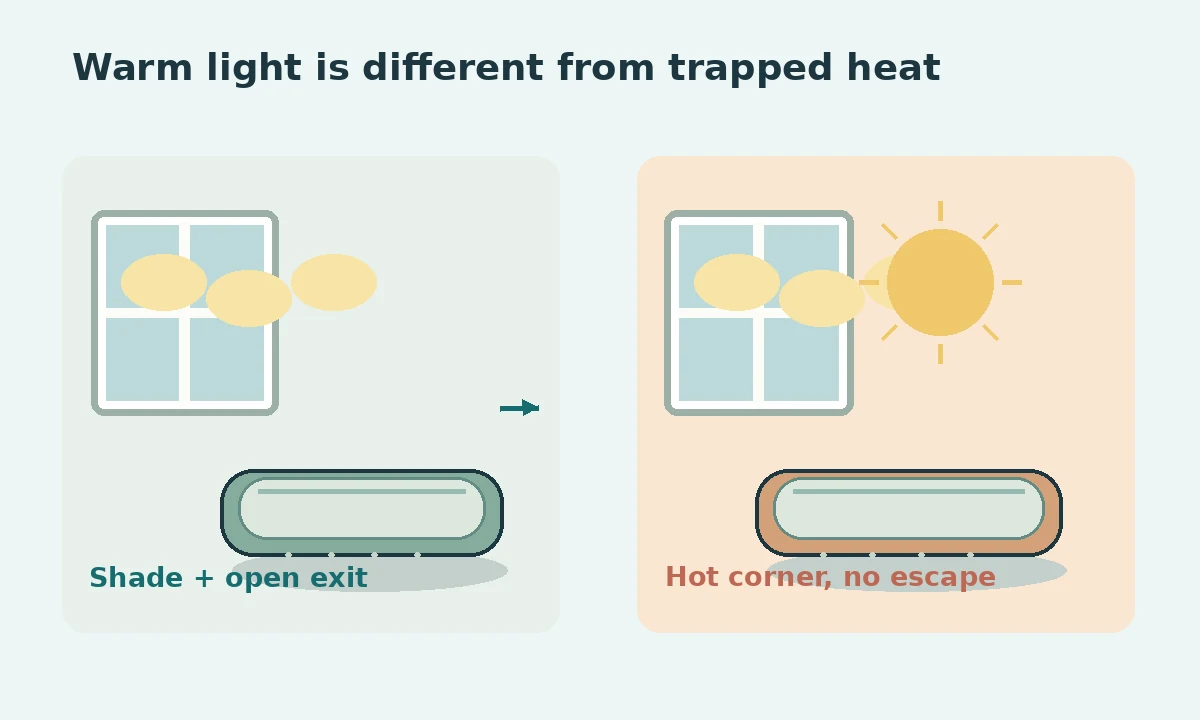
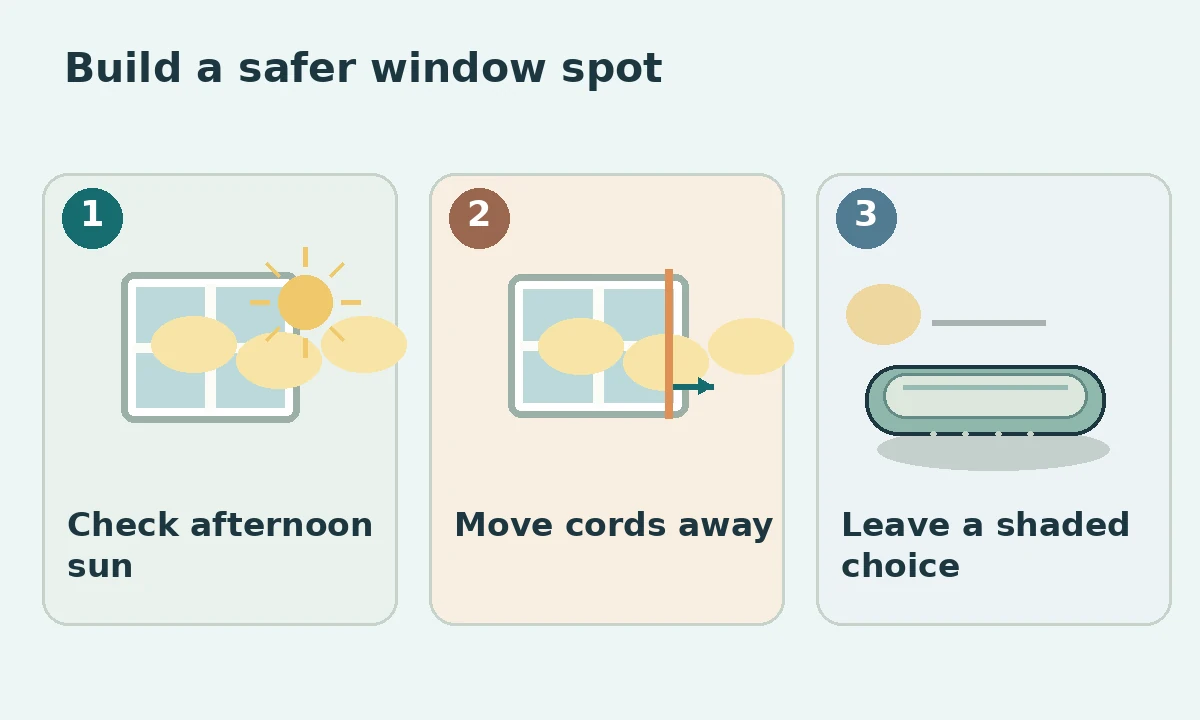
Start by checking the proposed spot in the morning, at midday, and in the late afternoon. Sunlight may move across the floor and cover the bed for only part of that period. Also note whether a nearby door opens, whether shadows cross the cushion, and whether the dog already chooses that location. Do not use one short temperature reading to declare it safe all day. Instead, create another shaded resting choice where the dog can move freely. A dog resting by a window must never become trapped in a small sun-heated area.
Separate a pleasant view from constant alerting
Some dogs enjoy watching the street and then fall asleep. Others become more vigilant when people or animals pass outside. Look for stiff posture, repeated barking, pacing, or an inability to settle. A bed directly against a busy picture window may not offer calm rest for that dog. Try a position set back from the glass or behind a partial sightline barrier. You can also close a curtain when traffic increases. Avoid punishing barking; instead, change the environment so your dog has an easier option.
Check drafts at floor level
Glass, frames, and exterior doors may feel different near the floor than at adult standing height. Sit or kneel where the bed will lie and notice airflow around the sill and under nearby doors. A bed should not cover a damaged vent or obstruct a room’s intended airflow. Dogs differ in coat, age, and comfort preferences, so a cool spot is not automatically harmful. However, if your dog repeatedly gets up to escape cold air, choose a less drafty position and keep the pathway clear.
Keep cords and blind loops unreachable
A raised blind, hanging pull cord, power cable, or curtain tieback may hang beside the bed. Some dogs chew or investigate dangling pieces. Move the bedding away from loops and arrange window coverings so the dog cannot get tangled. Do not rely on the dog being “too calm” to touch a cord. Tape or loose string used to tie a cord out of the way can introduce another chewing risk. If you cannot remove the hazard from the bed’s reach, choose a different resting location.
Avoid blocking exits and door swings
The window corner may also sit beside a balcony door or a hallway route. Map the open door arc with a piece of paper on the floor or by slowly opening the door while the bed is empty. Allow enough clearance for your dog to stretch, get up, and leave without stepping into the door’s path. A large bed can block a heat register, cabinet, or access to a window latch. Instead, select a position where people and pets can pass without pushing the sleeping animal aside.
Choose materials you can clean and dry
Window corners collect dust, outdoor pollen, and sometimes condensation. A fabric bed with an easy-to-remove cover may simplify routine cleaning, but check the exact care label. VCA recommends removing loose fur first and rinsing cleaning products thoroughly. Inspect for moisture beneath the bed, especially after rain or a cold night. If you find a damp patch, correct its source and dry the floor before restoring bedding. Do not hide a moisture problem beneath a thick waterproof layer.
Consider the dog’s preferred sleeping posture
A dog who stretches across a cushion may need more space from the wall than a dog who curls up. High bolsters can obstruct a low window view or make the entry awkward near furniture. Try placing the empty bed so the long side follows the wall while preserving a clear approach. Then allow the dog to choose an orientation naturally. Watch whether the dog can stand, turn, and change positions freely. If the bed is too cramped, move or replace it instead of nudging the dog into place.
Give a nearby alternative for warmer periods
Dogs sometimes switch between padded bedding and cooler floor surfaces. A shaded mat or another cushion across the room gives your dog a choice when sun reaches the window. Keep water available, and watch for unusual panting or distress in warm conditions. A dog who seems overheated needs a cooler environment promptly and veterinary advice when concerning signs appear. A window bed should never be marketed as climate control. Shade, ventilation, and the ability to move are more important than a decorative sunny photograph.
Introduce the new spot gently
Move a familiar clean blanket onto the new bed if your dog already accepts it. Invite the dog to sniff and explore, and reward calm voluntary contact. Do not lift a reluctant dog onto the cushion or close the room door to force use. If outside activity keeps interrupting rest, adjust the sightline before repeating the invitation. Some dogs settle in a new spot immediately; others prefer their old corner. Respect that choice while keeping both locations safe and accessible.
Do a final daylight and evening check
Check the bed during direct sun, after dusk, and while the household moves through the room. Confirm that the underside stays dry, the window covering remains out of reach, and the dog has an unobstructed route away. Watch for repeated awakenings from street noise and consider relocating the bed if needed. Finally, ask whether the window location truly serves your dog or mainly improves the room’s appearance. A successful resting place supports comfort throughout ordinary daily changes, not just a single moment.
How We Research
We reviewed veterinary and humane handling information alongside practical features of dog beds: entry height, usable floor space, fabric wear, cleaning labels, and the room around a resting animal. These are illustrated inspection guides, not claimed laboratory product tests or guarantees for every dog. Sources were checked for this guide in October 2026. Our editorial information explains our approach, and the veterinary disclaimer explains why behavior changes, distress, and possible ingestion require qualified attention.
Sources
VCA Animal Hospitals — Should My Dog Sleep in My Bed? — Veterinary discussion of individual comfort, access to resting places, and dogs choosing different surfaces.
VCA Animal Hospitals — Dog Behavior Problems: Stealing and Stay Away — Guidance on providing desirable comfortable resting zones rather than forcing a dog into an area.
VCA Animal Hospitals — Safe Spring Cleaning With Your Dog — Veterinary guidance on washing and fully drying pet bedding and reducing exposure to cleaning products.
It may be comfortable for a while, but provide shade, water, and another cooler place. Check conditions as sunlight shifts.
Yes. Check airflow at floor level and whether your dog repeatedly leaves the spot. Move the bed if the draft seems bothersome.
Only if your dog stays relaxed. Repeated barking or vigilance suggests a calmer sightline or different location.
Do not block the vent or expose the dog to concentrated heat. Follow the appliance guidance and keep a clear resting route.
Your dog may want a cooler or firmer surface or a different view. Leave safe choices available and do not force bed use.