
A pet odor eliminator is only useful if it reaches the material causing the smell and the label permits use on that particular surface. Products that perfume a room may temporarily mask an accident while urine or other residue remains beneath a rug, inside upholstery or around a litter box. See the HubPet veterinary disclaimer for health and safety limits.
This guide helps you tell cleaning, odor reduction and disinfection apart. It compares label directions, enzyme formulas, fabrics, hard floors and safe drying times without claiming that a single spray works on every pet mess or kills germs without evidence.
Identify the source before buying a bottle
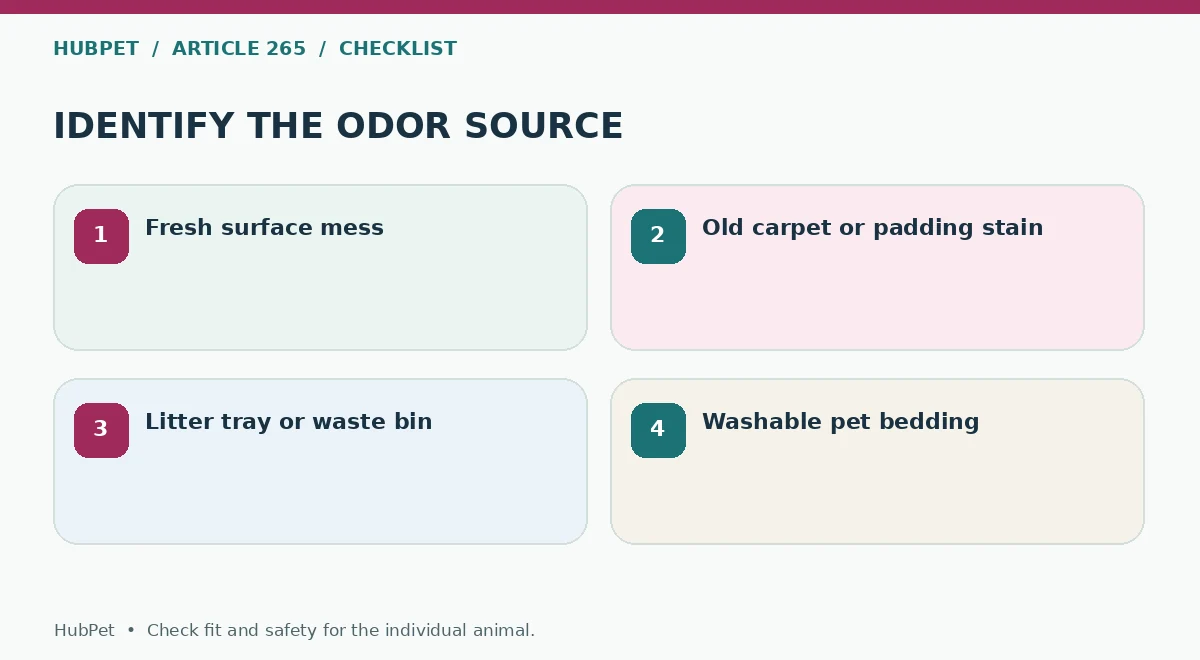
Fresh dog urine on washable tile, old cat urine in carpet padding, litter-box residue and damp pet bedding are different cleaning tasks. Locate the actual stain or contaminated area before trying to cover the odor with a room scent. Treating only the visible surface may leave material beneath that keeps smelling.
Remove solids carefully and blot fresh liquids without rubbing them into fibers. A small area can indicate a larger soaked zone underneath. If the smell returns after drying, inspect underlayers and nearby seams; another spray may be useless until a professional cleans or replaces contaminated padding or other materials.
Separate cleaning, deodorizing and disinfecting
Cleaning physically removes dirt and organic matter, while disinfectants target specified germs under stated conditions. A deodorizer may only mask or bind a smell. A label that says odor eliminator does not automatically establish disinfectant performance, safety on fabric or suitability for animal-contact areas.
Read the exact intended-use claims and directions before purchase. Use only a disinfectant with appropriate registration and labeled contact time when the situation calls for disinfection. In routine pet spaces, cleaning may be enough; do not escalate to harsh chemicals merely because a surface once smelled unpleasant.
Understand what enzyme products promise
Many pet accident cleaners use enzymes or microbial processes to break down some organic residues. Effectiveness depends on the formulation, correct saturation, contact time, temperature and whether the cleaner actually reaches the contamination. An enzyme label by itself does not prove a product will remove every old stain.
Check whether the maker gives directions for urine, feces or vomit, and whether directions allow repeat applications. Do not mix an enzyme formula with bleach, ammonia or another cleaning chemical. Prior cleaners can change how a product behaves, so follow the label rather than layering products improvisationally.
Match the formula to the material
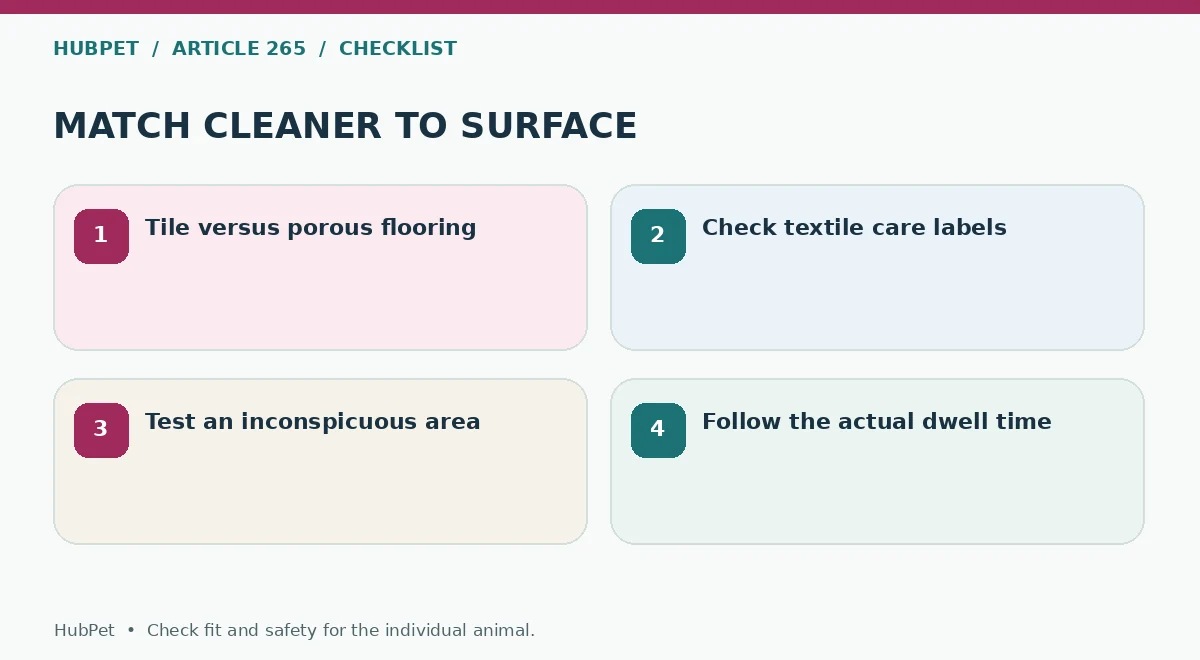
Sealed tile and some washable hard floors are easier to treat than wool rugs, leather, unfinished wood or porous stone. Carpets and upholstery can retain fluids in backing or padding; excess soaking may create moisture problems or discolor dyes. Do not assume one product suits all these materials.
Check manufacturer compatibility for the particular floor or textile, then test in a hidden area as directed. Avoid over-wetting wood and upholstery. For a valuable rug or fragile surface, ask a qualified cleaning professional before applying an unfamiliar enzyme or oxidizing agent.
Use a pet-access and ventilation plan
Pets may lick damp floors, sit on recently sprayed upholstery or investigate a cleaning bucket. Keep them away during application and until treated surfaces have dried according to the label. Open windows or otherwise ventilate when safe, and put chemicals away immediately after use.
ASPCA guidance notes that enzyme-based cleaners can cause stomach upset if ingested. A bottle marketed as pet-friendly is not edible or safe for direct spraying onto an animal. If you suspect exposure, contact a veterinarian or animal poison control rather than experimenting with home remedies.
Do not confuse fragrance with removing urine
Strong perfume can make people notice something else while residual urine continues to attract attention from pets. Cats may also dislike scented toilet areas. Choose low-fragrance or unscented formulations when suitable, especially for litter-box surroundings and heavily used resting spaces.
Avoid essential oils as an improvised pet odor remedy, particularly around cats. Never add household deodorizing products directly to litter or bedding unless the instructions explicitly allow that use and it is appropriate for the animal. Solving the cleaning problem is more important than a pleasant smell for an hour.
Treat carpets and bedding in logical stages
First collect solids and absorb accessible liquid, then follow the chosen cleaner’s directions for amount and dwell time. Remove residue if instructed and allow a full dry before judging the odor. Machine-washable pet bedding may be more effectively treated through a suitable laundry cycle than repeated room sprays.
For recurring carpet odors, confirm whether the backing and padding have become saturated. Do not blindly pour more liquid into the same spot: damp layers can develop additional problems. Follow textile care labels and consider replacement or professional help if you cannot reach the contaminated material.
Choose a safe routine for litter areas
Scoop waste and wash a litter pan with mild unscented cleaner as needed. Cats often prefer a neutral-smelling box over one with fragrance or strong disinfectant residue. A strong litter-box odor should prompt review of scoop frequency, box size, location and nearby waste storage before adding a chemical product.
Clean any accident outside the box with a surface-appropriate product, and preserve a comfortable alternative toilet while addressing the cause. Recurrent house-soiling warrants veterinary advice because litter changes, stress and medical problems can all affect behavior. Cleaner selection cannot diagnose the reason for an accident.
Read safety directions and mixing warnings
Inspect the label for target surfaces, contact time, rinsing requirements, protective equipment and storage instructions. Do not mix bleach with ammonia or any unknown cleaning product. Never apply household disinfectants to a dog’s or cat’s coat or paws as a substitute for veterinary guidance.
After a spill, ventilate the area and follow product instructions rather than introducing additional chemicals. If a pet chews the bottle, drinks concentrated cleaner, develops breathing trouble or shows distress after contact, seek urgent veterinary guidance. Keep original packaging available so a professional can identify the product.

Compare cost by completed cleaning task
A concentrated product may require dilution, while a ready-to-use spray may be convenient for small fresh spots. Compare usable coverage, correct dwell time, required repeat cleaning and fabric compatibility rather than bottle price alone. A cheap product that damages a sofa is not a bargain.
Before purchasing, write down the mess type, surface, pet access pattern and care-label limits. Pick a cleaner you can apply exactly as directed, then recheck the area after thorough drying. Persistent new accidents or changing elimination habits belong in a veterinary conversation, not an endless cycle of scented products.
How We Research
We checked this guide against the authoritative sources listed below on October 26, 2026. We reviewed practical differences, safety limits, and relevant home conditions rather than drawing conclusions from brand advertising. Specifications, warranty policies, and device capabilities change; check the manufacturer’s current manual. We did not purchase, laboratory-test, rank, or endorse individual products. Where a pet has pain, skin concerns, or fear, seek individual veterinary advice. See our approach at About HubPet.
Sources
ASPCA: Poisonous Household Products. Accessed October 26, 2026.
CDC: About Cleaning and Disinfecting Pet Supplies. Accessed October 26, 2026.
ASPCA: Litter Box Problems. Accessed October 26, 2026.
ASPCA: What Pet Parents Need To Know About Corrosive Household Products. Accessed October 26, 2026.
Use products only as labeled, keep animals away from wet applications, and store containers securely. Even enzyme cleaners can cause problems if swallowed.
No. Odor removal and disinfection are different claims with different requirements. Follow appropriate label directions when disinfection is necessary.
Contamination may remain in carpet backing or padding, beyond where a surface spray reached.
Perfume may mask a smell temporarily but does not remove the soiled material, and heavy scents can bother cats.
No. Do not mix cleaners, especially bleach with ammonia or other chemicals, because dangerous reactions can occur.