
Cat litter for odor control needs to do two jobs: make waste easy to remove and remain acceptable to the cat using the box. A heavily fragranced product may seem effective to a person while concentrating unwanted scent directly around the animal. Better odor control starts with maintenance, box access and the behavior of the substrate when wet. See the HubPet veterinary disclaimer for health and safety limits.
This guide separates urine and feces odors, absorbency claims, dust, perfume and pan hygiene. It offers a fair home comparison without naming a winning brand or suggesting that extra deodorizer can replace daily cleaning.
Locate the odor source before changing litter
A stale litter-box smell can arise from missed feces, old urine clumps, damp non-clumping material, residue along the tray base or a full waste bin nearby. Examine the cleaning routine before purchasing a formula that promises to neutralize every odor. The solution differs depending on where waste remains.
Take out the waste, wipe any spills around the pan with a suitable cleaner and refresh the box on an appropriate schedule. A fragrance that temporarily overwhelms ammonia-like odors will not remove old wet material. Persistent unusual urine odor or changes in elimination can warrant veterinary assessment, not simply a stronger litter.
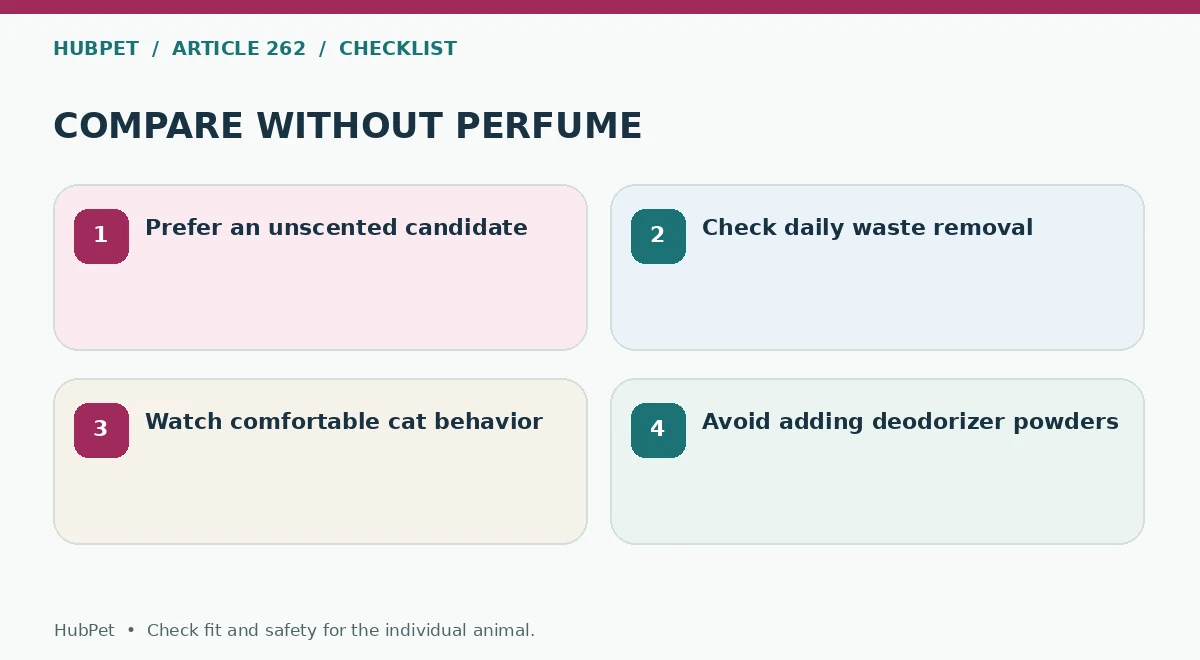
Prefer unscented formulas when practical
Professional feline guidelines consistently note that many cats prefer unscented, fine-textured litter. Perfume and deodorizer additives can make a tray less inviting even when a person enjoys the scent. An odor-control claim should therefore be evaluated separately from whether the bag contains perfume or intense plant fragrance.
Compare an unscented option first if the cat already accepts one. Do not spread room sprays, essential oils, or deodorizer powders inside the box. If the cat begins balancing on the rim, leaving immediately or eliminating elsewhere, restore a familiar material and investigate other causes.

Compare how wet material is removed
Clumping formulas may make damp urine material easier to lift without discarding the whole bed, but weak clumps can fragment and leave residue. Non-clumping products depend more on absorption, mixing and periodic full replacement. Neither method works if wet material stays in contact with a dirty tray for too long.
Lift a normal daily clump or remove damp particles using the recommended scoop, then inspect the floor of the box. Track how much soiled substrate remains. A practical comparison measures the cleanup result after a week of usual care, not a staged fragrance demonstration on a store shelf.
Give cats room and a clear exit
A roomy, accessible open pan helps the cat dig and gives caregivers a clear view of waste. Covered boxes can concentrate odors inside the space the animal enters. Adding a high hood to contain human-perceived smell can be counterproductive if it causes a cat to avoid the only available toilet.
Place pans in quiet areas with more than one possible escape path where feasible, especially in homes with several pets. Keep food and water away from toilet areas. A well-positioned clean box can solve more odor problems than an expensive material placed beside a noisy appliance.
Do not confuse dust, tracking and odor
Low dust means less particulate release under some conditions; low tracking means fewer granules ride on paws. Neither label demonstrates odor performance. Plant, mineral and paper materials vary significantly by formulation and storage condition, so product category alone cannot establish an advantage.
Use ordinary cleaning observations instead of intentionally raising airborne dust. Sweep up tracked granules with methods that contain particles and avoid perfumed sprays. Consider people with respiratory sensitivities, while remembering that product claims cannot diagnose or prevent allergies or asthma in animals or humans.
Maintain a realistic daily routine
Scoop feces and urine clumps at least daily, and increase frequency when multiple cats use the area. Refill to a familiar depth and replace non-clumping damp material as instructed. Empty the waste bin before it becomes a second odor source, and keep lids secured from curious pets.
Wash the tray with mild unscented soap and water when needed, rinse and dry thoroughly. Avoid ammonia-based cleaners and aggressive fragrances in a toilet area. Adjust the full-change schedule to the actual litter system rather than assuming every product offers the same number of clean days.
Look beyond the carbon and baking-soda claims
Some products advertise charcoal, carbon, baking soda or other odor-binding additives. The mere presence of an ingredient does not establish comparative performance or prove it is comfortable for the cat. Examine the full product labeling, independent test methods when available and whether a fragrance has been added alongside the claimed odor-control ingredient.
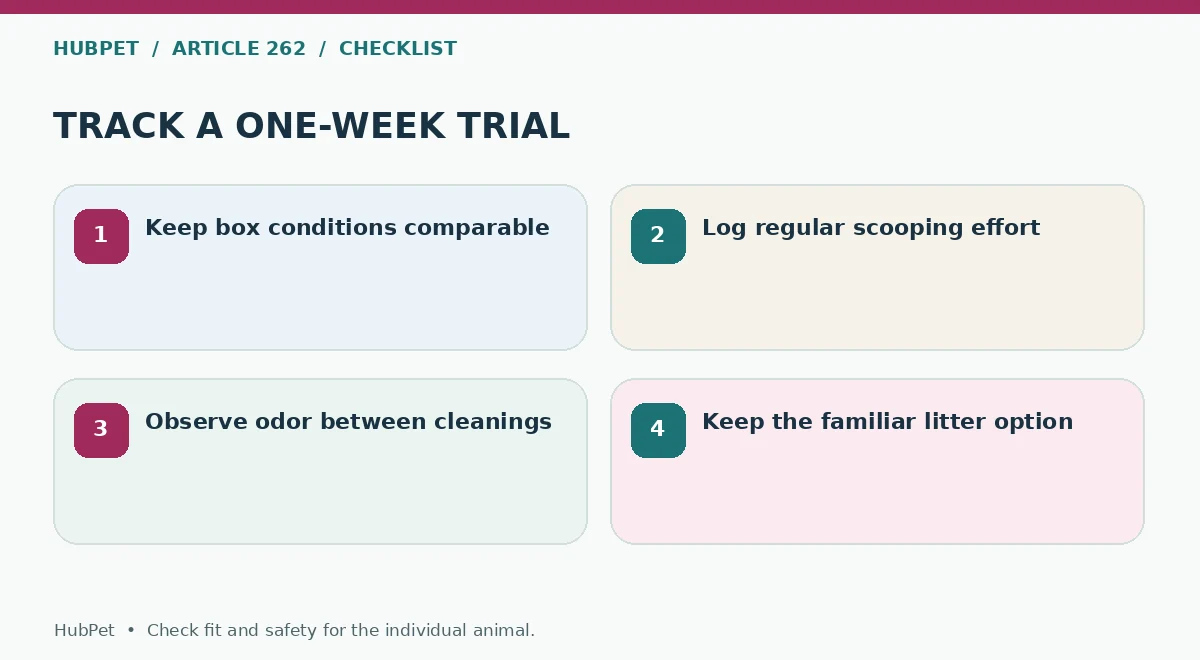
A simple comparison can keep box size, scoop frequency, litter depth and household conditions consistent. Note whether wet material is removed cleanly and whether the cat uses the box readily. Avoid experimenting on a pet that already has toileting difficulties without veterinary guidance.
Use a fair side-by-side litter trial
Offer the current litter and a proposed unscented alternative in similar boxes at accessible locations. Keep cleanliness comparable. Record voluntary use, scratching behavior, tracking and whether odors return between daily scoops. This gives the cat a choice while allowing useful household observations.
Do not force the animal to use the new material or abruptly remove its preferred box. If accidents appear, restore the previous setup and assess medical, stress and environmental explanations. Painful urination, blood or straining without urine deserves prompt veterinary attention rather than another odor-control product.
Estimate cost per clean week
Bag price and weight do not reveal how quickly a particular material becomes saturated or how frequently full replacement is needed. Record refills, scoop time, disposal volume and pan cleaning during the trial. A product that hides smell briefly yet needs frequent replacement may offer little practical value.
Also consider availability near home and the effort required to keep enough clean material on hand. The goal is consistent removal of waste and an acceptable substrate rather than maximizing fragrance intensity. A repeatable routine is usually more useful than chasing an impressive label.
Know when smell points to another issue
If odor persists despite thorough cleaning, inspect surrounding floor seams, nearby mats, lids and waste storage. Urine outside the tray can soak into porous material and require a surface-specific cleaner. Fragrance cannot repair a contaminated underlay or substitute for identifying where an accident occurred.
Sudden changes in toileting, urine frequency or behavior require veterinary advice. Avoid punishing a cat for accidents or confining it to an unpleasant litter box. A good odor-control strategy keeps the home hygienic while preserving comfort, predictable access and the owner’s ability to monitor health.
How We Research
We checked this guide against the authoritative sources listed below on October 26, 2026. We reviewed practical differences, safety limits, and relevant home conditions rather than drawing conclusions from brand advertising. Specifications, warranty policies, and device capabilities change; check the manufacturer’s current manual. We did not purchase, laboratory-test, rank, or endorse individual products. Where a pet has pain, skin concerns, or fear, seek individual veterinary advice. See our approach at About HubPet.
Sources
ASPCA: Litter Box Problems. Accessed October 26, 2026.
AAFP and ISFM: Guidelines for Diagnosing and Solving House-Soiling Behavior in Cats. Accessed October 26, 2026.
ASPCA: General Cat Care. Accessed October 26, 2026.
Not necessarily. Many cats prefer unscented litter, and perfume does not replace removing urine and feces promptly.
No. Effective removal, clean pans and an acceptable texture matter; individual formulations perform differently.
Avoid adding essential oils or strong fragrances to litter boxes. They may make the box unpleasant and can present pet safety concerns.
At least daily, and more often for heavily used trays, while following full-change and washing instructions.
Check the pan and nearby surfaces, but seek veterinary guidance if odor comes with changes in urination or behavior.