
This article is general information, not veterinary advice. If your pet seems unwell, is in pain or may have eaten something harmful, contact your vet or an animal poison control line right away. Read our vet disclaimer.
A stain and odor remover for cats should be chosen for the specific contaminated material, not for a perfume that briefly hides the smell. Fresh urine on tile is a different task from old urine that has reached a sofa cushion or carpet pad. Products formulated to break down pet urine compounds are a common first choice, but only when the label allows use on your surface and the liquid can actually reach the affected layer. You also need a plan to keep the cat away until the area dries. This comparison uses a surface-and-depth checklist, with no pretend product ranking or unsupported claims that one cleaner works everywhere.
Match the cleaner to what the urine reached
Look for a pet-urine enzymatic or odor-neutralizing cleaner with instructions for your floor, fabric or upholstery. Read the entire label for application, dwell time, rinsing rules and whether the surface needs colorfastness testing. If urine soaked beneath a carpet, a light surface mist usually cannot reach the source. Equally, soaking unfinished wood or porous stone without checking compatibility may create a second problem. Do not combine competing cleaners on the same wet surface; residues may interfere with later treatment. If the accident happened near food bowls or litter, move them before cleaning and keep pets out of the work zone.
| Affected surface | Selection check | Limitation |
|---|---|---|
| Washable hard tile | Pet-urine product compatible with grout | Urine may enter unsealed grout |
| Carpet and pad | Enzyme product with carpet instructions | Pad may need separate treatment |
| Upholstery or couch | Fabric-safe, hidden-spot test | Foam may hold contamination |
| Sealed hardwood | Floor-safe directions and low moisture | Standing liquid can harm finish |
| Unsealed wood or stone | Get specialist material guidance | Porous finishes may discolor |
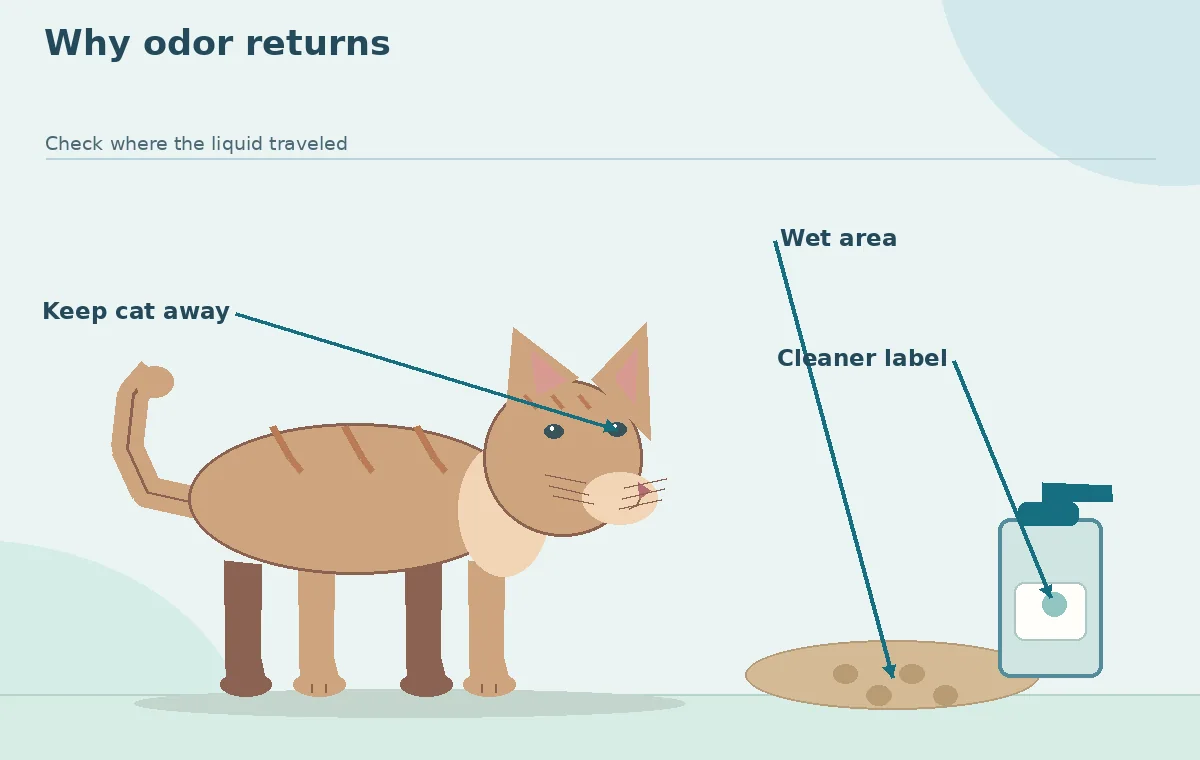
Read the label before deciding whether it is suitable
A product sold as ‘cat stain and odor remover’ may cover just one of your needs. Check whether it claims urine removal rather than fragrance masking, states the materials it may be applied to, and gives enough information to use it safely. Avoid relying on ratings that fail to describe the original spill or surface. Never blend bleach, ammonia, vinegar or other household products into a pet cleaner; mixing cleaning chemicals can be dangerous and may also compromise the cleaner. Use ventilation as the label directs, protect eyes and skin where indicated, and store supplies securely away from pets and children.
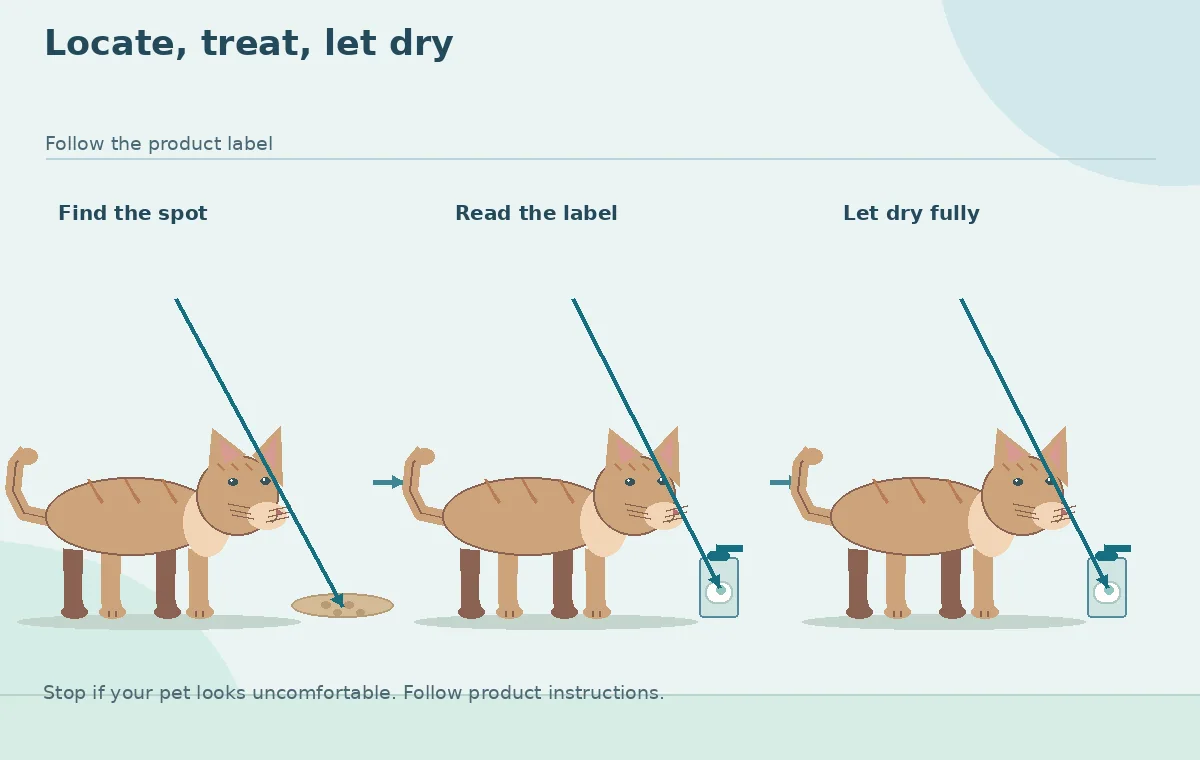
- Identify the full wet area by blotting fresh moisture and checking whether liquid has traveled into seams, padding or grout.
- Read the cleaner label for surface compatibility and any required hidden-spot color test; do this before applying to visible upholstery.
- Keep cats and other pets out of the room; open ventilation if instructed and do not add bleach, ammonia or homemade mixtures.
- Use the amount, contact conditions and drying method on the product label, reaching the affected material without flooding fragile surfaces.
- Recheck once completely dry. If odor remains in padding, request professional help rather than repeatedly saturating the top layer.
Know the limits: surface stain versus persistent odor
Visible stain removal and odor control are not identical. A stain can fade while odor remains in the underlay. Strong fragrances may be unpleasant to a cat and do not prove that urine components were removed. A spot that reappears after rain or humidity may mean the source is still embedded. On carpet, pet-safe extraction and access to the pad may be necessary; on sealed floors, standing fluid can damage joints. For home management, pair effective cleanup with appropriate litter box setup: our litter-box preference guide outlines texture and location factors, while pet-friendly floor care covers daily prevention.
| After drying, you notice | Interpretation | Next action |
|---|---|---|
| No scent and no residue | Possible successful cleaning | Monitor; no repeat treatment needed |
| Odor but little visible mark | Source may be deeper | Check padding or seams |
| Discoloration on a test patch | Surface incompatibility | Stop; contact material specialist |
| Cat returns to the same spot | Possible residue or other issue | Recheck cleaning and litter setup |
| Repeat accidents in new spots | Not just a cleaning issue | Arrange veterinary assessment |

Choose a useful product, not a marketing superlative
For a reasonable purchase decision, prioritize clear directions, material compatibility, odor-source reach and safe storage. A concentrated formula is not automatically safer or more effective; preparation and dilution must follow its specific label. Do not assume ‘natural’ or ‘plant based’ means harmless to cats. Examine whether the product is suitable for fabric backing or laminate finish and whether you can allow the necessary drying time. In a multicat home, it may be worth maintaining a small ready-to-use cleanup kit with disposable gloves and clean towels. The goal is to remove contamination promptly without creating a new exposure hazard.
Cleaning alone cannot solve repeated inappropriate urination. Changes in litter box cleanliness, privacy, mobility, stress or urinary health may contribute. Keep a brief record of when and where accidents happen rather than punishing your cat. The published daily cat care checklist can help you notice changes in routine. An enzymatic cleaner is a household tool, not a substitute for veterinary advice or an individualized behavior assessment.
When to Call Your Vet
Sudden urination outside the box, frequent attempts, vocalizing, blood, pain or difficulty passing urine require veterinary guidance. A cat straining with little or no urine may have a life-threatening obstruction: seek emergency veterinary help immediately, especially for male cats. Do not delay an examination while trying different cleaners.
How We Research
We used ASPCA litter-box guidance, Ohio State University’s veterinary-associated cleaning advice, and humane-society recommendations on treating urine deep in upholstery and carpet. We intentionally compare cleaner characteristics rather than pretending to test commercial formulas or endorsing a particular brand. Read more about our editorial approach on the About page.
Sources
ASPCA — Litter Box Problems; Ohio State University — How to Clean Up Cat Urine; PetMD — How to Get Rid of Cat Pee Smell (veterinarian-reviewed); Humane Society for Tacoma & Pierce County — Removing Pet Stains.
A pet-urine cleaner with enzyme or urine-specific instructions is a reasonable starting point when the label expressly permits your particular surface.
Fragrance may temporarily cover odors without reaching urine in underlay or furniture foam. Check source depth and follow a urine-specific cleaner label.
Only if the product and flooring manufacturer allow it. Water can damage unsealed wood and joints, so minimize moisture and test as directed.
No. Mixing household cleaners can be dangerous and can interfere with enzyme products. Use one product as labeled, with ventilation and pets excluded.
New, repeated or painful urination changes deserve veterinary assessment; straining with little or no urine is an emergency.