
Dog poop scoopers keep hands farther from stool and can make repeated backyard cleanup more manageable, but the best design depends on the surface. A serrated jaw that works on grass may grab stones from gravel, while a flat shovel that works on pavement may push soft waste across a lawn. See the HubPet veterinary disclaimer for health and safety limits.
This guide explains common scooper mechanisms, how to inspect them, and how to wash and store reusable tools safely. It avoids brand rankings because practical fit matters more than a universal best gadget.
Decide where most pickups happen
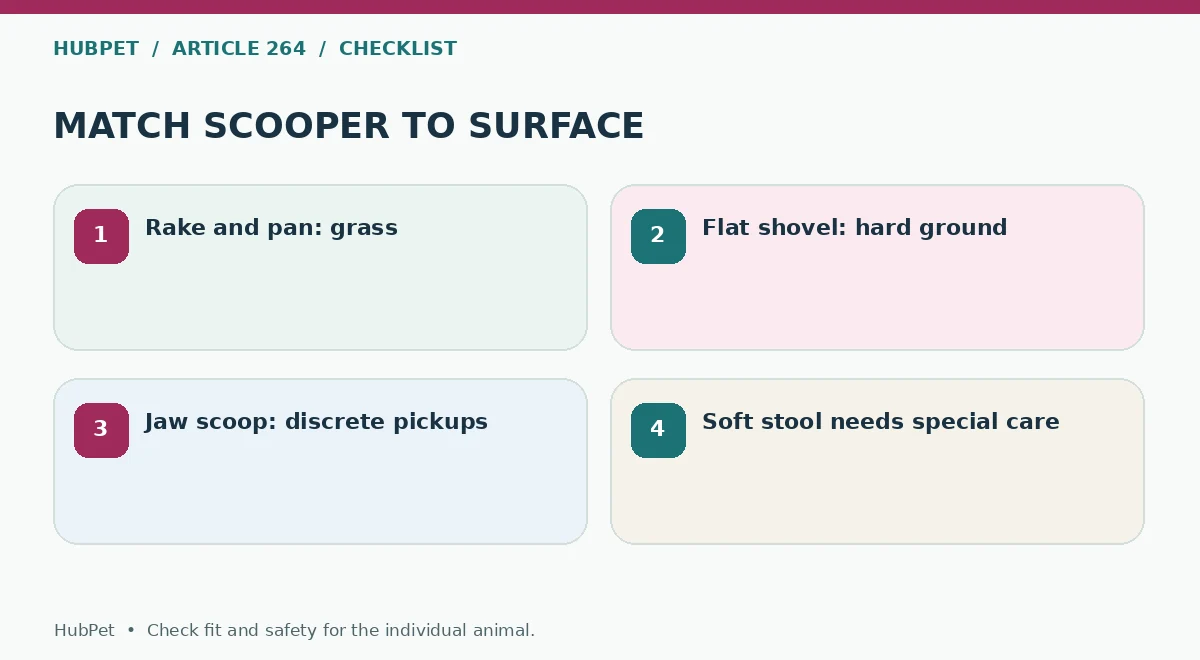
Grass, gravel, soil, decking and concrete present different collection problems. A rake can move through grass blades, a flat pan slides under waste on firm pavement, and a jaw design may reach spots where a tray cannot fit. No tool performs identically across every surface and stool consistency.
List your two most common pickup surfaces before shopping. A simple versatile shovel-and-pan set may suit a mixed yard, while a compact jaw can help in smaller areas. Test the motion with dry leaves or paper, never by spreading animal waste around to evaluate the tool.
Understand rake-and-pan sets
A narrow-toothed rake can lift stool from grass onto a receiving pan without taking much turf. Wide gaps may let small pieces through, while closely spaced teeth can trap debris that needs thorough rinsing. Handle lengths and how the pan stands on the ground affect the user experience.
Check that both tools are easy to align and that the pan has enough capacity for routine yard cleanup. Avoid tools with sharp exposed edges or fragile joints. The rake should move waste into the pan without scraping stones into it or tearing delicate lawns.
Compare spring-loaded jaw scoopers
A jaw or clamshell scooper opens around a pickup and closes by squeezing a handle. It can be quick for discrete firm pieces, yet hinges, teeth and spring cavities may accumulate residue. A strong spring is not automatically desirable if the grip is difficult or the mechanism snaps shut near fingers.
Try the handle with your normal hand position and check the open span against typical waste volume. Inspect whether the jaws close fully and can be rinsed on every surface. Avoid designs that trap stool in inaccessible crevices despite a claim of hands-free use.
Know when a shovel and bin work better
A small shovel and dustpan can move stool from a flat area or dry soil into a disposable bag or lined bin. Flat edges can smear on uneven turf, so you may need a narrower blade for outdoor ground. Larger yard cleanup often benefits more from a stable receiving container than a complex one-handed mechanism.
A scoop with a smooth, nonporous surface usually cleans more easily than textured plastic with deep grooves. Look for a safe place to set the collecting pan without touching walkways used by children or pets. Keep collection containers dedicated to waste handling.
Check handle length, weight and grip
Long handles reduce bending, which may help some people collect waste more comfortably. An extended handle that twists under load can make the tool unstable, however. Weight is not the only factor: balance, reach and grip width matter when the pan fills or a spring-loaded mechanism needs squeezing.
Assess storage and transport before buying. A telescoping tool must lock securely, while a fixed handle may be sturdier but harder to fit in a closet. If you have reduced hand strength, test clean controls or choose a simple setup rather than forcing a stiff jaw.
Choose materials that you can wash thoroughly
Stainless metal, coated metal and molded plastic all have tradeoffs. Inspect joints, hollow handles, exposed springs and seams for areas where contaminated water could collect. Corrosion resistance and an accessible cleaning surface are more valuable than a shiny finish or an unsupported antibacterial claim.
Wash used tools following suitable cleaning and disinfecting guidance, keeping pets out of the area until items are dry. Do not use the same broom, kitchen sink implements or cleaning brush for food preparation. Store supplies where children and animals cannot reach them.

Handle loose stool with extra care
Soft or liquid stool is hard to capture without smearing, whatever mechanism you choose. A broad shovel or suitable absorbent material may help lift as much waste as possible, but you still need to clean contaminated ground or hard surfaces where practical. Never spray feces toward people or pets.
Wear appropriate protection if splash or contact is likely and wash hands afterward. If an animal has repeated diarrhea or seems unwell, seek veterinary advice. A tool intended for formed waste does not address the underlying health problem or make contaminated surfaces automatically safe.
Create a separate route for collected waste
Transfer pickups into a lined collection container or an approved bag, seal it securely, and use the disposal method allowed by the local waste authority. Leaving a full scooper uncovered beside the door creates odor and can attract pets. A reusable scooper itself is not a substitute for proper disposal.
Consider how far you must carry the collected material and whether the pan tilts without spilling. Never assume an outdoor compost pile is appropriate for dog feces; many systems cannot accept it safely. Keep all waste away from gardens used to grow edible produce.
Clean the tool without introducing new hazards
Remove visible residue first using a controlled wash in an area intended for dirty equipment. Follow manufacturer instructions and CDC guidance when a disinfectant is needed. Never mix bleach with ammonia or other cleaners, and do not allow dogs to lick wet tools or treated ground.
Rinse and dry the scooper as directed before storing it, and keep cleaning chemicals in their original containers. If a design cannot be cleaned adequately after routine use, consider a simpler tool. Hygienic maintenance is a buying criterion, not an optional finishing step.

Use a final surface-and-storage checklist
Before purchase, match mechanism to the common ground surface, check the collecting capacity, test clean hand movements, and look for washable joints. Confirm that the tool fits the available storage space and that consumable bags or liners are easy to obtain when required.
The best home option is the one you can use consistently without touching waste or spreading contamination. Keep a backup bag or simple scoop available for unusual pickups. Responsible dog waste collection supports shared outdoor hygiene and avoids the false promise that one tool handles every condition.
How We Research
We checked this guide against the authoritative sources listed below on October 26, 2026. We reviewed practical differences, safety limits, and relevant home conditions rather than drawing conclusions from brand advertising. Specifications, warranty policies, and device capabilities change; check the manufacturer’s current manual. We did not purchase, laboratory-test, rank, or endorse individual products. Where a pet has pain, skin concerns, or fear, seek individual veterinary advice. See our approach at About HubPet.
Sources
CDC: Dogs: Healthy Pets, Healthy People. Accessed October 26, 2026.
CDC: About Cleaning and Disinfecting Pet Supplies. Accessed October 26, 2026.
CDC: Hygiene Practices Around Animals. Accessed October 26, 2026.
A rake-and-pan or suitable jaw design may work on grass. Choose based on turf, waste consistency and ease of washing.
Sometimes, but a design that grabs stones can make gravel pickups difficult. Compare the shovel or jaw opening to your common surfaces.
They may reduce bending, but weight, stability and grip strength also affect comfort.
Remove visible soil, follow the tool and cleaner directions, dry it completely, and wash hands after handling waste.
Only use a system that explicitly accepts dog waste under local rules; do not assume a home compost pile is appropriate.