
A pet carpet cleaner can mean a portable extractor, an upright washing machine, or a bottle of spot treatment. These tools solve different problems. A puppy accident on a washable rug is not the same job as recurring urine odor deep in carpet padding. See the HubPet veterinary disclaimer for health and safety limits.
This guide helps you identify the mess, match the tool to your flooring, and avoid driving moisture into hidden layers. Start with the carpet label and the machine instructions. For sudden or repeated accidents, also investigate a possible health or behavior change rather than relying on cleaning alone.
Identify the mess before choosing a machine
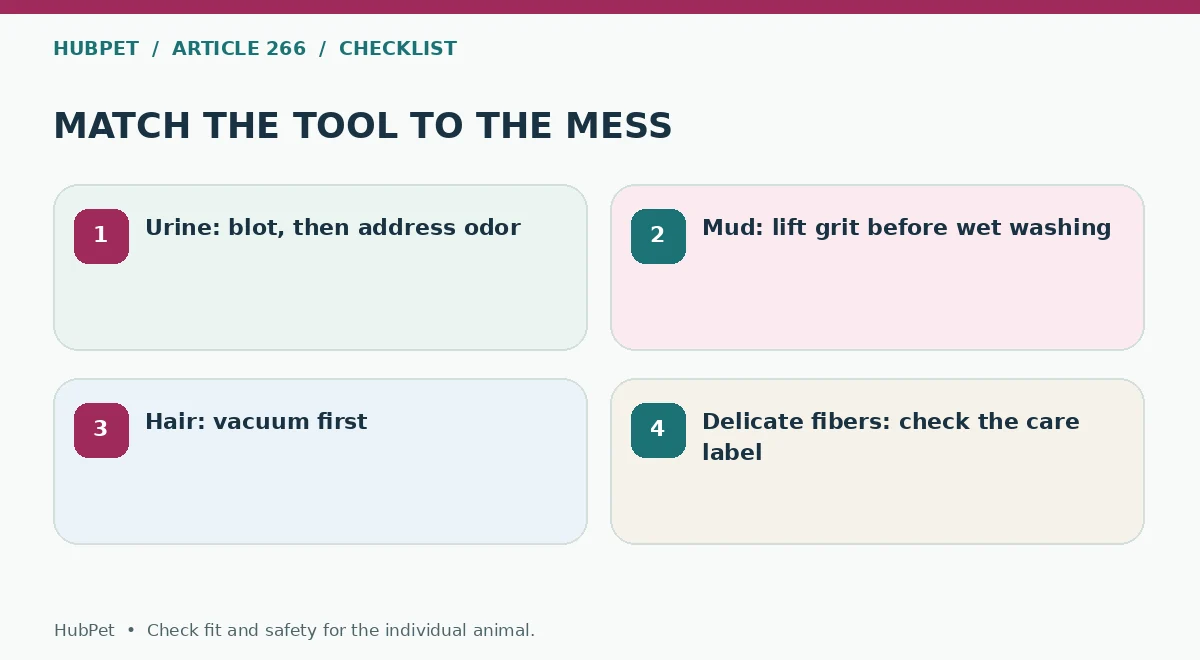
Fresh urine needs fast blotting and controlled rinsing. Dried urine can leave residues that require a suitable odor treatment. Mud and tracked dirt mainly call for extraction and adequate drying. Hair needs vacuuming before any wet cleaner enters the picture.
Separate stain visibility from odor. A surface may look clean while the backing still smells, especially after repeated accidents. By contrast, a harmless discoloration can remain after you remove contamination. Choose equipment around the actual problem rather than a dramatic before-and-after photo.
Compare portable extractors with upright carpet washers
Portable extractors suit stairs, car seats, small rugs, and isolated accidents. Their compact hoses can target an area without soaking an entire room. Check the usable hose reach, tool shape, and how easily you can empty the dirty-water tank afterward.
Upright carpet washers cover larger floor areas with fewer passes. However, bulky machines may struggle along baseboards or under furniture. Compare the machine’s weight when full, tank capacity, and extraction performance. A convenient detergent compartment cannot compensate for poor suction or slow drying.
Check carpet fibers, backing, and manufacturer limits
Some wool, sisal, silk, jute, and specialty rug constructions cannot tolerate ordinary wet extraction. Read the carpet or rug maker’s care directions before testing a machine. Colorfastness alone does not prove the backing, dyes, or adhesive can survive a wet process.
Test any cleaner in a hidden spot and let it dry completely. Watch for bleeding dye, stiffness, texture change, or a water ring. Avoid flooding seams and rug edges. When a valuable or delicate rug lacks clear wet-cleaning permission, seek a professional familiar with that material.
Look for controlled liquid delivery and strong recovery
A useful extractor lets you meter water instead of saturating carpet. Clear tanks help you monitor the amount recovered, but transparent plastic does not measure extraction efficiency. Inspect nozzle access and whether the machine can make slow suction-only passes.
Remember that soaking the padding creates a second problem. Residual moisture may produce musty odor and prolong room downtime. Make several dry passes as the manual permits, improve ventilation, and check the underside of removable rugs. Stop using the room until fibers and backing feel dry.
Understand what a cleaning formula actually does
A carpet detergent loosens soils so the machine can rinse and extract them. A dedicated urine-odor product may target lingering residues. An enzyme-based cleaner needs its labeled contact conditions; do not assume it works through a carpet already loaded with other chemicals.
Compare ingredient disclosure, fragrance, dilution directions, and carpet compatibility. Use only formulas approved for your machine where the manual requires them. Strong perfume can mask a problem without cleaning it. Also, never mix products or improvise combinations of bleach, ammonia, or other agents.
Review tanks, brushes, and everyday maintenance
Hair, grit, and damp debris collect around brush rolls and narrow passages. Look for brush covers you can remove safely, accessible seals, and filters you can inspect. A dirty machine can reintroduce odors during the next cleaning session.
After every session, empty dirty water promptly and rinse washable components according to the manual. Let parts dry before storage. Consider where you will clean the nozzle and store the machine. If basic maintenance feels unrealistic in your home, a simpler spot-cleaning setup may work better.

Protect pets while you clean and dry
Keep dogs and cats away from detergent bottles, wet carpet, electrical cords, and the running machine. Follow label instructions about reentry; many products require surfaces to dry before pets return. Never assume a cleaner is safe to lick because its label says natural.
Place the pet in a comfortable alternative room, with familiar water and bedding. Be careful with noise-sensitive animals; a loud extractor may frighten them. If a pet contacts a chemical or shows concerning signs, contact your veterinarian or animal poison resource with the product label available.
Create a repeatable accident cleanup sequence
Blot new liquid with absorbent towels without scrubbing it deeper. Use cool water and extraction when the surface instructions allow. Then apply a compatible odor neutralizer as directed, including any required dwell time. Keep pets away until the treated area fully dries.
Check for remaining odor only after drying, not while a fragrance temporarily dominates the room. For recurrent trouble, inspect the backing and pad. Sometimes replacement becomes more practical than repeated cleaning. Document the spot and date to distinguish new accidents from incomplete removal.
Decide whether owning a cleaner makes sense
Estimate how often you actually face wet messes. A small apartment with occasional accidents may favor a portable unit or rented extractor. A carpeted house with multiple high-use rooms may justify an upright machine, provided the carpets permit wet cleaning.
Include detergent costs, drying space, machine storage, maintenance, and the option of professional help. Renting offers another way to test workflow before buying. Do not select based on unverified promises of total odor removal. Severe contamination below the carpet may require building-material assessment.

Use a purchase checklist instead of a brand ranking
Start with permitted carpet materials, stain frequency, usable cleaning width, hose access, and suction-only passes. Next, compare whether you can carry the full machine and clean its tanks. Finally, read current warranty exclusions, detergent restrictions, and replacement-part availability.
A product page may say pet-specific or deep clean without explaining performance. Ask how the machine handles edges, dirty-water recovery, and cleaning after use. Pair any choice with a humane accident-prevention plan. Cleaning treats a surface; it does not diagnose why an animal is eliminating indoors.
How We Research
We checked this guide against the authoritative sources listed below on October 26, 2026. We reviewed practical differences, safety limits, and relevant home conditions rather than drawing conclusions from brand advertising. Specifications, warranty policies, and device capabilities change; check the manufacturer’s current manual. We did not purchase, laboratory-test, rank, or endorse individual products. Where a pet has pain, skin concerns, or fear, seek individual veterinary advice. See our approach at About HubPet.
Sources
Humane World for Animals: How to Remove Pet Stains and Odors. Accessed October 26, 2026.
CDC: About Cleaning and Disinfecting Pet Supplies. Accessed October 26, 2026.
AVMA: Household Hazards. Accessed October 26, 2026.
Portable extractors target spots and stairs. For broad carpeted areas, compare an upright machine or a professional service and check the carpet instructions.
Do not use heat as a shortcut on urine contamination. Humane World cautions that hot steam can set some urine residues in fibers.
A machine may extract liquid from carpet fibers without fully reaching soaked padding. Persistent deep odor can require professional assessment or replacement.
Sometimes. Compare the soil type, carpet compatibility, and machine requirements. Never mix products or replace an approved formula with an improvised chemical blend.
Follow the exact label and equipment instructions. Keep pets off wet or chemically treated surfaces until cleaning and drying requirements are satisfied.