
A couch can smell clean on the surface while pet odor remains inside a cushion. Fabric, batting, foam, and the frame absorb moisture differently. Before you use a spray, locate the odor, find the upholstery cleaning code, and check whether the cover actually comes off. Many covers have zippers but still require professional cleaning. This guide separates routine fur and body odor from an actual urine or vomit spill, so you can choose a method that does not soak the cushion core or leave irritating residue for your pet. Review our veterinary disclaimer before handling an exposure or health concern.
Find which layer smells
Remove throw blankets, then smell the couch from a comfortable distance in a well-ventilated room. Check the seams, armrest, underside, cushion edges, and the spot where your dog or cat usually rests. A mild fur smell on a washable throw may need only laundry. A sour odor concentrated along one cushion seam suggests fluid may have reached padding or foam. Lift cushions when the design allows, but never force a fixed cushion loose. Note visible discoloration, wetness, or damaged foam before choosing a cleaner.
Read the cleaning code and the cover label
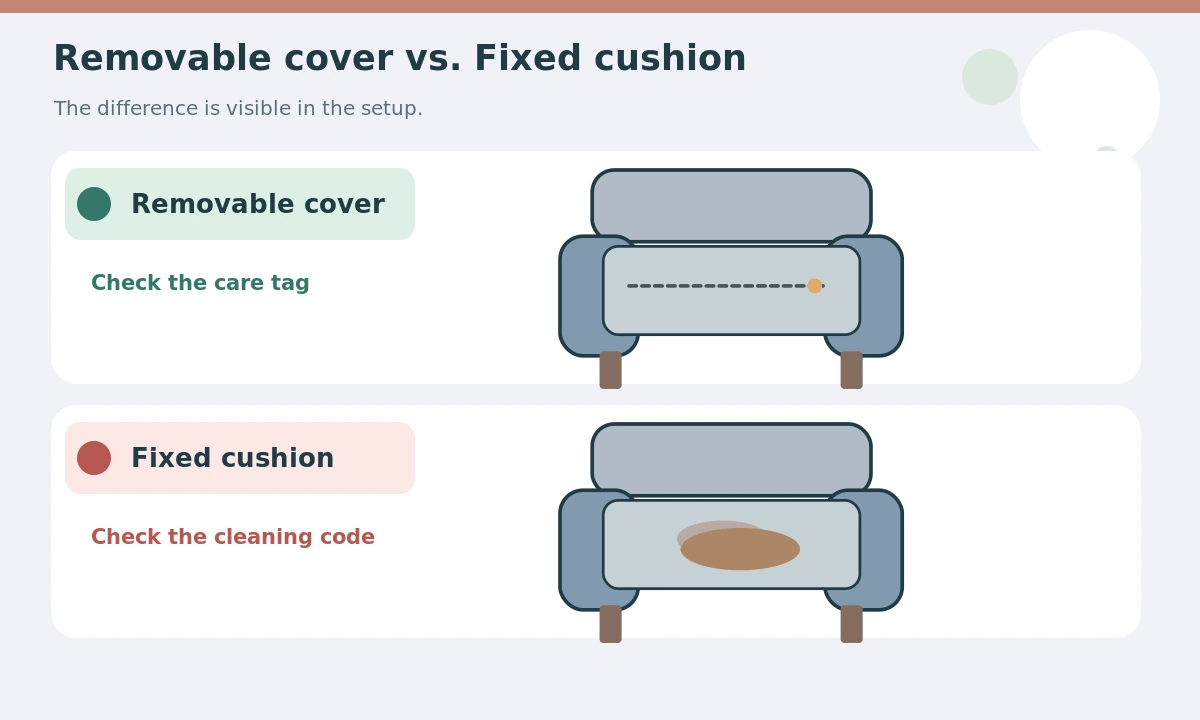
Look beneath the seat or on the cushion tag for manufacturer care directions. An upholstery code such as W, S, W/S, or X may guide what kind of cleaning the fabric permits. It does not promise that the inner foam can withstand moisture. Check any separate cover label too; a zipper alone does not guarantee machine washability. If the instructions require professional cleaning, respect that limit. Test any approved product on a hidden area for color transfer, staining, or texture changes before treating a visible stain.

Remove fur and dry debris before wet cleaning
Use a vacuum attachment with moderate suction and a clean upholstery brush to lift loose hair, dander, and crumbs. Work along seams without pulling stitches or snagging woven loops. A soft rubber tool may gather embedded fur on sturdy upholstery, but delicate velvet and loose weaves need the method their manufacturer specifies. Empty the vacuum afterward. Dry debris can turn muddy when you add liquid, so remove it before spot treatment. If the smell disappears after you wash a removable throw, leave the upholstery itself alone.
Clean a permitted removable cover separately
If the tag specifically allows removal and washing, follow its cycle, detergent, and drying instructions. Close zippers to protect the teeth and keep loose lint out of the machine. Avoid hot drying when the material can shrink. A slightly shrunken cover may no longer fit around foam without tearing a seam. Never put a damp cover back over the cushion core: trapped moisture can cause odor to return. Dry the foam and cover independently, then reassemble only when both feel and smell dry.
Avoid saturating the foam core
When an accident penetrates through the cover, a heavy spray may carry fluid farther into the foam. Start with blotting and ventilation, and use a surface treatment only when the material instructions permit. Some dense cores retain moisture long after their outer fabric feels dry. Repeated flooding can make professional cleaning harder and may create hidden dampness against the couch frame. Ask an upholstery cleaner whether the cushion inserts can be treated or should be replaced. A machine that extracts water cannot make every kind of foam safe to soak.
Choose fragrance cautiously
A strong air freshener may mask a source without removing it. The American Lung Association recommends limiting unnecessary fragrances, especially around people who react to them. Pets also walk on, lick, and sleep against upholstery. Follow cleaning-product labels, keep pets out during treatment, and allow complete drying and ventilation before they return. Avoid essential-oil recipes and never mix household chemicals. If your pet has licked cleaner or appears irritated, call your veterinarian or a poison-control service instead of trying another home mixture.
Control new odor at the point of use
A washable, colorfast throw can protect the favorite resting area and simplify weekly cleaning. Choose breathable fabric that your pet does not chew or swallow. Wash it before odor reaches the cushion, and vacuum the couch seams as part of regular housekeeping. Wipe paws after muddy walks and inspect any recurring wet spots. If your pet repeatedly urinates on furniture, a behavior and veterinary check matters more than buying a stronger deodorizer. Never punish your animal for an accident discovered later.

Recognize when the insert needs help
Persistent odor inside foam, discoloration spreading through the padding, crumbling foam, or dampness that never clears are signs to stop experimenting. Ask the couch maker whether it sells replacement inserts or recommends a cleaner. If mold seems possible, seek appropriate professional advice rather than cutting open a cushion indoors. A removed cushion may have structural pieces or adhesives you should not disturb. Document the model, fabric code, and affected section so a professional can advise whether a targeted repair makes financial sense.
How We Research
HubPet reviewed published animal-welfare and household-surface guidance, then organized practical decisions around access, compatible materials, cleanup order, residue, and drying. We distinguish general pet-care advice from instructions that vary by product and surface. We did not test cleaner brands or verify compatibility for individual materials. See our About HubPet page for editorial context.
Sources
Humane World — How to Remove Pet Stains and Odors — Read source.
ASPCA — Poisonous Household Products — Read source.
American Lung Association — Fragrances — Read source.
Safety note: This guide offers general household and pet-care information, not veterinary diagnosis or a warranty for any cleaning method. Follow surface and product labels. Keep animals away from wet products and contact a veterinarian when illness, poisoning, or irritation is possible.
No. Use the actual care label and upholstery cleaning code. Some zippered covers require professional treatment and can shrink in a home washer.
Avoid soaking foam. Liquid may remain inside after the cover feels dry. Consult the manufacturer and an upholstery cleaner for deep odor.
Vacuum fur and dander, wash an approved removable throw, and ventilate the room. Clean the upholstery itself only when the tag permits.
Fragrance can mask odor without removing residue inside the foam. Locate the source and consider specialist cleaning or a replacement insert.
Only after any allowed cleaner has dried and the surface no longer exposes the pet to residue. Follow the label and allow adequate ventilation.