
A large cat can fit inside a tray and still have too little space to turn or dig normally. Bigger outer dimensions can also mislead: deep tapering, hoods, and corner shapes may shrink the area where your cat stands. Start by measuring usable floor space instead of shopping for the word XL. See the HubPet veterinary disclaimer for health and safety limits.
This guide focuses on what changes when you need a genuinely roomy litter box, including large-bodied cats, cats who turn repeatedly, and households where a standard tray crowds normal posture. It complements our general litter-box choice guide by emphasizing dimensions, accessibility, weight, and fit in the room.
Define large by your cat’s movements
Look at how your cat moves inside its current litter box. Does the animal step in with all paws, circle freely, squat without pressing against a side, and bury waste without perching on the rim? Those observations tell you more than an XL badge on a retail shelf.
If the cat appears stiff or reluctant to step over a wall, contact a veterinarian about mobility or pain. A bigger floor does not compensate for an impossible entry. Match the animal’s current needs and comfort, not just its breed or expected adult weight.
Use an explicit length measurement
The AAHA feline life-stage guidance describes a litter box about one and a half times the length of the cat from nose to tail tip. Treat this as a generous design reference and take an actual measurement; household cats vary far too much for a single universal inch count.
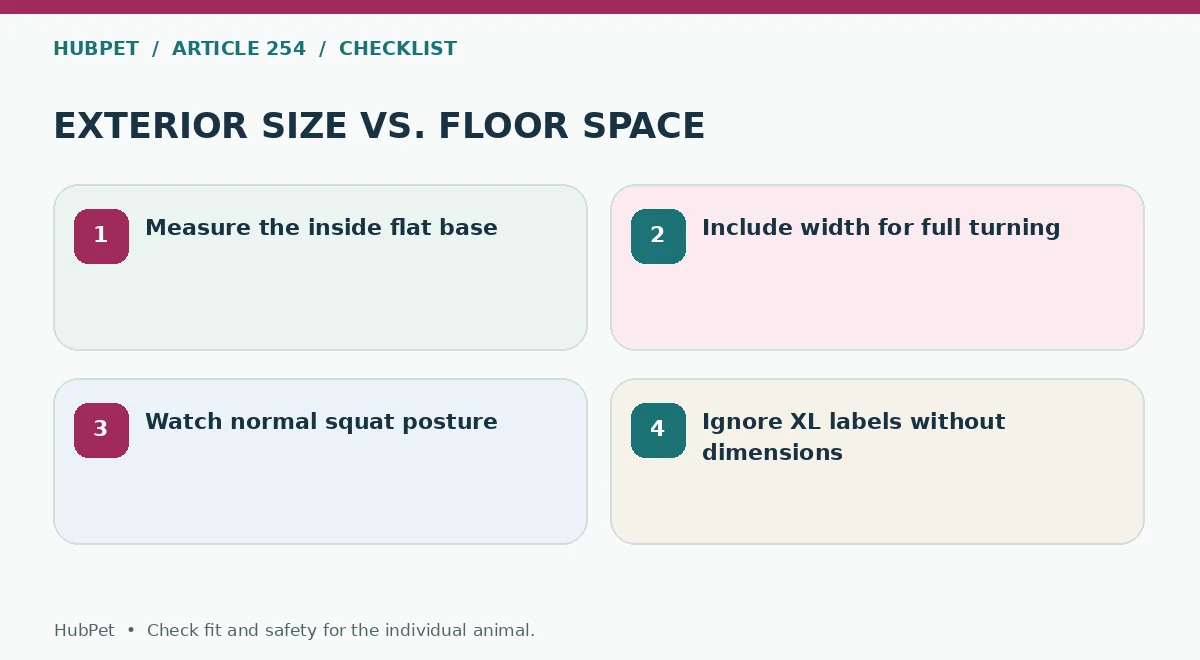
Measure the inside flat base, not just the rim at the top. An extra-wide lip may look large in a photo but provide no standing room. If you compare two boxes online, request interior base measurements and the opening width before making a decision.
Check width and turning room together
Length alone does not make a box functional if the cat must turn sideways between narrow walls. Watch whether its shoulders and hips clear the sides and if its usual turning pattern fits. Round corners and internal steps can reduce the usable area that your cat experiences.
Draw a cardboard outline to scale on your floor before purchasing. Confirm that the base fits both the cat and the place where you plan to keep it. A giant tray wedged behind furniture can lose the accessibility advantage you bought it to provide.
Balance high sides with a low, safe entrance
A tall-sided box may catch some scattered litter or urine, yet high walls all around can exclude kittens and cats with reduced mobility. Look for a smooth, broad entrance that the animal can step through without leaping. A low opening should not expose a sharp cut edge.
For cats who stand while urinating, side-wall design may help contain mess, but choose the entrance around the cat’s abilities. The AAFP/ISFM guidelines describe high clear walls with a low entry as one potential accessible layout in clinical settings. Home preferences still vary.
Compare open bins and enclosed XXL products
Open boxes usually allow a clear view of waste and give the cat more freedom of posture. Very large covered boxes may work for some cats, but a hood can reduce headroom and trap odors. If the cat avoids the roofed option, provide an open alternative rather than forcing adaptation.
Check the clearance under any hood while your cat stands and turns. The AAFP/ISFM house-soiling guidance highlights challenges caused by small covered boxes and recommends an open design when practical. A cover is a choice to test, not an upgrade to assume.
Consider a smooth storage-style tray carefully
AAHA notes that larger storage containers may provide generous litter-box area. A suitable container needs a stable base, washable interior, safe smooth edges, and a properly designed entry. Avoid sharp cut plastic, jagged DIY openings, and flexible walls that collapse when the box fills.
Check that the plastic tolerates your intended washing method and remains stable during use. An under-bed bin may offer more flat floor area than a tall tub, but short walls can increase scatter. Choose by the individual cat’s posture and the owner’s ability to clean it.

Plan the full footprint in the room
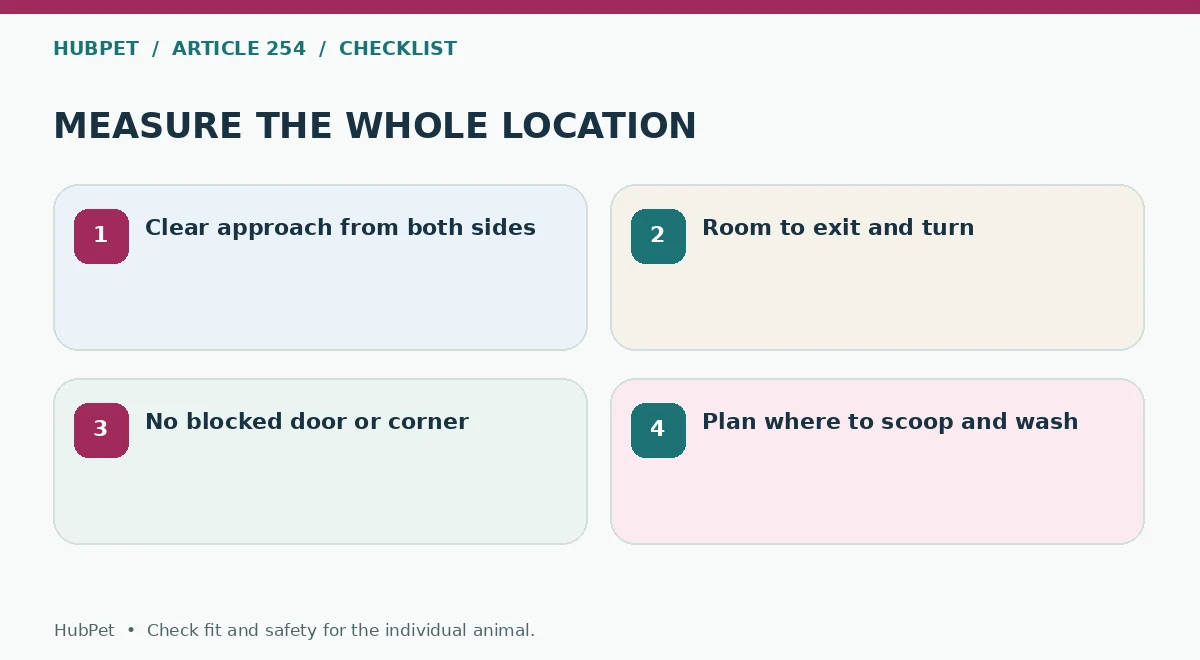
Leave enough clearance for the cat to approach, turn around outside the box, and exit without meeting a closed door or another animal. Do not block hallways or place the box right beside food. A roomy tray becomes less useful if it sits in an exposed noisy corner.
Measure a second space before you buy if the household needs multiple toileting locations. Placing several trays shoulder to shoulder does not always give cats separate resources. Our litter-box placement guide explains why routes and household layout matter.
Calculate the weight of a full large box
A larger tray holds more litter and may become hard to lift safely. Think about your grip, the distance to the cleaning area, and whether you can scoop daily without dragging a full container. Extra capacity is not permission to leave waste in place longer.
A stable scoop, easy-to-reach location, and manageable cleaning plan are more useful than a giant tray you cannot service. Avoid tipping a heavy box near the cat or allowing children to carry it without supervision. Follow the chosen litter’s handling directions.
Introduce the extra space as a choice
Offer the large tray while keeping the familiar box available. Use the same litter type and similar cleaning routine at first so the new variable is mainly space. Observe how comfortably your cat turns, digs, and exits instead of expecting instant preference.
If the cat uses only one box, leave the other clean while you learn. Do not punish avoidance or move a cat into the tray by force. For a household with more than one cat, pay attention to whether another animal guards routes to the new resource.
Know when larger is not the solution
A cat who strains, cries during urination, visits the box repeatedly without producing urine, or suddenly eliminates elsewhere needs a veterinary assessment. A suspected urinary blockage is an emergency. Do not delay care while comparing XXL models or trying new litter.
If medical problems have been assessed, revisit size, entry, location, litter texture, and cleanliness one variable at a time. Our litter box troubleshooting guide covers the broader environment. Space helps only when the cat can use that space comfortably.
How We Research
We checked this guide against the authoritative sources listed below on October 26, 2026. We reviewed practical differences, safety limits, and relevant home conditions rather than drawing conclusions from brand advertising. Specifications, warranty policies, and device capabilities change; check the manufacturer’s current manual. We did not purchase, laboratory-test, rank, or endorse individual products. Where a pet has pain, skin concerns, or fear, seek individual veterinary advice. See our approach at About HubPet.
Sources
AAHA: General Litter Box Considerations. Accessed October 26, 2026.
AAFP and ISFM: 2022 Cat Friendly Veterinary Environment Guidelines. Accessed October 26, 2026.
AAFP and ISFM: Guidelines for Diagnosing and Solving House-Soiling Behavior in Cats. Accessed October 26, 2026.
Measure your actual cat and the usable inside floor. AAHA gives a generous reference of about one and a half times nose-to-tail-tip length; turning room matters too.
They suit some cats but may restrict height, trap odor, or make cleaning harder. Offer a clean open alternative and compare what your cat uses comfortably.
A stable washable container may work when it offers generous flat space, smooth edges, and a safe entry. Avoid sharp homemade cuts or unstable plastic.
Not automatically. High sides can help contain scatter, but a low accessible entrance matters for a cat who cannot step over a tall wall.
Not necessarily. Sudden changes can have medical causes; straining or inability to urinate requires urgent veterinary care. Review the setup after health concerns receive attention.