
A sifting litter box uses a perforated tray to separate used material from loose litter. It may save some scooping motions, but it can create dust, spill granules, or handle your preferred litter poorly. More importantly, the cat still needs a stable, roomy toilet. Read our veterinary information disclaimer if a change in elimination suggests pain or other illness.
This guide focuses on manual lift-and-sift designs rather than motorized self-cleaning machines. You will learn how to check hole size against litter texture, avoid unpleasant tray swaps, and keep daily waste removal consistent. The best design for an owner is not useful if the cat dislikes its entry, substrate, or position.
Understand what the sifter actually separates
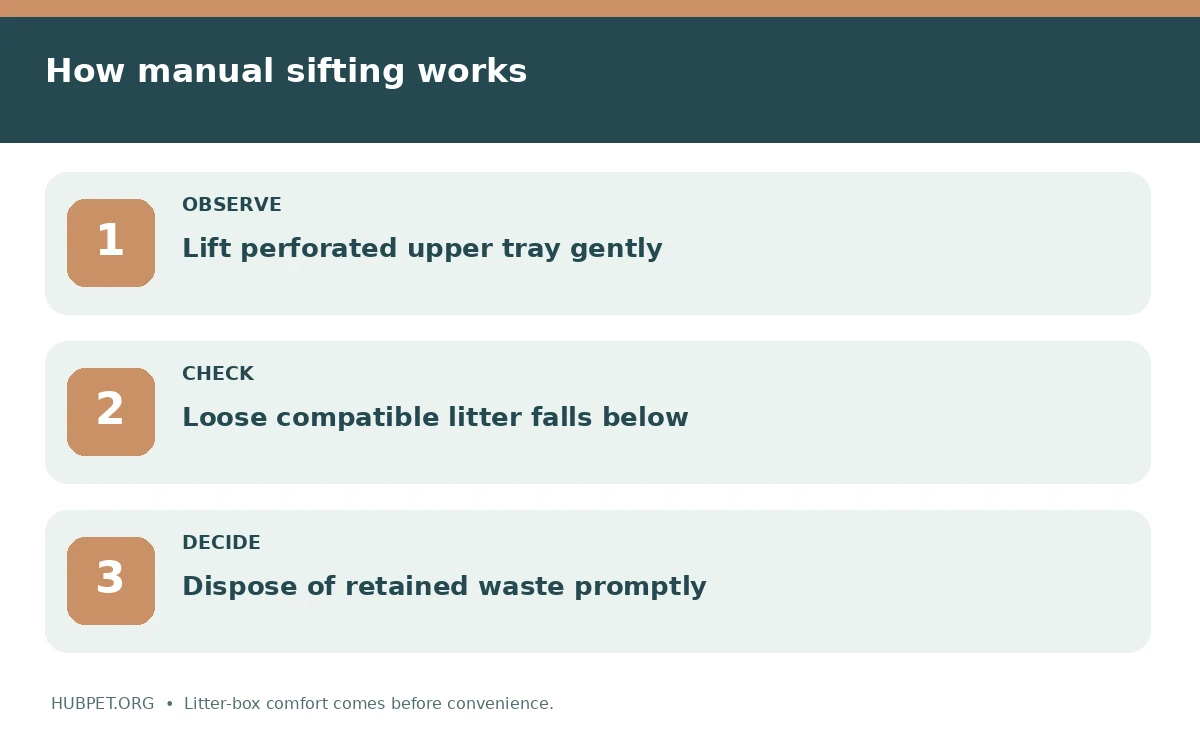
Many manual systems stack a perforated insert above a solid tray. When you lift the insert, clean loose grains pass through openings while clumps or solid waste remain for disposal. Other tray sets alternate a mesh pan with collection pans. The exact lifting sequence matters: it determines spill risk, cleaning effort, and whether the lower pan collects damp residue.
A sifter does not detect disease, sanitize the litter, or automatically remove waste. It simply changes the separation method. Read the manufacturer’s illustrated instructions before buying, and confirm that you can complete every step using the tray where it will actually sit. A bulky assembly can turn a quick scoop into a difficult balancing act.
Match hole size to the litter you already use
Compare the size and shape of clean grains with the openings in the insert. Fine clumping litter may flow through suitable holes while intact clumps stay behind. Coarse pellets may lodge in holes or need a different screen layout. Soft clumps may break apart during vigorous lifting. Never assume all products work with all litter varieties.
Cats often prefer familiar unscented litter. Merck Veterinary Manual notes that substrate preference and cleanliness affect litter-box use. If a new tray requires an unwanted litter switch, the convenience may not justify the disruption. Look for the sifter that accommodates the cat’s existing preference, not a requirement to buy an unfamiliar substrate.
Check interior area and accessible entry
Perforated inserts consume space and may add a lip above the base tray. Measure the actual usable floor area and the lowest entry step with the insert assembled. The cat needs enough space to dig, turn, and eliminate without standing on a sharp edge. Oversized handles and locking tabs should never intrude where paws land.
Kittens and older cats may find a raised insert awkward. Offer a low-entry alternative when needed. Compare the assembled tray dimensions with the older box rather than replacing a comfortable large tray with a smaller system. Both the AAFP/ISFM guidelines and Ohio State emphasize space and easy access over a tidy exterior.
Compare lifting force and spill control
Wet clumps can make the top tray surprisingly heavy. At the store or through the maker’s instructions, examine grip width, tray rigidity, and how the insert rests while you pour out waste. A flimsy basket may bend and scatter granules. Tall, narrow collection trays can be harder to pour without a dusty cloud.
Choose a setup you can lift steadily without twisting over a litter-covered floor. If back, wrist, or mobility limitations make repeated lifting difficult, an ordinary scoop may work better. Test an empty tray’s grip first and plan a nearby waste container, clean floor covering, and handwashing routine.
Keep the sifting mechanism gentle
Vigorous shaking can break fragile clumps and push dirty material back into the clean layer. Lift slowly, wait for loose grains to pass, and stop before forcing a stuck pellet through the grid. If waste remains in corners, use a scoop as needed. A manual sifter is a tool, not an excuse to leave residue in the tray.
If the design requires removing the whole upper tray each time, choose a stable place to set it during cleanup. Avoid leaving litter-filled inserts where a curious cat or child can overturn them. Keep the process quiet enough that the cat does not begin to associate toileting with startling bangs or abrupt movement.

Inspect corners, seams, and wet residue
Some designs have hollow rims or interlocking channels that trap dirty litter. Run a finger along the clean empty tray to feel for rough junctions before purchase. After use, inspect the lower pan for wet sediment and stuck grains. You should be able to disassemble and wash every litter-contact surface according to instructions.
Ohio State recommends daily scooping and routine washing. A sifter should make those habits easier, not reduce your awareness of urine output or waste appearance. Keep a simple record if elimination changes; a device that hides residue or waste can make meaningful changes harder to spot.
Decide whether manual sifting fits your home
Manual sifting works differently from a sensor-driven automatic box. It needs human attention, lifting, and regular checks, but it avoids motors and powered cycles. You still must empty waste promptly and keep the litter area calm. The manual approach may appeal to people who prefer direct control of each cleaning session.
For a multi-cat home, cleaning demand rises with use. If you depend on one complicated lift-and-pour operation several times daily, compare that effort with an ordinary scoop. Keep litter boxes in different locations when possible and do not consolidate multiple cats into one sifting tray purely to simplify the owner’s work.
Introduce a new tray without changing everything
Set the assembled sifting tray beside the familiar box with the same litter type and a comparable depth. Let the cat explore freely. Watch entry and turning, especially if the insert feels springy or noisy underfoot. Do not carry the cat into it or remove the old tray before you know that it accepts the new one.
If the cat avoids the new texture or height, return to the established box. A quick preference comparison is more useful than online claims about every cat loving easy cleanup. For sudden accidents, straining, or distress, arrange veterinary assessment rather than assuming the cat simply dislikes the sifter.

Use a realistic purchase checklist
Choose based on six observable criteria: compatible litter, spacious floor, easy entry, stable insert, manageable lift, and washable corners. Then estimate the cost and availability of replacement components. You do not need a branded promise of “hands-free” cleaning when the system still requires lifting and disposal.
A straightforward scoop and a large open box can remain the better solution for many homes. Buy the sifting mechanism only when it makes your routine easier without reducing daily hygiene or the cat’s comfort. Reassess after several weeks, especially if you change litter or notice reluctance around the box.
How We Research
HubPet reviewed veterinary guidance, cat welfare recommendations, and practical cleaning information relevant to sifting litter box. We distinguished expert advice about litter-box comfort from product-design claims that lack independent testing. This is desk research, not hands-on evaluation of individual products or veterinary endorsement. Sources were reviewed on October 26, 2026. Read about HubPet and our editorial approach. General information cannot replace veterinary guidance for an individual cat.
Sources
Purina US: Best Types of Litter Boxes: Find Your Cat’s Fit. Accessed October 26, 2026.
Merck Veterinary Manual: Providing a Litter Box for a Cat (reviewed July 2025). Accessed October 26, 2026.
Ohio State University Indoor Pet Initiative: Litter Boxes. Accessed October 26, 2026.
AAFP and ISFM: Guidelines for Diagnosing and Solving House-Soiling Behavior in Cats. Accessed October 26, 2026.
No. You must lift the insert, separate waste, dispose of it, and clean trays regularly. Manual sifting is not an automatic cleaning cycle.
No. Hole size, pellet shape, and clump strength affect performance. Check the manufacturer’s compatible substrates and preserve the cat’s preference.
Only if they offer an easy low entry, secure insert, and enough room to turn. An ordinary low-sided tray may be more comfortable.
It can change the way you separate waste, but daily waste removal and regular washing remain essential for litter-box hygiene.
Keep the familiar tray available and restore normal access. Sudden or persistent toileting changes should prompt a veterinary conversation.