
A large dog bed can cost more simply because it uses more fabric and fill. Paying less is not a problem when the sleeping area remains wide enough and the bed holds up to normal cleaning. The trouble comes from choosing by a discount, a generous product photo, or a size name that hides narrow usable space. Budget large dog beds vary widely in seam construction, refill options, cover removal, and floor grip. A smart purchase compares total use, not only the checkout price. Start with the dog’s resting pose and a clear floor plan, then inspect the features you are most likely to use every week. For medical concerns affecting resting comfort, review our veterinary disclaimer and speak with your veterinarian.
Prioritize actual sleeping dimensions over labels
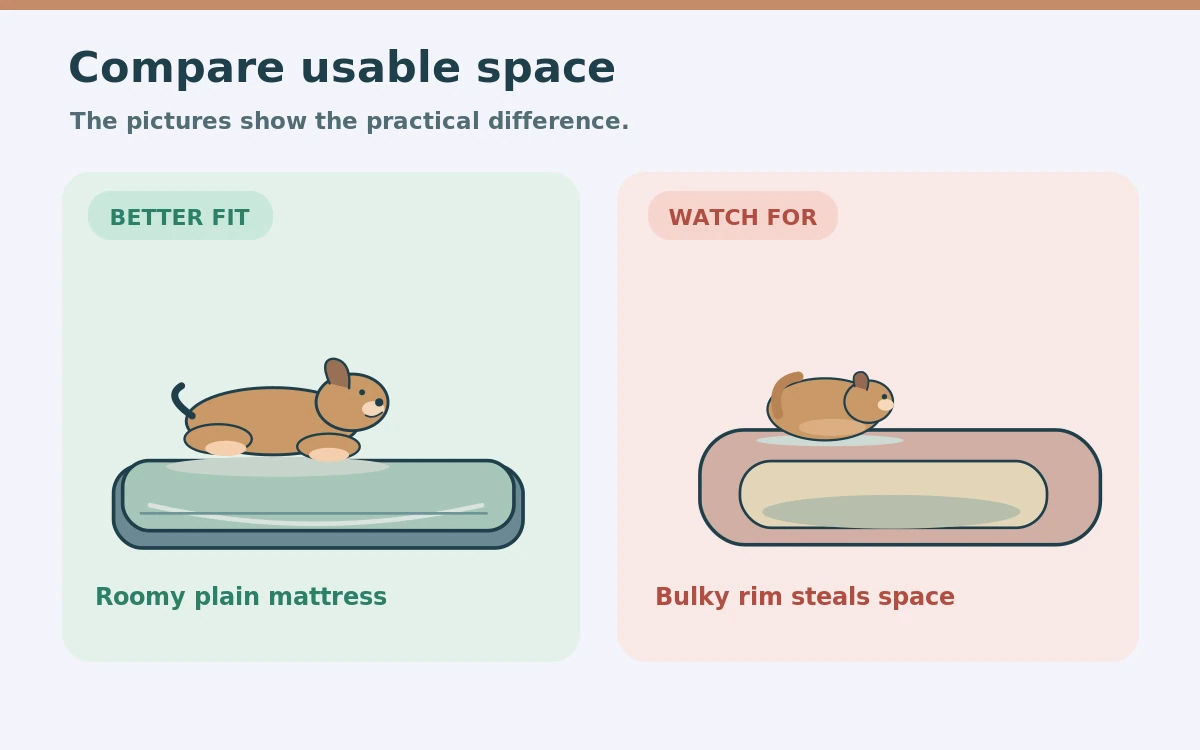
A ‘giant’ or ‘XXL’ tag has no fixed physical meaning across brands. Look at the length and width of the flat area your dog can occupy, not only the outside dimensions. Thick bolsters often make the photographed bed look generous while leaving a much smaller mattress between the walls. The American Kennel Club advises buying enough room for a dog to lie on its side. Outline the usable area with tape on the floor, then observe how your dog stretches or turns. If paws consistently fall off the model you outlined, a low-profile larger pad may be a better buy than a plush donut.
Inspect seams before worrying about color
Large dogs create extra tension at corners each time they turn or get up. Check photos for doubled stitching, reinforced high-stress corners, and an enclosed zipper that does not expose a tempting pull. If product details omit seam construction, contact the seller rather than guessing. An attractive soft edge can fail quickly if the dog habitually kneads or digs at bedtime. Do not treat ‘chew resistant’ as a promise that a dog cannot access stuffing. Any loose thread, torn fabric, or exposed foam can become a swallowing hazard. Remove damaged bedding promptly.

Compare a single fill slab with loose stuffing
Low-cost beds may use fiber fill, cut foam pieces, or a flat foam slab. Each has a different feel and maintenance burden. Loose filling can shift into corners during washing and leave a shallow center; a solid insert may keep a more predictable surface but require a separate cover. Avoid assuming a high loft always means a supportive bed. Press a sample gently if shopping in person and read owner instructions for how the insert recovers. Look for replacement inserts when available. If the dog struggles to rise, do not assume a firmer purchase fixes the cause; consult a veterinarian.
Account for the floor and access height
A slippery bottom can turn a cheap bed into a daily nuisance. Check whether the underside is textured and whether the bed lies flat on your actual floor. Keep it away from doors, stairs, and narrow walking routes. Large mats may fold up when a dog turns if their internal fill bunches. An unusually tall soft mattress may wobble when the dog steps off. For a dog with limited mobility, a low-entry, stable bed may suit better than a deep nest. Watch an actual entry and exit rather than guessing from breed or weight charts alone.
Add cleaning costs to the comparison
Washable is a useful label only when the specified machine can handle the product and the filling dries completely. A large one-piece bed may not fit your washer, while a removable cover can fit easily and allow the core to stay dry. The CDC recommends following the care label and regularly cleaning pet bedding. Compare whether covers can be bought separately, whether colors bleed, and how often you will need to remove hair. Over time, a slightly more expensive bed with an affordable replacement cover might cost less over time than repeatedly replacing an unserviceable whole mattress.
Know when waterproof claims help and when they do not
A water-resistant outer layer may handle a small spill, but the seams, zipper opening, and underside can remain vulnerable. Even a protective inner barrier needs cleaning and drying. Check what the product actually claims, whether the cover is breathable enough for normal comfort, and whether a backing makes noise or slides. Avoid wrapping an ordinary foam insert in loose plastic. Your dog may chew the material, and trapped moisture can create odors. If accidents are frequent, address the underlying pet-care problem rather than treating the bed as an absorbent toilet.
Compare return policies and real replacement options
An online photograph cannot show every weak corner. Read the return period, shipping rules for large parcels, and any exclusions for used bedding. Ask if the seller stocks replacement covers or inserts. For an inexpensive bed that lacks spare parts, decide in advance what damage would require replacing the whole item. Avoid claims of a lifetime warranty without reading its actual coverage. Good value means a bed with clear dimensions, washable surfaces, and repair options that match the realistic lifespan you expect. Buying the cheapest unit repeatedly is not always the least expensive choice.
Test comfort without overcommitting
Place a new bed beside a familiar resting spot rather than removing the old one immediately. Allow your dog to enter and leave without coaxing or pressure. Look for enough space to extend the legs and for the mattress to support the body evenly. Observe whether a bolster blocks an easy exit or whether the entire unit slides on smooth flooring. A few quiet nights reveal more than an excited first inspection. Keep tags and packaging until you know whether the bed fits, subject to the seller’s return policy. Let the dog’s behavior inform the decision.

Use a five-minute weekly maintenance check
Lift the bed and inspect the bottom for dampness, hidden debris, worn coating, and slipping. Check each zipper flap, corner seam, and exposed edge while removing hair. Launder the cover as directed and ensure complete drying before replacing it. Flatten any bunching fill if the manufacturer permits it. Record repeated issues such as a sagging center or shredded seam; they tell you which feature deserves a higher budget next time. A basic bed can provide reliable daily comfort when its size, material, and upkeep match the dog and household.
How We Research
HubPet compared published veterinary and animal-welfare guidance with the practical construction and care questions in this guide. We checked dimensions, exits, cover fit, materials, and everyday cleaning limits; we did not run laboratory testing or claim a product endorsement. Specific features vary by manufacturer and model. Read our editorial approach, follow the product instructions, and consult a veterinarian when pain, mobility difficulties, or other health concerns affect your dog’s rest.
Sources
American Kennel Club — Sleepy Time: Choosing a Dog Bed — https://www.akc.org/expert-advice/home-living/sleepy-time-choosing-dog-bed/ (reviewed October 2026).
CDC — Cleaning and Disinfecting Pet Supplies — https://www.cdc.gov/healthy-pets/about/cleaning-and-disinfecting-pet-supplies.html (reviewed October 2026).
ASPCA — General Dog Care — https://www.aspca.org/pet-care/dog-care/general-dog-care (reviewed October 2026).
Safety note: This article provides general pet-care and buying guidance, not an individual veterinary assessment. Stop using damaged bedding or any component a dog is chewing. Seek veterinary guidance for pain, burns, suspected ingestion, or changes in ability to rest or rise.
No. Price does not reliably predict support or comfort. Compare the actual fill, sleeping dimensions, care instructions, and how the dog uses the bed.
Compare measured flat sleeping space with your dog’s stretched posture. XXL is a marketing label and does not provide a consistent measurement across brands.
Often it helps with routine cleaning, especially when a whole large bed does not fit the household washer. Check availability and cost of replacement covers.
Check whether the bottom grips your floor and the bed sits flat. Relocate it to a level place or choose an appropriate stable design.
Remove bedding when torn seams expose foam, stuffing, or sharp parts. Continued chewing or swallowing of components can be dangerous.