
A litter box can look roomy in a product photo and still feel cramped to the cat who must turn, dig, squat, and leave it. A lid or tall wall may please an owner who wants to hide mess, yet another cat may avoid the same design. The first buying decision should follow your cat’s movement and preferences. See the HubPet veterinary disclaimer for health and safety limits.
This guide explains a repeatable selection process for ordinary household boxes: measure the usable inside floor, check the way your cat enters, compare open and covered styles, and plan placement and cleaning. A new box is not a medical treatment. Any new straining, pain, or unexpected house-soiling deserves veterinary assessment.
Start with the cat rather than shelf dimensions
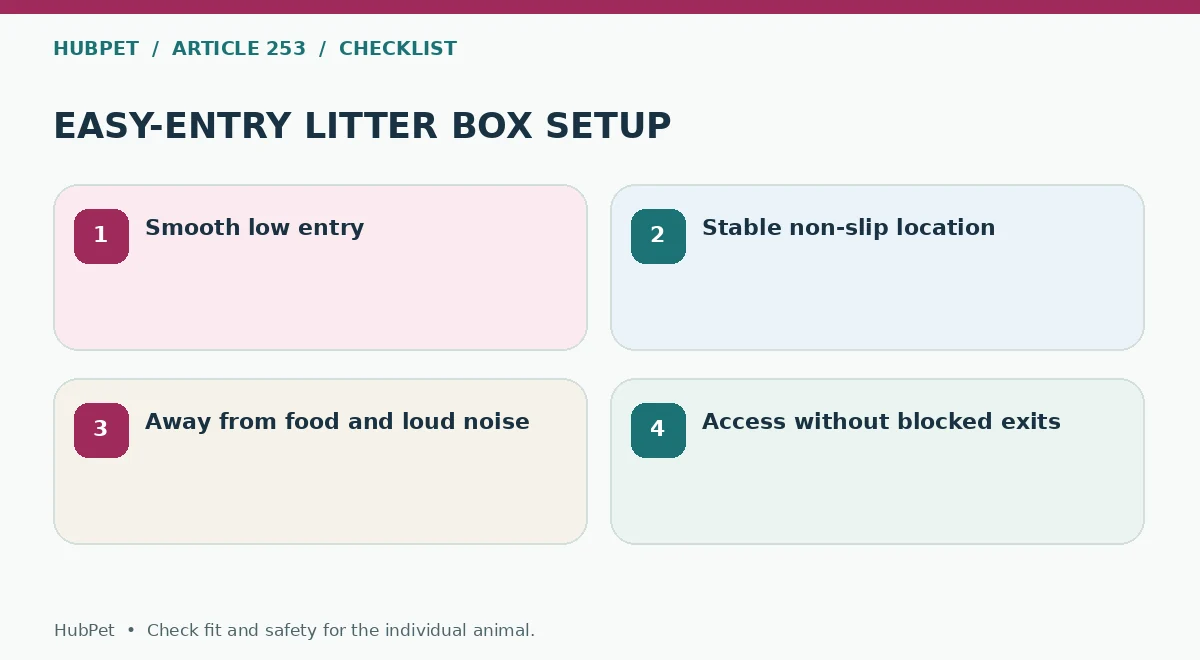
Observe how your cat enters the current tray, turns to dig, and leaves. A cat who perches on a rim or seems unable to turn may need more usable area. Check whether the animal moves comfortably over the entry wall, especially if it is a kitten or an older cat.
The AAHA guidance recommends generous proportions and notes that many manufactured trays fall short. A roomy storage-style container can sometimes supply usable floor space, provided the entrance remains safe. Do not select a box solely by its outside measurements or the age label on its packaging.
Measure the usable inside length and width
Use a tape measure to estimate your cat’s body length. AAHA cites a litter box at least about one and a half times the cat’s length from nose to tail tip; this offers a generous starting reference rather than a promise that every cat will approve. Check usable inside dimensions where litter rests.
Tapered walls, rounded corners, and deep molded bases can subtract meaningful standing room from an advertised exterior size. A large label does not change those dimensions. Make a short comparison chart with the cat’s measurements, inside floor area, entrance height, and space available in your home.

Prefer an easy entrance over a dramatic wall
Low entries help kittens and cats with limited mobility reach the litter. A tray can have taller walls elsewhere to contain litter while keeping a doorway easy to step through. Smooth rounded edges matter wherever paws and bellies pass; avoid sharp DIY cuts or exposed wire.
If your cat hesitates, jumps awkwardly, or stops using a familiar tray, do not assume it is stubbornness. Pain, mobility changes, and other problems can affect toileting. Discuss persistent changes with a veterinarian and provide an easily accessible temporary option.
Decide between open and covered with observation
Open trays let you see waste and scoop promptly. The AAFP/ISFM house-soiling guidelines note that some covered boxes trap odors and restrict movement; cleaning and individual preference also matter. A covered design is not automatically calmer, more private, or more acceptable to the cat.
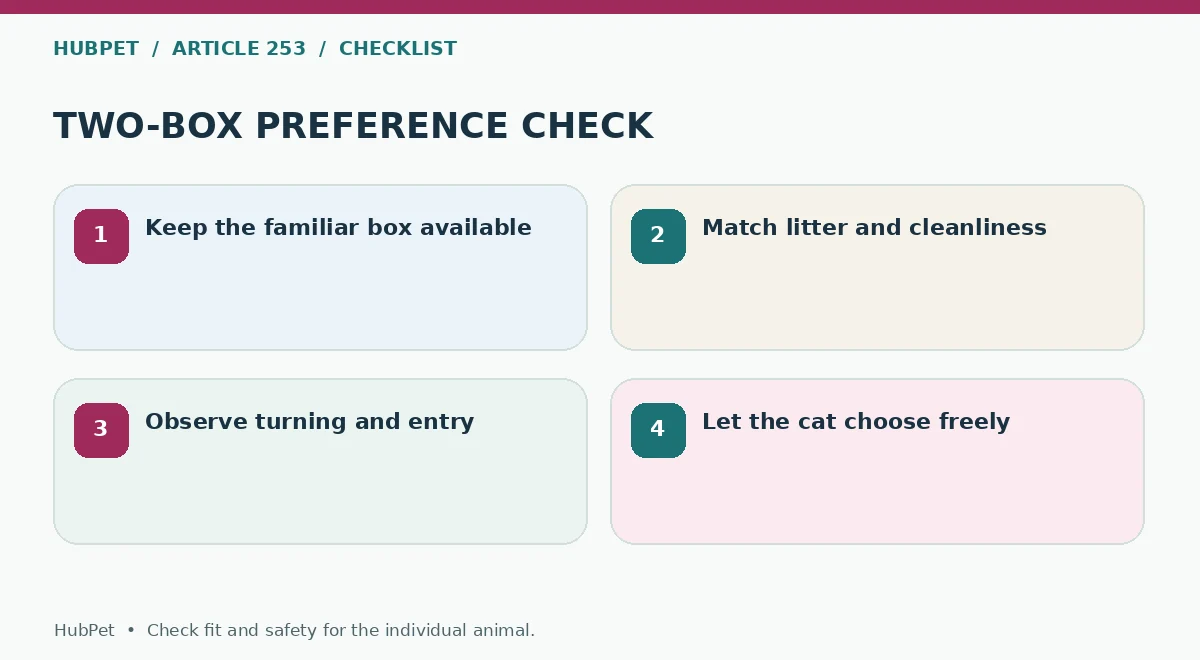
If you change styles, offer the old and new boxes side by side in suitable separate positions long enough to observe which the cat uses. Remove any swinging door that seems to block access, unless the design requires it for safe function. Never force the cat into an unfamiliar box.
Plan numbers and locations before purchasing
A household may need more than one toileting area, especially when cats share a home. A widely used starting point is one box per cat plus an additional box, placed in separate accessible locations rather than lined up as a single resource. Adjust with veterinary or behavior guidance for household dynamics.
Keep boxes away from loud machines, blocked corridors, and bowls. Every cat should be able to approach and leave without another pet controlling the exit. Our litter box placement guide explains how home layout affects actual access.
Make cleaning effortless enough to happen daily
Choose a box you can scoop without taking apart difficult mechanisms. Smooth corners and a stable base simplify waste removal. The AAFP/ISFM guidelines emphasize frequent scooping and washing with mild products; a self-cleaning claim never removes the need to check hygiene and your cat’s acceptance.
Check whether the lid hinges pinch fingers and whether a full tray becomes too heavy to carry. Do not use harsh scented detergents that leave strong residues. Rinse and dry as the manufacturer advises before adding litter back to a clean box.
Check litter compatibility without chasing gimmicks
Cats often prefer familiar unscented fine-textured litter, but individuals vary. The veterinary house-soiling guidelines advise respecting substrate preference and avoiding abrupt changes. A box that requires a special pellet or grate may narrow the cat’s options even when marketing promises less tracking.
When changing the tray, retain the usual litter at first so you change only one variable. Offer the cat a choice if possible. Monitor posture, digging, and whether the animal uses the entire surface. Avoid forcing a sudden box-and-litter conversion during household stress.
Evaluate mats and high sides realistically
A wide mat can capture some tracked granules but should not interfere with a stable step into the box. Place it flat without curling edges or creating a trip hazard. Taller rear walls may contain scattered litter, yet a cat still needs an approachable exit.
Do not hide the box so effectively that you forget to check it. The point is a comfortable, clean toilet, not an invisible fixture. If litter sprays beyond the tray, observe the cat’s size and movements before buying enclosed furniture or a more restrictive lid.
Use a controlled two-box preference check
Put the familiar box and a candidate box in acceptable spots and maintain both equally well. Keep litter type and cleanliness consistent, and observe over several days. Note ease of entry, digging, turning, and exit rather than judging only by the number of times you find waste.
If the cat shows distress or stops eliminating normally, seek veterinary help. Never withhold the familiar box to make the new purchase seem successful. The existing litter-box troubleshooting article outlines broader reasons for avoidance.
Know when shopping should stop and veterinary care begin
Repeated straining, vocalizing, blood, frequent unproductive visits, or a sudden change in elimination can indicate illness. A cat who seems unable to urinate needs emergency veterinary attention. Do not try to solve these signs by ordering a larger tray, adding fragrance, or changing litter brands.
A comfortable toilet setup supports normal behavior but does not diagnose painful conditions. Record the timing of changes, what you observed, and recent environmental modifications for the veterinary team. After medical causes receive attention, a cat-friendly box choice can support a sensible home plan.
How We Research
We checked this guide against the authoritative sources listed below on October 26, 2026. We reviewed practical differences, safety limits, and relevant home conditions rather than drawing conclusions from brand advertising. Specifications, warranty policies, and device capabilities change; check the manufacturer’s current manual. We did not purchase, laboratory-test, rank, or endorse individual products. Where a pet has pain, skin concerns, or fear, seek individual veterinary advice. See our approach at About HubPet.
Sources
AAHA: General Litter Box Considerations. Accessed October 26, 2026.
AAFP and ISFM: Guidelines for Diagnosing and Solving House-Soiling Behavior in Cats. Accessed October 26, 2026.
AAFP and ISFM: Feline Environmental Needs Guidelines. Accessed October 26, 2026.
Choose a roomy inside floor that allows easy turning and digging. AAHA describes a generous reference of about one and a half times the cat’s nose-to-tail-tip length.
Not universally. Some cats tolerate lids, while others dislike trapped odor or limited movement. Offer a clean open alternative and observe individual preference.
A low entrance is usually easier for a small kitten to navigate. Select smooth stable walls and reassess the tray as the kitten grows.
Pick a quiet, accessible place away from food, loud appliances, and routes that other pets can block. Provide separated toileting choices in multi-cat homes.
Not reliably. New house-soiling can reflect medical or environmental problems. Ask your veterinarian about sudden changes before assuming the box is the sole cause.