
Stainless-steel cat litter boxes attract attention because the surface looks simple to wash and the walls feel sturdy. Those qualities may matter to the person cleaning the box, but the cat still needs space, footing, easy access, a comfortable substrate, and a quiet location. No material automatically makes a litter box more acceptable to every cat. See the HubPet veterinary disclaimer for health and safety limits.
This guide weighs practical reasons to consider stainless steel against potential drawbacks, including metal noise, rim design, weight, and cost. It separates measurable features from marketing promises. If your cat is currently avoiding its tray, have a veterinarian assess sudden changes instead of expecting a new metal box to resolve the problem.
Separate cat needs from material marketing
A stainless-steel tray can offer a smooth nonporous-looking surface, but that does not prove superior odor control, health outcomes, or lifelong durability. Scratches, seams, cleaning products, and use all affect maintenance. Ask sellers for actual dimensions, grade information, and care instructions rather than accepting words such as hygienic or premium at face value.
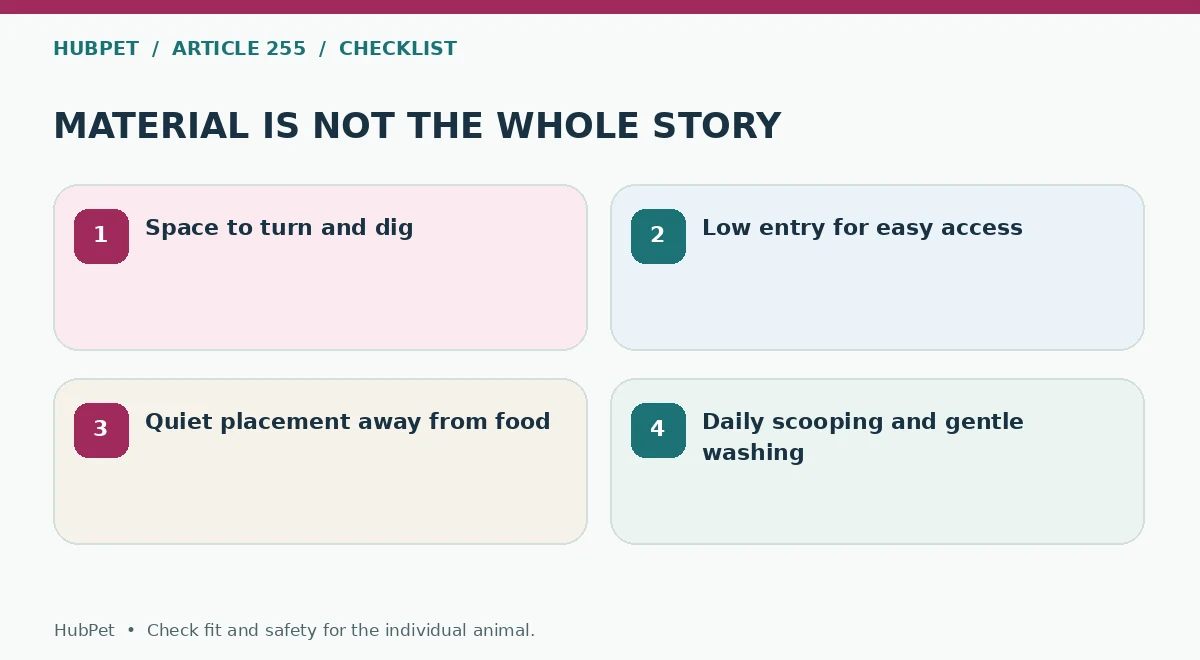
AAHA and AAFP/ISFM guidance centers feline access, floor space, litter preference, placement, and daily care—not a universal winning box material. Keep that hierarchy in mind. If a well-sized familiar plastic box works and stays clean, switching materials may offer little practical benefit.
Measure the inside base before comparing metals
Many metal trays use rolled rims that enlarge the outside footprint without increasing the litter area. Measure usable flat length and width, then watch whether your cat can turn and dig naturally. A deep but narrow tray may look substantial while restricting a long-bodied animal.
AAHA describes a generous size reference of roughly one and a half times the cat’s length from nose to tail tip. Check the whole standing area and the height above the litter. A larger tray is not automatically better if the cat cannot enter comfortably.

Inspect every edge, weld, and rolled rim
Run a cloth carefully along accessible edges and check whether threads catch on rough spots. Do not test sharp metal with bare fingers. Look for well-finished corners, secure joins, and no protruding fasteners. A rim that flexes, lifts, or catches a paw deserves rejection.
Study user instructions and close-up product photos. If the manufacturer does not show how corners join, ask for details before purchase. A removable rubber rim can ease contact but creates another surface to clean and inspect for chewing or damage.
Think about entrance height and mobility
Steel trays sometimes feature tall continuous walls meant to contain scatter. Those walls can challenge older cats, small kittens, or pets with painful joints. Find a low, smooth entry if the cat needs it; avoid makeshift saw cuts in metal that leave burrs or unsafe edges.
A cat who suddenly struggles to step into a box may need veterinary assessment for pain or other illness. Do not solve the problem by asking the animal to jump higher. Our aging-cat comfort article explains why accessibility deserves attention beyond one piece of equipment.
Check stability on your actual floor
Bare metal can slide or rattle on tile and other hard surfaces. Check that the tray rests flat and that any feet remain securely attached. A thin damp mat or unstable stand can worsen rocking rather than help. Never add small detachable pieces that a pet could chew.
Test the empty box for wobble, then reassess its stability when filled according to litter instructions. Make sure placement does not block a door or force the cat past noisy appliances. A solid tray cannot compensate for a stressful location.
Consider sound, temperature, and cat preference
Scooping tools can make a sharp sound against steel, and paw movements may also sound different than on plastic. Some cats ignore that change; another may hesitate. Do not claim that all cats prefer warm plastic or reject cold metal: individual responses vary and published guidelines do not establish a universal preference.
Use familiar litter, avoid banging tools against the base, and place the tray in a calm area. Offer the previous box alongside the new one and observe without forcing contact. Sudden changes in toileting should prompt medical consideration, not a race to buy another material.
Plan real-world cleaning and drying
A simple smooth tray can be convenient to scoop, yet folded corners, rolled edges, and textured attachments may collect debris. Choose a design you can empty, wash, rinse, and dry without special tools. Follow the maker’s directions, and avoid rough abrasives that scratch the finish.
The AAFP/ISFM house-soiling guidelines emphasize daily waste removal and regular washing with mild products. Skip heavily scented cleaners and ammonia-based solutions. A metal surface does not remove the need to scoop, manage litter depth, or clean stubborn residue.
Compare total weight and handling comfort
A large metal box plus litter can feel heavy and awkward. Check the empty weight and whether the rim gives safe handholds when cleaning. Sharp handles or corners can make a durable-looking tray impractical for someone with limited grip or mobility.
Plan to scoop in place, and carry an emptied tray for deeper cleaning if possible. Never lift a full box over your cat or through tight spaces. A stable lightweight alternative may be better when you need frequent washing or live in a small apartment.
Review costs without accepting miracle claims
Steel often costs more upfront than basic plastic trays, but sticker price alone cannot predict lifetime value. Compare warranty wording, replacement parts, edge finish, cleaning workload, and the likelihood that your cat will accept the design. Beware blanket claims that metal prevents all odor or will never scratch.
Read return conditions carefully because a used litter box may not qualify for a refund. Before paying, confirm the measurements and accessibility. A thoughtfully sized ordinary tray can outperform an expensive steel one that the cat refuses to enter.
Run a fair transition and keep a fallback
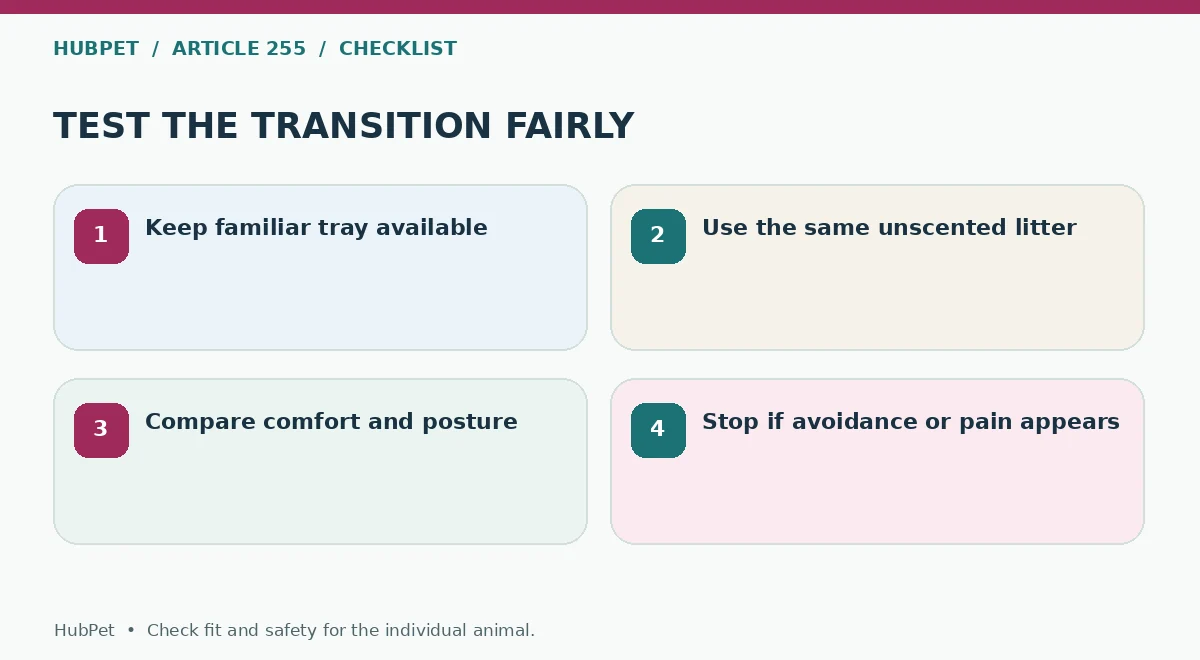
Set the stainless-steel tray in an accessible location and keep the familiar one available. Use the same unscented litter and similar cleaning schedule so your cat can compare the boxes without extra disruptions. Watch entry, posture, digging, and where the animal chooses to eliminate.
Do not punish the cat for preferring the old tray. If the new material brings noise, awkward access, or tension with another cat, return to a simpler option. Review our litter box placement advice before blaming the tray alone; access and environment often matter more than marketing language.
How We Research
We checked this guide against the authoritative sources listed below on October 26, 2026. We reviewed practical differences, safety limits, and relevant home conditions rather than drawing conclusions from brand advertising. Specifications, warranty policies, and device capabilities change; check the manufacturer’s current manual. We did not purchase, laboratory-test, rank, or endorse individual products. Where a pet has pain, skin concerns, or fear, seek individual veterinary advice. See our approach at About HubPet.
Sources
AAHA: General Litter Box Considerations. Accessed October 26, 2026.
AAFP and ISFM: Guidelines for Diagnosing and Solving House-Soiling Behavior in Cats. Accessed October 26, 2026.
AAFP and ISFM: 2022 Cat Friendly Veterinary Environment Guidelines. Accessed October 26, 2026.
Not universally. Steel may offer a smooth sturdy surface, but the cat’s room to move, easy entry, litter texture, cleaning and placement matter more than a material claim.
No. Regular waste removal, suitable litter, ventilation, and washing still matter. Be cautious of claims that a particular material makes routine cleaning unnecessary.
Some trays rattle or ring on hard flooring and when scooped. Check stability and introduce the new box beside a familiar option to see how your cat responds.
Scoop regularly and wash with a mild product that both feline-care and manufacturer guidance allow. Rinse, dry, and avoid harsh scented or abrasive cleaners.
First contact a veterinarian about sudden toileting changes. Then assess size, accessibility, litter type, location, and cleanliness before experimenting with a different tray material.