
A top-entry litter box can contain scatter, but an elevated opening is a real access hurdle and is not appropriate for every cat. This guide focuses on the decision that actually changes daily use. Consider the animal’s access and comfort first, then fit, cleaning, and long-term upkeep. The examples are practical screening tests rather than promises that one design works for every pet.
What top entry really asks of a cat
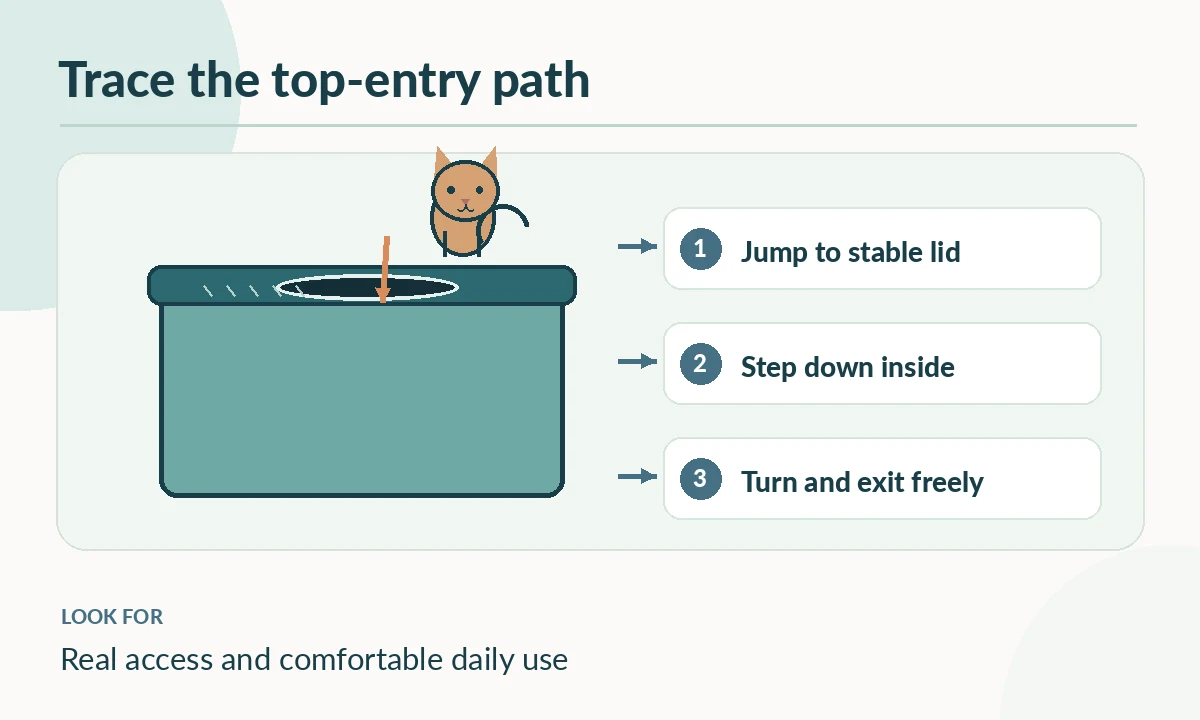
A top-entry cat litter box is a deep container with an opening in its lid. To use it, the cat climbs onto the top, steps or jumps through the opening, then reverses the process to leave. That route is the central buying question. This design may contain scatter and discourage curious dogs. It also requires balance and confident movement on an elevated surface. Do not interpret a successful first jump as proof that the box remains comfortable every day. Watch whether the cat enters smoothly, can orient inside, and exits without scrambling or hitting the rim.
Measure the interior and the hole separately
The box footprint is not its usable floor area. Sloping walls and a deep inner bucket reduce turning room, especially for long-bodied cats. Measure the unobstructed base against your cat’s body length. Room to turn and dig is more valuable than a compact silhouette. Measure the opening as well. A cat should not squeeze its shoulders through a small round hole or scrape its back against a sharp lid. Inspect the lid edge for rough plastic and confirm the top can support repeated steps without flexing. If the lid tilts when pressed, rule it out.
Understand who may need another design
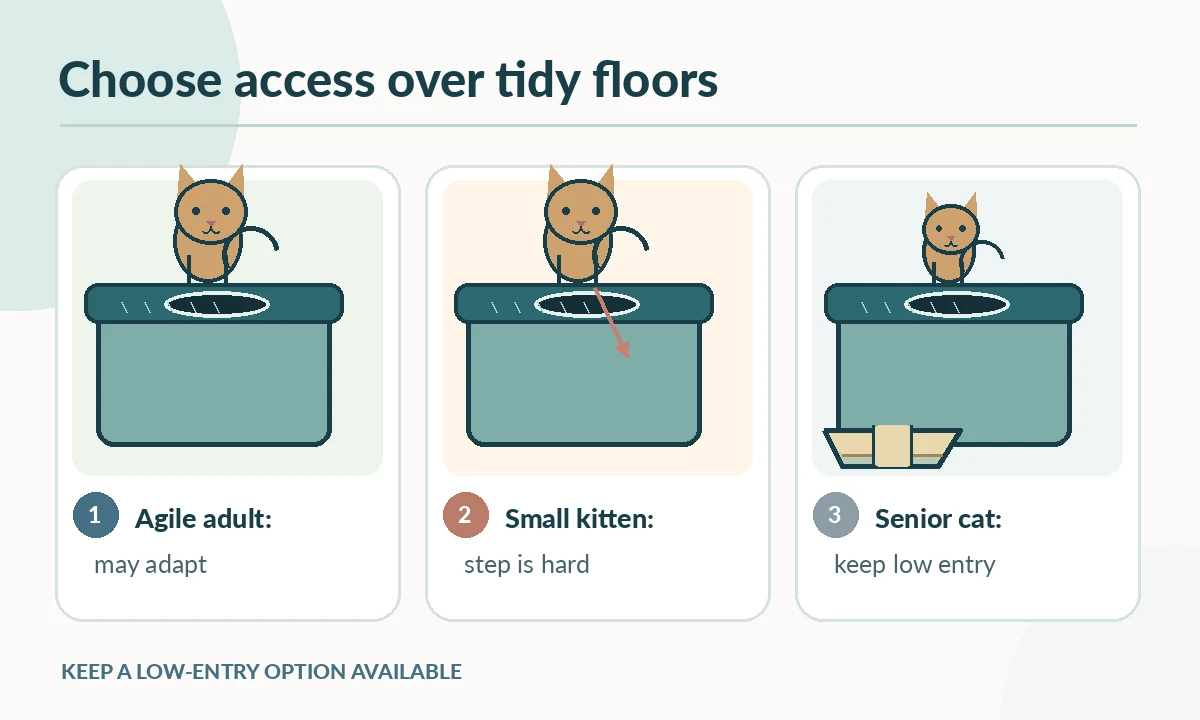
Growing kittens can misjudge a steep descent or struggle to reach the top. Cats with arthritis, weakness, visual problems, or other mobility limits may avoid a high opening even when they once managed it easily. A large cat may fit through the hole but find it difficult to turn inside. Anxious cats may dislike having only one elevated exit route. In these households, a broad open tray with an easy entrance is usually a more practical baseline. A top-entry box should never be the only available toilet while you are testing suitability.
Compare tracking control with comfort
Manufacturers often advertise grated or ribbed lids that catch litter from paws. Such surfaces may retain some grains, but they can also feel uncomfortable or create a messy ledge to clean. Inspect whether the grate is removable, whether litter falls back into the box, and whether the lid collects urine or moisture near the rim. Track how much litter actually reaches the floor during a normal week rather than relying on a product claim. A conventional open box placed on a flat, paw-friendly mat may solve the tracking problem without changing access.
Clean a deeper container safely
A tall bucket can be awkward to scoop, especially if clumps collect in the corners. Check whether the entire lid lifts off without tools and whether you can reach every edge without knocking dirty plastic against clothing. Use a scoop that suits the litter texture and remove waste daily. For deep cleaning, follow manufacturer advice for the material, rinse thoroughly, and dry before refilling. Avoid harsh scents that may put the cat off. Wash hands after cleanup. In households where pregnant or immunocompromised people live, follow CDC advice on who handles the litter and on gloves and handwashing.

Make the switch as a supervised choice
Place the new top-entry container near a familiar box but do not remove the old low-access tray. Use the familiar litter texture and depth so only one major variable changes. Allow voluntary exploration; reward calm curiosity away from the tray rather than lifting the cat into the hole. Check how easily the cat enters and exits over several ordinary days. A cat that perches on the lid without going inside, rushes out, or begins eliminating elsewhere is telling you the change may not work. Return to a comfortable alternative without treating refusal as misbehavior.
Decide whether the trade-off is worthwhile
Choose a top-entry model only when you have an agile, willing cat, ample usable interior space, a stable nonslip lid, and a cleaning routine you can maintain. Reject one that promises a spotless floor at the cost of a tight entrance or poor access. The best litter box is the one the cat reliably uses with little stress, not the one that best conceals evidence of a litter box. For mixed-age households, providing different tray styles in separate locations may protect choice better than buying identical top-entry containers.
Quick decision checklist
Before making a change, check your cat’s approach and exit. Check stability and cleaning access. Ask whether the setup still works on a busy day. Offer a familiar alternative when testing a new toilet feature. Watch real use rather than relying on a product promise, and revise the arrangement if your cat hesitates or appears distressed.
How We Research
Our research compares physical design and daily use with feline welfare guidance. We prioritize voluntary access, enough room, familiar litter, and cleaning that works in a real home. Relevant sources include veterinary bodies such as AAHA, plus Cats Protection and International Cat Care. Marketing claims do not count as evidence. We make no claims of hands-on testing on commercial models. Illustrations demonstrate general principles, not safety certifications. Learn more about our editorial approach on the HubPet About page.
Sources
Battersea, Best litter tray setup: Read the source. Accessed October 27, 2026.
AAHA, General Litter Box Considerations: Read the source. Accessed October 27, 2026.
CDC, People at Increased Risk for Toxoplasmosis: Read the source. Accessed October 27, 2026.
Safety note: A sudden change in urination or defecation, repeated straining, apparent pain, or persistent litter-box avoidance needs veterinary assessment; do not assume a behavior or equipment problem. For general context see our veterinary disclaimer.
A textured lid may catch some grains, but litter still sticks to paws and can leave the box when the cat jumps out.
Often not as the only option: the high entrance may be difficult. Provide a broad, low-entry tray that a kitten can reach comfortably.
Some can, but stiffness, pain, or reduced mobility can make climbing uncomfortable. Keep a low-entry alternative available.
Yes. Offer the new option beside a familiar, easily reached tray and let the cat choose without forcing entry.
It may hide odor from people but can concentrate smells inside. Scooping and proper cleaning matter more than a lid.