
This article is general information, not veterinary advice. If your pet seems unwell, is in pain or may have eaten something harmful, contact your vet or an animal poison control line right away. Read our vet disclaimer.
How to prevent a pet from licking wounds starts with the veterinary plan for that specific wound. VCA surgical-incision guidance checked in 2026 warns that licking or chewing can pull out sutures and introduce infection. ASPCA after-surgery instructions checked in 2026 also advise preventing access to the incision. Therefore, use a barrier or recovery device only in the way the veterinary team recommends. For the related care topic, see how to Support a Pet After Surgery at Home.
How to Prevent a Pet from Licking Wounds: Protect the Site Correctly
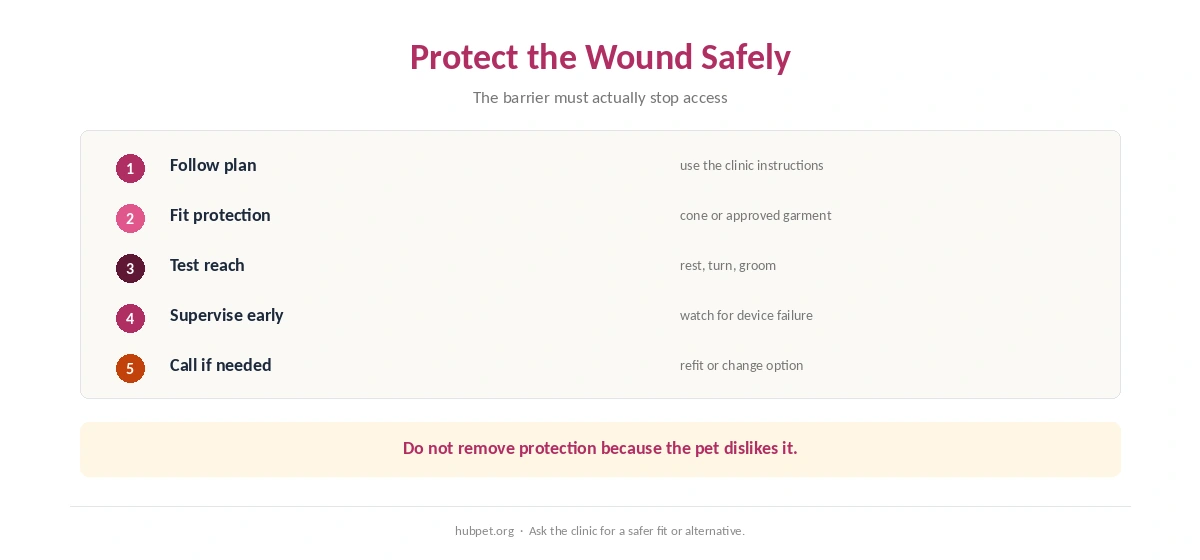
First, ask which protective option fits the wound location and the individual pet. VCA guidance checked in 2026 describes Elizabethan collars as a common way to prevent access to surgical sites. Some post-operative patients may use a recovery garment instead. However, a garment is not appropriate for every wound, drain, bandage, or body location, so the veterinarian’s instructions come first.
Check that the pet still cannot reach the wound while resting, turning, or grooming. If the device slips, the pet can reach around it, or the pet becomes distressed enough to injure themselves, contact the clinic for a fit check or an alternative. Do not simply remove the protection and hope supervision will be enough.
Set up the home so the protective device is easier to use. The calm-space guide can reduce traffic and rough activity. The pet-proofing guide can help block furniture or narrow spaces where a cone may catch. If activity restriction forms part of the discharge plan, the play-and-rest guide can help you choose lower-arousal routines.
How to Prevent a Pet from Licking Wounds Without Home Remedies
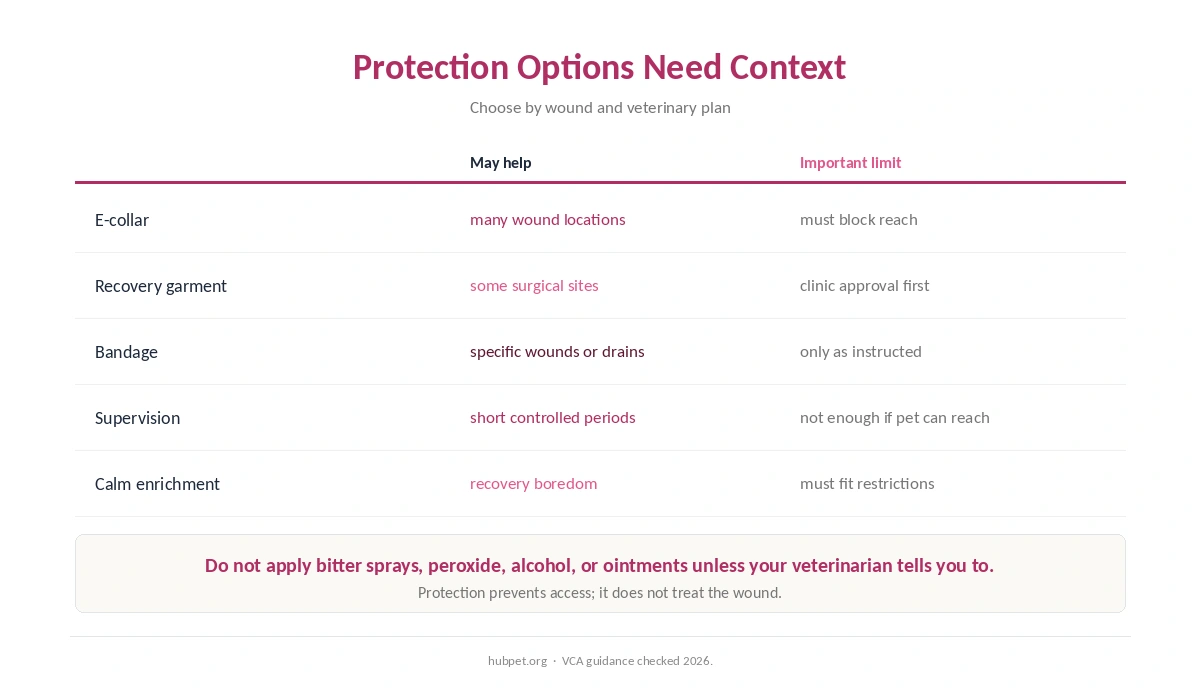
How to prevent a pet from licking wounds does not require putting bitter sprays, disinfectants, ointments, or household products on the injury. VCA incision guidance checked in 2026 says not to apply creams, ointments, disinfectants, hydrogen peroxide, alcohol, or other substances unless the veterinarian specifically instructs you to. A product that tastes unpleasant can also be unsafe on some wounds or near the eyes and mouth.
In practice, how to prevent a pet from licking wounds is to block access reliably while following the clinic’s instructions for that exact site.
Likewise, do not improvise a tight bandage. A bandage may be part of veterinary wound care, but fit, pressure, moisture, and wound access matter. If the clinic applied a bandage or drain, follow its instructions exactly and call if it slips, becomes wet, smells abnormal, or the pet interferes with it. For a practical companion checklist, see pet Recovery Support Checklist.
Keep necessary handling brief and predictable. The handling-practice guide can help with calm, reward-based cooperation when the clinic permits routine checks. The positive reinforcement guide can help you reward calm behavior around a cone or recovery garment instead of forcing repeated restraint.
| Protection | When it may help | Important limit |
|---|---|---|
| Elizabethan collar | blocks access to many sites | must fit and actually block reach |
| Recovery garment | some surgical sites | only if clinic approves for that wound |
| Bandage | specific wounds or drains | use only as instructed |
| Direct supervision | short controlled periods | not a substitute if pet can reach wound |
| Calm enrichment | reduces boredom during restriction | must fit the recovery plan |
If confinement or reduced activity is difficult, use the crate-comfort guide only when the veterinary team has approved crate rest. The predictable-routines guide can make feeding, toileting, checks, and rest easier to anticipate. For a recent veterinary visit, after-vet comfort steps can help lower household pressure without changing the medical plan.
When to Call Your Vet
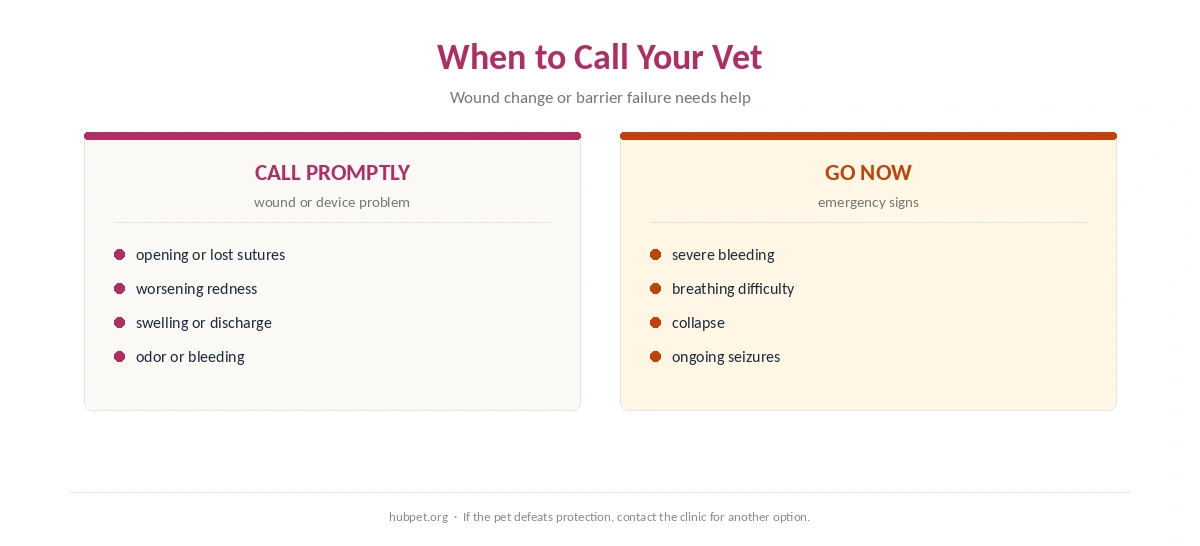
VCA surgical-incision guidance checked in 2026 advises contacting the veterinarian for continuous bleeding or fluid, excessive redness, swelling, foul odor, discharge, or removed sutures. Call promptly if the wound opens, the pet repeatedly defeats the protective device, or you cannot follow the discharge plan safely.
Do not wait for the next scheduled recheck if the pet is worsening. The skin-check guide can help you notice visible change, but it cannot determine whether a wound is infected or healing normally. The pain-signs guide can help you notice discomfort while you contact the clinic.
Go now: uncontrolled or severe bleeding, breathing difficulty, collapse, ongoing seizures, or another emergency sign needs urgent care. Use the pet emergency signs guide and the pet first-aid checklist while arranging professional help. If a wound resulted from a possible toxin or chemical exposure, contact a veterinarian or poison control service rather than applying a home treatment.
How We Research
HubPet reviewed these sources on October 11, 2026: VCA surgical-incision guidance, VCA post-operative guidance for cats, and ASPCA after-surgery instructions. All emphasize preventing licking or chewing and contacting the veterinary team when the incision worsens or protection fails. Read our editorial method at How We Research.
VCA notes that licking or chewing can remove sutures and can introduce infection or further injury.
No. A cone is common, but the correct device depends on the wound location, procedure, fit, and individual pet. Ask the veterinary team.
Do not apply products to a wound unless the veterinarian specifically approves them for that wound and pet.
Contact the clinic for a fit check or another protective option. A device that does not block access is not doing its job.
Call promptly for opening, removed sutures, worsening redness or swelling, odor, discharge, or bleeding. Severe bleeding or other emergency signs need immediate care.
How to Prevent a Pet from Licking Wounds: Bottom Line
How to prevent a pet from licking wounds starts with the veterinary wound plan. Use correctly fitted protection, watch for failures, and call when the site changes or the pet defeats the barrier. Avoid improvised bandages and home products. The safest solution is the one that protects the wound without overriding the veterinary team’s instructions.