
Educational information only; not veterinary diagnosis or an individualized training plan. Sudden behavior changes, injury, pain signs, or persistent distress warrant veterinary advice. Read the HubPet veterinary disclaimer.
An adult cat hissing at a new kitten can make an introduction feel like a disaster. Yet a hiss often serves as a distance-increasing warning: “I am uncomfortable; do not come closer.” It does not, by itself, prove that the cats will never coexist. The response matters: do you allow space and slow down, or force another meeting while both animals are aroused?
This article is for a resident cat who has begun hissing during an introduction. HubPet already offers a full cat-to-cat introduction guide; here the purpose is more specific: interpret the warning, prevent injury, reset a session, and decide what progress looks like before trying again.
What the hiss tells you—and what it does not
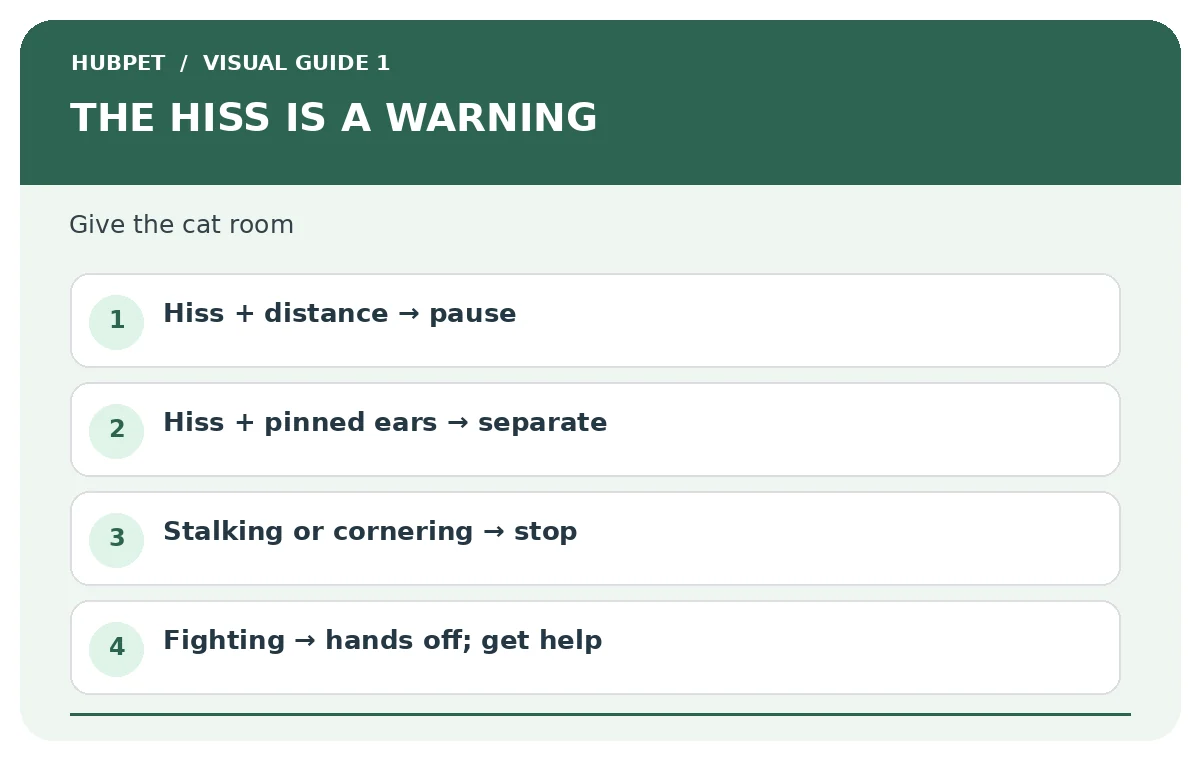
Hissing is a communication signal that often accompanies fear, uncertainty, or a desire for space. Look at the rest of the scene: distance, blocked exits, staring, ears, tail, body tension, and whether the kitten keeps approaching. A single hiss during a brief encounter is different from repeated stalking, swatting, or cornering.
Do not label the older cat jealous, spiteful, or dominant based on the sound. Those explanations can lead to punishment or forced exposure. The 2024 American Association of Feline Practitioners guidance frames introductions in terms of preventing intercat tension and managing the environment, not making cats “work it out.”
Stop the interaction without adding panic
If you hear hissing, calmly increase distance. Guide the kitten back to its prepared room using a toy or safe diversion when possible. Avoid grabbing between tense animals, shouting, or reaching into an active fight. If cats start fighting, separate them safely without placing your hands between them. Then consult a professional.
After separation, provide each cat a familiar, quiet area. Give time for arousal to drop. Record the moment when the hiss started, how close the animals were, and whether one blocked a route. These details help determine which step of the introduction process was too difficult.
Reset to separate spaces and scent exchange
Return the kitten to a secure transition room with its own litter tray, water, food, hide, perch, scratching option, and toys. Keep familiar resources available to the resident cat elsewhere. Avoid letting the kitten roam into the resident cat’s preferred resting place while the older cat is trapped nearby.
Once both seem settled, exchange bedding or use safe scent transfers so each animal can investigate the other’s odor without a meeting. Reward calm curiosity. If either cat becomes tense near the exchanged item, increase distance and try a smaller change rather than pushing forward.
Make resources abundant and geographically separate
Competition can appear when a cat must pass another to reach food, water, litter, or a hiding place. The AAFP guidelines recommend multiple resources throughout the home. Offer one of each essential resource per cat plus an extra, in private locations. Concentrating everything in one corner can undermine the count.
Provide vertical escapes, more than one route through a shared area, quiet feeding spots, and resting places where the kitten cannot constantly ambush the older cat. These changes cannot guarantee friendship. However, they reduce preventable pressure as you introduce the animals gradually.

Use a barrier before trying face-to-face time
When scent exposure is calm, try brief visual contact through a secure gate or other barrier that prevents chasing and swatting. Keep a generous distance and give both cats the option to leave. Pair the session with a pleasant activity if each cat is comfortable enough to participate.
End before signs escalate. Fixated staring, stiff posture, stalking, repeated hissing, growling, flattened ears, or retreating in panic mean you should stop and move back to an easier stage. There is no universal schedule; the response of the cats determines the pace.
Protect the resident cat from kitten energy
Kittens may approach impulsively, pounce, or chase when the older cat wants to rest. Arrange supervised play for the kitten before introduction practice so the kitten is less likely to direct all its energy at the resident. Give the older cat high resting options and an escape route.
Do not insist that the resident cat tolerate being climbed on or chased. A calm side-by-side moment at a safe distance is more useful than an enforced nose-to-nose greeting. The goal can be peaceful tolerance, not cuddling.
Use a simple readiness checklist
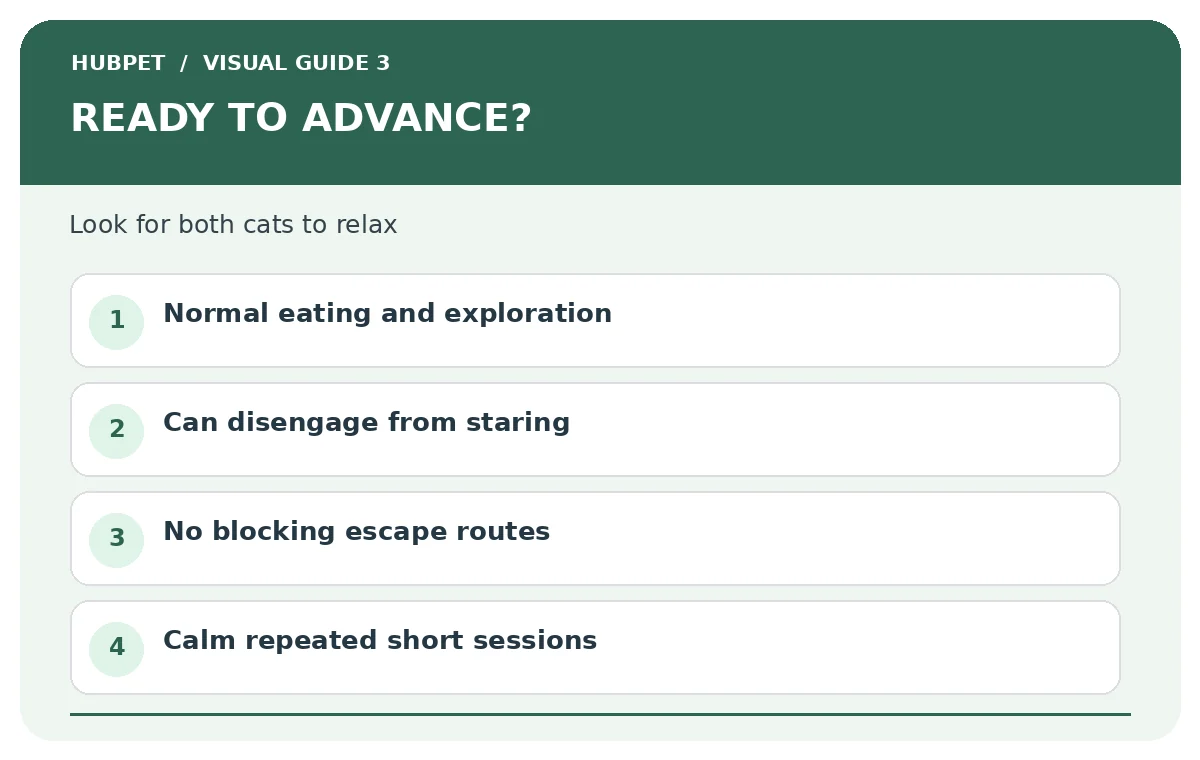
Before moving closer, look for both cats eating normally, exploring their own spaces, showing relaxed posture near the other cat’s scent, and being able to disengage from brief visual contact. An absence of hissing in one rushed session is not enough on its own. Multiple calm experiences matter more than one lucky interaction.
If you see repeated tension, lengthen the separation period and review resource placement. HubPet’s multi-pet home checklist helps identify overlooked environmental pressure points.
Mistakes that make hissing worse
Punishing a hiss removes a warning without removing the discomfort. Holding one cat near the other, feeding them nose-to-nose, shutting them together in a small room, or letting them fight it out increases risk. A kitten that seems playful may still be intrusive to an adult cat.
Avoid using an opened carrier as the only escape route in a cramped area, or allowing a cat to be cornered. Make every session reversible: you should be able to end it calmly without physically putting your hands between frightened animals.
When to ask for help
Contact your veterinarian if either cat stops eating, avoids the litter box, hides persistently, appears painful, or develops a sudden behavior change. Physical injury or repeated fights call for immediate safety management and professional assessment. A qualified feline behavior professional can help create a paced reintroduction plan when tension continues.
Cats do not have to become close companions to live well. If one animal remains chronically stressed despite careful management, discuss realistic welfare-focused options with your veterinary team rather than forcing coexistence.
How We Research
We based the reset sequence on the 2024 AAFP Intercat Tension Guidelines and compared it with Cats Protection guidance on introducing a kitten and meeting the needs of multiple cats. We distinguish a warning hiss from a physical fight and emphasize environment, separation, and veterinary advice over punishment or forced contact. Read more about our editorial approach on the HubPet About page.
Sources
AAFP / Cat Friendly Homes: 2024 Intercat Tension Guidelines. Reviewed October 26, 2026.
Cats Protection: Bringing a New Kitten Home. Reviewed October 26, 2026.
Cats Protection: Getting Another Cat. Reviewed October 26, 2026.
ASPCA: Aggression in Cats. Reviewed October 26, 2026.
It can happen during an introduction when a cat feels uncertain or needs more distance. Slow the process and watch for escalating signs.
Do not force repeated stressful contact. End the session calmly, separate the cats, and restart at a distance each can handle.
There is no fixed timetable. Progress depends on the individuals and may take many gradual sessions; comfort, not the calendar, should set the pace.
No. Hissing communicates discomfort. Punishment can worsen fear; reduce the trigger and create safer, more positive exposures.
Seek professional guidance for fights, injury, persistent fear, food avoidance, litter changes, or worsening tension despite a gradual plan.