
Educational information only; not veterinary diagnosis or an individualized training plan. Sudden behavior changes, injury, pain signs, or persistent distress warrant veterinary advice. Read the HubPet veterinary disclaimer.
A tiny kitten’s meow can mean something different from the familiar greeting of an adult pet cat. A very young kitten calls for a mother and relies heavily on warmth and feeding; a newly adopted older kitten may vocalize while adjusting to an unfamiliar room, looking for company, or anticipating food. Without age and situation, there is no reliable translation for the sound alone.
This guide focuses on kitten development and care decisions. HubPet’s general article on meows directed at people covers adult-cat contexts; this one explains the specific checks a kitten caregiver should make before assuming the noise is merely attention-seeking.
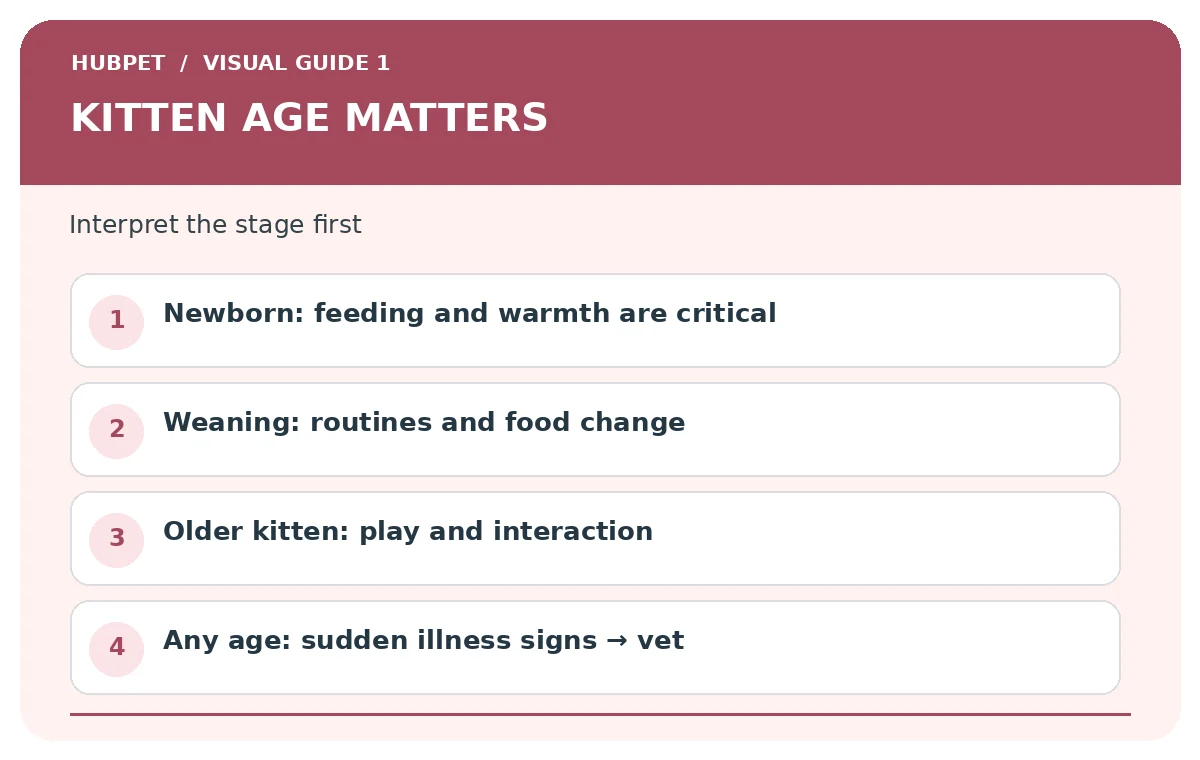
First, check the kitten’s age and situation
A newborn or very young kitten has different needs from an active youngster already eating kitten food and using a litter tray. If you are caring for an unweaned kitten without the mother, follow a veterinarian or rescue organization’s care plan for feeding, warmth, elimination support, and monitoring. Do not guess feeding amounts or use ordinary cow’s milk as a substitute.
For a kitten old enough to join a household, compare vocalizing with feeding times, naps, play, and changes in the home. A short call near a door has different implications from sustained crying paired with weakness or refusal to eat.
Reason 1: calling for mother or familiar contact
Very young kittens use meows to communicate with their mothers. When a kitten is separated from the litter or moved to a strange home, calls may increase while they search for familiar contact and cues. VCA notes that meowing plays an important role in kitten-to-mother communication.
A safe response for an adopted kitten is a quiet home base with food, water, litter facilities, cozy bedding, and a hiding place appropriate for the age. Spend calm time nearby without forcing handling. If a kitten is genuinely neonate and crying continuously, seek veterinary or rescue guidance immediately rather than applying adult-cat settling advice.
Reason 2: food expectations or basic care needs
A kitten may call before a meal or when looking for the person who normally feeds them. First check the feeding schedule appropriate to their developmental stage and the food recommended by your veterinary team. A healthy, growing kitten should have regular access to suitable nutrition under that plan.
Repeated loud crying with a poor appetite, unusual lethargy, vomiting, or diarrhea needs prompt veterinary assessment. Do not simply offer extra treats to cover up a problem. Note what and how much the kitten is actually eating and drinking when speaking to the clinician.
Reason 3: a new home and a disrupted routine
New rooms, unfamiliar smells, and separation from littermates can leave a kitten uncertain. Some explore while calling; others hide and vocalize from cover. Begin with one kitten-proofed room rather than the entire home, and allow a predictable schedule for meals, play, and rest.
Keep the space free of loose cords, toxic plants, and dangling strings. Place the litter tray away from food and water and offer a covered or partly enclosed resting option with an easy exit. HubPet’s first-week kitten and cat checklist helps track safe setup tasks.
Reason 4: play, investigation, and interaction
A curious kitten may meow at a toy, a closed door, or a caregiver moving through the room. Notice whether the kitten returns to normal play, eats, grooms, and rests afterward. Interactive wand play with supervision can satisfy an active kitten without teaching them to target hands or feet.
Do not respond by chasing or repeatedly picking up a kitten that is trying to retreat. Offer predictable positive contact, then let the kitten choose to approach. Age-appropriate enrichment is useful; long sessions that leave a youngster overstimulated are not necessary.
Why a kitten may meow at night
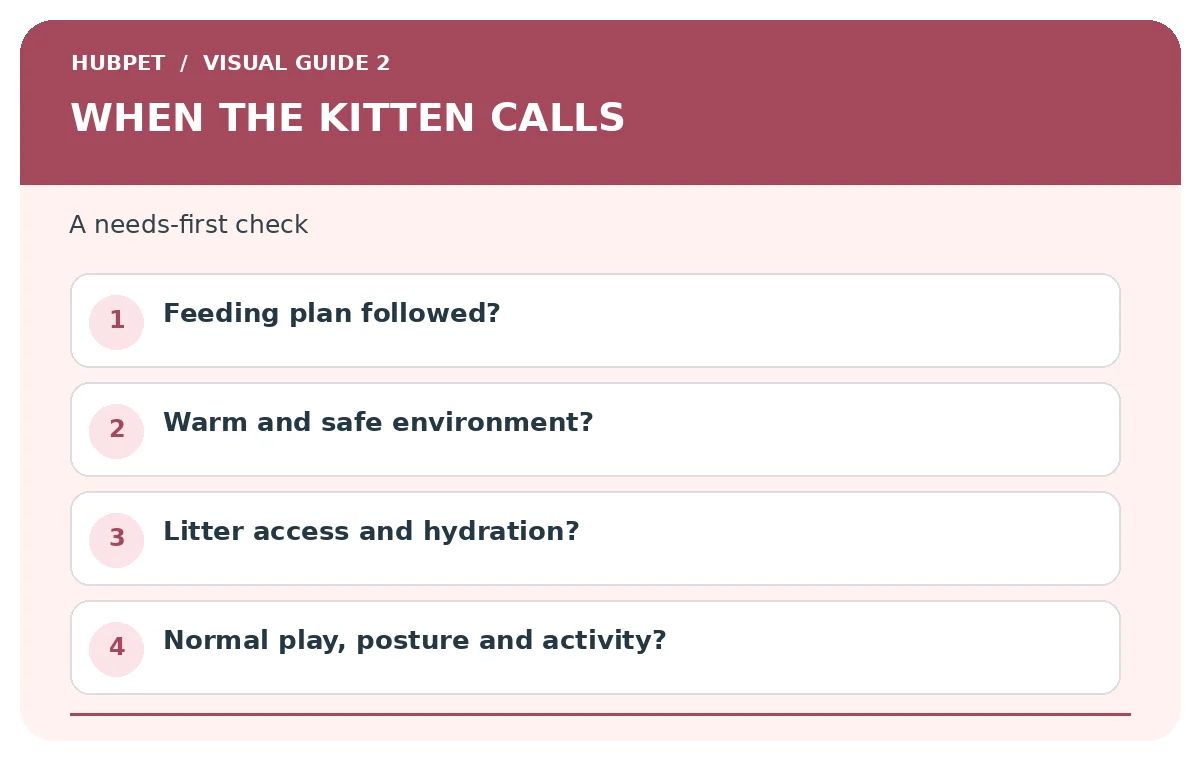
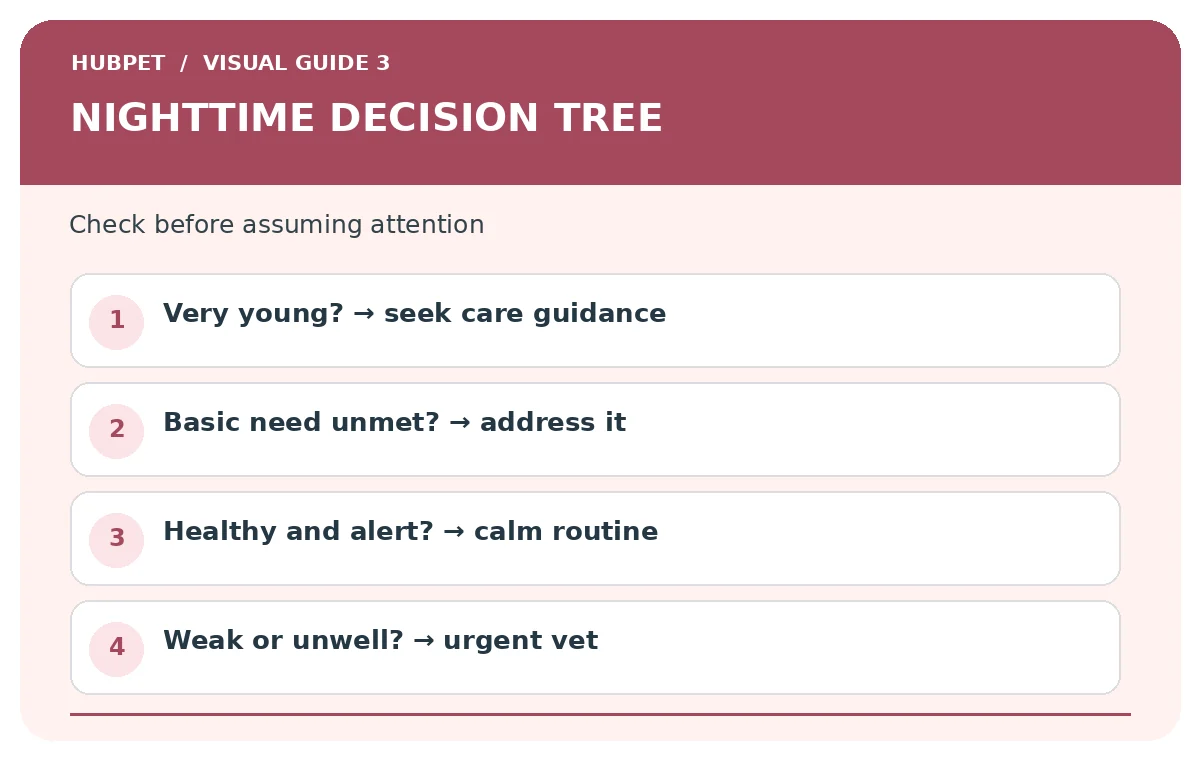
Night calls often coincide with a new environment, an unusual meal routine, or separation from familiar companions. Review whether the kitten has eaten as advised, can find the litter tray, is comfortable in the sleeping area, and has had gentle play earlier in the evening. Keep nighttime checks quiet and matter-of-fact.
Never leave an unwell or very young kitten to cry unattended on the assumption that it must learn independence. Age, weight, feeding, and body temperature can alter how quickly a kitten needs clinical help. For older healthy kittens, routines can gradually become predictable without punishment.
Read the body, not the volume
A kitten standing comfortably, exploring and returning to play gives different information from one crouched with a tight posture and very low activity. Check eyes, breathing, movement, warmth, appetite, stool, and whether the kitten responds normally to gentle interaction.
Do not diagnose dehydration, infection, or pain from a particular meow pitch. Record onset, frequency, and accompanying changes. Veterinary advice is appropriate whenever vocalization is sudden, persistent, or paired with concerning symptoms.
A three-step response you can use today
First check the basics: age-appropriate feeding, safe temperature, clean litter, water for a weaned kitten, and freedom from obvious hazards. Second offer a quiet retreat and gentle scheduled interaction. Third, reassess how the kitten behaves after its needs are met, without expecting every vocalization to disappear.
If a kitten does not improve or looks unwell, contact a vet. Keep a simple note of feeding, toilet output, sleep, and activity. Those observations are especially valuable for newly adopted kittens whose normal pattern is not yet known.
Red flags that change the plan
Urgent veterinary advice is needed when a kitten is weak, cold, refusing to feed, breathing abnormally, collapsed, or persistently crying with apparent distress. Smaller and younger kittens can deteriorate quickly. Do not delay care to experiment with music, pheromones, or internet feeding formulas.
A new caretaker should have a veterinary appointment and an age-appropriate health plan. Good kitten care is not about silencing meows; it is about responding to real needs and noticing when the normal developmental picture changes.
How We Research
We distinguish kitten-to-mother calls from human-directed vocalization using VCA Animal Hospitals, and cross-check routine kitten care against Cats Protection guidance on newborn care, kitten development, and bringing a kitten home. We deliberately omit feeding dosages and home treatment instructions because those depend on individual age and clinical condition. Read more about our editorial approach on the HubPet About page.
Sources
VCA Animal Hospitals: Why Do Cats Meow?. Reviewed October 26, 2026.
Cats Protection: Bringing a New Kitten Home. Reviewed October 26, 2026.
Cats Protection: Kitten Care. Reviewed October 26, 2026.
Cats Protection: Kitten Ageing Chart. Reviewed October 26, 2026.
A new environment, disrupted routine, hunger, or a need for contact may contribute. Check care needs and seek veterinary advice if the kitten appears unwell.
Very young kittens call to their mothers and depend on warmth and feeding. Persistent crying, weakness, or poor feeding requires urgent veterinary guidance.
The kitten may be seeking familiar contact while adjusting. Provide a secure base and predictable gentle interaction, and check that basic needs are met.
Do not automatically ignore it, especially in very young kittens. Check feeding, safety, and health needs before supporting an older healthy kitten’s sleep routine.
Crying with breathing difficulty, collapse, significant weakness, coldness, or refusal to feed calls for urgent veterinary advice.