
A dog stretches out on a bed, exhales loudly, and looks as though the day has been exhausting. Is that sigh contentment, boredom, or something else? The answer depends on what happened immediately before the sound and what the rest of the dog is doing. A normal sigh can accompany resting and a change in breathing depth. It cannot, by itself, reveal a precise emotion. Use the setting, muscle tension, facial expression, and breathing pattern together rather than translating every exhale into a human thought.
Start with the moment before the sigh
Note whether your dog has just finished a walk, chosen a quiet bed, stopped asking for attention, or encountered an uncomfortable situation. A long breath while curling up after play commonly fits a relaxed transition. A dramatic sound during waiting can occur with frustrated anticipation, but it is not proof your dog feels rejected. Describe what you can observe: the dog lay down, the eyes softened, then one long exhale followed. That observation is more reliable than assigning a motive from the sound alone. Record the sequence if you are concerned about a repeated pattern.
Look for loose, comfortable body language
Relaxed dogs often have soft eyes, easy muscle tone, neutral ears for their build, and movement that is not frozen or strained. They may settle on one hip or rest the chin on their paws. Contrast that with a dog holding a rigid posture, turning away, tightly closing its mouth, or showing the whites of its eyes. The AKC emphasizes interpreting the whole body because individual signals can occur in several emotional states. A sigh paired with loose posture usually calls for no intervention. Avoid waking or handling a resting dog just to test whether it is happy.

Separate a sigh from a whine, huff, or pant
A sigh is often a single noticeable exhalation; a whine has a tonal sound, a huff can be a short breathy burst, and panting involves repeated open-mouth breaths. These everyday descriptions are not diagnostic categories. Listen to how frequently the sound repeats and whether breathing returns to a comfortable rhythm. After exercise or in warmth, dogs may pant to cool themselves. A dog resting in a cool room that repeatedly strains to breathe presents a very different picture. If you cannot tell what sound you heard, a short video for your veterinarian can be useful.
When the sigh follows a request for attention
Your dog may look at the leash, approach you, then settle and exhale after you do not begin a walk. The sequence can reflect an adjustment from activity to rest, but a single sigh does not tell you the dog is sulking. If the dog repeatedly pesters you and then struggles to settle, review the day’s opportunities for sniffing, play, elimination, and sleep. Offer an appropriate routine rather than rewarding constant demands at random. You can reinforce a quiet choice, such as lying on a mat, without treating the sigh itself as a trick to train.

Build a useful two-minute observation record
Write down three fields: what happened just before, how the dog held its body, and what happened after. For example: “Came in from sniff walk; loose limbs and half-closed eyes; one deep exhale then slept.” Compare with “Stood at door; paced and vocalized; settled only after going outside.” A few brief entries help distinguish a common rest sound from a new, consistent change. Keep temperature, recent exertion, and nearby noises in mind. Do not hover with a camera near a sleeping dog; observing from a normal distance is enough.
Respect sleep and give the dog a choice
When sighing marks rest, the best response is often to do nothing. Provide a comfortable, accessible bed away from traffic and allow the dog to leave it. Ask children not to climb on or surprise a resting pet. If you want interaction, invite the awake dog over rather than leaning into its face. Some dogs prefer to sleep near people while others seek another room; either option can be normal. Consistent restful time benefits the household regardless of whether a particular sound is audible. A calm environment offers more value than trying to provoke a “happy sigh.”
Recognize breathing changes that need help
Breathing that is labored, unusually fast at rest, accompanied by blue or pale gums, weakness, collapse, coughing, or obvious distress requires prompt veterinary attention. Do not assume a repeated noisy exhale is a harmless mood signal if it appears with those signs. A new pattern that persists, even without an emergency sign, deserves a veterinarian’s assessment. The appropriate response depends on the whole clinical picture, not this article. Record timing and context, avoid unnecessary exertion, and seek medical advice rather than diagnosing anxiety or a lung condition at home.
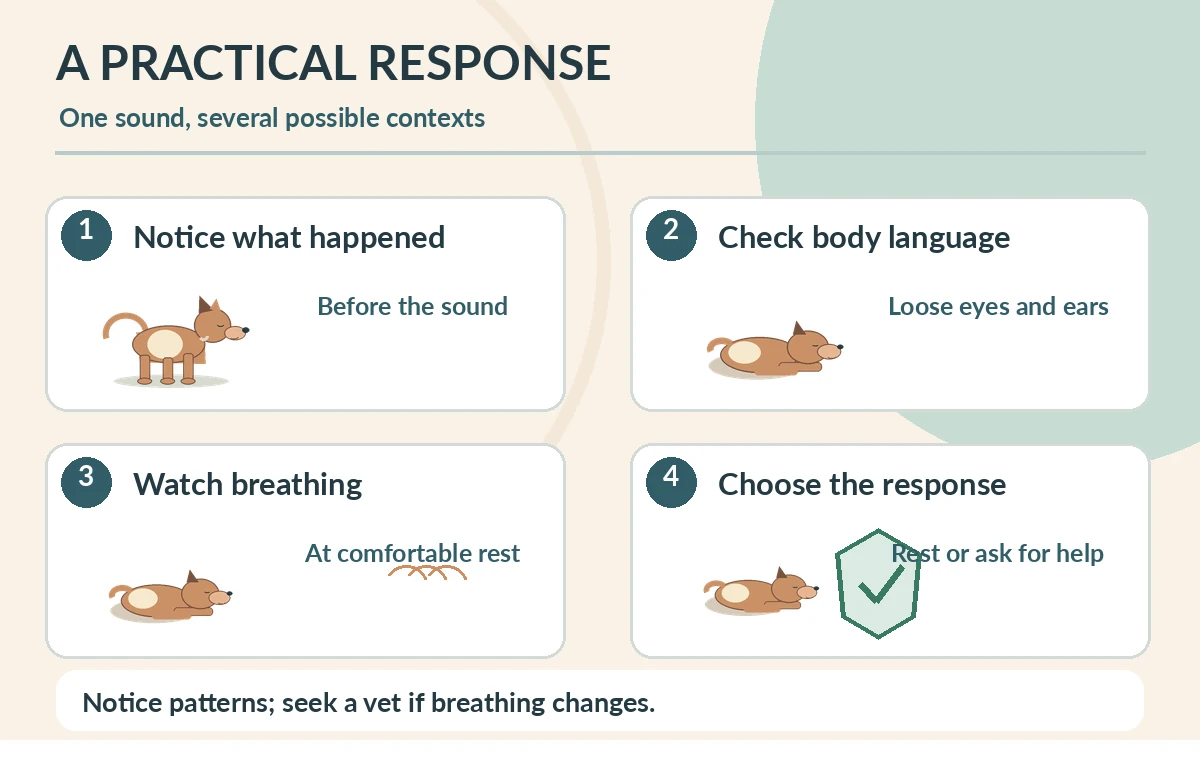
Use a simple context-first decision rule
When your dog sighs once, relaxes, and rests comfortably, respect the quiet moment. An exhale that follows an unfinished need may call for a calm toilet break or predictable enrichment without making the sound itself the cue. Tense posture means you should reduce pressure and allow space. Breathing that looks abnormal, or a dog that seems ill, calls for veterinary care instead of training. This four-way distinction helps families avoid two common errors: interpreting every sigh as sadness and dismissing a meaningful respiratory change because the dog often makes dramatic noises.
How We Research
We examine primary veterinary or recognized animal-welfare guidance, compare it with practical behavior observations, and separate supported claims from plausible but uncertain explanations. We avoid treating isolated gestures as diagnoses and prioritize voluntary interaction, reward-based education, and clear veterinary escalation signs. This guide was reviewed against the linked resources on October 27, 2026; it does not replace individual clinical or behavior advice. Learn about our standards on About HubPet.
Sources
American Kennel Club, Why Do Dogs Sigh?: Read source. Accessed October 27, 2026.
American Kennel Club, How to Read Dog Body Language: Read source. Accessed October 27, 2026.
American Kennel Club, What Do My Dog’s Facial Expressions Mean?: Read source. Accessed October 27, 2026.
ASPCA, Dog Bite Prevention: Read source. Accessed October 27, 2026.
Safety note: Sudden behavior changes, pain, distress, breathing difficulty, or bites call for individualized veterinary or professional help. See our veterinary disclaimer.
It can accompany comfortable rest, but a sigh does not identify a feeling on its own. Look at posture, the immediate situation, and what your dog does afterward.
Settling beside you may be a relaxed moment. Check for loose limbs, soft eyes, and easy breathing rather than treating the sound as proof of affection.
A long exhale can happen after a delayed activity or unmet expectation. The broader sequence matters more than one sound.
No. A sigh is typically a distinct exhale; panting involves repeated breaths. New or difficult breathing at rest needs a veterinarian’s guidance.
Seek help for labored breathing, weakness, unusual gum color, collapse, or repeated new respiratory changes, especially while the dog is resting.