
Educational information only, not veterinary diagnosis or individualized behavior treatment. Sudden behavior changes, pain signs, persistent distress, and bite risk warrant appropriate veterinary or qualified professional advice. Read our veterinary disclaimer.
A dog may watch you unpack groceries, stare as you reach for the leash, or hold a steady gaze from across the room. These moments do not all carry the same message. Dogs pay attention to human gestures and routines, and some learn that looking toward a person is the fastest way to predict a meal, walk, playtime, or training reward. A stare can also accompany discomfort. The safest interpretation starts with the whole scene, not a claim that one expression has a fixed meaning.
This guide is specifically about a dog looking at a person: what the eyes, posture, and timing can tell you and what to try next. For a larger reference covering ears, mouths, tails, and movement, see our guide to subtle stress signs in dogs. You do not need to stare back or conduct a dominance test to understand your dog.
First, Tell a Soft Look From a Hard Stare
Notice the muscles around the eyes and the rest of the face. With a loose body, blinking, easy movement, and room to step away, looking at you may simply be social attention. Fixed unblinking eyes paired with a rigid body, closed tense mouth, or guarding a valued object require a very different response. An individual dog’s facial anatomy, lighting, and position can affect what you see, so never decide from one feature alone.
If the dog becomes stiff when you approach food, a bed, or a chew, do not take the item or lean in to inspect the face. Stop the approach, allow space, keep children away, and get reward-based professional help for resource-guarding concerns. For an unknown dog, avoid sustained eye contact; quietly increase distance rather than trying to prove friendliness.
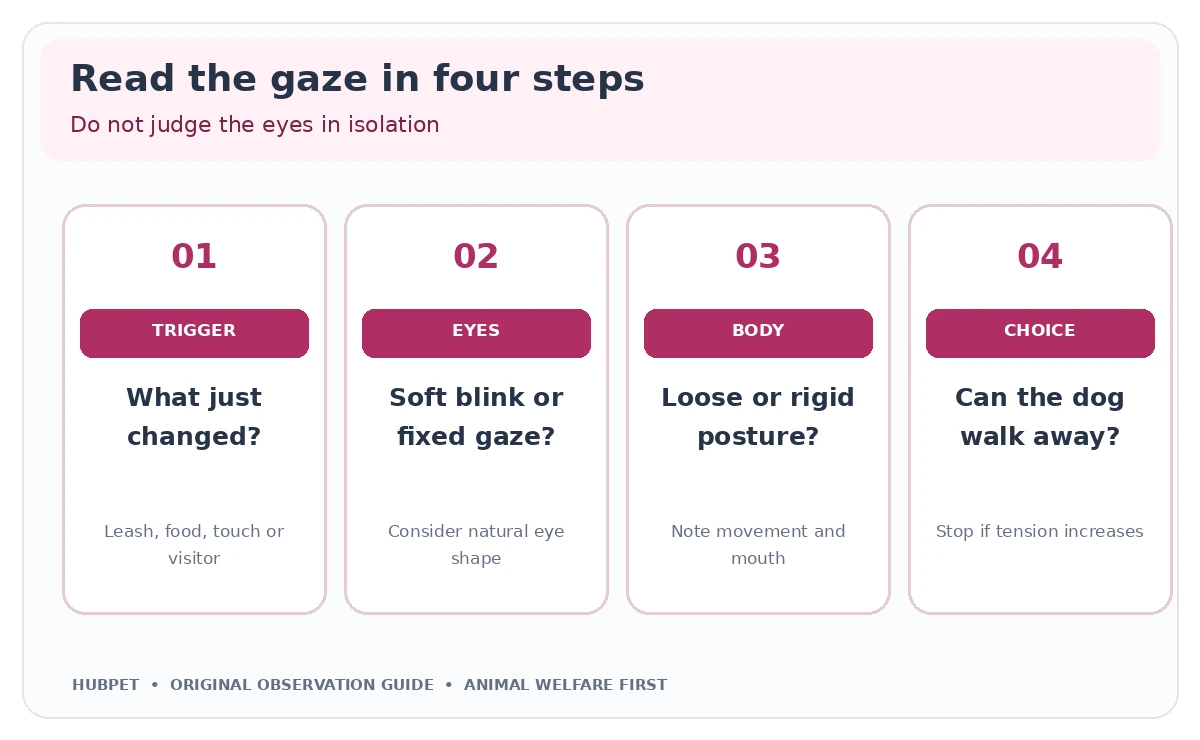
Six Everyday Reasons a Dog Watches You
Anticipation is common: your hand moves toward the walking shoes, and your dog watches for the next step. A request is another possibility, especially beside the door or water bowl. A trained dog may maintain eye contact because previous lessons rewarded checking in. Social interest is possible when the dog is comfortable and chooses to stay nearby. Uncertainty can produce monitoring, while guarding or fear can also involve an intense, tense gaze.
Look for evidence rather than applying a personality label. Does the stare occur at the same time each day? Did you just interrupt sleep, approach a favorite possession, or ask for a difficult cue? A dog who watches you cook may be responding to food smells and learned routines, not sending a secret message. Consider the environment before interpreting emotion.
Use a Three-Column Staring Log
For a few ordinary episodes, record what happened just before the gaze, what the dog’s full body looked like, and what happened immediately afterward. One entry might read: “Leash picked up; loose body and tail; dog walked to the door.” Another could read: “Approached chew; frozen shoulders and hard eyes; person stopped.” These are observations, not diagnoses. Repeated patterns help distinguish anticipation from a possible safety warning.
Include the length of the interaction, but do not provoke longer staring in order to measure it. If the dog is looking toward you before a predictable event, prepare the appropriate routine. If the gaze happens around a particular person, object, or handling step and the dog looks uneasy, change the setup and ask for experienced help rather than repeating the trigger.
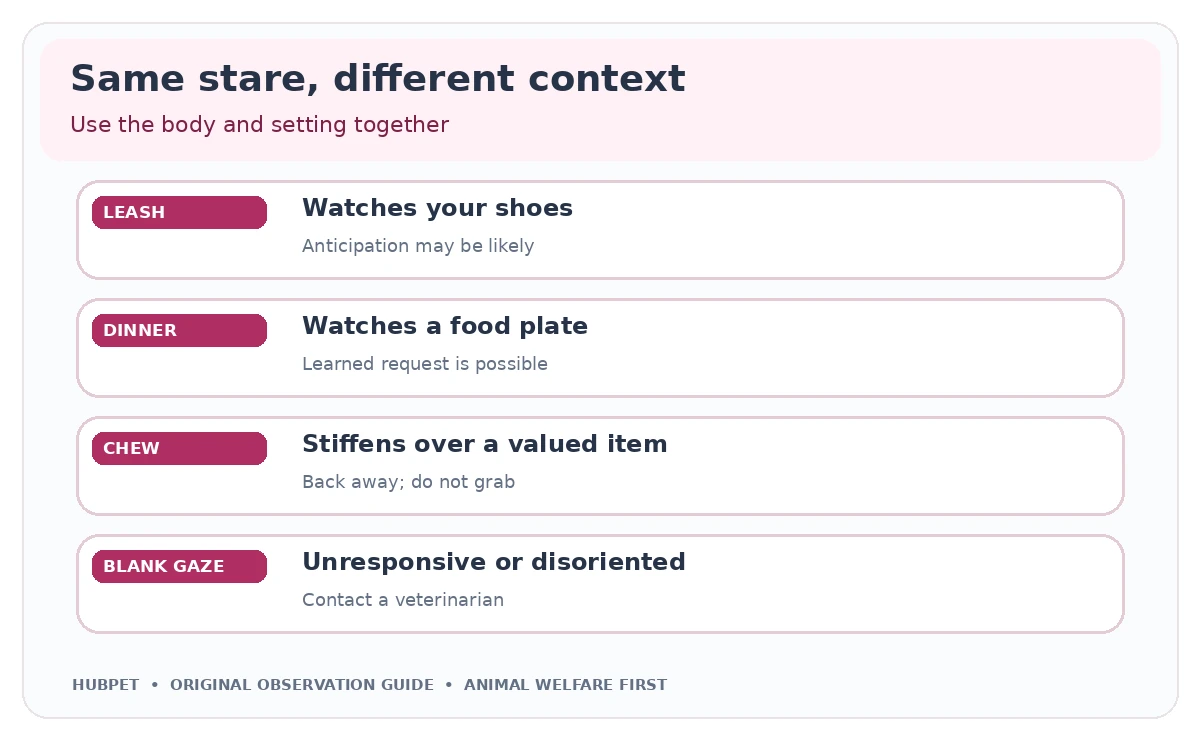
Respond to Needs Without Reinforcing Begging
Check basics before deciding the gaze is attention-seeking. Does the dog need a toilet break, fresh water, an opportunity to rest, or comfortable space? Meet legitimate needs. If staring at your plate has become a learned habit, put mealtime management in place before dinner begins: offer a comfortable mat, a suitable activity, and reinforcement for settling away from the table.
The goal is not to punish looking at you. Teach a clear alternative such as a calm sit by the door or returning to a resting spot. Our existing table-begging article covers that specific household routine. If you are inconsistent, sometimes handing over food after a long stare, the old pattern may persist; plan what everyone in the home will do.
Teach Optional Eye Contact, Never Forced Eye Contact
Some dogs enjoy brief rewarded check-ins, while others find direct eye contact uncomfortable. In a quiet room, wait for a voluntary glance, mark it with “yes,” and give a small reward. Release the dog to move away. Repeat only when posture remains loose and the dog willingly returns. After easy successes, use a simple cue if useful, but do not demand that a frightened dog hold your gaze.
Practice in short sessions, ending before frustration rises. Around distracting dogs or traffic, safety and adequate distance come first; looking at you is not a substitute for moving away from a trigger. For consistent timing and manageable criteria, see short dog-training sessions. Consent and freedom to disengage are part of a humane learning environment.

When Staring Changes Suddenly or Feels Unsafe
If a normally responsive dog starts staring blankly, appears disoriented, fails to respond, develops unusual movements, or has other abrupt behavioral changes, contact a veterinarian promptly. This article cannot distinguish behavioral observation from a neurological or sensory issue. A new hard stare accompanied by growling, freezing, snapping, or attempts to guard a space calls for immediate separation from vulnerable people and qualified help.
You can be affectionate with your dog without insisting on prolonged eye contact. Notice soft, chosen interactions; stop when the body stiffens or the dog turns away. The best outcome is an accurate reading of the dog’s needs and a household response that keeps both people and animals comfortable.
How We Research
We reviewed the linked veterinary, animal welfare, and behavior resources on October 26, 2026, using the HubPet editorial approach. The cited organizations provide guidance, while the observation prompts and practical household examples are our own. Editorial checks addressed unsupported mind-reading of animals, aversive training suggestions, and advice that could delay necessary veterinary care. Our original diagrams serve as teaching tools, not diagnostic charts or findings from clinical studies. Individual animals differ: consider your pet’s usual behavior, age, medical history, and safe opportunity to disengage.
Sources
American Kennel Club: Why does my dog stare at me?. Accessed October 26, 2026.
American Kennel Club: Why you should not stare down an unfamiliar dog. Accessed October 26, 2026.
American Kennel Club: How to read dog body language. Accessed October 26, 2026.
American Veterinary Society of Animal Behavior: Training position statements. Accessed October 26, 2026.
Comfortable social attention can be part of a positive relationship, but a stare alone does not establish affection. Look for relaxed posture, choice to approach, and the surrounding situation.
Food odors and past rewards often explain watching at mealtime. Meet normal needs and reinforce a safe alternative resting place rather than sharing food in response to begging.
A fixed gaze is more concerning when paired with stiffness, resource guarding, or threats. Give space and seek qualified help. New episodes of unresponsive staring need veterinary assessment.
No. Prolonged direct staring may unsettle dogs and does not establish healthy leadership. Use predictable routines, choice, and positive reinforcement instead.
Yes, if voluntary eye contact is comfortable for that dog. Reward short offered glances in a quiet place; never force or hold the dog still for the exercise.