
One minute your dog is sniffing the lawn; the next, its shoulders hit the ground and all four paws point skyward. Rolling in grass is common, but there is no single universal reason. A dog may investigate a scent, enjoy contact with a surface, rub an itchy area, or simply engage in playful movement. The important distinction is between occasional rolling on a safe patch and repeated rubbing that coincides with skin discomfort or a hazardous find. Here is a practical way to interpret the scene without mind-reading your pet.
Watch the sniff, shoulder drop, and roll
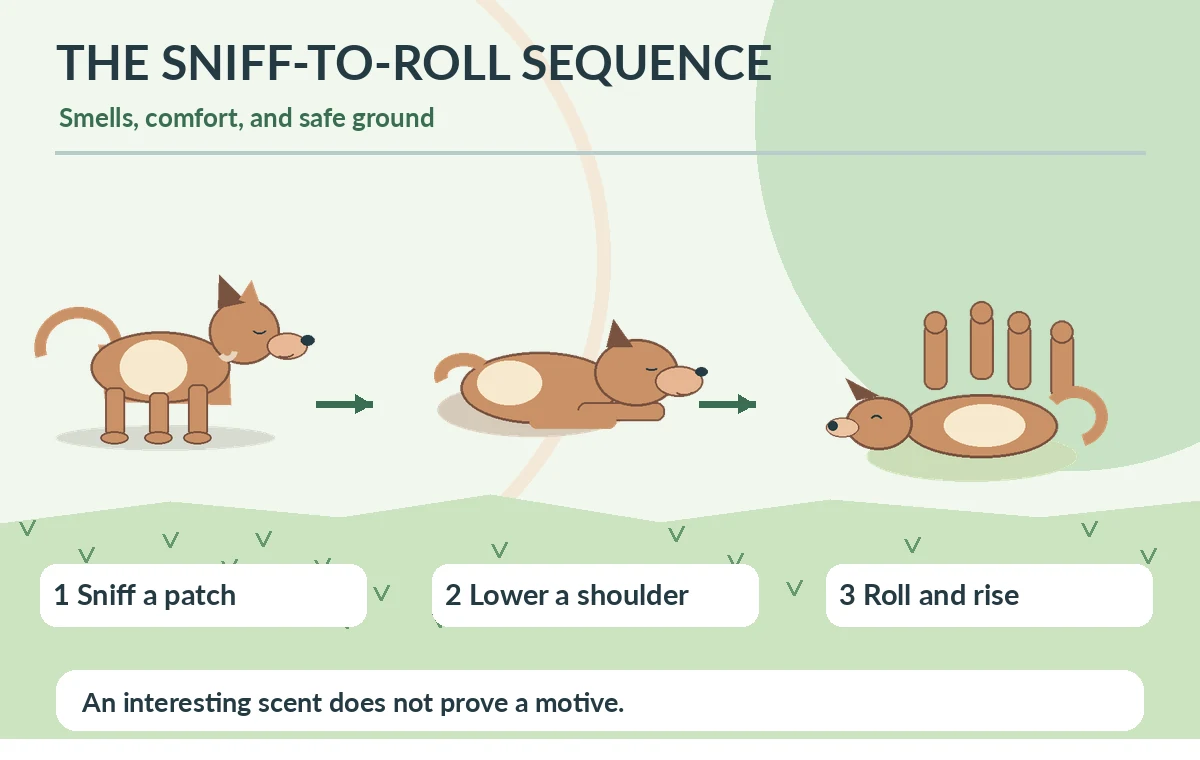
A common sequence begins with focused sniffing, followed by one shoulder lowering, a twist onto the back, and a wriggle. Record whether the dog repeatedly returns to exactly one spot. A strong odor may be part of the appeal, but it is not possible to prove the dog’s motive from the roll alone. VCA discusses several theories for rolling in pungent substances, including scent masking and scent interest, without presenting any as a universal explanation. If your dog chooses clean grass and stands up relaxed, the episode may be ordinary outdoor exploration.
Why interesting smells change the experience
A lawn carries odor from wildlife, other animals, moisture, and human activity. Dogs experience those cues through a sensitive nose; a patch that looks identical to us may be especially interesting to them. Some owners describe their dog rolling immediately after a bath. That timing does not prove a dislike of shampoo or an attempt to replace a scent, though strong fragrances may be unpleasant for some pets. Think of rolling as one possible response to sensory information. It is not evidence of deliberate defiance or a reason to punish the dog.
Notice the difference between a stretch and an itch
An exuberant roll often includes loose movement, pauses, and a normal return to walking. Repeated rubbing at one body area, scratching, chewing feet, skin redness, bald spots, or discomfort suggests that physical irritation may be involved. Check the coat gently after the walk without digging into the skin or applying home remedies. You cannot diagnose fleas, allergies, or an infection from the motion alone. If irritation persists, or the pet seems uncomfortable, contact your veterinarian. The purpose of observing the pattern is to provide useful details at that visit.
Inspect the ground before you allow a roll
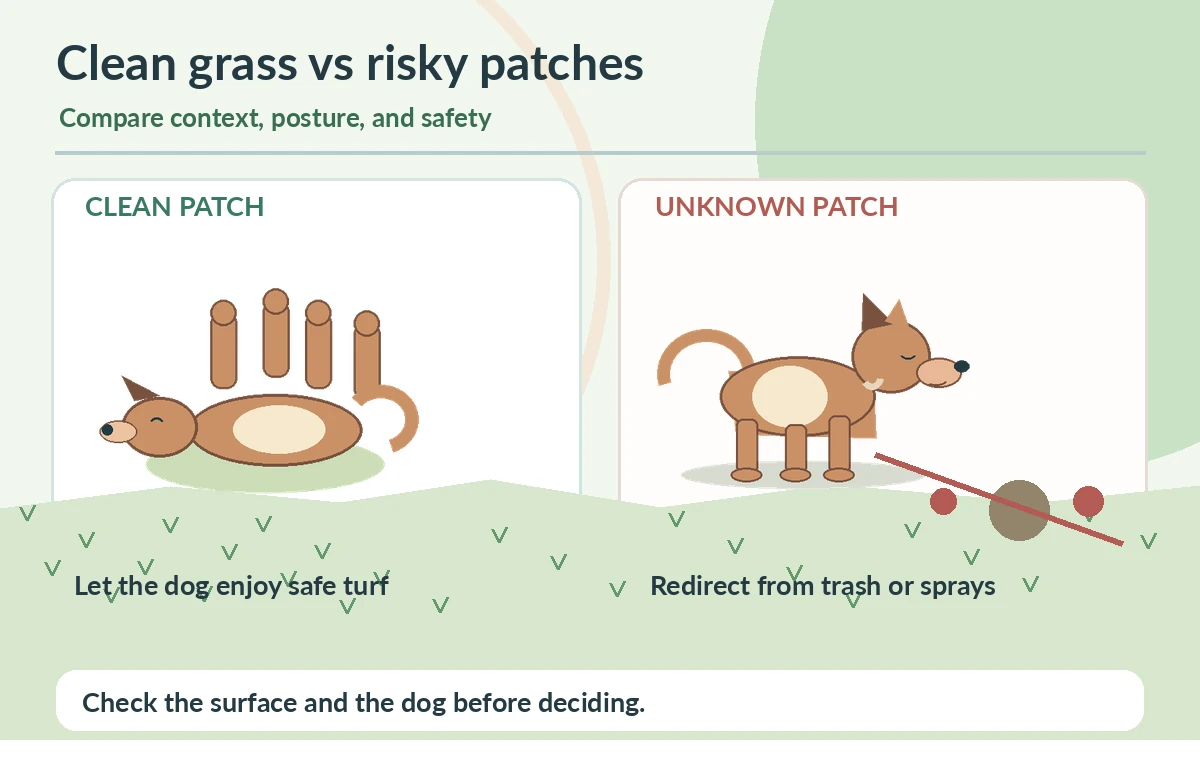
Allow rolling only on a place you have checked for feces, sharp objects, foxtails or other grass awns, standing water, and visible chemical treatment notices. Keep the dog clear of unknown garden products or recently sprayed lawns until the label’s reentry conditions permit access. Watch for heat on artificial turf and for wildlife activity in brush. Do not rely on a visual scan to detect every hazard; leash management and choosing familiar locations reduce exposure. If a patch smells intensely foul, lead the dog away before its back touches the surface.
Give a cue that preserves choice
Teach a cheerful “this way” or recall using rewards on an ordinary low-distraction walk. Start when the dog is only sniffing, not already rolling hard. Say the cue once, move away a few steps, and reward following. Repeat on easy paths before testing more interesting smells. Avoid jerking a leash, shouting, or dragging a dog by the collar. AVSAB recommends reward-based methods rather than aversive corrections. You can let the dog return to an approved sniff spot when safe, helping it learn that responding to you does not always end outdoor exploration.
After a roll, make a sensible coat check
On return, look over the shoulders, ears, back, and belly for burrs, grass seeds, ticks, or visible contamination. Follow your veterinarian’s parasite prevention guidance and remove debris gently with suitable grooming tools. If the coat seems clean, you may not need a full bath after every roll; overbathing can be unnecessary for many dogs. If you see feces or a mystery chemical residue, prevent licking and ask a veterinarian or poison-control professional about safe next steps rather than improvising with concentrated detergents. Wash your own hands after handling contaminated fur.
Make room for harmless rolling
For a dog that loves clean turf, offer a known safe patch on walks or in a maintained yard. Pair this with ordinary sniff walks and opportunities to stretch and explore. Restrict access to areas with trash, feces, or landscaping chemicals instead of trying to eliminate every roll. If grass is unavailable, enrichment can include scent-search games with dog-safe household items or supervised play on a clean mat. The point is not to replicate the smell of a mystery lawn; it is to offer agency and movement without exposure to avoidable hazards.

A quick decision tree for the next roll
Ask three questions in order. Is the surface visibly safe and permitted for pet use? Does the dog’s movement look loose and voluntary? Does the dog recover normally without repeated scratching or signs of illness? Three yes answers may support allowing a short supervised roll. A questionable surface calls for a calm redirect. Skin discomfort calls for observation and possibly veterinary advice. Sudden weakness, trouble breathing, or severe distress after outdoor exposure warrants urgent care. Separating surface risk from behavior keeps responses proportionate and humane.
How We Research
We examine primary veterinary or recognized animal-welfare guidance, compare it with practical behavior observations, and separate supported claims from plausible but uncertain explanations. We avoid treating isolated gestures as diagnoses and prioritize voluntary interaction, reward-based education, and clear veterinary escalation signs. This guide was reviewed against the linked resources on October 27, 2026; it does not replace individual clinical or behavior advice. Learn about our standards on About HubPet.
Sources
VCA Animal Hospitals, Why Does My Dog Roll in Gross Things?: Read source. Accessed October 27, 2026.
American Kennel Club, How to Read Dog Body Language: Read source. Accessed October 27, 2026.
American Kennel Club, Why Does My Dog Dig?: Read source. Accessed October 27, 2026.
American Veterinary Society of Animal Behavior, Humane Dog Training: Read source. Accessed October 27, 2026.
Safety note: Sudden behavior changes, pain, distress, breathing difficulty, or bites call for individualized veterinary or professional help. See our veterinary disclaimer.
A different smell or sensory preference may play a role, but no one can infer a single motive. Choose a clean spot and avoid heavily scented products.
It can occur during relaxed play, although a rolling motion is not a reliable emotion label. Check body language and the surrounding surface.
Allow it on a safe, inspected surface if your dog enjoys it. Redirect calmly when there is feces, litter, chemical treatment, or another risk.
Persistent rolling with scratching, chewing, redness, or hair loss can be associated with discomfort. A veterinarian can assess the underlying cause.
Not necessarily. Inspect the coat and paws first. Seek guidance if you suspect toxic residue or substantial contamination rather than overusing shampoo.