
Educational guidance only, not a veterinary diagnosis. New pain, sudden behavior changes, intense fear, or a bite risk call for professional assessment. Read the veterinary disclaimer.
Dog body language is a moving picture, not a dictionary in which one tail wag or ear position means one emotion. Watch the whole animal: posture, muscle tension, weight shift, eyes, mouth, tail, movement, and the environment. A dog can wag while frightened, freeze before snapping, or move away politely when they have had enough contact. Context changes what a signal is likely to mean.
This guide gives dog owners a repeatable reading method rather than promising to mind-read dogs. Compare your dog with their own comfortable baseline first. For a narrower myth, see Does a Wagging Tail Always Mean a Dog Is Happy?. The practical goal here is to decide when to engage, pause, create space, or ask for professional support.
Take a Three-Second Whole-Dog Snapshot
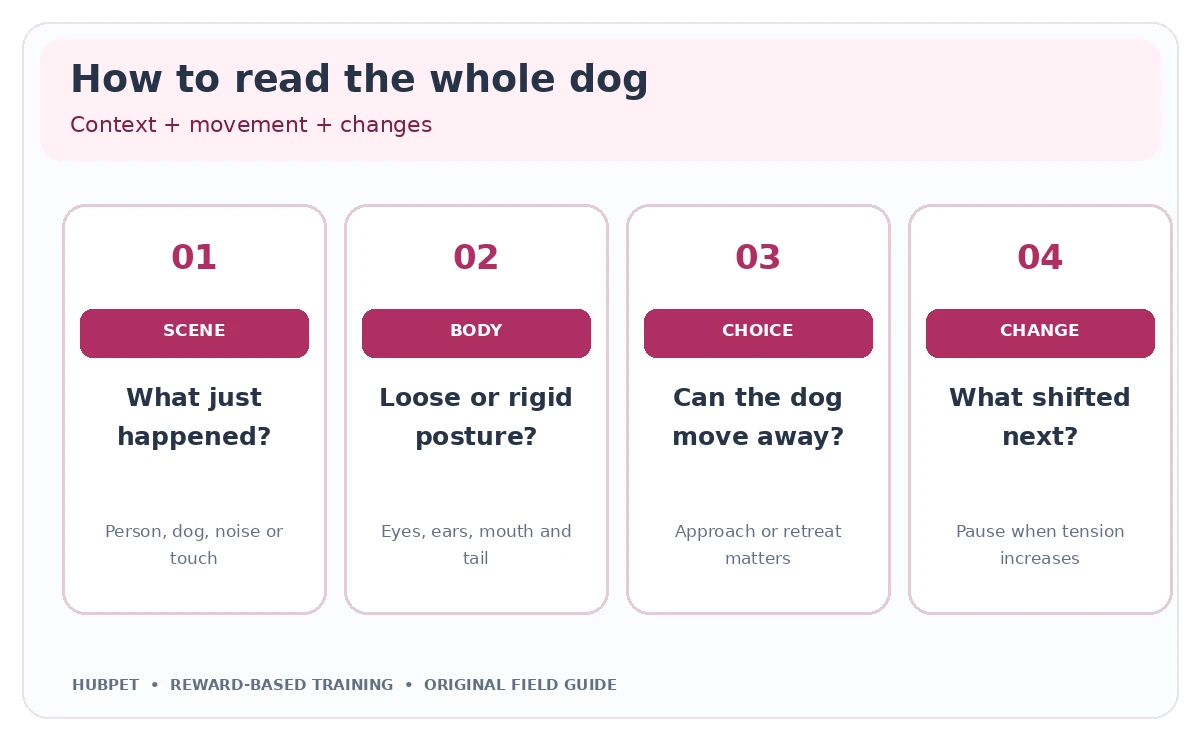
Before approaching, pause and notice three layers: the situation, the body, and the direction of movement. What is the dog looking at? Are their weight and muscles loose or rigid? Are they approaching, retreating, turning sideways, or unable to move away? Compare these with the dog’s normal behavior when comfortable in a familiar place. An isolated photo misses how the posture changes over time.
Look again after something changes, such as a person bending over or another dog coming closer. Does the dog soften and continue investigating, or become still and vigilant? A flexible, recoverable response usually tells you more than the exact angle of one ear. If uncertainty remains, give the dog space instead of testing a theory with a touch or greeting.
Posture and Movement Come First
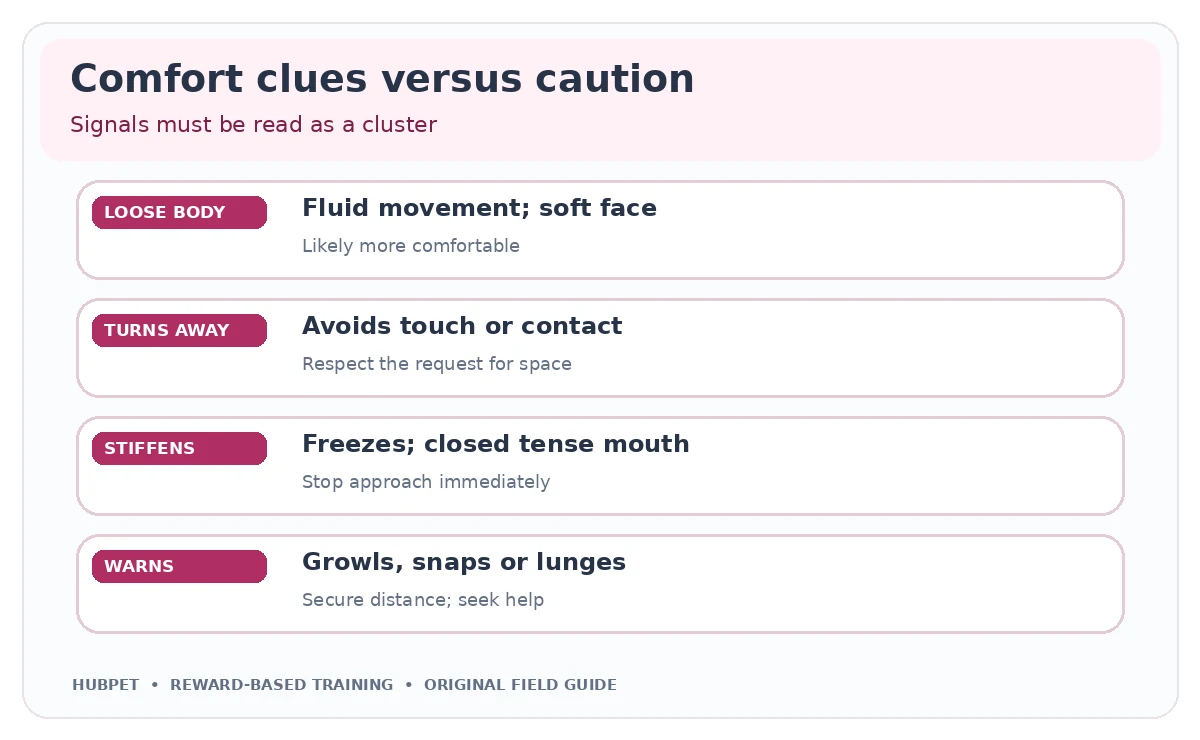
Loose curves in the body, normal breathing, fluid movement, and the ability to move toward or away can be compatible with comfort. A tucked, crouched body may signal fear; a tall, rigid stance with forward weight can signal high arousal or warning. Raised hackles reflect arousal, not automatic aggression or a claim to dominance. Breed shape, tail carriage, coat, and individual habits can change appearances.
Freezing deserves particular respect. A still dog is not necessarily relaxed; a sudden stiff pause can precede a warning or bite when pressure continues. Never reach into a dog’s resting place, corner a dog, or assume lying on the back always invites belly rubbing. Allow escape routes. The dog hugging and comfort guide discusses how human affection can sometimes feel restrictive.
Eyes, Ears, and Mouth Offer Supporting Clues
Soft eyes and a loose face in a familiar setting may accompany calm behavior. Wide eyes showing unusually visible whites, hard staring, a closed tense mouth, lip licking without food, yawning outside a sleepy context, or ears flattened behind can accompany worry. None of these gestures stands alone: a dog may lick because food is nearby, yawn because they are tired, or have naturally exposed eye whites.
Watch transitions. If a dog’s mouth closes abruptly, body stiffens, and attention locks onto a person, pause the interaction and increase room. A dog pulling back when a hand approaches is communicating something useful even without growling. Respect that signal. For additional examples of low-key warning behavior, see our guide to subtle dog stress.
Why the Tail Can Mislead
A moving tail indicates arousal or engagement, not automatically friendliness. Tail height, speed, stiffness, body movement, and the setting matter together. A low loose wag during familiar play is different from a high stiff wag paired with rigid posture and a direct stare. Docked tails and naturally curled tails also change what observers can see.
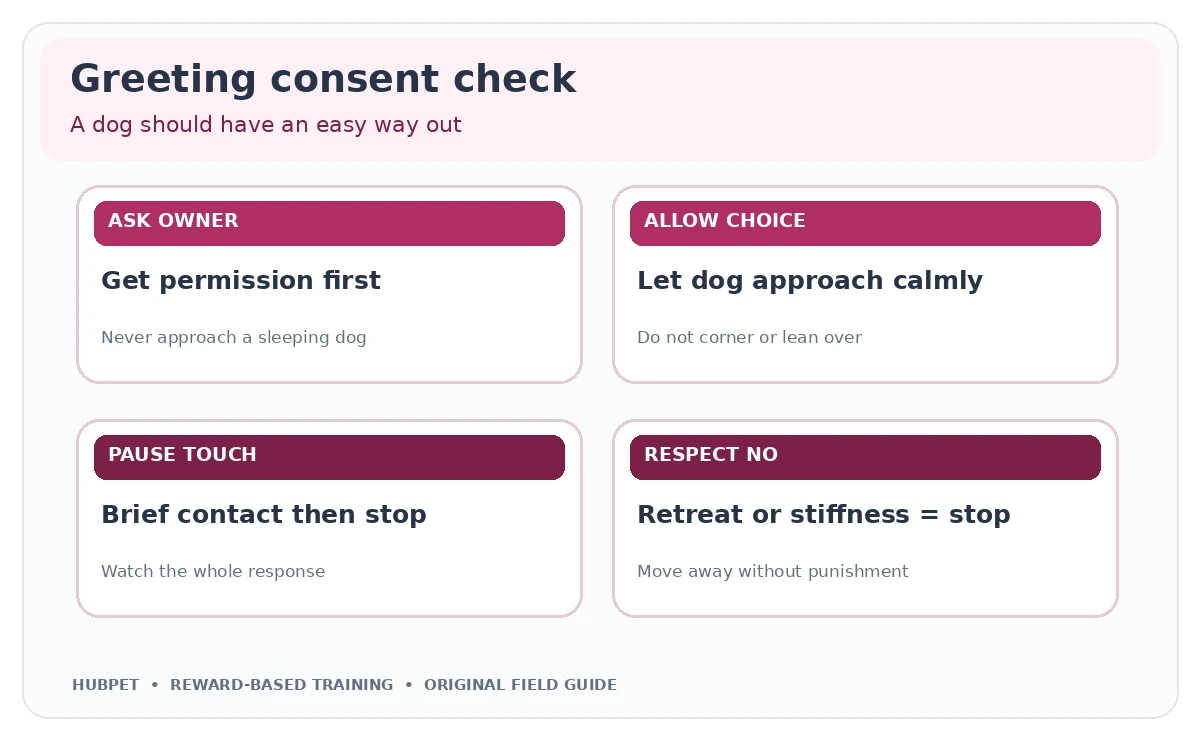
Do not use the tail as a permission signal to pet a dog. Ask the owner, allow the dog a choice to approach, and pause if the dog turns away, moves back, stiffens, or stops seeking contact. Even a dog previously comfortable with a particular person may be less comfortable while eating, sleeping, injured, or confined.
Use Body Language in Everyday Situations
At home, watch the dog as a child approaches a sleeping area. If the dog tries to move away, give them a protected resting place rather than asking the child to persist. On walks, notice whether another dog’s approach creates pulling, freezing, barking, or a relaxed glance. Give space before forcing an on-leash greeting. During grooming, split handling into small voluntary steps and stop if tension increases.
Consider a familiar guest reaching toward the dog’s head. Does the dog lean in loosely, turn sideways, duck under the hand, or retreat? Respond to the movement, not the guest’s expectation. A pause in petting can test whether the dog voluntarily requests more; if the dog moves away, the interaction is over. This is a practical consent check, not an infallible way to read emotion.
Safety Boundaries and When to Get Help
Growling, snapping, lunging, repeated freezing, or an attempt to flee should be treated as requests for more space and potential safety warnings. Do not punish the warning or force a dog into contact to prove they are friendly. Secure separation from children and unfamiliar animals as needed. If a dog has bitten or appears likely to bite, work with a veterinarian and qualified reward-based behavior specialist.
Sudden behavior change can signal discomfort or illness and calls for veterinary assessment. Never diagnose pain from a stress signal alone; note what happened and share the observation. The most useful habit is simple: look at the whole dog, notice change over time, make room for choice, and err on the side of safety when signals conflict.
How We Research
We reviewed the linked veterinary and animal-behavior resources on October 26, 2026, separating published guidance from our practical at-home examples. See the HubPet editorial approach. We checked each recommended response against animal welfare, ordinary owner safety, and situations requiring veterinary or professional assessment. We created original teaching diagrams and observation tools; they are not diagnostic instruments or clinical trial data. Dogs differ in temperament, age, and history; the material is educational, not an individual assessment.
Sources
VCA Animal Hospitals: How to recognize canine stress and the value of context. Reviewed October 26, 2026.
VCA Animal Hospitals: Canine communication and the meaning of whole-body posture. Reviewed October 26, 2026.
ASPCA: Dog bite prevention and body-language safety. Reviewed October 26, 2026.
American Veterinary Society of Animal Behavior: Humane dog training position statement and clarification. Reviewed October 26, 2026.
No. Tail movement may accompany many emotional states. Read stiffness, body posture, movement, facial cues, and context together, and allow the dog to choose whether to approach.
More visible eye whites can occur with stress or a particular head angle, but anatomy and context matter. Watch for other signs such as freezing, withdrawal, tension, or a change from the dog’s usual expression.
Not always. Exposing the belly can occur in different social contexts, including appeasement or discomfort. Pause and look for a relaxed, voluntary request for contact rather than assuming consent.
No. Growling can be an important warning that the dog feels uncomfortable. Give space and address the cause with qualified help rather than suppressing the signal and increasing bite risk.
Pause after a short period and watch the dog’s response. If they move away, duck, stiffen, or do not seek more interaction, end contact. Never restrain a dog to continue petting.