
A dog trots over with a loose body and an open mouth that resembles a human smile. Another pulls its lips back to reveal teeth while its ears tuck and body wiggles. Those scenes may look similar in a photo, yet they can mean different things. A relaxed open mouth, an appeasement grin, panting, and a threat display are not interchangeable. Rather than deciding that visible teeth equal happiness or aggression, consider the whole body and the interaction. You can enjoy a charming expression without forcing the dog to pose or assuming the face reveals one specific emotion.
What people usually call a dog smile
Many owners describe a lightly open mouth with a relaxed jaw, soft eyes, and loose facial muscles as smiling. This expression may accompany enjoyable play or resting, but it does not copy human facial communication exactly. AKC’s discussion of facial expressions stresses interpreting posture and situation alongside the mouth. If a dog is breathing comfortably and choosing to approach, the overall picture may be positive. A photograph alone cannot tell you whether a dog is comfortable with a stranger, hot after exercise, or about to disengage. Look at the moments before and after.
Understand the appeasement or submissive grin
Some dogs retract their lips and briefly show their front teeth while the body remains soft and wiggly, especially during greetings. AKC calls this an appeasement or submissive grin and distinguishes it from a tense snarl. Do not label the dog guilty or frightened solely from that grin; context determines what the display is doing. At the same time, a dog asking for space may also show facial tension and teeth. Avoid putting your face close to the dog’s muzzle or encouraging children to imitate the expression. Give the animal room to decide whether to interact.
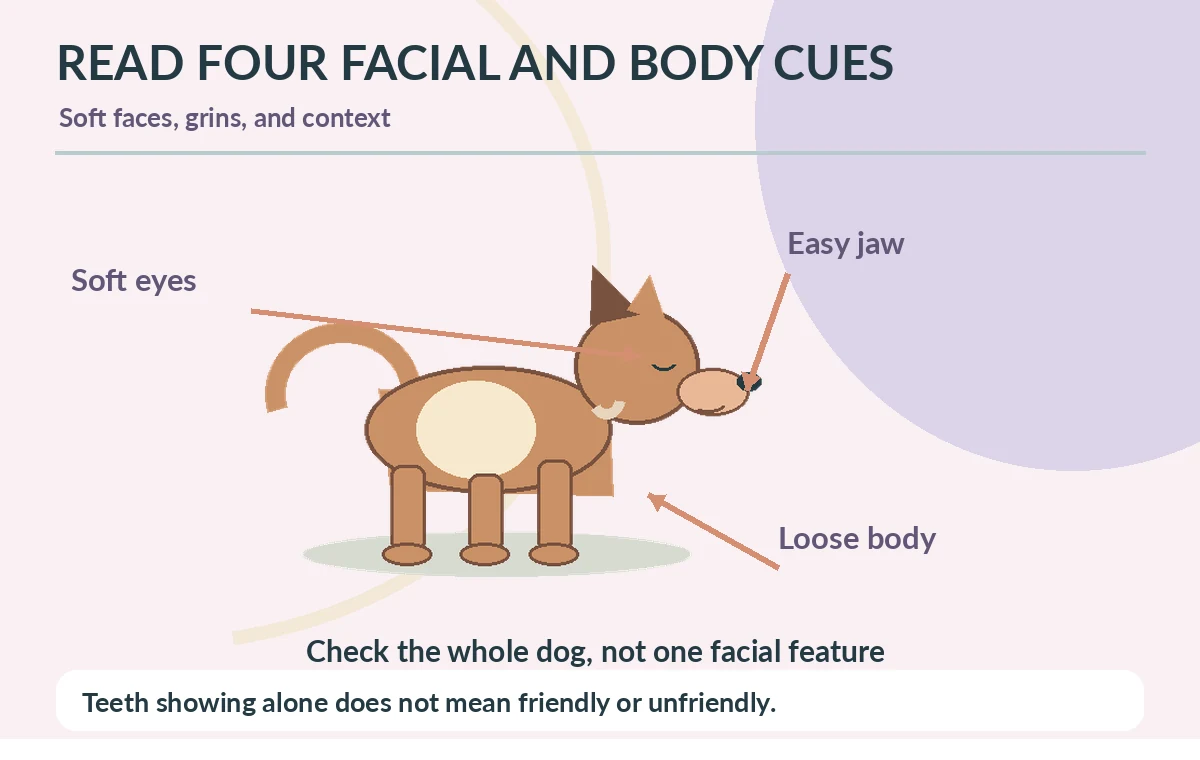
Compare the jaw, eyes, ears, and body
A relaxed mouth is more reassuring when the dog’s eyes look soft, muscle tone is loose, and movement is fluid. Concern rises when you see a tight lip curl, rigid legs, fixed stare, pinned ears, low posture, or a sudden freeze. A wagging tail is not a safety guarantee: dogs wag during several emotional states. The ASPCA’s bite-prevention advice highlights stiff posture and discomfort as reasons to back away. Teach the household to check several features instead of relying on one feature, such as “the corners of its mouth point upward.”
Know when panting changes the picture
An open mouth often accompanies panting, especially after activity or in warm weather. Panting can be normal cooling behavior, while rapid, unusual panting may also occur during stress or illness. Do not interpret a tongue-out photo as an automatic happiness signal. Provide water, access to a cooler place, and a break when appropriate. If a dog seems overheated, weak, confused, or has difficult breathing, obtain prompt veterinary help. A relaxed-looking photograph is a poor substitute for observing temperature, exertion, and breathing over time.

Read play face with the rest of play
During friendly play, dogs often display loose exaggerated movement, bouncing turns, play bows, and open mouths. AKC notes that both dogs repeatedly choosing to engage is a better indicator of mutually comfortable play than facial expression alone. When one dog tries to leave, stiffens, or is repeatedly pursued without breaks, interrupt calmly and allow separation. You do not need to decide whether a particular grin is a smile to manage play well. Give the dogs enough room, supervise children, and end sessions before arousal or rough contact escalates.
Make photographs and greetings low pressure
Let your dog choose its position rather than holding its muzzle, pulling back lips, or asking someone to crowd it for a smiling photo. Use natural light, take pictures from a normal distance, and pause when the dog turns away. For greetings, ask strangers to wait for the dog to approach rather than leaning over its head. People often read a friendly expression through a human lens, but dogs can feel uneasy even when they look “cute.” Reward calm voluntary contact and let the dog opt out. The best portrait is one taken while the pet remains comfortable.
Never treat a snarl as a funny smile
A dog that freezes, exposes teeth with a tense muzzle, growls, backs away, or lunges may be warning that it needs distance. Stop touching, move away calmly, and prevent others from approaching. Punishing warning sounds can increase danger by removing information about discomfort without resolving the cause. If displays are frequent or escalating, ask a veterinarian and qualified reward-based behavior professional for an individualized plan. Do not test the dog by reaching for its food, hugging it, or staging stressful photos. Bite prevention starts with listening to a dog’s attempts to communicate.

A practical four-cue interpretation checklist
Before calling a face a smile, ask: Are the eyes soft or fixed? Is the body loose or stiff? Is the dog voluntarily approaching or seeking escape? What is happening with breathing and recent activity? Compare all four, then choose a low-pressure response. Relaxed dogs can continue their activity; uncertain dogs need space; a dog showing clear warning signals needs distance and safe management. Sudden changes in breathing or behavior call for veterinary help. This checklist avoids treating an appealing facial shape as a diagnosis of mood or a promise that petting is welcome.
How We Research
We examine primary veterinary or recognized animal-welfare guidance, compare it with practical behavior observations, and separate supported claims from plausible but uncertain explanations. We avoid treating isolated gestures as diagnoses and prioritize voluntary interaction, reward-based education, and clear veterinary escalation signs. This guide was reviewed against the linked resources on October 27, 2026; it does not replace individual clinical or behavior advice. Learn about our standards on About HubPet.
Sources
American Kennel Club, What Do My Dog’s Facial Expressions Mean?: Read source. Accessed October 27, 2026.
American Kennel Club, How to Read Dog Body Language: Read source. Accessed October 27, 2026.
American Kennel Club, Are Dogs Playing or Fighting?: Read source. Accessed October 27, 2026.
ASPCA, Dog Bite Prevention: Read source. Accessed October 27, 2026.
Safety note: Sudden behavior changes, pain, distress, breathing difficulty, or bites call for individualized veterinary or professional help. See our veterinary disclaimer.
Some relaxed facial expressions resemble a human smile. They can accompany pleasant experiences, but body language and context tell you more.
It is a teeth-showing greeting or appeasement display seen in some dogs. A loose, wiggly body helps distinguish it from a tense warning.
Not necessarily. Exposed teeth can also accompany fear or aggression. Keep a respectful distance and look at the full body.
An open mouth may relate to panting, relaxation, or play. Recent exertion and breathing matter more than one facial photograph.
Back away if the dog freezes, growls, hard-stares, lunges, turns away repeatedly, or shows tense muscles and a tight lip curl.