
Educational information only; not veterinary diagnosis or an individualized training plan. Sudden behavior changes, injury, pain signs, or persistent distress warrant veterinary advice. Read the HubPet veterinary disclaimer.
Finding a new hole in the yard is frustrating. However, punishment after the fact cannot explain where your dog should dig instead. Digging is a normal canine behavior that can serve several purposes, from seeking cooler soil to tracking an interesting scent. First identify where, when, and how the digging happens. Then change the environment and teach a workable alternative.
This article is a practical training plan. HubPet already explains common motives behind yard digging; here the focus is the next seven days of management, reinforcement, safe boundaries, and troubleshooting. “Stop” means reduce damage and danger, not forbid every natural digging movement.
Step 1: Map the holes before choosing a fix
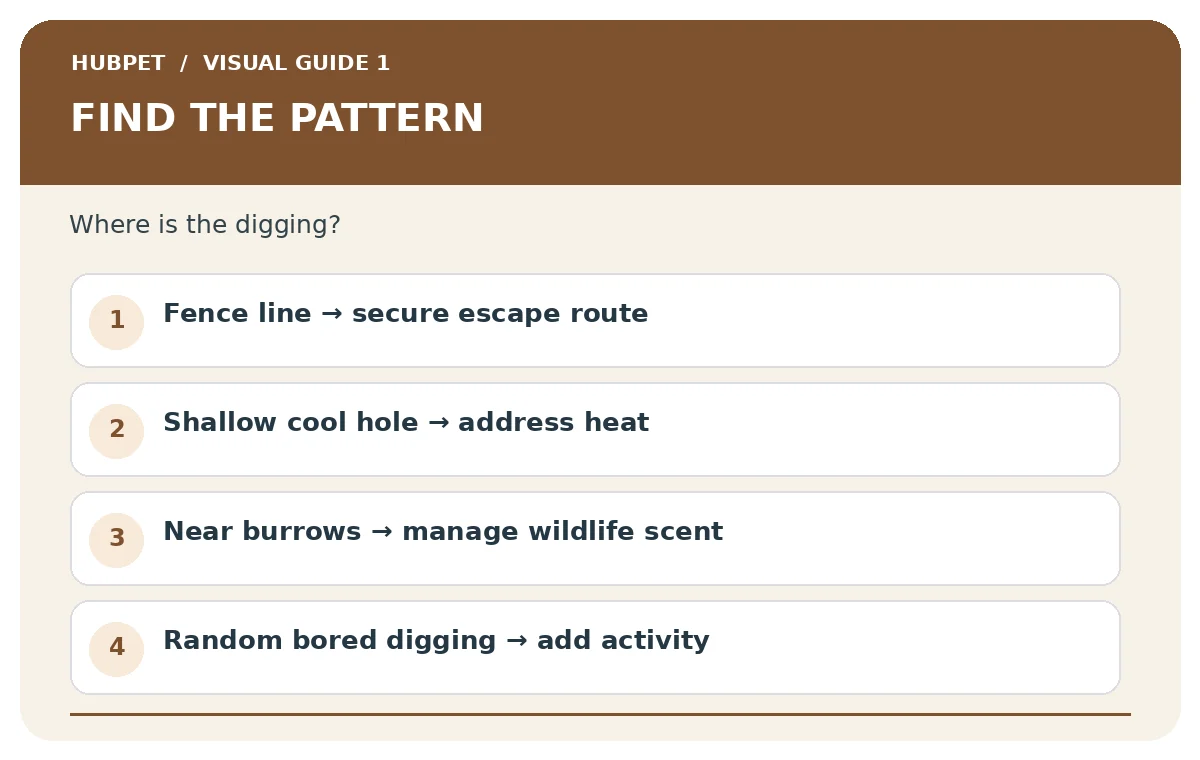
Take notes for several outings: holes by the fence, holes near shrubs, one shallow hollow in hot weather, or scattered holes near rodent scent. Notice whether the dog was alone, whether it was warm, and whether the digging began during play. You need not know the cause with certainty, but the pattern guides a safer response.
Fence-line digging deserves immediate attention because escaping can put a dog at risk. Move the dog to a secure supervised area while you inspect the perimeter. If tunneling or destructive digging occurs only during absences and comes with pacing, vocalizing, or distress, talk to your veterinarian about separation-related concerns.
Step 2: Remove immediate hazards from the yard
Check for access to roads, sharp debris, treated landscaping, fertilizer, pesticides, and potentially toxic bulbs. ASPCA cautions that garden products and bulbs can be harmful if swallowed. Do not use pepper, irritants, buried sharp objects, shock, or frightening traps as deterrents. They can cause harm without solving the reason for digging.
Secure fencing with professional help if needed, using materials that cannot injure paws or trap a dog. Do not assume that burying objects in a hole is safe simply because it stops you from seeing the problem. Keep supervising and offer a safe indoor alternative until you resolve the escape risk.
Step 3: Give digging an approved location
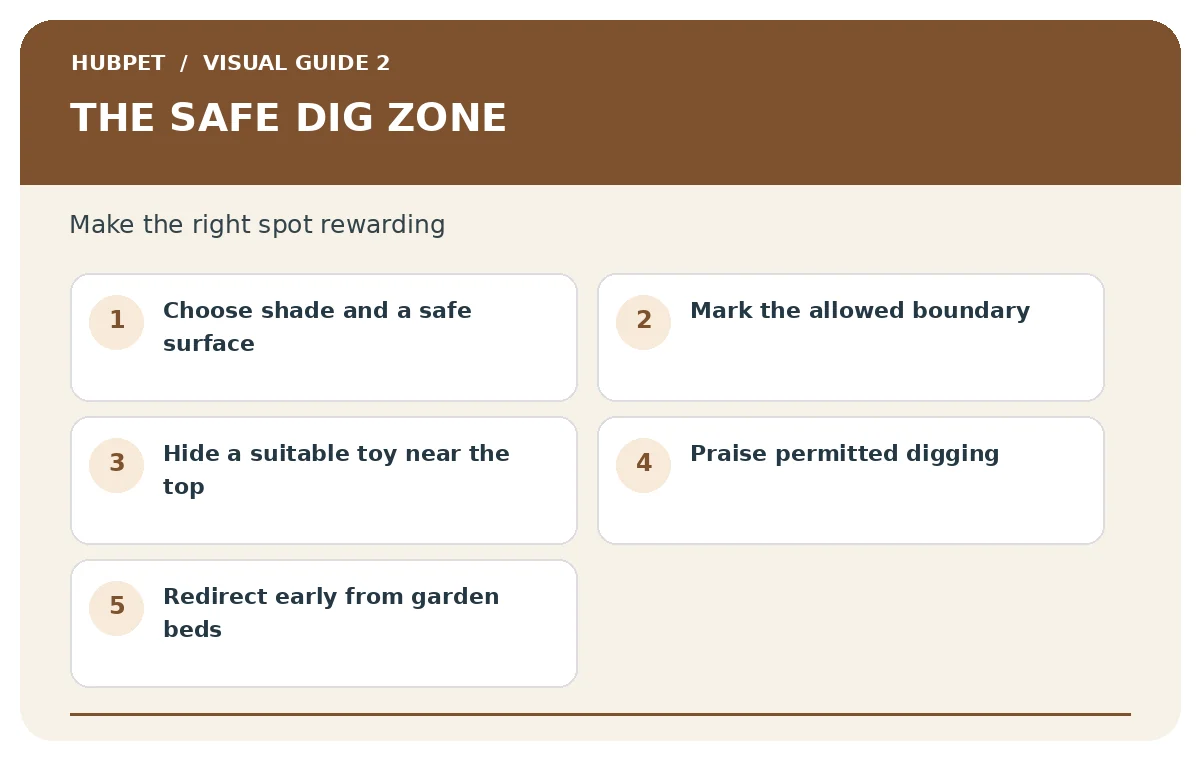
Choose a shady, supervised part of the yard. Keep a sandbox or loose-soil area safe and clean. Mark its edges and keep it away from garden chemicals. Hide a suitable toy near the surface while your dog watches, then invite the dog to investigate. Praise and reward exploring the permitted spot.
As your dog begins to favor this area, reward digging there and redirect gently from off-limits places. AKC recommends designated digging areas for dogs who enjoy this natural behavior. Avoid forcing a fearful dog to approach the box; make the first sessions short and easy.
Step 4: Replace unsupervised boredom with a workable routine
More yard time does not necessarily mean better enrichment. Before an outdoor break, offer a sniff walk, a few minutes of reward-based training, or safe interactive play suitable for your dog’s age and health. Stay outside to reinforce the behaviors you want. A yard should not function as long solitary confinement.
Use several small activity opportunities instead of trying to exhaust the dog. HubPet’s weekly enrichment checklist can help you distribute walks, sniffing, play, and rest. A dog who is satisfied and supervised has fewer opportunities to rehearse unwanted digging.
Step 5: Teach a calm redirect in the moment
When the dog approaches a forbidden planting bed, calmly invite them to an easy known behavior, a scatter of safe food on approved ground, or their digging box. Reward the alternative promptly. Avoid calling repeatedly in an angry voice or chasing; those reactions can accidentally turn digging into an exciting attention game.
Practice before your dog is deeply absorbed in excavation. Begin when they merely orient toward the garden, reinforce coming to you, then walk together to a permitted activity. If redirecting fails repeatedly, increase management: shorter supervised outings, more distance from the trigger, or physical barriers that do not endanger the animal.
Step 6: Fix the cause, not just the soil
Dogs digging cool spots on hot days need indoor shelter, water, and safe shade. They do not need a training correction. One sniffing around tunnels may be tracking wildlife; make the area less attractive through humane property maintenance rather than letting the dog dig near a dangerous den. A dog hiding a treasure may need a different place to store or play with it.
If fence escape is the pattern, assume environmental management is urgent. If anxiety signs accompany destruction, ordinary reward redirection alone may not be sufficient. Keep the dog safe and involve veterinary or qualified behavior support as needed.
A simple seven-day progress record
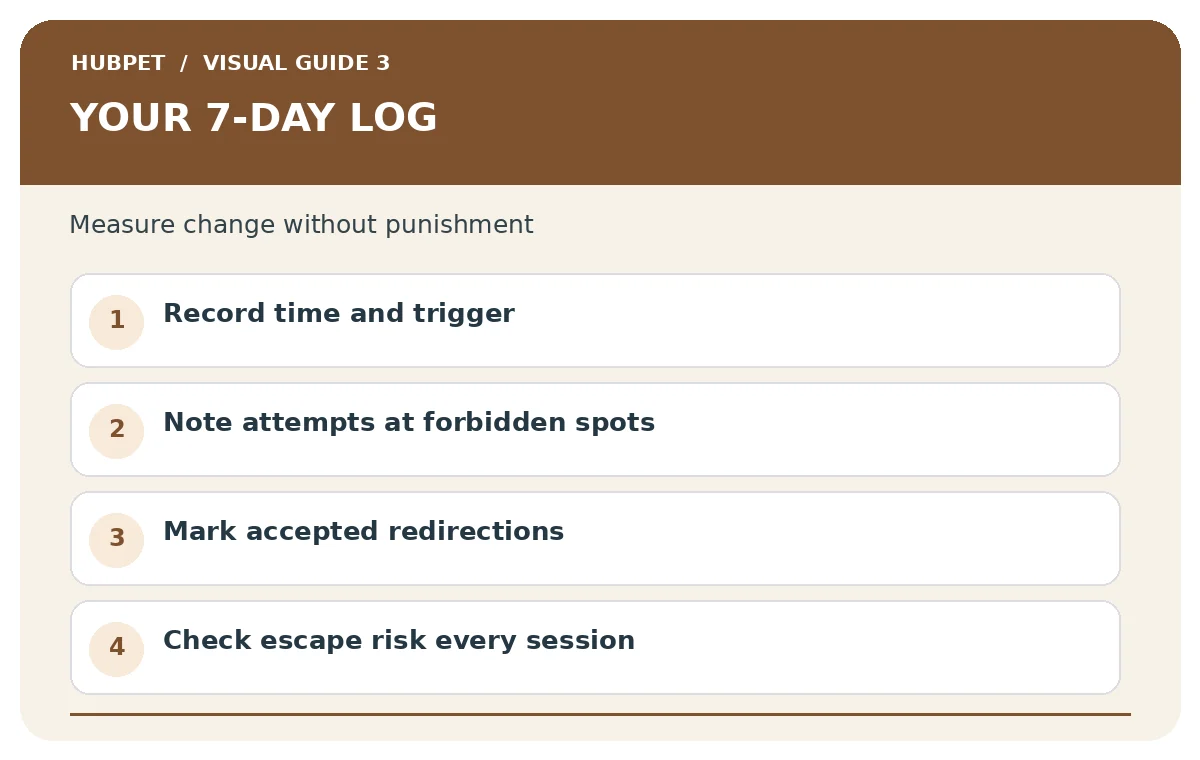
For each outdoor session, note the trigger, number of attempts in restricted areas, whether the dog accepted redirection, and whether they used the approved dig zone. Track trends rather than expecting perfect behavior on day one. If the environment changed substantially, record that too; it may explain the improvement.
At the end of the week, ask what reduced opportunities to dig unsafely. If attempts still cluster around a fence or appear with fear, prioritize safety and reassess the cause. Extend the plan rather than returning to scolding or leaving the dog unattended.
Common mistakes that set the plan back
Filling holes without changing access can lead to a fresh hole nearby. Scolding the dog for an old hole links the punishment to your return, not the earlier digging. Providing one new toy does little if the dog is still outdoors alone for long periods. Likewise, a bare sandbox may not compete with an active wildlife scent trail.
Instead, make the allowed spot rewarding, keep supervision consistent, and adjust the environmental trigger. If a barrier is needed, use a safe structure maintained by an adult rather than hidden hazards under the soil.
When to involve a professional
Get veterinary advice for sudden repetitive digging alongside anxiety signs, unusual restlessness, injury, or other behavior changes. Ask a qualified force-free trainer for an individualized plan when your dog continues to rehearse dangerous fence escape or cannot disengage from the trigger in safe conditions.
Training may reduce the damage, but some dogs will always value an occasional permitted digging session. A durable solution is usually a combination of safety, enrichment, and an acceptable outlet.
How We Research
We separated motives from management using American Kennel Club guidance on natural digging, approved dig zones, and escape risk. We checked ASPCA advice on environmental enrichment, separation-related behavior, and garden hazards. This guide avoids aversive deterrents and recommends assessment where safety or anxiety is a concern. Read more about our editorial approach on the HubPet About page.
Sources
American Kennel Club: Why Do Dogs Dig?. Reviewed October 26, 2026.
American Kennel Club: How to Teach a Dog to Dig on Cue. Reviewed October 26, 2026.
ASPCA: Separation Anxiety. Reviewed October 26, 2026.
ASPCA: Compost and Fertilizer Pet Safety. Reviewed October 26, 2026.
An appealing approved digging spot can redirect a natural behavior, but supervision and reducing other triggers still matter.
The dog may be trying to escape or reach an interesting scent. Secure the boundary and investigate stress or environmental triggers before training.
No. Delayed punishment does not explain the desired alternative and may create fear. Supervise and reward behavior you can guide in the moment.
Bring the dog indoors to a cooler environment, provide water and appropriate shade, and manage heat exposure rather than treating the digging as disobedience.
Sudden repetitive digging with distress, self-injury, or dangerous escape attempts warrants veterinary and qualified behavior guidance.