
This article is general information, not veterinary advice. If your pet seems unwell, is in pain or may have eaten something harmful, contact your vet or an animal poison control line right away. Read our vet disclaimer. Kitten behavior can seem to change every few weeks: a sleepy new arrival becomes a daring climber, a hand-chaser, an explorer and eventually an adolescent with firm preferences. There is no single date when every kitten becomes calm. What matters is whether the kitten is able to eat, use the litter box, rest, play and interact voluntarily while continuing to develop confidence. The most useful plan is age-appropriate enrichment plus a consistent, safe environment. This chart covers common milestones from about eight weeks to the end of the first year without treating every variation as a behavioral problem.
Begin by giving your kitten a predictable home base: a quiet bed or hiding place, accessible food and water, a suitable litter box, a scratcher and supervised play. Let new experiences arrive in small, positive steps and respect the choice to retreat. In the first days, track eating, stool and urine as well as play. If an active kitten suddenly becomes withdrawn, stops eating or strains in the box, that is not simply a stage of kittenhood—consult a veterinarian.
Use the age guide as a range, not a strict schedule
VCA describes an early sensitive socialization period followed by active play, increasing independence and adolescence. Early exposures influence confidence, but older kittens can still learn through gradual positive experiences. A kitten’s history, health, personality, prior handling and home setting make individual differences normal. Use the age bands below to set achievable expectations, then watch the actual kitten. The table is an owner planning aid, not an assessment of developmental disorders.
| Age or stage | Common behavior themes | Helpful environment and routine | Seek advice if |
|---|---|---|---|
| 8–11 weeks | Play bursts, exploration, need for safe retreat | Quiet starter room, shallow-access litter box, gentle handling | Poor intake, lethargy or elimination trouble |
| Around 3 months | Climbing, chasing, greater confidence | Sturdy scratcher, wand play, short positive introductions | Persistent fear or abrupt withdrawal |
| 4–5 months | Active hunting-like play, chewing on inappropriate items | Toy rotation, remove string and cord hazards | Swallowing suspected or eating changes |
| 6–7 months | Adolescent energy and preferences | Consistent no-hands play; more climbing choices | Pain, new soiling or hard aggression |
| 8–10 months | More individual social style and routines | Continue enrichment and respectful handling | Marked decline in activity or appetite |
| 11–12 months | Emerging adult habits with ongoing curiosity | Reassess environment, weight and vet plan | Sudden changes in established behavior |
Read normal play and the signals that say stop
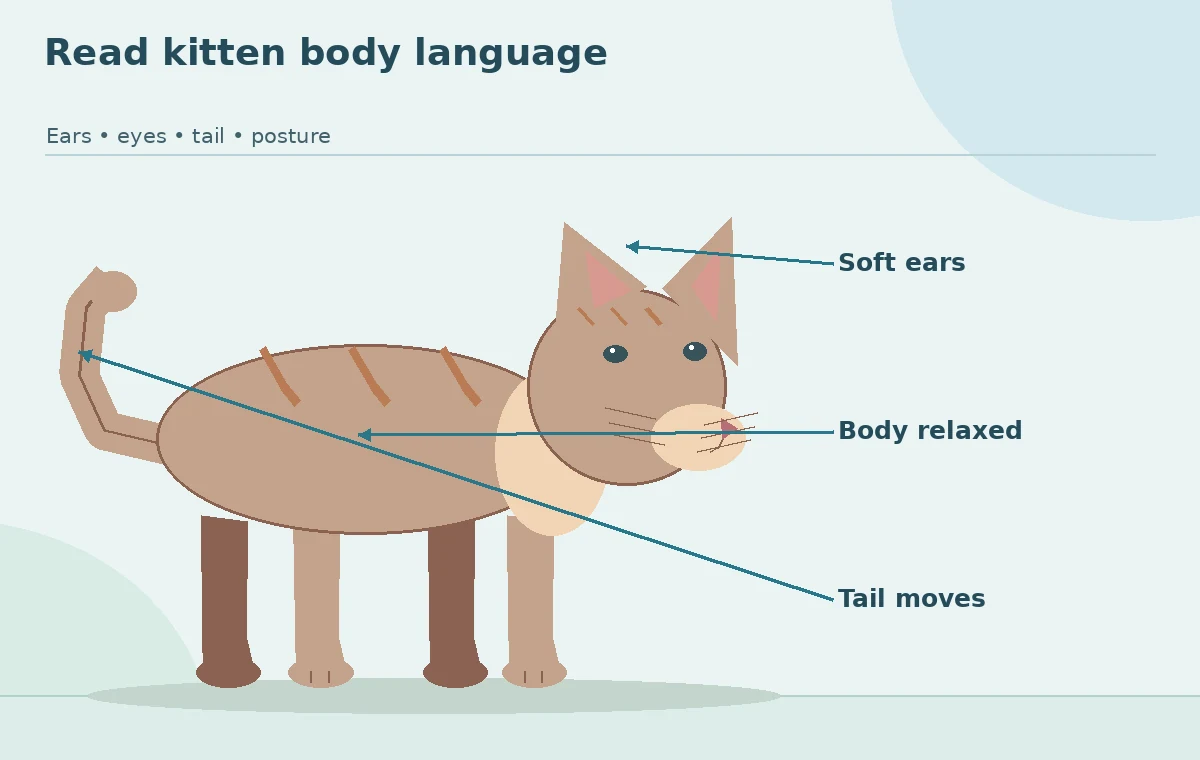
A kitten that stalks a plush toy or darts across the room is practicing movement and hunting skills. A relaxed cat may have a loose body and forward-facing ears; flat ears, a tense crouch and escalating swats may signal that interaction should end. Do not lift a struggling kitten to make it tolerate guests. Teach that hands bring gentle care and toys are for chasing. The published HubPet piece on cats attacking feet covers how moving ankles can accidentally become hunting targets, distinct from a general age guide.
Create a daily routine that fits a growing kitten
- Provide a consistent quiet sleep and hiding area where visitors do not reach in.
- Keep water and food stations away from busy litter-box traffic; monitor actual eating and elimination.
- Offer several short supervised hunting-style play sessions instead of one overwhelming session.
- Allow the kitten to catch safe toys and finish with a calm transition, not frantic overstimulation.
- Place a sturdy scratching surface and an appropriate elevated resting area where the kitten already spends time.
- Introduce handling, sounds and new people gradually with treats or play while the kitten stays free to leave.
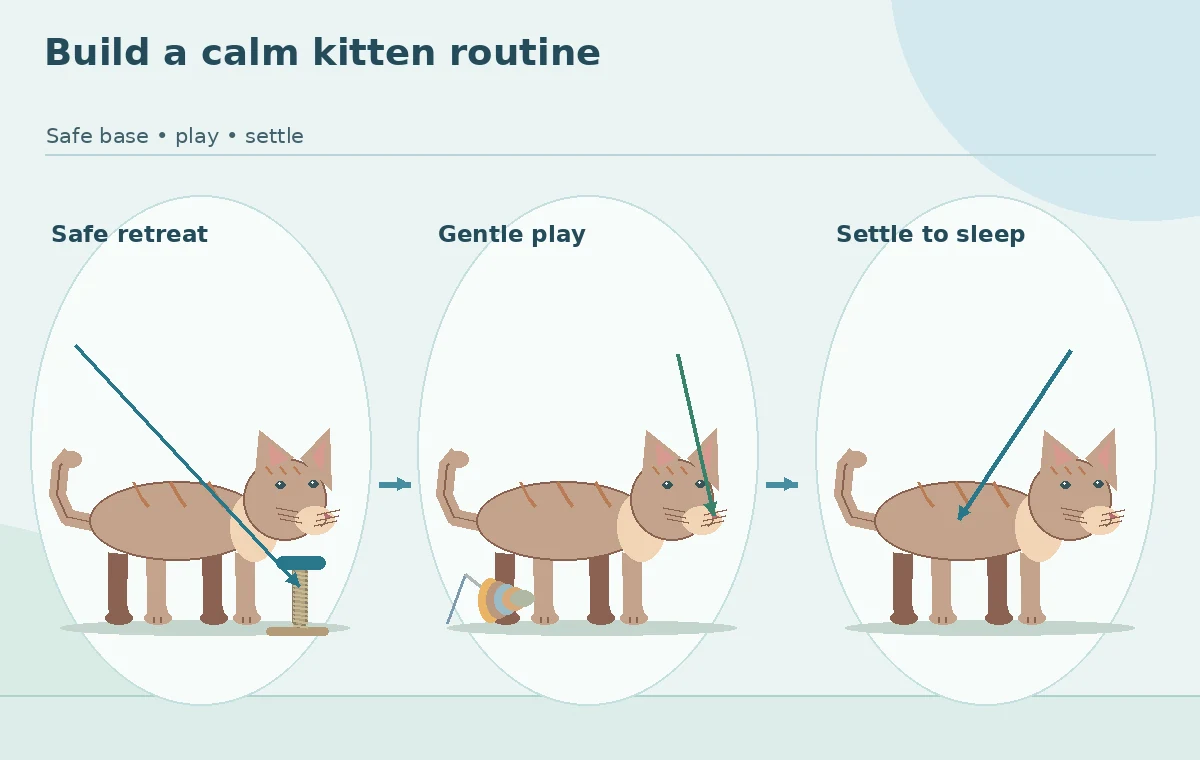
Different homes need different versions of this routine. In a small apartment, use vertical scratchers and safe climbing options rather than more floor clutter. With young children, create a kitten-only retreat and supervise every interaction; pets should not be chased or carried without consent. With other animals, introduce slowly rather than putting everyone together immediately. Safe independence is more useful than constantly stimulating the kitten. When your kitten starts using contact to groom your hair or hands, refer to cat grooming and safe boundaries to protect both the animal and the person.
Troubleshoot an age-related change without guessing
| You notice | First context check | Reasonable next step |
|---|---|---|
| More hand-chasing at 4–6 months | Has play used fingers as bait? | Replace with wand and kicker toys |
| Hides when guests arrive | Is there a quiet escape option? | Offer positive choice-based introductions |
| Scratches furniture | Are suitable scratchers near preferred spots? | Add sturdy preferred-texture scratcher |
| Sudden litter-box accidents | Could there be pain, box barriers or urinary signs? | Arrange vet evaluation before behavior changes |
| Sudden night vocalizing | Has routine or health changed? | Observe and ask vet about new signs |
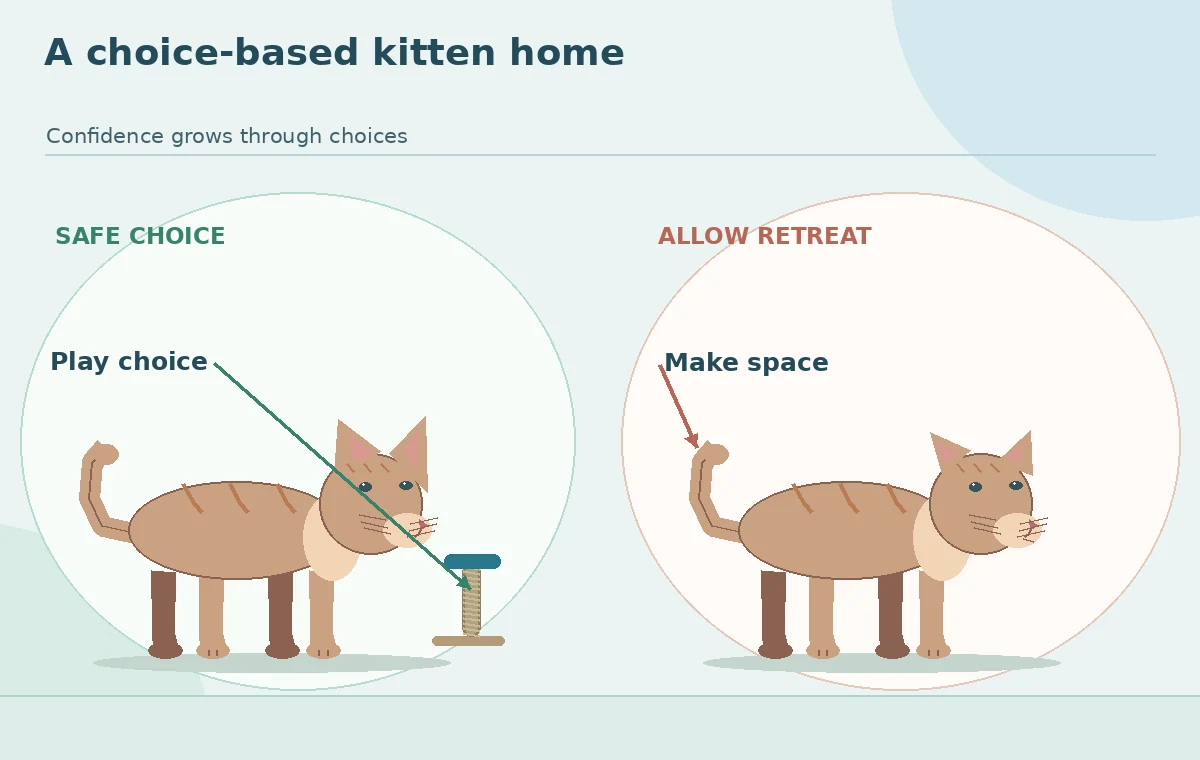
Do not equate every nighttime sprint with excessive energy that must be exhausted. Rest is essential, and forced handling, punishment or too many new experiences can make a kitten more fearful. Pair daytime play with predictable quiet intervals. If your kitten yowls or scratches at night, the cat nighttime vocalizing guide covers environmental and veterinary clues without promising that a single bedtime trick will work. Caregivers can record patterns so a veterinarian sees what changed and when.
When to Call Your Vet
A kitten who is weak, repeatedly vomiting, not eating, struggling to urinate, breathing abnormally or markedly less active needs prompt veterinary guidance. Young kittens are especially vulnerable to reduced food intake. Sudden aggression, yowling with pain, new litter-box problems or a dramatic change in social interest also warrant assessment before behavior training. Your kitten’s veterinarian can tailor preventive care, nutrition and neutering discussions to the individual animal. This article does not provide medical diagnosis or treatment.
An age chart is useful only if you also record changes
Each week, note the kitten’s preferred play, ability to settle, response to gentle handling and any concerning change in appetite or litter habits. Ask whether the environment still fits a growing body: can the kitten turn in the box, access water safely, climb without falling and retreat from guests? A kitten who learns to make choices is more likely to cooperate with routine care than one restrained through unwanted contact. Aim for progress in comfort and choice, not a checklist that every kitten must complete by a birthday.
How We Research
We used VCA’s life-stage overview and behavior-training resources to distinguish developmental ranges from individual temperament. Our table combines observable activities with environmental adjustments rather than behavioral diagnoses. We checked published HubPet topics to avoid recreating their focused advice on foot ambushes, grooming contact and nighttime vocalizing. Medical red flags are included only to direct readers to veterinary care. For our editorial method, see About HubPet.
Sources
VCA: New Kitten Guide; VCA: Kitten Behavior and Training — Getting Started; VCA: Importance of New Kitten Introductions; VCA: How to Deal With Kitten Biting. These are independent educational references, not personalized veterinary examinations.
Energetic play and chasing can be normal, but do not use hands as toys. Seek advice for hard bites or sudden changes.
Many are highly active and testing preferences. Provide climbing space, supervised play and consistent gentle limits.
Yes. Young cats continue to benefit from calm routines, enrichment and reward-based cooperation.
A new kitten may need time and space. Persistent or sudden hiding, especially with appetite or energy changes, merits veterinary advice.
Offer several short, supervised sessions adjusted to the kitten’s interest and need for rest rather than enforcing a rigid duration.