
Educational information only; not veterinary diagnosis or an individualized training plan. Sudden behavior changes, injury, pain signs, or persistent distress warrant veterinary advice. Read the HubPet veterinary disclaimer.
A purr is a rhythmic sound and vibration, not a reliable mood label. Your cat might purr while sprawled beside you, asking for contact, nursing a litter, facing an unfamiliar situation, or coping with discomfort. Those situations can feel very different to the cat. The most useful question is not simply “Is my cat purring?” but “What is happening around the purr, and what else is the cat showing?”
This guide identifies six everyday contexts, shows how to check the rest of the body, and offers a decision path for unusual purring. It builds on HubPet’s earlier discussion of the myth that purring always means happiness without repeating that yes-or-no debate. A purr is one clue in a much wider picture.
1. Resting in a familiar, comfortable spot
A cat stretched loosely on a favorite blanket, with neutral ears and normal breathing, may purr during a comfortable rest. Look for soft muscles, a natural posture, and the freedom to move away. Some cats purr quietly; others are loud enough to hear across a room. Volume alone does not tell you whether the cat feels more content than another cat.
Avoid treating a purr as permission to touch. Offer your hand, allow the cat to approach, and stop petting when the cat turns away or stiffens. If the cat stays nearby after you pause, that can be more informative than how loudly the purr sounds.
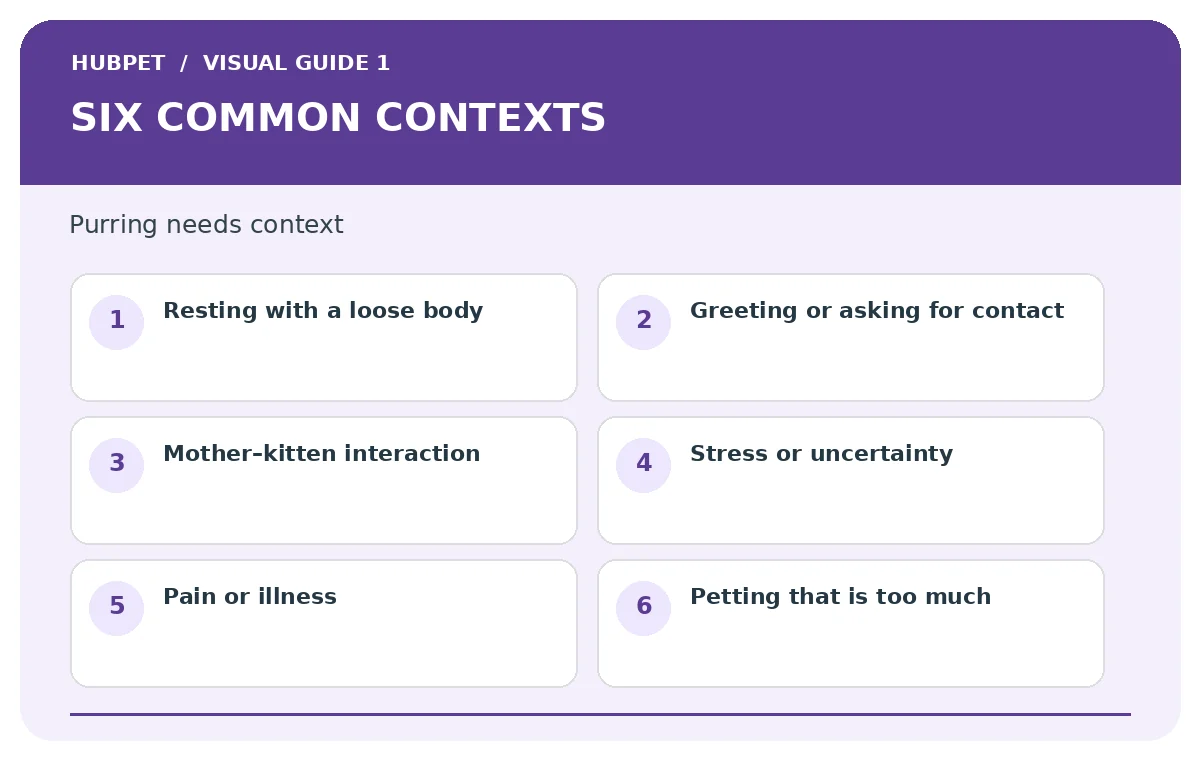
2. Greeting a familiar person or requesting interaction
A cat may purr when stepping onto a lap, rubbing against a leg, or approaching a familiar caregiver. That pattern can accompany a social greeting or an invitation to interact. Watch what happens next: does the cat settle, lean into a brief stroke, head toward food, or simply choose to sit close?
Instead of guessing a single meaning, track the sequence. A cat that circles near the kitchen at the usual meal time may have an expectation different from one that naps on a quiet chair. Reward a calm approach with gentle attention when the cat welcomes it; do not restrain a cat just because it is purring.
3. Mother–kitten contact and early communication
Young kittens purr during close contact, and purring is part of feline communication in addition to other vocalizations and scent signals. Nursing and proximity to the mother create a distinctive social setting that should not be flattened into a human-style emotion. A kitten may also meow to seek contact; the two sounds do not have identical functions.
For very young kittens, consider warmth, feeding, weight gain, and responsiveness together with behavior. Persistent crying, failure to nurse, unusual coldness, or weakness calls for prompt veterinary guidance. It is unsafe to assume that a purring kitten is healthy without checking these basics.
4. Seeking contact while uncertain or stressed
Some cats purr in environments that are clearly not relaxing, including during travel, handling, or a veterinary visit. Look for a tucked body, hiding, flattened ears, a rigid tail, reduced appetite, or an effort to escape. When those signs appear, respect the need for distance and a predictable safe place.
Reduce the intensity of the situation where possible. Give the cat a secure carrier or retreat, avoid chasing or forced reassurance, and allow recovery time. You can use HubPet’s low-stress home setup as a starting point, but do not use purring to dismiss visible distress.
5. Coping with pain or illness
Purring may also occur when a cat is uncomfortable. VCA Animal Hospitals and Cats Protection caution that a purring cat is not necessarily pain-free. Changes in movement, hiding, crouched posture, unusual vocalization, poor appetite, or reluctance to jump are more important clinical clues than the purr itself.
If you notice new purring alongside a clear behavior change, arrange a veterinary assessment. Emergency signs such as struggling to breathe, collapse, or inability to urinate warrant urgent help rather than a home observation experiment. Do not diagnose pain from pitch, frequency, or internet audio samples.
6. Purring during petting that is becoming too intense
A cat can begin an interaction willingly and later find it unpleasant. During petting, look for tail twitching, skin rippling, ears turning sideways, an abrupt head turn toward your hand, or an attempt to move away. Purring does not override these stop signals.
Keep contact brief, pause frequently, and let the cat choose whether to continue. If a cat nips or swats, stop calmly instead of punishing. Sudden touch sensitivity, especially in a previously tolerant cat, should be discussed with a veterinarian because discomfort can contribute to defensive reactions.
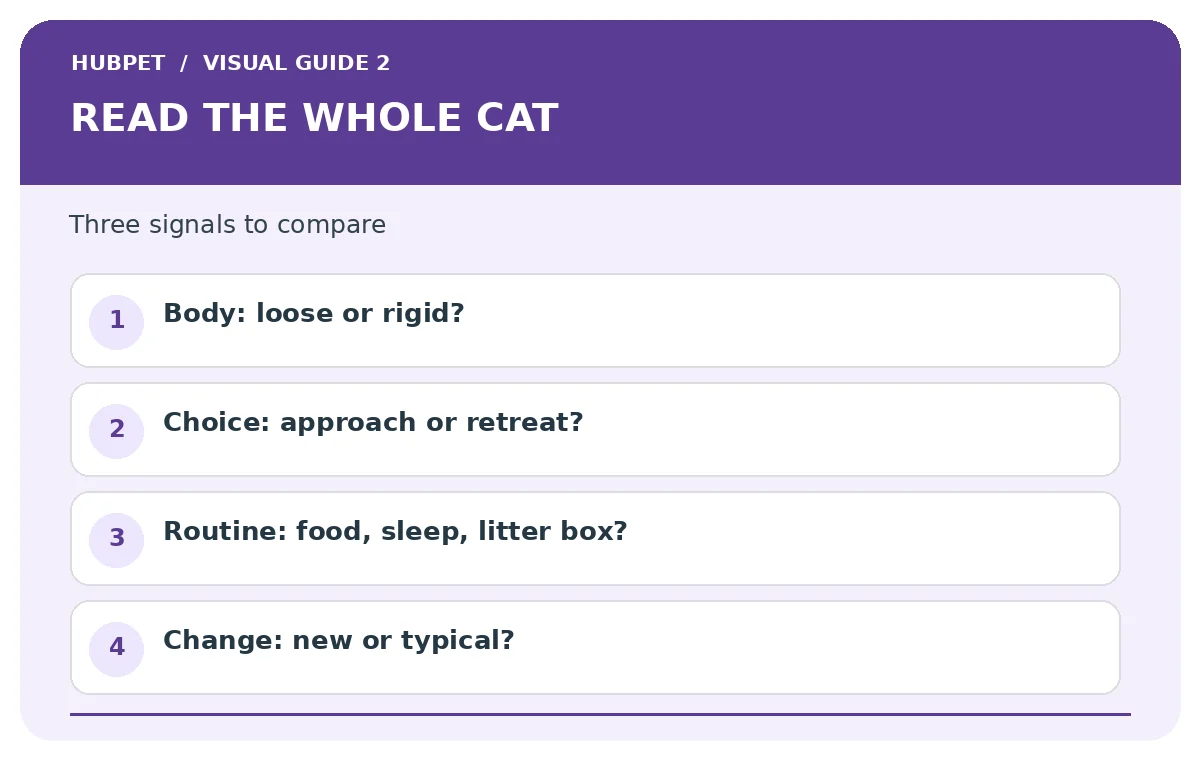
A two-minute context check
First note the setting: sleep, greeting, food routine, handling, or something unfamiliar. Next watch the whole body: loose versus tense posture, ears and tail, and whether the cat chooses to approach or leave. Finally compare this moment with your cat’s normal appetite, movement, litter-box use, and activity.
If the picture is mixed, leave a short note with the date, circumstances, and any new signs. A pattern over several days can be much more useful at a veterinary appointment than trying to decode one isolated sound. Keep normal routines consistent while you observe.

What purring cannot prove
Purring cannot establish a medical diagnosis or measure affection. It also cannot guarantee safety in unfamiliar places. Popular claims that purring heals injuries are not a reason to delay clinical care. The same cat may purr in several contexts; different cats also vary in how often they vocalize.
If your cat rarely purrs, that is not automatically a problem. Consider the full pattern of behavior. A new loss of normal social contact, loss of appetite, or unusual quietness is more relevant than comparing your pet to someone else’s unusually talkative cat.
When to call a veterinarian
Contact your veterinary team for a new purr pattern paired with hiding, reduced eating, pain on touch, breathing changes, limping, poor grooming, or changes in urination. Seek urgent veterinary care for breathing distress, collapse, or straining without producing urine. Prioritize those symptoms over attempts to interpret vocal sounds.
Bring short observations, a video recorded without stressing the cat if available, and any changes in routine. The goal is to provide context for a professional examination, not to label a purr as a specific illness at home.
How We Research
We compared veterinary behavior explanations from VCA Animal Hospitals with Cats Protection advice on cat body language and pain. We excluded unproven claims that a particular purr frequency diagnoses illness or heals injuries. The practical checklist separates normal context observation from symptoms requiring a veterinarian. Read more about our editorial approach on the HubPet About page.
Sources
VCA Animal Hospitals: A purring cat equals a happy cat?. Reviewed October 26, 2026.
Cats Protection: Why does my cat purr?. Reviewed October 26, 2026.
Cats Protection: Signs of pain in cats. Reviewed October 26, 2026.
Many purr while enjoying welcome contact, but watch their posture and whether they choose to stay. Stop when the cat pulls away or looks tense.
Yes. Some cats purr during stressful handling or unfamiliar situations. Check ears, posture, retreat behavior, and other signs before interpreting the sound.
Not necessarily. Loudness differs among cats and situations; it is not a validated happiness scale or a reliable health assessment.
Hiding may indicate stress or discomfort. Provide quiet space and monitor for changes in appetite, movement, and litter-box use; contact a vet if the change persists.
Some cats purr less audibly than others. A new change paired with other abnormal signs matters more than the absence of a loud purr by itself.