
A cat can bat at a hand without wanting a fight. A quick paw movement may create space, stop touch, or redirect play that has become too exciting. The meaning depends on the posture and what happened just before the motion. Watch the tail, ears, muscles, and route to escape. Never test how many swats your cat will tolerate. Instead, protect hands, stop reaching, and make the next interaction easier. If swatting starts suddenly or comes with other changes, discuss possible discomfort with a veterinarian.
Freeze the reaching motion, then move away
If the cat lifts a paw, pins its ears, or leans back, stop advancing. Slowly withdraw your hand without jerking it into a chase game. Give the cat a clear exit from the chair, shelf, or doorway. Do not grab its paw or hold it in place. Defensive swats happen quickly, and a hand near the face can trigger another one. If children are nearby, guide them away without creating a crowd around the cat. The safest reset starts by removing the pressure.
Read the rest of the body
A loose cat batting at a wand toy during a play session differs from a crouched cat with a tense face. Look for narrowed options, sideways ears, a tucked body, a whipping tail, or repeated retreat attempts. No single sign gives certainty. Therefore, compare the full scene, including whether the cat chose to stay and whether you followed it. Treat a swipe paired with a hiss as a clear request for space. Do not try to make the cat accept touch to prove trust.
Identify the reach that triggered the swipe
Many incidents happen when a hand appears from overhead or reaches into a sleeping place. Write down the exact motion, not a broad label such as ‘random aggression.’ Perhaps the cat was cornered on a windowsill. Perhaps the hand touched a belly the cat does not enjoy having touched. Or perhaps a child moved a toy too close to the face. Move the interaction into open space and lower your hand to the cat’s level. Let the cat initiate contact.
Separate play swats from defensive contact
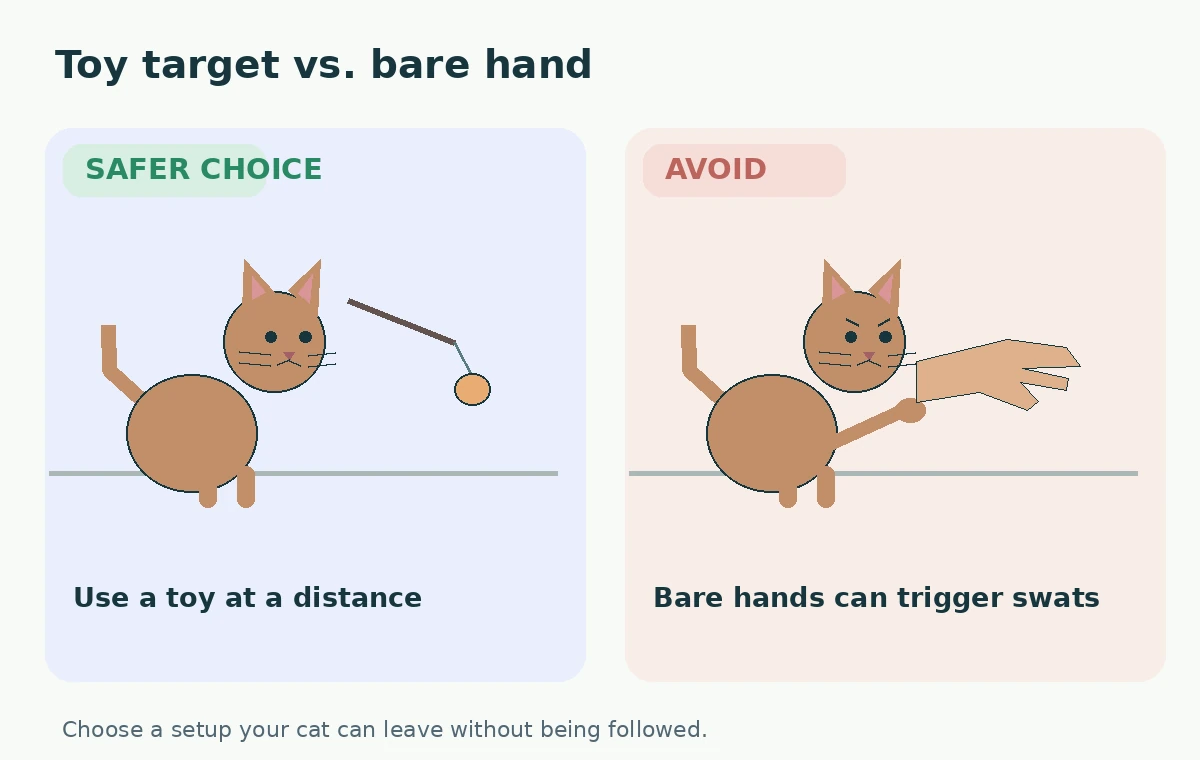
During play, a cat may stalk a moving object, spring forward, and hold a loose toy. Defensive swats often follow an approach the cat cannot easily avoid. Still, these patterns can overlap, especially when play becomes intense. Use a wand or kicker toy to keep human skin out of the game. Stop briefly when excitement rises, then resume only after the cat settles. Never encourage kittens to wrestle bare fingers, because that makes the rules difficult to learn later.

Change petting to a brief invitation
Offer the side of a relaxed hand at a distance. Wait for the cat to sniff or rub on it. Give one or two gentle strokes in an area the cat already seeks, then remove your hand. Watch whether the cat leans back in or steps away. By contrast, prolonged petting until the cat lashes out ignores several earlier chances to stop. A cat may prefer a short greeting to a long session. Respecting that preference makes future contact more predictable.
Plan safe play away from hands
Choose a well-maintained wand toy with a secure attachment and plenty of distance from your body. Drag it along the floor, pause, and let the cat catch it. Avoid whipping it toward eyes or encouraging bites on fingers. Put string toys away when the session ends. A stuffed kicker or sturdy ball can provide a separate target for grasping and kicking. If the cat grabs a hand, stay calm, reduce movement, and seek professional advice for repeated injurious incidents.
Protect resting and hiding places
Do not reach into a cave bed or behind a sofa simply because the cat is within arm’s length. Provide a place where the cat can rest without unexpected handling. Also, consider elevated perches with stable access, so the cat can choose to observe people. Teach visitors not to lure the cat out and then grab it. If you must move the cat for safety, ask a veterinarian or qualified behavior professional about humane handling strategies. Prevention matters more than surprise restraint.
Respond without fear or punishment
Do not shout, strike, chase, or startle the cat after a swipe. Those responses can intensify fear and suppress early warnings. Instead, pause interaction, note the trigger, and reset the environment. Reward the cat for voluntary calm approaches when they are comfortable. Teach adults and children the same rule: hands stay still when a cat backs away. If the cat moves toward you with relaxed posture, allow a short greeting without automatically picking it up.
Keep an incident log and adjust one thing
Record whether the cat swatted during petting, play, grooming, or a sudden approach. Include the location and whether a different route was available. Change one variable, such as offering a low hand instead of reaching from above, and watch whether the next session improves. Avoid staging stressful ‘tests’ to collect more data. An accurate log helps you identify patterns and gives professionals useful context. It also prevents confusing a new medical problem with a long-standing handling preference.

Know when professional support matters
A bite that breaks skin needs prompt human medical guidance. If the cat repeatedly attacks without an obvious trigger, seems painful, stops eating, or changes movement, seek veterinary evaluation. Separate pets or people with doors if someone is at risk. Never attempt painful restraint as a home behavior experiment. Once a veterinarian rules out relevant health problems, a qualified feline behavior professional can help design a plan. This article cannot diagnose aggression or an underlying disease.
How We Research
We reviewed guidance from veterinary and animal welfare organizations, compared the recommended body-language signs and environmental changes, and separated common management from issues that call for a veterinary exam. Our about page describes the project. Behavior varies between cats; this guide is educational and not a diagnosis. For new illness or safety concerns, see our veterinary disclaimer.
Sources
AAHA: Behavior and Environmental Needs — evidence-based background on feline comfort, body language, and supportive management.
Cornell Feline Health Center: Feline Aggression — evidence-based background on feline comfort, body language, and supportive management.
VCA Animal Hospitals: Fears and Phobias in Cats — evidence-based background on feline comfort, body language, and supportive management.
No. It may be defensive, playful, or a response to overhandling. Look at the full posture, context, and whether the cat can leave.
Punishment can increase fear and reduce useful warnings. Change the approach, let the cat choose contact, and reward calm voluntary interactions.
Offer a safe toy rather than hands. Keep sessions short, supervise attachments, and store string toys away after play.
Stop petting and give space. Continuing may make a mild warning escalate to scratching or biting.
Sudden new behavior, unusual sensitivity, pain signs, or escalating injuries justify veterinary guidance and possibly a feline behavior referral.