
The gap under a bed feels sheltered, quiet, and hard for larger animals to enter. Many cats use it for ordinary naps or for managing an unfamiliar sound or visitor. The important distinction is whether hiding is a familiar preference or an abrupt change from the cat’s baseline. Provide safe choices and do not drag the animal into the open. A cat that hides while also eating poorly, struggling to move, or acting unusually should be assessed by a veterinarian.
Hiding is a normal coping strategy for cats
Cats Protection and Ohio State University describe hiding places as valuable because they give cats control over exposure to people, animals, and noise. Under a bed can serve that purpose, as can a covered box or a quiet high perch. Some cats seek that space every afternoon and emerge normally for food, play, and social time. That familiar pattern is generally different from a cat suddenly spending all day hidden and becoming difficult to engage. Ask what the behavior looks like for this individual cat rather than treating every hidden cat as either perfectly fine or automatically ill.
Identify ordinary triggers without forcing a test
Common triggers include visitors, construction, fireworks, a vacuum, an unfamiliar pet, or moving furniture. A newly adopted cat may choose a small shelter while adjusting to a strange home. Write down what changed before the hiding started and whether the cat will come out after the disturbance passes. Do not bang on the bed, reach in with a broom, or ask children to retrieve the animal. Those actions can make the hiding location feel less safe. A patient, predictable environment helps the cat make its own decision to reappear. Stay available without crowding the opening.
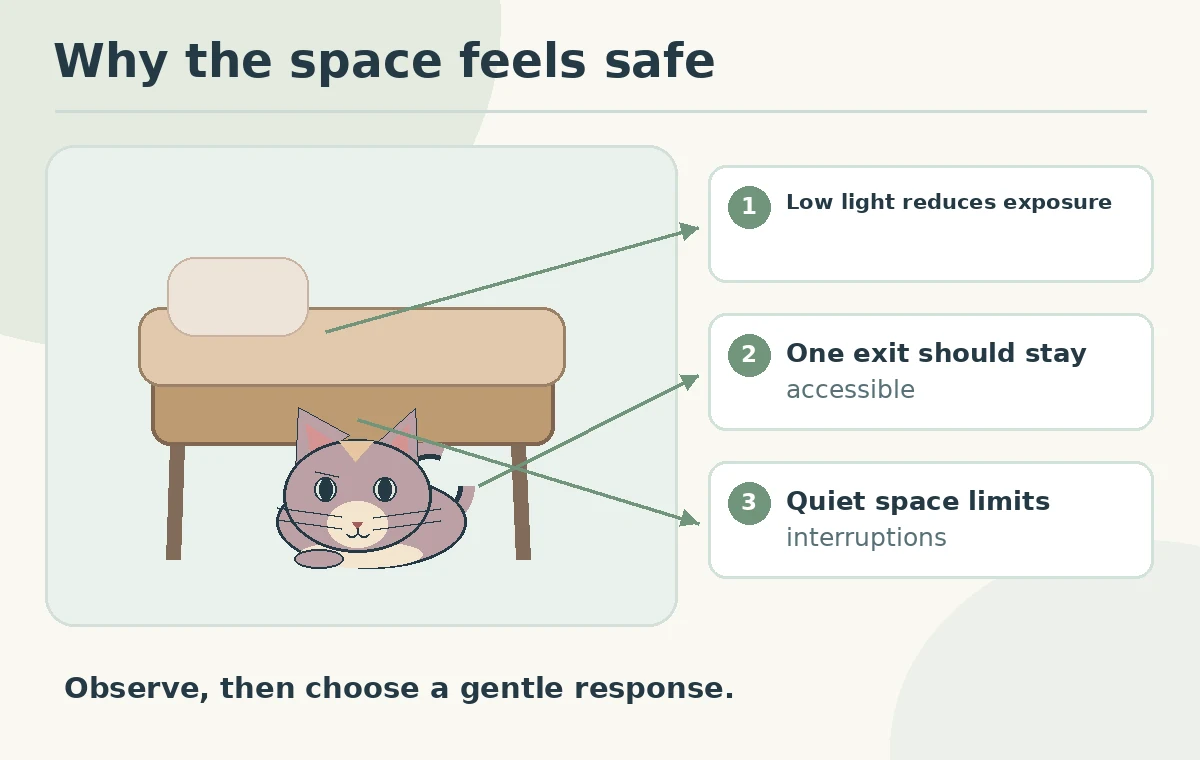
Check that the under-bed area is physically safe
Before a cat decides the area is its den, inspect for electrical cords, loose staples, collapsing storage boxes, chemical containers, sharp bed-frame hardware, and gaps where the cat could become stuck. Check that a motorized adjustable bed cannot operate while an animal is underneath. Block unsafe cavities without sealing off a cat already inside. Ensure there is a clear path to leave. A covered commercial cat hide can offer a safer alternative if the under-bed space is hazardous. Never reach into moving furniture machinery to retrieve an animal. Create a calm exit route instead.
Food, water, and litter should remain accessible
A hiding cat still needs essentials, and another pet must not guard the route to them. Put a clean litter box, fresh water, and suitable food at reachable locations, but not packed into the hiding cavity. Cats Protection advises against pushing food deep into a hide, which can create pressure or contamination. For new arrivals, a quiet starter room with separated resources may be easier than full-house access. If the cat is refusing food or not toileting normally, seek veterinary guidance rather than waiting for a behavior plan to work. Avoid moving every supply at once unless it is unsafe.
Watch for sudden or persistent changes in behavior
Hiding becomes more concerning when a previously social cat withdraws abruptly or stays hidden despite the home returning to normal. Other warning signs include refusing food, changes in drinking or litter habits, vomiting, labored breathing, difficulty walking, or unusual vocalization. Cats can conceal illness, so lack of crying does not rule out a problem. Contact your veterinarian promptly if hiding comes with other changes. Breathing trouble, collapse, or inability to urinate requires urgent care. Do not self-diagnose anxiety or give calming medication without veterinary direction.

Give the cat a better place to retreat
Offer an enclosed cardboard hide or sturdy cat bed with an easy exit, placed in a low-traffic location. Some cats like height as well as concealment; a stable shelf or climbing station with safe access gives them another choice. Choose a location away from noisy appliances and repeated human traffic. Put a blanket carrying the cat’s own scent inside and leave it in place. Let the cat investigate on its own, and avoid placing hands inside to encourage it. If several cats live in the home, each should have multiple ways to rest without being approached or cornered.
New cats need a gradual adjustment period
A rescue cat may hide after moving in even when the new home is quiet. Set up one safe room with a carrier or covered hide, feeding area, water, and litter at separate points. Enter calmly, sit or read, and avoid prolonged direct eye contact. Place treats within easy reach only if the cat is comfortable and eating normally; do not use food to lure it into frightening contact. Over time, some cats emerge after hours while others need longer. Monitor basic care carefully. If the cat will not eat, drink, or use the box, ask a veterinarian or shelter professional for specific guidance.
Multi-cat conflict may be the hidden reason
Sometimes the trigger is subtle: a confident cat sits at the bedroom door, blocks a hallway, or stares whenever the timid cat approaches the food area. The hidden cat may only come out when the other cat sleeps. Observe movement and resource access at several times of day. Add feeding and water stations, litter locations, perches, and hides in separate areas rather than expecting the quieter animal to pass an intimidating housemate. Introductions should be gradual. If intimidation persists, talk with a qualified feline behavior professional after checking for medical causes.

Keep the response predictable and low pressure
Maintain familiar meal and play routines, reduce avoidable noise, and let the cat emerge without being chased or lifted. Reward voluntary approaches with calm attention if the cat seeks it. A simple log of hiding duration, triggers, eating, and litter habits can make a veterinary appointment more informative. Do not treat the goal as eliminating every hiding place; a cat that can retreat safely may feel more confident in the open. The goal is regular access to resources and a choice of comfortable spaces, with prompt medical attention when hiding becomes a meaningful change.
How We Research
This guide draws on published information from veterinary professionals and established feline welfare organizations, including Cats Protection, Ohio State University, and VCA Animal Hospitals as relevant. We compared normal explanations with alternative interpretations and safety warning signs, then focused on observable behavior, freedom to choose contact, and practical home setup. No single gesture reveals every cat’s state, and these observations cannot diagnose an individual animal. The illustrated scenarios are educational examples, not clinical examinations. Review About HubPet for our editorial approach.
Sources
Cats Protection: Cats hiding: Read source. Reviewed October 27, 2026.
Indoor Pet Initiative: Hiding instinct: Read source. Reviewed October 27, 2026.
Cats Protection: Shy cats: Read source. Reviewed October 27, 2026.
Safety note: Behavior can change with stress or illness. If your cat has a sudden change in activity, appetite, breathing, movement, toileting, or awareness, seek veterinary advice. This guide is not a diagnosis or treatment plan. See our veterinary disclaimer.
Some cats choose the same protected nap spot routinely. Assess whether your cat emerges for normal food, litter, activity, and social behavior.
No. Allow the cat to remain safely hidden and ask guests to ignore the hide. Forcing contact can make the situation more frightening.
Keep food and water accessible in a quiet area near, but not inside, the hiding place. Avoid trapping the cat by clustering every resource together.
Call promptly if hiding is sudden, unusually prolonged, or accompanied by reduced appetite, changed litter habits, pain, vomiting, or other illness signs.
Offer a safer covered hide first, check that the cat has exited, and only then block dangerous access. Never close a space while the cat is still inside.