
Educational information only, not veterinary diagnosis or individualized behavior treatment. Sudden behavior changes, pain signs, persistent distress, and bite risk warrant appropriate veterinary or qualified professional advice. Read our veterinary disclaimer.
Meowing is one of the familiar sounds of life with a cat, but it is not one fixed word with one fixed meaning. A cat may meow when a person comes home, near a food bowl, at a closed door, or while something in the household has changed. ASPCA notes that adult domestic cats often direct meows toward people. A single sound is less informative than the cat’s routine, body language, and whether the vocalization is new.
HubPet already has an article about what meows directed at owners can mean. This companion guide takes a broader approach: categories of vocalization, an observation checklist, environmental causes, and when an increase needs veterinary advice. It is not a sound dictionary or a promise that a certain pitch always means hunger or affection.
The Most Common Situations That Trigger Meowing
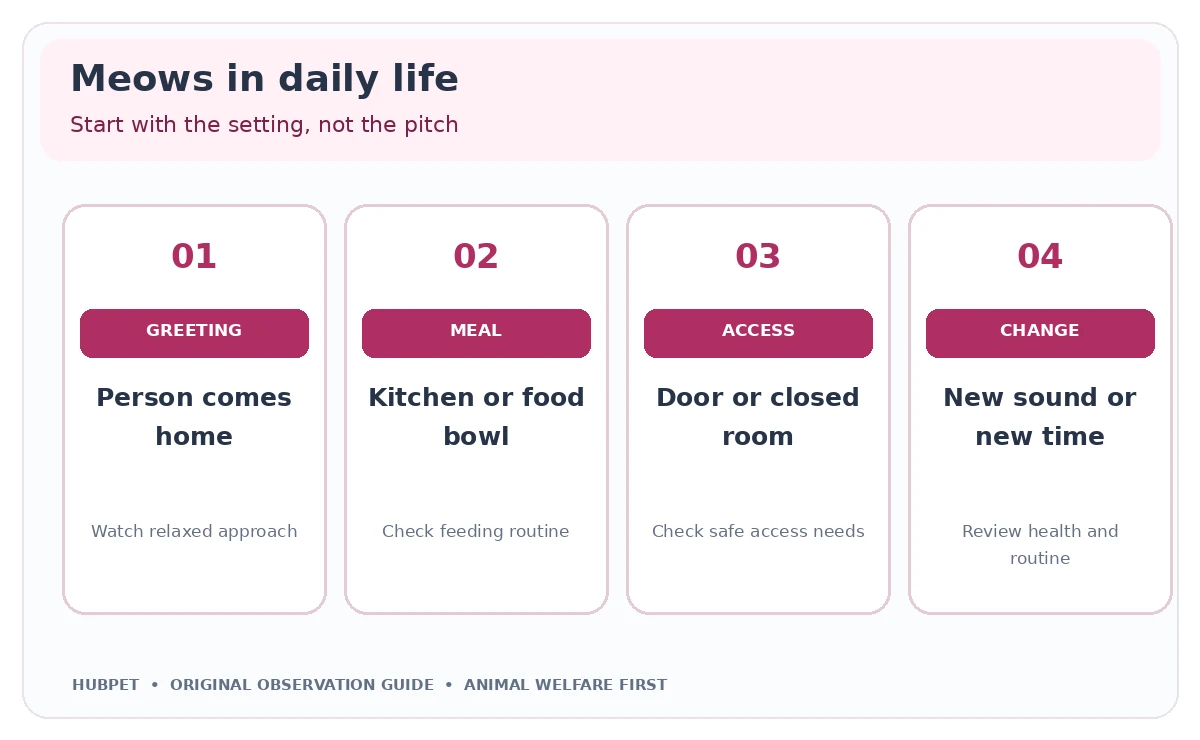
Greeting calls can follow your arrival or appear when a cat enters the same room. Food-related meows often occur around a routine meal, near a cabinet, or when someone prepares a treat. Doorway meows may request access to a preferred room. Other cats vocalize when seeking play, companionship, or attention. These are useful patterns to observe, not proofs of a single emotional state.
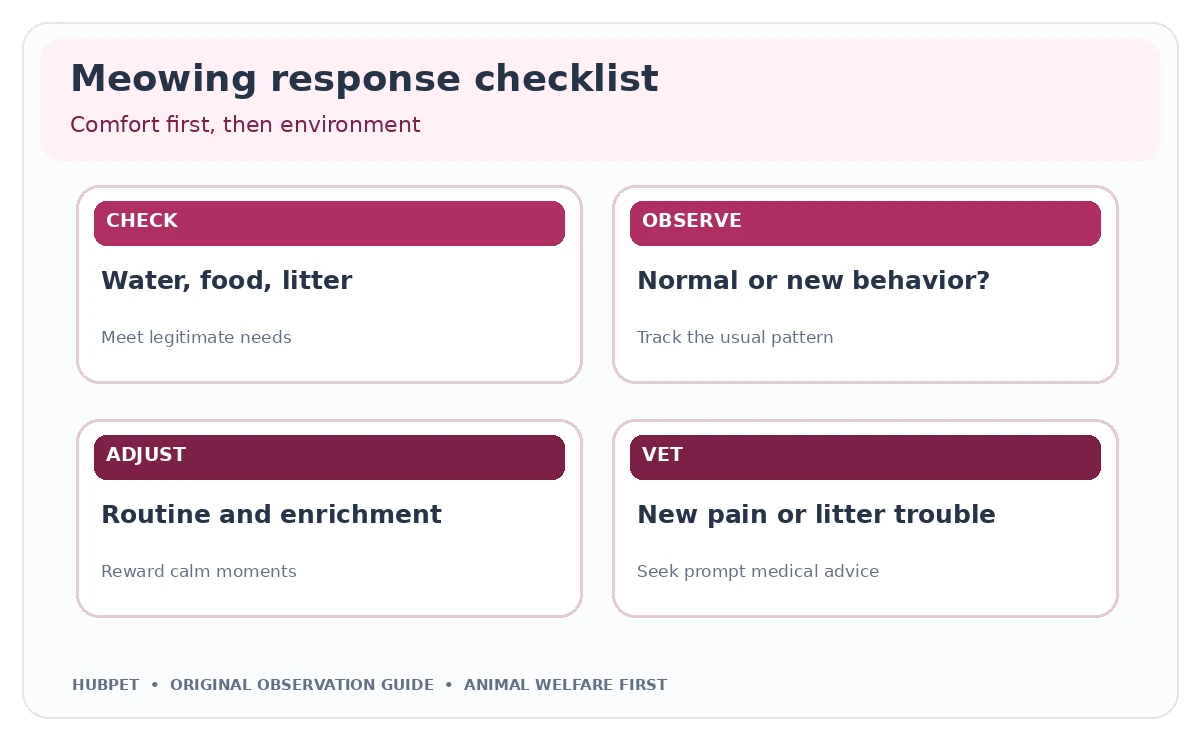
Notice when the meow starts, where your cat goes next, and whether another need may be unmet. Check water, litter box access, safe resting areas and the normal feeding schedule before calling the behavior “demanding.” Responding to a real need is different from repeatedly changing a routine in response to every vocal outburst.
How Meows Differ From Yowls, Trills, and Hisses
Cats have several vocalizations, including chirps, trills, purrs, growls, hisses, and drawn-out yowls. Ordinary meows directed at people may occur in many settings, while prolonged yowling can occur in contexts such as mating-related behavior, anxiety, or illness. Neither sound provides a reliable medical diagnosis. The accompanying posture and timing carry crucial information.
If a vocal cat looks alert and comfortably explores the environment, that differs from one who crouches, hides, or keeps crying in an unusual place. Do not respond to a hiss by approaching or lifting the cat to “reassure” them; give space instead. To see body posture associated with these sounds, consult our existing guide to recognizing cat stress.
Make a Meowing Map: Time, Place, and Response
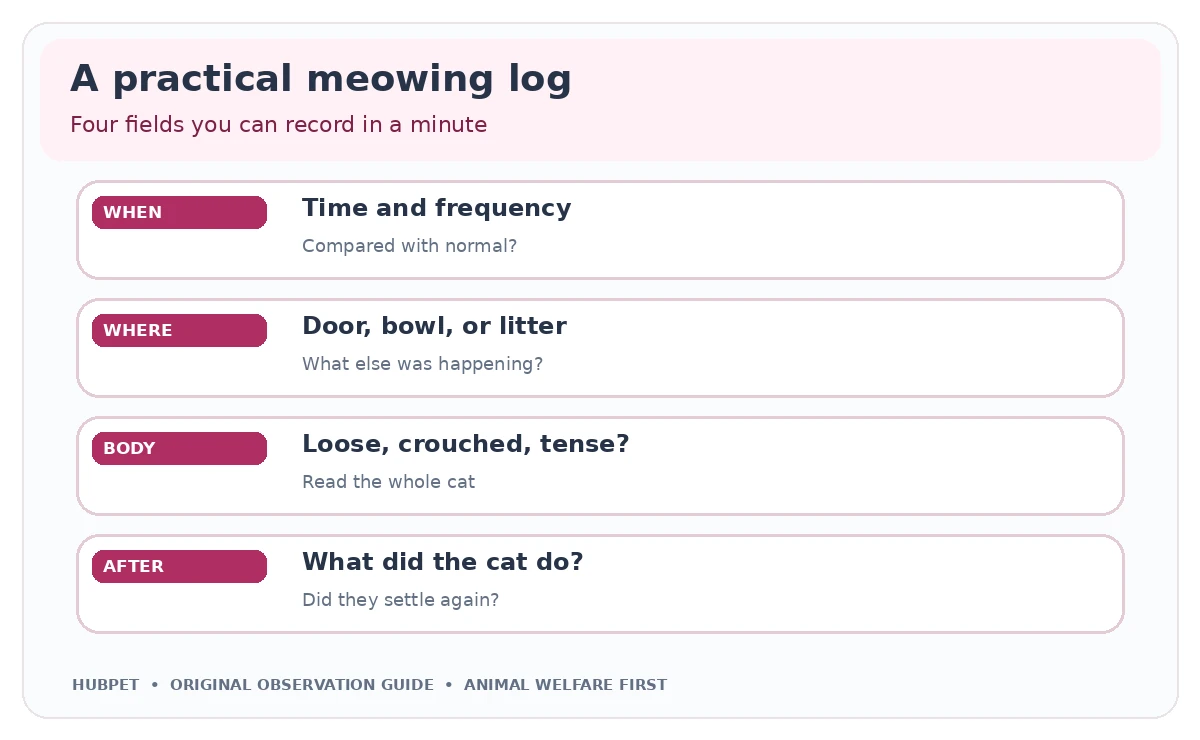
Across several ordinary days, write down the time, place, sound pattern, what preceded it, and what happened afterward. One entry might read: “6:45 a.m., kitchen, repeated meows, breakfast served.” Or: “Late evening, hallway, loud new yowling, wandered without settling.” The first record points to a predictable routine; the second deserves closer attention, particularly if the cat is older or otherwise different from normal.
Keep the record short enough to use. You can note frequency relative to the cat’s baseline rather than counting every single sound. If you share it with a veterinarian, include diet, litter habits, appetite, weight change, sleep and mobility observations. A simple log helps avoid both overreacting to normal communication and dismissing a genuine change.
Respond Before the Routine Becomes a Shouting Match
If meowing follows a reliable schedule, feed at consistent times, add purposeful play, and provide safe enrichment before the usual peak. Offer attention during calm interactions rather than using a loud meow as the only cue to interact. Cats should have water, food appropriate to their care plan, clean litter, and access to a place to retreat. Management makes desired behavior easier without frightening the animal.
Never hit, spray, startle, or shout at a cat for vocalizing. You cannot train away a medical problem or fear through punishment. The ASPCA cautions owners to check basic needs rather than ignoring every meow. For households where schedule changes trigger restlessness, our predictable-routines guide outlines ways to create structure without rigidity.
When More Meowing Is Not Just More Talking
Contact a veterinarian for abrupt increases in vocalization, repeated night calls, changes in voice, painful movement, appetite or weight changes, trouble using the litter box, confusion, or other unusual behavior. In particular, a cat straining in the litter box or unable to urinate may need urgent veterinary care. Do not label the problem loneliness or boredom without checking for illness.
VCA describes medical, sensory and age-related factors that can influence excessive vocalization. These causes require proper assessment, not a home diagnosis based on meow volume. Keep a clip or written log of what you see, and share when the change began. Even if enrichment ultimately helps, owners should not delay assessment of medical concerns.
A Practical Rule: Meet Needs, Then Look for a Pattern
First check whether the cat may be asking for something essential or seems distressed. Next read their posture and context. Then ask whether this sound is typical for this individual. If it is an ordinary attention or meal routine, improve predictability and reward relaxed behavior. If the change has no clear explanation, persists, or occurs with other signs, seek veterinary input.
Cats vary greatly in how vocal they are; comparison with another cat is less useful than comparison with their own baseline. The goal is not silence. It is a household where normal communication is heard, legitimate needs are met, and owners recognize concerning changes early.
How We Research
We reviewed the linked veterinary, animal welfare, and behavior resources on October 26, 2026, using the HubPet editorial approach. The cited organizations provide guidance, while the observation prompts and practical household examples are our own. Editorial checks addressed unsupported mind-reading of animals, aversive training suggestions, and advice that could delay necessary veterinary care. Our original diagrams serve as teaching tools, not diagnostic charts or findings from clinical studies. Individual animals differ: consider your pet’s usual behavior, age, medical history, and safe opportunity to disengage.
Sources
ASPCA: Meowing and yowling. Accessed October 26, 2026.
VCA Animal Hospitals: Why cats meow. Accessed October 26, 2026.
VCA Animal Hospitals: Caterwauling in cats. Accessed October 26, 2026.
VCA Animal Hospitals: Signs of pain in cats. Accessed October 26, 2026.
Many cats meow during greetings or to start an interaction. Check posture and what happens next rather than assuming one universal meaning.
The cat may anticipate a regular meal, ask for food or draw attention to an unmet need. Check the feeding plan and overall behavior.
Adult pet cats often direct meowing toward people, although cats communicate in many ways and social context matters. Cats also use body signals and other vocalizations.
A change in routine is possible, but pain, sensory or other medical issues also deserve consideration. Sudden persistent changes warrant veterinary advice.
Do not automatically ignore vocalization. Check basic needs and distress first; when needs are met, use a predictable routine and reinforce calm alternatives without punishment.