
Why cats stick out their tongue varies with context. A tiny pink tip seen after grooming or while resting is sometimes called a “blep.” The same visible sign can also accompany oral discomfort, difficulty eating, or breathing trouble. The safest approach is to look at the whole cat: relaxed posture, normal breathing, appetite, and an unchanged pattern are reassuring; drooling, pawing at the mouth, unusual mouth color, or open-mouth breathing are not. Do not pry the mouth open for a home examination. If the tongue stays out unexpectedly or new symptoms appear, contact your veterinarian. Breathing difficulty requires urgent attention.
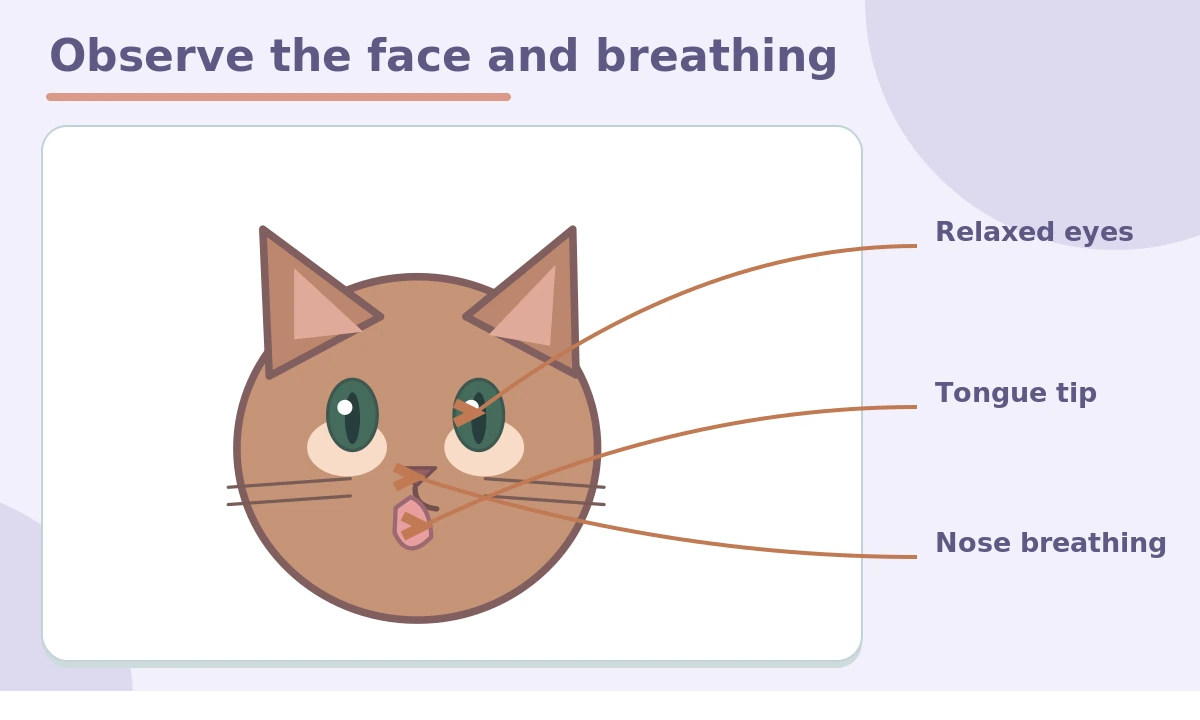
A brief blep can follow grooming or relaxation
Cats Protection describes a tiny tongue tip that stays visible when a cat becomes distracted while grooming or settles into a relaxed posture. A cat may leave the tongue out for a moment and then pull it back in without difficulty. If the cat is comfortable, breathes normally through the nose, eats normally, and returns to its usual behavior, the moment may be harmless. Take note of the duration and what happened just before it. Do not poke the tongue or tap the cat’s face to make it disappear. A brief photo can be useful if you later need to show the veterinarian a change.
Open-mouthed scent investigation looks different
A cat that encounters an interesting smell may open the mouth in a flehmen response, which helps process scent through a specialized sensory organ. This expression can resemble a grimace and may briefly expose the tongue. It commonly follows deliberate sniffing and then ends as the cat moves away. Do not confuse the flehmen response with panting. A cat that seems to struggle for air, stretches its neck to breathe, or continues with an open mouth needs urgent veterinary assessment. Context matters, but signs of breathing trouble override guesses about scent behavior.
Learn what an ordinary tongue looks like
A healthy tongue is generally pink, although lighting can make colors look different in photographs. You do not need to lift the lips or hold the mouth open for a detailed inspection. Instead, notice normal eating, drinking, grooming, and comfortable breathing during ordinary daily interactions. Cats Protection advises speaking to a veterinarian about swelling, sores, unusual colors, or a tongue that stays visible more often than usual. A clear picture taken without restraint may help the clinical team. Never scrape the tongue or try to remove something you cannot identify safely.
Notice food and grooming changes
A cat with mouth discomfort may hesitate at a bowl, drop food, chew on one side, avoid hard food, drool, or groom less often. These clues matter more than a cute-looking blep alone. Record when the change began and whether it appeared after a new object, injury, or illness. Do not switch to medicine or apply human oral gels without veterinary direction. If the cat cannot eat comfortably or seems painful, arrange veterinary assessment. Dental and oral problems can be difficult to see at home, and a normal-looking tongue tip cannot rule them out.

Breathing difficulty is an emergency exception
Cats normally breathe quietly with the mouth closed at rest. Open-mouth breathing with obvious effort, rapid breathing, blue or gray tissue, collapse, or marked distress can be an emergency. Cornell describes extended posture and labored breaths as signs that need immediate veterinary attention. Do not wait to see whether a panting cat returns to a normal blep, and do not force food or water. Reduce handling, keep the environment calm, and contact an emergency veterinarian right away. The diagram here contrasts a relaxed brief tongue tip with a distressed posture; it is not a substitute for professional assessment.
Avoid forcing a mouth check at home
A startled cat can bite when restrained, and fingers placed between teeth are at risk. If you notice string or another object near the mouth, contact a veterinarian before trying to pull it. Tugging on a swallowed string can cause internal injury. If the cat tolerates a casual view while yawning, observe without reaching inside. Otherwise, let a professional examine the mouth using safe handling. Do not use photos to self-diagnose gum or tongue disease. The job of a home checklist is to recognize changes and seek help, not to perform treatment.
Record duration, triggers, and other signs
Write down whether the tongue appeared after grooming, sniffing, sleep, eating, or play. Note whether the cat was otherwise relaxed, and whether breathing seemed effortless. Compare with the cat’s usual habits; some cats have occasional tiny bleps for years. A new continuous tongue exposure is different from a momentary tip. If possible, take a short video without disturbing the cat. Share it with your veterinary team alongside any appetite, energy, drooling, or behavior changes. Useful observations make an appointment more productive while avoiding unnecessary handling.
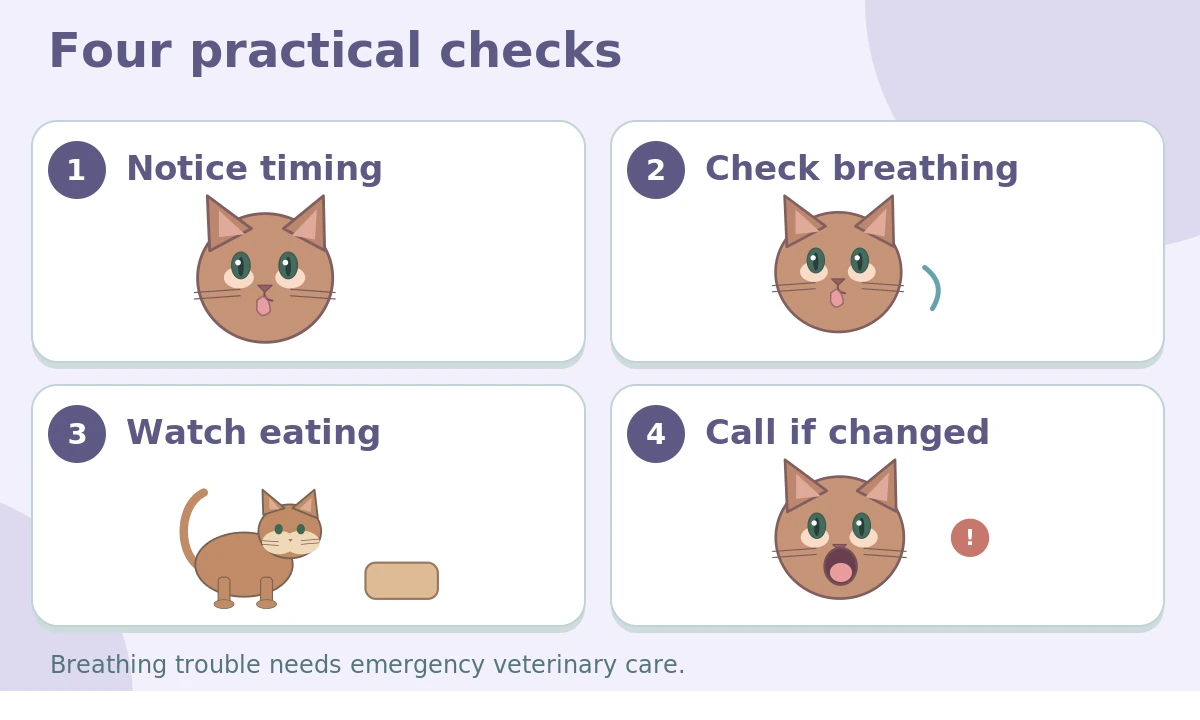
Keep the response proportional to the risk
If the cat has a brief familiar blep and no other changes, simply observe and maintain the usual routine. A new persistent tongue-out posture, unusual drool, mouth odor, difficulty eating, or apparent discomfort deserves a veterinary examination. Open-mouth breathing or respiratory distress requires emergency help without delay. Explain the difference to other household members so nobody dismisses breathing trouble as a cute expression. Stay calm, allow the cat space, and avoid forcing the mouth shut. Small visible signs can have different meanings depending on the full situation.
How We Research
We compared guidance from recognized veterinary and animal-welfare organizations, then checked each everyday situation against safer handling and observable warning signs. We distinguish common possibilities from confirmed causes and avoid treating drawings as diagnostic tools. For transparency, see our editorial information and veterinary disclaimer. Consult your veterinarian about symptoms, ingestion, discomfort, or a sudden behavior change.
Sources
Cats Protection — Why Do Cats Have Rough Tongues? — practical veterinary or animal-welfare context for recognizing and responding to this behavior.
Cats Protection — What Is Blepping? — practical veterinary or animal-welfare context for recognizing and responding to this behavior.
Cornell Feline Health Center — Dyspnea (Difficulty Breathing) — practical veterinary or animal-welfare context for recognizing and responding to this behavior.
A blep is a small visible tip of the tongue, often noticed briefly after grooming or during relaxation.
No. A brief blep can be harmless, but persistent tongue exposure with drooling, mouth pain, or eating changes warrants veterinary assessment.
Cats sometimes perform a flehmen response to investigate scent. Ongoing open-mouth breathing is different and needs urgent care.
No. Do not restrain the cat or manipulate the tongue. Observe and contact a veterinarian if the posture changes or persists.
Open-mouth breathing with effort, collapse, or blue-gray tissues warrants immediate emergency veterinary attention.