
Why cats sleep at your feet often has a simple explanation: the bed is familiar, warm, and close to someone they trust. The foot area may also offer more room to shift position or step away than the middle of a crowded bed. None of these possibilities proves what a particular cat is thinking. Look at when your cat settles, which side it chooses, and whether it can leave without being disturbed. A cat that changes sleeping spots throughout the week can still feel secure. The best response is to provide comfortable choices, not to insist on a certain position.

The foot of a bed can offer closeness with an exit
Cats may value a familiar person’s presence while retaining control over their resting space. At the foot of a bed, a cat can sometimes watch the room and leave without stepping across a sleeping person. Some cats prefer the edge, others the middle of a blanket or a separate bed nearby. Do not interpret a foot-of-bed choice as a ranking of family members or proof that the cat is anxious. Observe whether the cat settles with relaxed posture and wakes normally. A position that works tonight may change with the room temperature, bedding, noise, or activity elsewhere in the home.
Warmth matters, but choice matters more
Blankets collect warmth and familiar smells, which can make an ordinary bed attractive. Cats Protection notes that cats commonly seek warm, comfortable, secure resting spots. Your feet may provide a gentle heat source without the close contact of a lap. However, cats can also move away when they become too warm. Keep an accessible cooler resting option and avoid trapping the cat beneath heavy covers. Do not use an electric blanket or heated pad as the only available sleeping area. A cat should always be able to change position and leave without help.
Your movements can shape the preferred spot
A cat may settle where people move less, although the quietest part varies with a sleeper’s habits. Some cats avoid the middle of a bed because turning or blankets shifting can interrupt sleep. Observe without testing by moving your feet toward the cat. If the cat regularly jumps down after you roll over, add a nearby washable cushion at bed height or on the floor. Avoid blaming the cat for seeking an alternative. If you share the bed with another pet, give both separate routes away from each other. No cat should have to cross a guarding dog to reach water or a litter box.
Set a stable, accessible place at the end of the bed
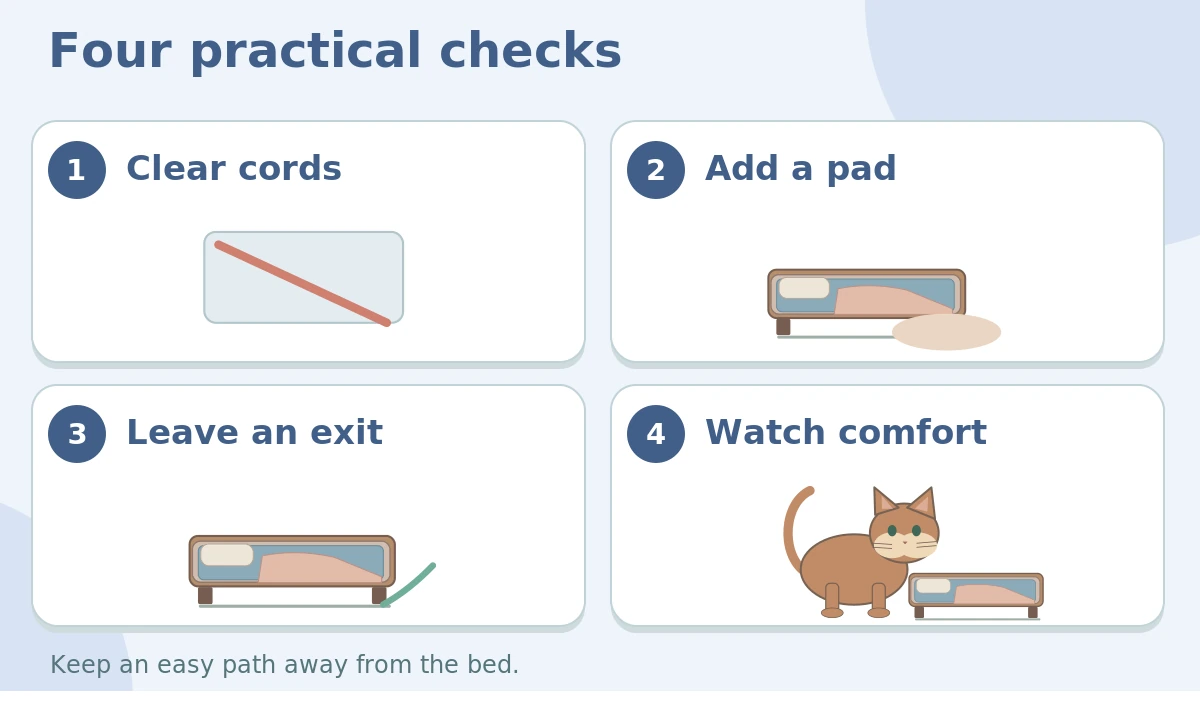
If you welcome the cat, clear loose charging cables, hair ties, and items that may fall when the cat jumps. Use a clean, flat throw or small washable pad that does not slide off easily. A cat with reduced mobility may need a stable step or a lower alternate sleeping surface rather than repeated jumps. Leave the bedroom door or a safe exit available when appropriate. A dim night-light can help you avoid stepping on the cat as you get up. These measures support comfortable access without creating a rule that the cat must sleep beside you.

Compare relaxed resting with disrupted sleep
A relaxed cat may curl up, stretch, tuck paws, or reposition between light naps. That is different from a cat that repeatedly gets up because another animal blocks the route or someone keeps reaching to pet it. Reduce interruptions before interpreting the position. If the cat begins hiding, avoids the bed after an unpleasant interaction, or loses interest in usual rest spots, look at changes in the household. Disturbance, illness, and pain can all affect rest. A sudden or substantial change in sleep and activity deserves a veterinarian’s assessment, especially when paired with appetite or mobility changes.
Keep your sleep needs in the plan too
A cat cannot be expected to know that moving at night wakes you. If shared sleep disrupts your rest, offer a comfortable alternative nearby and encourage the cat to use it during calm daytime periods. Place the alternative away from drafts and busy walkways. Reward voluntary exploration with gentle attention or a suitable treat. Avoid physically shoving the cat off the bed or suddenly closing the door without planning for water and litter-box access. Consistent routines work better than changing the rule every evening. The goal is predictable choices for both you and your cat.
Give multiple cats separate resting options
Two cats may tolerate sharing a bed at times while still preferring independent spaces. Do not assume a quiet stare between them means they want to lie together. Watch whether one cat blocks the bed edge or follows the other away. Offer separate cushions, perches, and clear exit paths in different parts of the room. Keep food and litter resources out of conflict-prone bottlenecks. If one cat gives up a favorite spot every time the other arrives, change the layout rather than forcing a shared sleeping arrangement. Rest should not depend on winning access from another pet.
Look at the whole day, not one sleeping pose
Cats sleep in multiple short periods across day and night, and a preferred bed position provides only a small clue about comfort. Note normal play, eating, grooming, and interactions as well. A cat that sleeps at your feet every night but plays and eats normally may simply enjoy the location. A cat that suddenly sleeps far more, appears weak, or stops visiting familiar places needs attention. Cats Protection advises owners to contact a veterinarian when sleep changes sharply. Continue to offer quiet, accessible resting spaces while checking for any broader changes.
How We Research
We compared guidance from recognized veterinary and animal-welfare organizations, then checked each everyday situation against safer handling and observable warning signs. We distinguish common possibilities from confirmed causes and avoid treating drawings as diagnostic tools. For transparency, see our editorial information and veterinary disclaimer. Consult your veterinarian about symptoms, ingestion, discomfort, or a sudden behavior change.
Sources
Cats Protection — Why Does My Cat Sleep on Me? — practical veterinary or animal-welfare context for recognizing and responding to this behavior.
Cats Protection — Cats and Sleep — practical veterinary or animal-welfare context for recognizing and responding to this behavior.
It may indicate comfort with your presence, but a single sleeping position cannot prove a specific emotion or relationship.
Movement or shifting covers may interrupt rest. Provide a nearby pad so the cat can choose a quieter spot.
Avoid trapping a cat under heavy covers. The cat should have fresh air, free movement, and an easy exit.
Only if needed for comfort or safety. Encourage a suitable nearby bed gently rather than forcing the cat out.
A sudden shift with low energy, appetite changes, hiding, or difficulty moving warrants a veterinary check.