
A cat curled against your legs can feel like a compliment, but one sleeping position does not decode an animal’s mind. People are warm, familiar, and usually stationary during a nap. Cats also change sleeping locations as their needs and the environment change. The useful question is not whether your cat loves you more than everyone else; it is whether your cat looks comfortable, has a choice, and can leave freely.
Warmth is a practical reason to choose a person
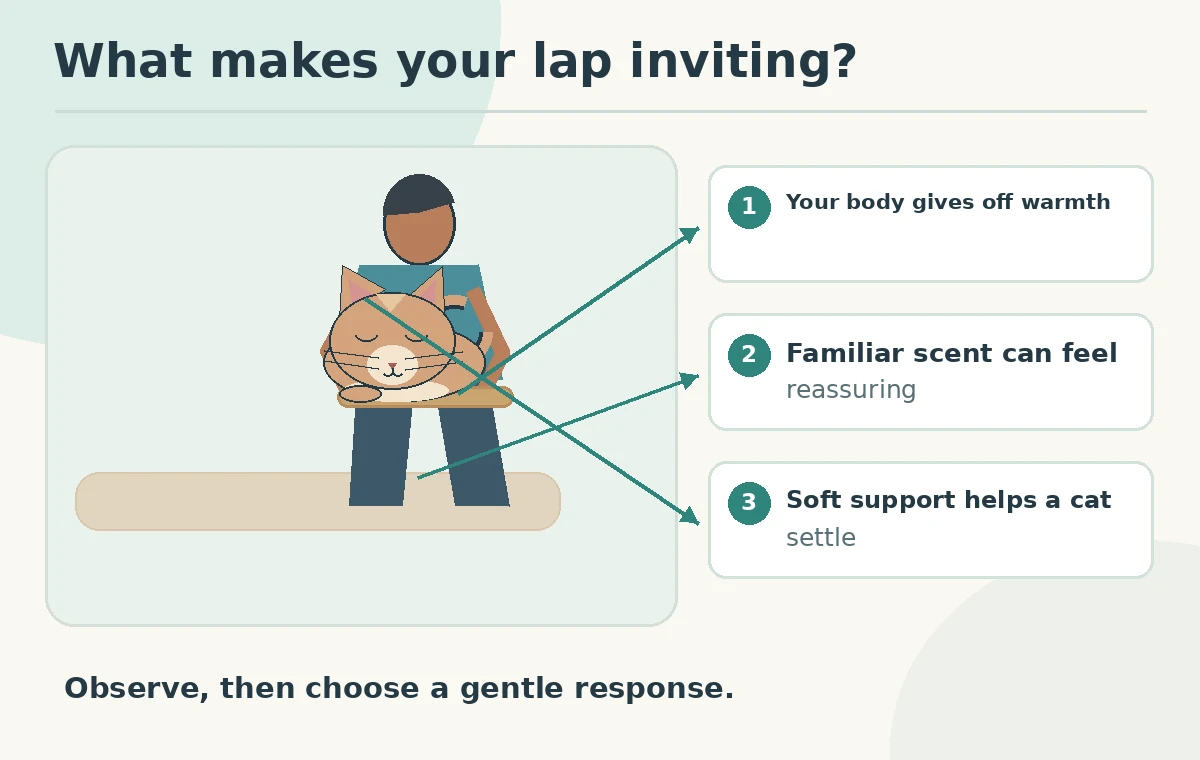
Cats favor comfortable temperatures and often choose sunny patches, cushions, and warm people. The Cats Protection sleeping guide identifies body heat as one likely reason for napping on an owner. Observe whether your cat chooses you on cooler evenings but prefers the floor in warm weather. That pattern supports a warmth explanation without turning it into a universal rule. Keep enough room for the cat to adjust position and avoid trapping them under heavy blankets. Some cats seek warmth because they enjoy it; a new, persistent change in temperature-seeking alongside lethargy or other symptoms deserves veterinary attention rather than guesswork.
A familiar scent and predictable place matter
A regular person offers smells, breathing patterns, and a routine the cat knows. When you sit reading at the same hour every day, your lap becomes an easy-to-predict resting surface. That familiarity may help a cat relax, yet a nearby blanket carrying its own scent can serve a similar purpose. Pay attention to where the cat chooses to enter, settle, and exit. If your cat switches between people or beds, do not interpret it as rejection. Cats use multiple locations for sleep, and preference depends on temperature, noise, traffic, and access on that particular day.
Check body language before deciding it is affection
A comfortable resting cat usually has relaxed muscles, ordinary breathing, and ears that are not pinned back. An animal that kneads once and settles may be getting comfortable. One that shifts repeatedly, flicks its tail sharply, freezes at touch, or keeps its ears flattened may need space. A purr alone is not a reliable mood meter; cats may purr in a range of circumstances. Watch the whole pattern and whether the cat stays when you stop petting. Walking away gives you useful information. Let the cat make the next move instead of lifting it back.
Why lap, chest, feet, and pillow are different
A lap is steady when you sit still and leaves the cat close to your hands. A chest may offer warmth and movement the cat finds familiar, but that does not prove the cat is listening to your heartbeat. Feet and legs can make an easy perch while allowing quick departure. Pillows are soft and carry familiar scent. A cat may change favorite spots overnight if a fan turns on or another household member moves. Use this location guide as possible explanations, not a test of attachment. Make sure the surface is safe and the cat cannot get caught in bedding.
Do not disturb a cat that has fallen asleep
Repeatedly stroking a sleeping animal may startle it, especially if it wakes disoriented. If you need to stand, speak softly and give the cat time to notice your movement, then allow it to walk away. Do not grab, shove, or punish a cat for choosing a sleeping place you dislike. For children, teach a simple rule: a sleeping cat is not an invitation to pet. Offer the cat another nearby resting option so it can remain close without being pinned down. Respect for rest makes shared spaces easier for everyone.

Build a good alternative without a standoff
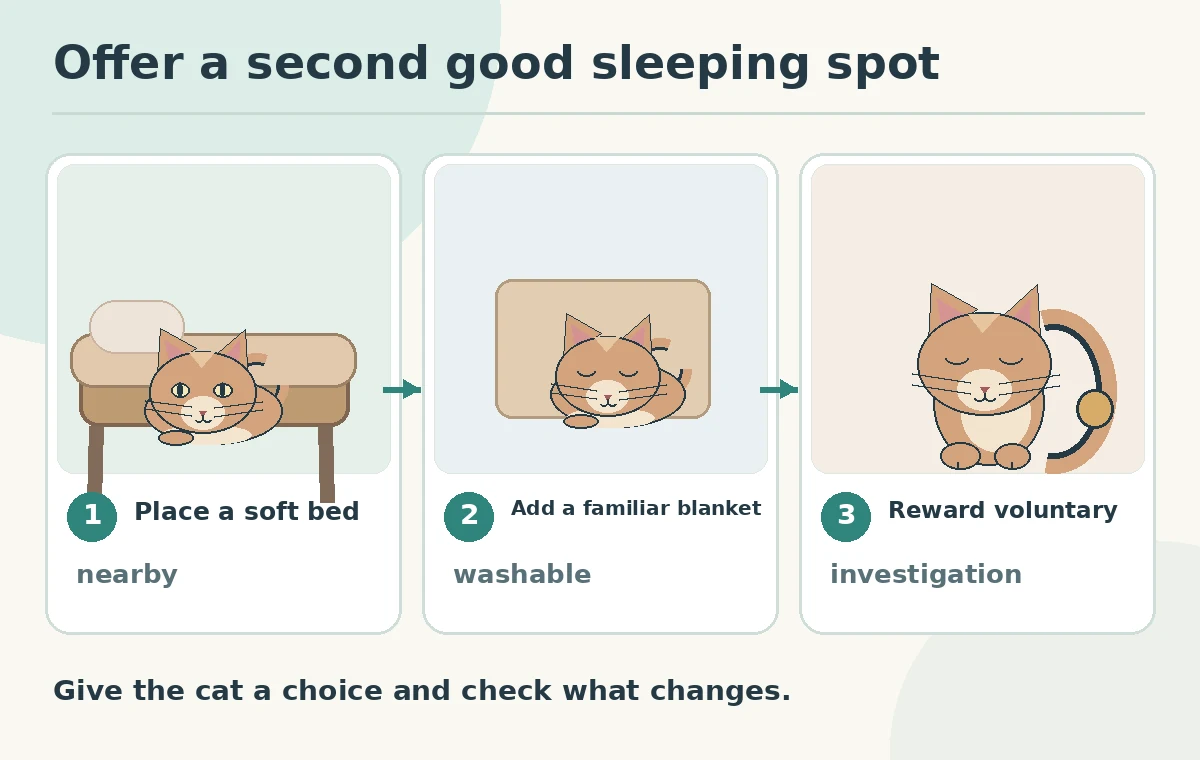
If a cat sleeps on your keyboard, chest, or pillow and you need that space, create an attractive choice first. Place a stable bed or folded washable blanket beside where you work or sleep. Pick a quiet position with an easy entrance and exit. Allow the cat to sniff it rather than physically installing the animal there. Praise calm exploration and offer a tiny food reward if it suits the cat’s diet. Gradually reward voluntary settling. Avoid moving the bed repeatedly; consistency helps your cat learn what to expect. Some cats prefer several resting spots in different rooms.
Manage nighttime arrangements early and calmly
Decide whether bedroom access is practical for your household and apply the same routine consistently. For a cat that wakes you repeatedly, add play and suitable feeding opportunities earlier in the evening rather than relying on scolding at night. Keep a comfortable sleeping area, clean water, and litter access outside the bedroom if the door will stay shut. Introduce the arrangement gradually if possible. Avoid putting a cat outdoors at night just because it wants the bed. For babies and young children, prevent unsupervised access to sleep areas regardless of how gentle your cat usually seems.
Make accommodations for age and mobility
Older cats and those with restricted movement may prefer a lower bed or a wide step to the couch. A cat that previously jumped onto your lap but now hesitates could be having difficulty reaching it. Give the cat sturdy, low-slip options at reachable heights and note whether it still grooms, eats, and moves normally. Never force a jump to test whether there is a problem. Sudden changes in sleeping position, breathing, appetite, activity, or behavior deserve a veterinary conversation. Comfort means the cat can approach and leave independently, not only that the fabric feels soft.
Use a simple observation diary rather than a verdict
Over several days, note temperature, time, activity before the nap, and whether the cat actively approached you. Record relaxed or tense cues and what happened when you stopped petting. This small comparison separates a pattern from one memorable evening. The purpose is not to score affection or choose a favorite family member. It is to make the sleeping space more comfortable and spot meaningful change. Most cats will rotate between a warm person, an empty chair, and a quiet hiding spot. A healthy relationship gives them permission to choose all three.
How We Research
This guide draws on published information from veterinary professionals and established feline welfare organizations, including Cats Protection, Ohio State University, and VCA Animal Hospitals as relevant. We compared normal explanations with alternative interpretations and safety warning signs, then focused on observable behavior, freedom to choose contact, and practical home setup. No single gesture reveals every cat’s state, and these observations cannot diagnose an individual animal. The illustrated scenarios are educational examples, not clinical examinations. Review About HubPet for our editorial approach.
Sources
Cats Protection: Why does my cat sleep on me?: Read source. Reviewed October 27, 2026.
Cats Protection: Cats and sleep: Read source. Reviewed October 27, 2026.
Cats Protection: What do cat sleeping positions mean?: Read source. Reviewed October 27, 2026.
Safety note: Behavior can change with stress or illness. If your cat has a sudden change in activity, appetite, breathing, movement, toileting, or awareness, seek veterinary advice. This guide is not a diagnosis or treatment plan. See our veterinary disclaimer.
A close relationship may play a part, but warmth, comfort, familiarity, and the cat’s desire for a stable resting place are also plausible explanations.
Your chest may offer warmth and proximity, while your lap can change angle or move more. Location by itself does not reveal the cat’s feelings.
Avoid startling a sleeping cat. If you need to move, give a gentle verbal cue and allow the cat an easy route to a different place.
Offer a comfortable nearby bed, a familiar blanket, and rewards for exploring voluntarily. Never force the cat to stay in a new spot.
Contact your veterinarian if a change is abrupt or persistent, particularly with pain cues, low appetite, altered breathing, reduced mobility, or unusual withdrawal.