
A cat raking claws through a duvet or fitted sheet at bedtime can be startling, especially when paws land near sleeping people. The behavior might be ordinary stretching, kneading with lightly extended claws, a bid for play, or repeated scratching of a textured surface. The distinction matters: kneading often accompanies relaxation, while an energetic sideways rake may need a separate scratcher and a different evening routine. You can preserve the cat’s choices while protecting both fabric and human skin. This is general behavior and environment guidance, not a diagnosis. Sudden behavior change or signs of pain deserve veterinary advice. See our veterinary disclaimer.
Tell kneading, stretching, and scratching apart
Watch the paw movement. Kneading usually alternates the front paws rhythmically against a soft blanket; a deliberate scratch uses longer pulling strokes and often follows a stretch. A cat may also paw at a duvet to reach a moving hand or foot. Do not interpret every claw as aggression, and do not punish a resting cat for kneading. Instead, note the texture, where on the bed the cat stands, and whether the behavior starts when someone moves beneath covers. Use that observation to decide if the best substitute is a comfortable blanket, a horizontal scratch pad, or an active play outlet.
Choose an immediate, reachable alternative
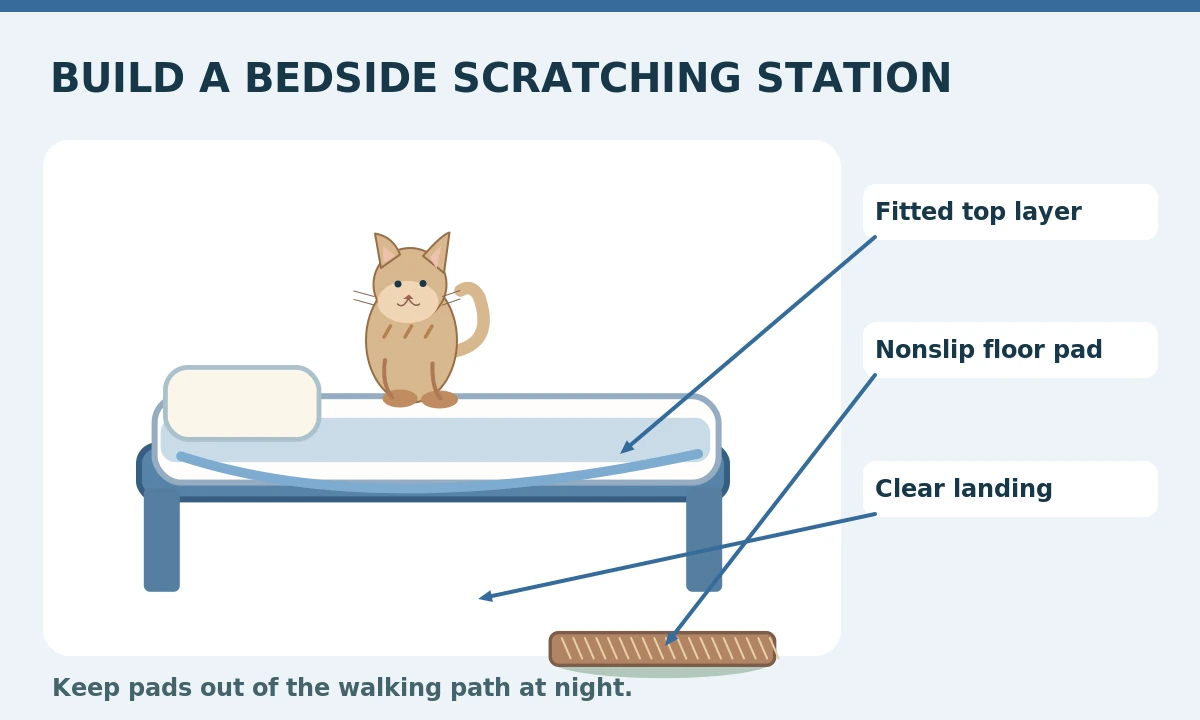
Put a flat, nonslip scratching pad on the floor beside the usual landing side of the bed, or use a stable low angled scratcher if the cat prefers a slight incline. The surface should stay still when the cat plants both paws. If your cat stretches against the bed frame instead of dragging claws across sheets, try a tall post positioned beside the frame, clear of traffic. Do not place loose cardboard pieces directly in a walkway where someone might step on them at night. Let the cat see the alternative while the sheet is temporarily protected.
Protect sheets without trapping paws
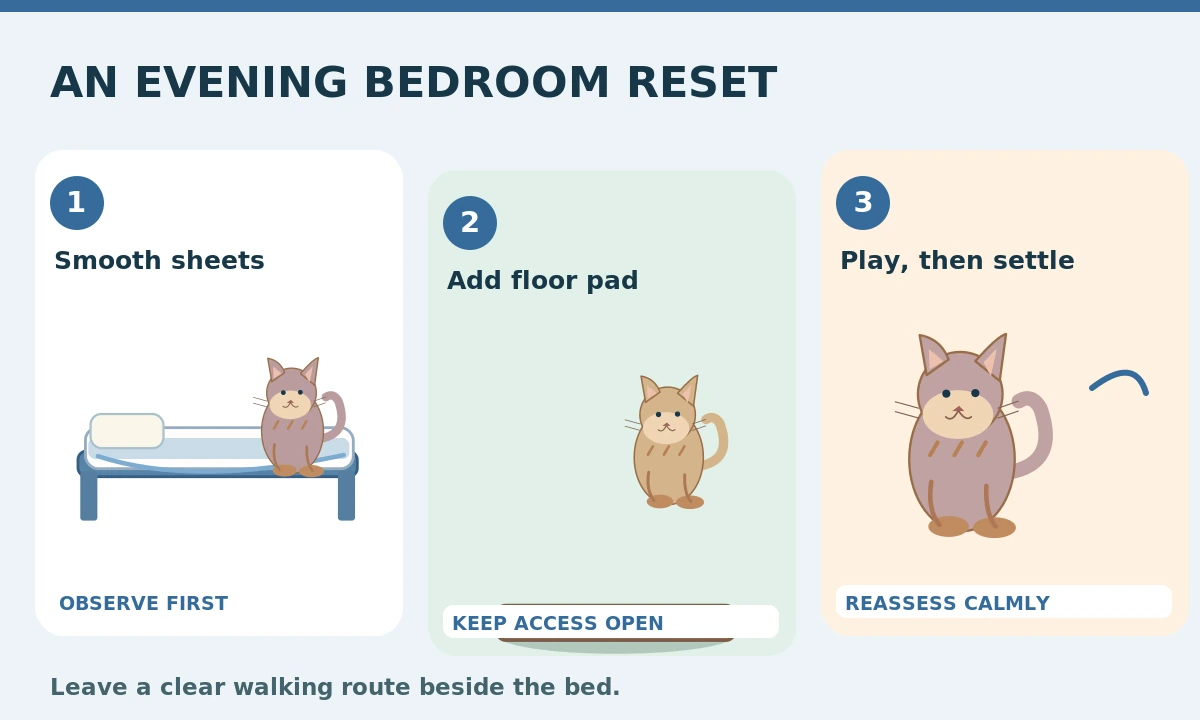
Begin with a tightly fitted, washable top layer that does not leave loose fringe or threads. Smooth bedding before sleep and repair major snags promptly; long loops can catch claws. Avoid weighted throws with unsecured beads, pins, adhesive tapes placed on bedding, or citrus and essential-oil sprays. If the cat persists at one corner, cover it for a short trial and put a scratcher at floor level nearby. You can change fabric texture, but do not remove every soft resting surface from the room. Cats still need comfortable places to settle and normal opportunities to scratch.
Plan a predictable play-to-rest transition
Try a brief interactive play session before bedtime. Let the cat chase and catch an appropriate toy. Follow with a calm wind-down, food routine where appropriate, and access to resting areas. A routine does not guarantee that a cat will sleep through the night, and it should never involve withholding necessary food or water. Avoid making fingers under the blanket into a chase game. If pawing reliably brings exciting attention, silently protect hands and offer daytime play in a different place. Keep any overnight toys free of strings, detachable feathers, or other parts the cat might swallow unattended.
Keep hands and feet out of rough play
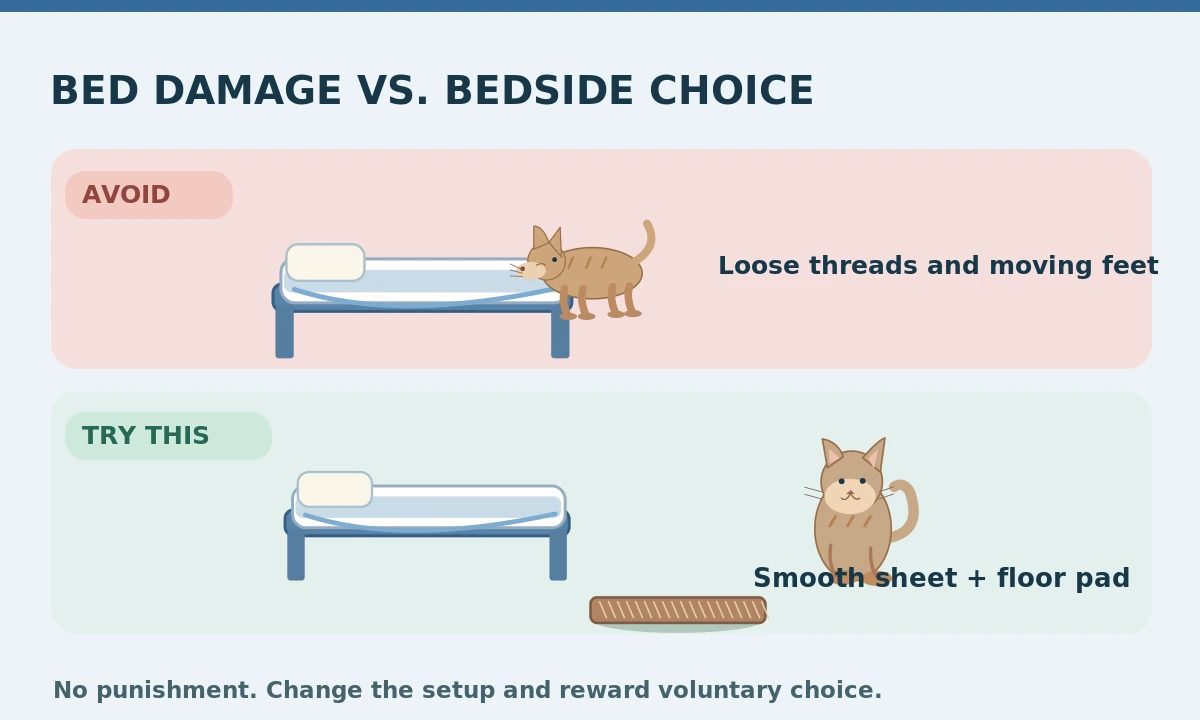
If the cat reaches beneath the covers for moving toes, stop making the bed a toy. Keep hands still and covered, and offer an interactive wand session at a safer time rather than wrestling with the cat. Put the wand away after supervised play so strings cannot wrap around paws. Pushing or shouting may further arouse a cat during rough play. Never restrain a cat to force scratching on a post. A simple environmental change and consistency among family members are more useful than reacting dramatically each time.
Offer separate sleeping and scratching locations
Some cats like sleeping next to people but prefer to scratch just after waking. Place a low, stable scratching option beside a separate bed or favorite resting spot, not only beside the human mattress. Consider more than one station in homes with multiple cats. The feline environmental needs guidelines recommend separated access to important resources, including scratching and resting. If the cat is anxious when shut out of a bedroom, address the transition gradually with a safe resting location rather than suddenly confining it to a small space. Keep access to litter, water, and usual routes available.
Review the pattern after a week
Record whether the behavior happens before sleep, just after dawn, or after someone moves their feet. Then look for a corresponding improvement in the use of the scratcher and fewer new fabric pulls. If the cat ignores a flat pad, test another stable texture or an upright post before escalating interventions. Avoid turning the bed into an obstacle course of plastic, cords, and devices. You want a comfortable sleeping space, a usable scratching location, and a predictable response when play begins. Adjust one element at a time to learn what changes the cat actually prefers.
Know when the bedroom plan is not enough
Abrupt nighttime restlessness, touch intolerance, new aggression, or repeated vocalization deserves veterinary attention. This matters especially for older cats. Scratching can also accompany environmental stress or a lack of appropriate outlets. A qualified feline behavior professional can help with persistent problems after health concerns are addressed. Seek care if a claw tears or a paw becomes swollen. Nail trimming may reduce accidental sheet snags when the cat tolerates it, but it does not replace scratchers and should be introduced gently. Do not declaw a cat to protect bedding.
How We Research
Our editorial approach uses veterinary and animal-welfare guidance from Cornell, ASPCA, VCA, and AAFP/ISFM. Documented principles on normal scratching, resource access, surface preference, and low-stress handling inform specific home checks. The illustrations explain design and behavior; they do not represent clinical trials or independent product tests. If pain, urinary changes, wounds, or abrupt behavior changes occur, veterinary assessment takes priority. Read our editorial approach and research method.
Sources
ASPCA — Destructive Scratching — background on feline scratching, enrichment, safe choice, and humane redirection.
Cornell Feline Health Center — Feline Behavior Problems: Destructive Behavior — background on feline scratching, enrichment, safe choice, and humane redirection.
AAFP/ISFM — Feline Environmental Needs Guidelines — background on feline scratching, enrichment, safe choice, and humane redirection.
VCA — Why cats scratch furniture — background on feline scratching, enrichment, safe choice, and humane redirection.
Not necessarily. Rhythmic kneading is often a resting behavior; repeated long raking strokes may favor a scratching surface.
Match the cat’s current movement: a nonslip horizontal pad for flat raking or a stable tall post for upright stretching.
Not as a first response. Begin with a safe bedside alternative, fabric protection, and a calmer routine.
Yes, long loose loops may catch claws, and swallowed threads can be hazardous. Repair or remove badly snagged fabric.
Gentle nail care may reduce damage, but it cannot replace natural scratching outlets or enrichment.