
Why Cats Scratch After Naps calls for understanding a cat’s normal needs before changing the home. Scratching can maintain claws, stretch muscles, and communicate through scent and visible marks. The safest approach is to protect vulnerable surfaces while providing an appealing, stable alternative at the place your cat actually visits. This article gives a practical sequence for observing the behavior, adjusting the environment, and rewarding the right choice. It does not recommend punishment, declawing, or holding a cat’s paws against a post. Sudden pain, injury, distress, or a major change in behavior warrants veterinary advice. Read our veterinary disclaimer for the limits of general guidance.
Read the wake-up sequence before moving anything
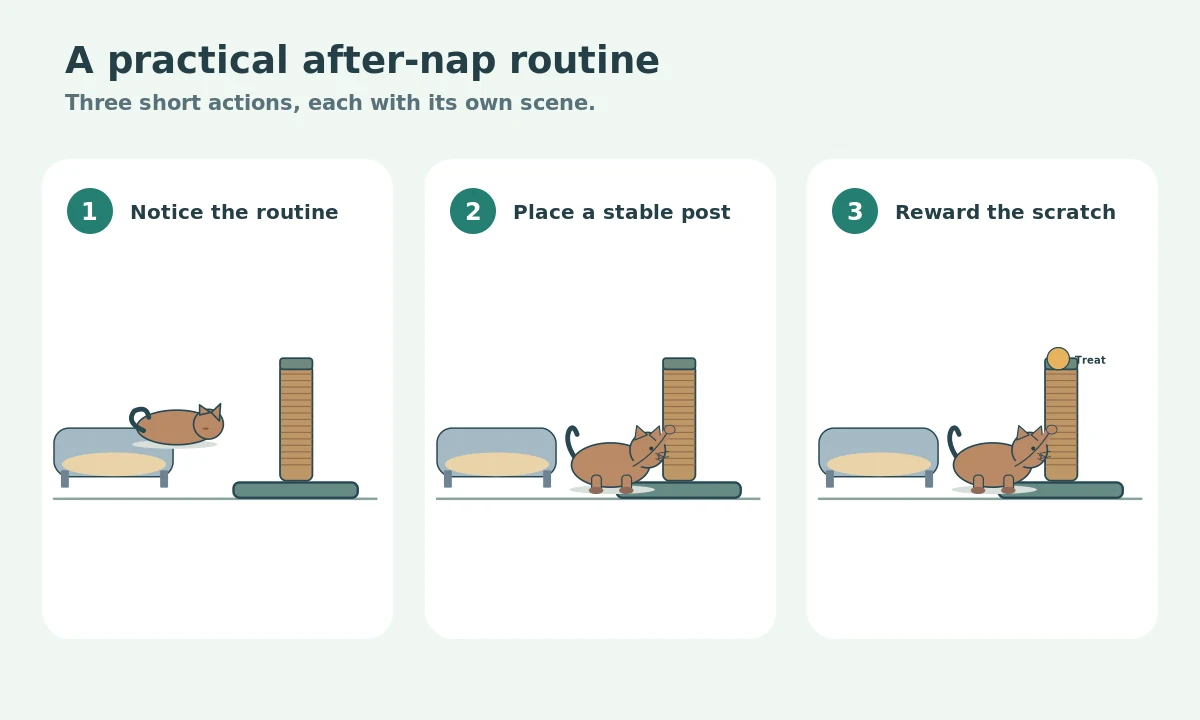
A familiar routine often starts with a long stretch, a step off the sleeping surface, and a few deliberate pulls against a vertical object. Watch the full sequence instead of counting claw marks alone. Cats use scratching to stretch, maintain claw condition, and leave visual and scent signals. The timing after sleep does not mean the cat is bored, angry, or trying to damage a favorite chair. Record which side of the bed the cat exits, whether it heads to a door, and whether it chooses an upright edge or a flat rug. That observation tells you what a suitable replacement needs to offer.

Choose a post that permits an actual stretch
The scratching surface should be tall enough for the cat to extend its forelegs while keeping the hind paws stable. A short post can be used for a few pulls but may not meet a cat’s full-stretch preference. Try an upright sisal, cardboard, or sturdy woven surface, then watch whether the cat hooks its claws comfortably. Avoid exposed staples, loose fringe, splinters, or dangling strings. Push the base gently from several sides before allowing use; it should not slide or tip. A post that wobbles when the cat leans on it can send the cat back to a much steadier furniture edge.
Put the new scratcher on the existing route
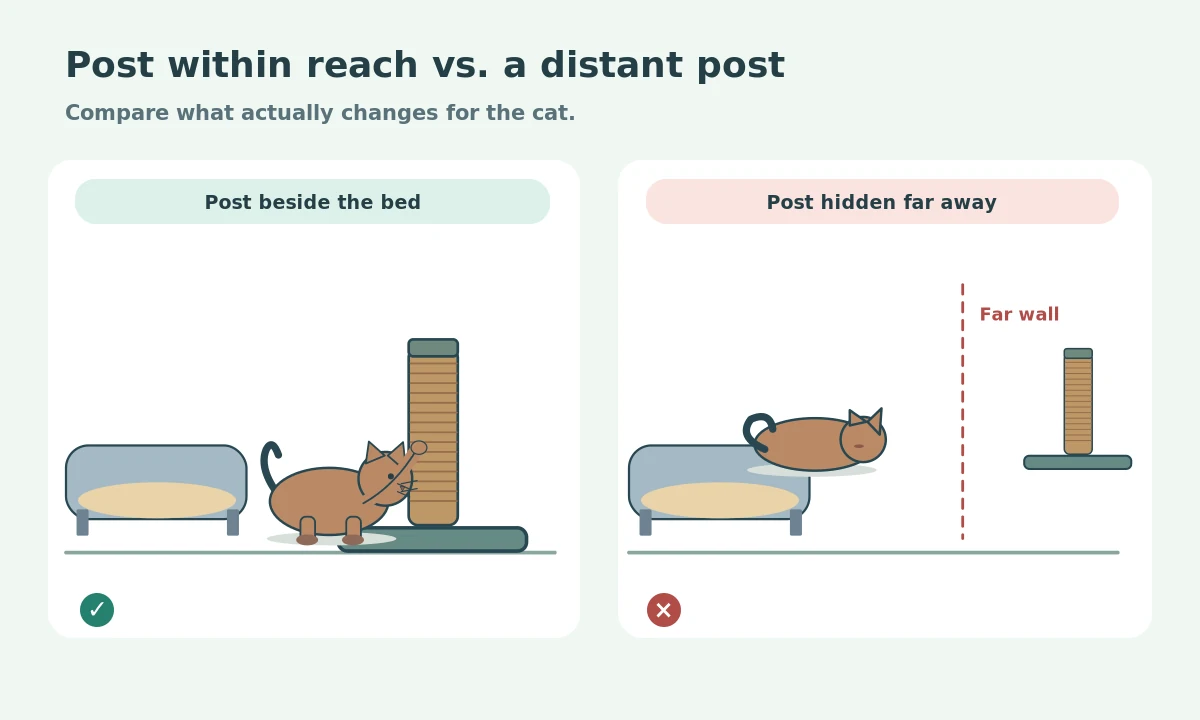
Placement is not simply a decorating decision. Start close to the cat’s preferred sleeping place and within the route it takes after waking. A post placed across the home may be attractive to people but poorly matched to a quick post-nap stretch. Leave a clear landing zone on the floor and avoid blocking a doorway. If your cat sleeps in two rooms, place an appropriate surface in each rather than expecting one post to cover both routines. Keep the post away from hot vents, unstable shelves, fragile lamps, and any electrical cords that could become snagged during a reach.
Match the direction and texture the cat already uses
Look for claw tracks that move straight down an upright sofa arm versus forward across a horizontal mat. Orientation matters as much as material. Cornell and the ASPCA recommend providing a scratching object that resembles the cat’s demonstrated preference. A cat that scratches a woven vertical edge may ignore a smooth horizontal pad; the reverse can also happen. Offer a second option without removing the first until you see sustained use. The fibers should give just enough for claws to catch without trapping nails. Replace or repair pieces that unravel into strands the cat might chew.
Invite investigation without placing paws on the surface
Set a favorite toy near the post, then allow the cat to choose whether to investigate. Some cats respond to a small amount of catnip, but not all do. Praise softly or offer a small preferred reward when the cat voluntarily touches or scratches the surface. Keep sessions brief and stop if the cat leaves. Do not grab the paws or rub them against the post: forced handling can create avoidance. A reliable routine is to watch for the usual after-nap stretch and place the reward at the correct surface, not to wait for furniture damage and then shout.
Protect the old target while the new habit grows
If the chosen target is the bed frame, sofa arm, or doorway trim, use a removable barrier only when its material is compatible with the finish and does not leave residue. A tightly fitted throw or a temporary freestanding screen can make the furniture less rewarding while the nearby post becomes familiar. Never tape a sticky material directly to delicate wood or upholstery without checking its care requirements. Do not block the cat from entering its normal resting area. Recheck the barrier daily for loose edges and chewing hazards. Continue rewarding use of the acceptable scratcher while any protection remains.
Measure progress by behavior rather than perfection
For several days, note how many wake-up episodes lead to the post versus the former furniture target. The useful trend is more voluntary post use, not immediate elimination of all marks elsewhere. Leave an already loved post in place even when it looks worn; its familiar marks and scent can make it valuable. If use drops, check whether the base shifted, the texture broke apart, or another animal now blocks the route. Do not move the post quickly to a distant corner after only one successful scratch. Make small changes after the habit stabilizes.
Know when scratching needs a closer look
Scratching is normal, but sudden frantic scratching, repeated conflict at doorways, limping, torn nails, or marked changes in behavior deserve attention. Check for another cat staring or blocking a favorite route, especially near beds and shared rooms. An older cat may need a lower, steadier surface that permits a comfortable reach. If the cat appears painful or the change is abrupt, call your veterinarian rather than treating the behavior as disobedience. The goal is a satisfying scratching outlet that fits the cat’s body and daily routine, not a home with zero visible scratch marks.
How We Research
HubPet reviewed guidance from established veterinary and animal-welfare organizations and compared the recommendations against the physical layouts shown in the illustrations. We focused on normal feline scratching, voluntary reward-based behavior change, stable materials, safe access, and triggers for seeking professional help. We do not claim product tests or individual behavior assessments. See our editorial research process. Check instructions for furniture, windows, and scratching products before applying any setup advice.
Sources
ASPCA — Destructive Scratching — https://www.aspca.org/pet-care/cat-care/common-cat-behavior-issues/destructive-scratching (accessed October 2026).
VCA — Cat Scratching Behavior — https://vcahospitals.com/know-your-pet/cat-behavior-problems-scratching (accessed October 2026).
Cornell Feline Health Center — Destructive Behavior — https://www.vet.cornell.edu/departments-centers-and-institutes/cornell-feline-health-center/health-information/feline-health-topics/feline-behavior-problems-destructive-behavior (accessed October 2026).
Safety note: This is general animal-welfare guidance, not a diagnosis or replacement for a veterinarian. Do not restrain, frighten, declaw, or punish cats to suppress natural scratching. For sudden pain, injury, or intense distress, consult your veterinarian. For human wounds, seek medical advice where appropriate.
Yes. Many cats stretch and scratch as part of waking; scratching also maintains claws and leaves scent and visual information.
Start beside a favorite resting area and on the path your cat takes after waking. Keep the base stable and the route open.
Match the chair’s vertical or horizontal feel with a nearby scratcher, protect the chair carefully, and reward voluntary post use.
No. Let your cat investigate on its own. Forcing paws against a surface can make the animal avoid it.
No. Familiar wear can make a post appealing, but replace it when exposed hardware, splinters, or loose strings create risks.