
Finding pet vomit on carpet calls for two decisions, not just one: check the animal’s health and then protect the textile. Repeated vomiting, blood, painful behavior, marked lethargy, or suspected toxin exposure need veterinary attention. For an otherwise stable pet, you can keep the animal away from the spill and begin cleaning the carpet. Lift solid material before blotting fluid, and never scrub debris down into the pile. This guide focuses on a small, recent accident; large or deeply soaked areas may need professional cleaning and a carpet-specific method. Review our veterinary disclaimer before handling an exposure or health concern.
Check the pet before touching the carpet
Look at your dog’s or cat’s breathing, energy, responsiveness, and whether vomiting continues. Note the approximate time and appearance of the material without handling it unnecessarily. If you see blood, repeated vomiting, a swollen painful abdomen, marked weakness, or possible poisoning, call a veterinarian promptly. VCA highlights several of these signs as reasons to seek urgent care. Keep your pet from licking the spill or any products you may use. Do not give medication or attempt to induce vomiting unless a veterinary professional specifically directs you.
Set up a small protected cleanup zone
Move pets and children away, put on disposable gloves, and open a window if the room needs ventilation. Gather paper towels, a blunt scoop or sturdy card, a sealed waste bag, and a fabric-safe cleaner that suits the carpet label. Place tools close enough to avoid walking through the area. Check under nearby furniture to see whether the mess spread. Avoid stepping on the material, as shoe pressure can drive it into the fibers. If the spill contains sharp foreign material or unknown chemicals, ask a professional before handling.
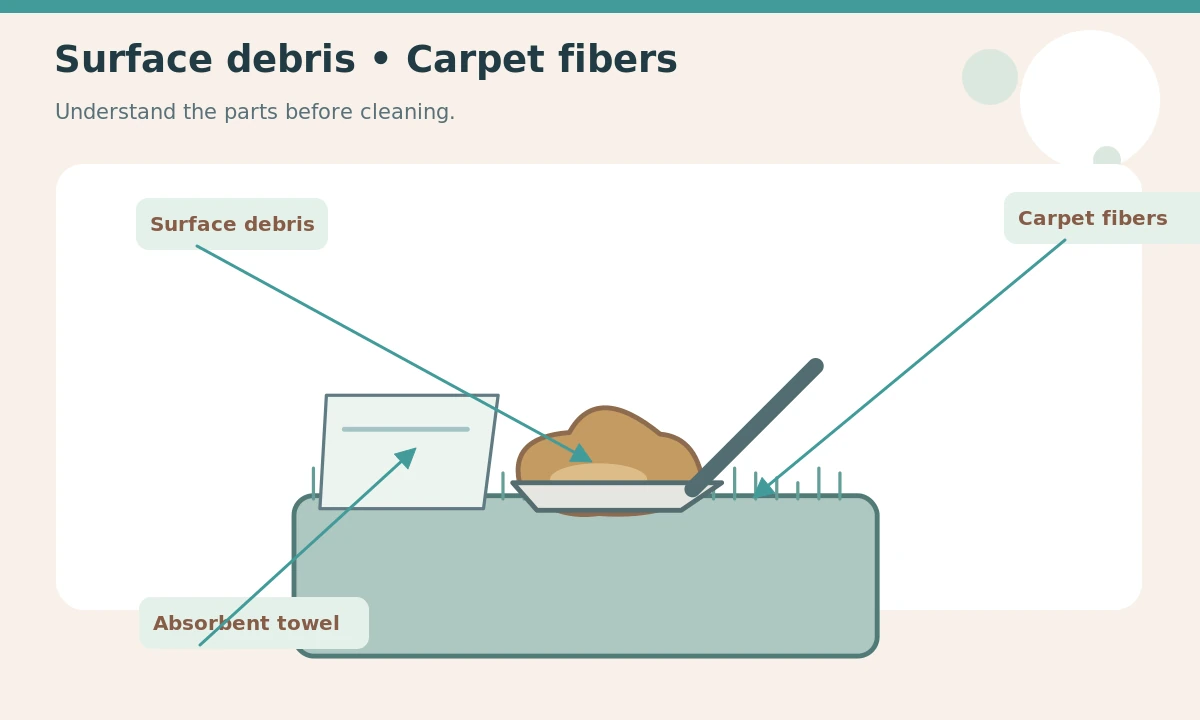
Lift solids rather than rubbing them into the pile
Hold a blunt edge nearly flat against the carpet and move it gently beneath the visible material. Scoop inward from the edge instead of dragging it over clean fibers. Deposit the material into a lined bag and dispose of it promptly. For very long pile, use the lightest movement needed; do not pull loops or shear fiber tips. A stiff wire brush can damage fibers and spread the stain. Once the visible solids are gone, switch to absorbent towels. Clean or discard the scoop before another household task.
Blot remaining moisture from the edges
Place a folded absorbent towel over the damp area and press lightly. Lift and replace the towel as it picks up moisture. Work toward the center to prevent the spot from growing. Do not flood the carpet to dilute a stain. Check whether liquid has penetrated the backing, especially on a thin rug over wood flooring. A rug that traps moisture underneath needs attention to the floor as well as the fibers. If the stain spreads beyond a manageable area, consult a professional instead of repeatedly wetting the same spot.

Use a carpet-compatible cleaner only after testing
Find the carpet or rug maker’s care directions. Some fibers tolerate a small amount of water-based treatment, while specialty rugs require other methods. Test the selected product on an unobtrusive area for color change or damage. Follow its application and removal instructions; more product does not automatically improve cleaning. Do not mix enzyme solutions with bleach, ammonia, vinegar, or another cleaner. Use a product designed for the relevant textile and keep pets away while the surface remains damp. Preserve the label in case you need exposure advice.
Dry the pile and backing completely
Blot after cleaning and let air circulate through the room. Use ventilation rather than direct high heat. Avoid walking on the damp spot or covering it with a pet bed before it dries. If a small removable rug is washable under its label, dry the backing as thoroughly as the front. Check again later for a lingering odor. A carpet can feel dry on top while the padding beneath remains damp. An extractor may help for compatible carpeting, but always follow the carpet and machine directions rather than soaking the area.
Check what the carpet still shows
Examine the cleaned spot in daylight after it dries. A color change may come from the vomit, the cleaner, dye transfer, or earlier wear. If an odor remains, do not mask it with scented powder and assume the problem is solved. Deep staining can reach carpet padding, requiring specialist advice. Avoid steam treatment for a pet-waste spot unless the carpet maker and cleaning professional specifically approve the process. Humane World cautions against high-heat steam methods for urine stains because heat can set residues; cautious handling also protects unfamiliar carpet materials.
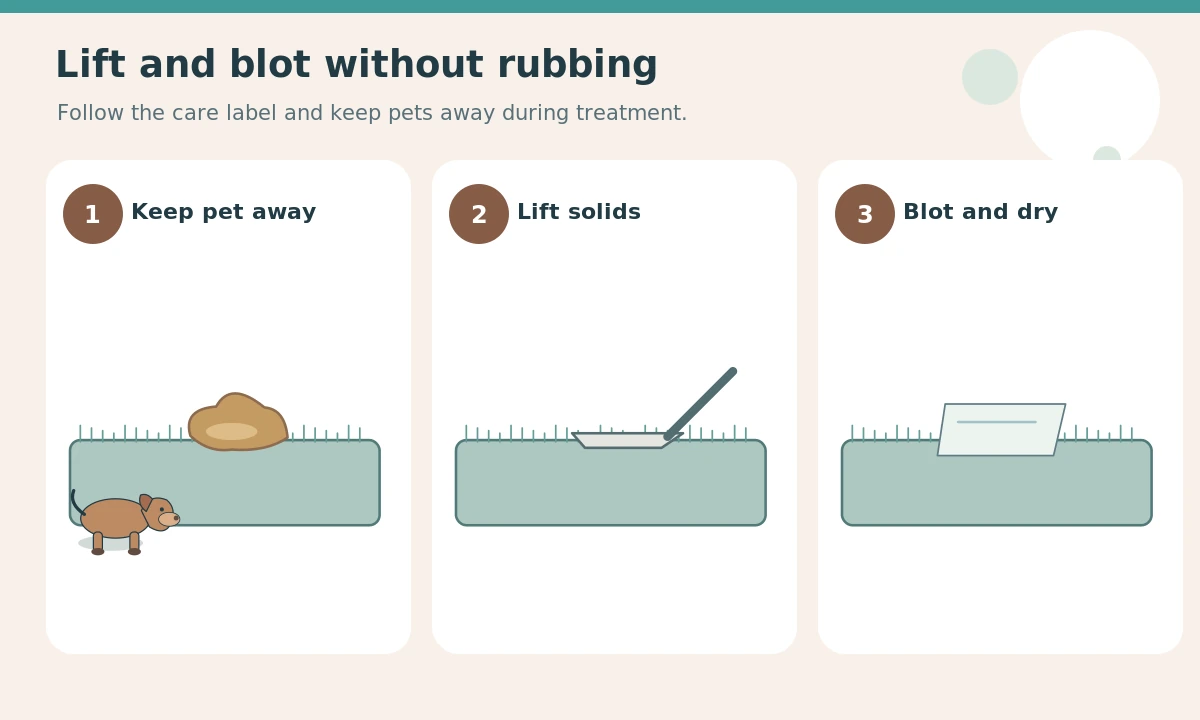
Prevent repeat mess without ignoring symptoms
Keep pet-safe cleaning supplies accessible but locked away from animals. Use washable throws near favorite resting spaces when appropriate, and watch for patterns that you can discuss with your veterinarian. Do not punish your pet for becoming sick. A repeat episode can indicate a health concern rather than a housekeeping problem. Store labels, note the date of the incident, and clean the carpet tools thoroughly afterward. If your pet ate a foreign object or poison is possible, prioritize veterinary triage. A clean floor never outweighs an animal’s immediate medical needs.
How We Research
HubPet reviewed published animal-welfare and household-surface guidance, then organized practical decisions around access, compatible materials, cleanup order, residue, and drying. We distinguish general pet-care advice from instructions that vary by product and surface. We did not test cleaner brands or verify compatibility for individual materials. See our About HubPet page for editorial context.
Sources
VCA Animal Hospitals — Vomiting in Dogs — Read source.
Humane World — How to Remove Pet Stains and Odors — Read source.
ASPCA — Poisonous Household Products — Read source.
Safety note: This guide offers general household and pet-care information, not veterinary diagnosis or a warranty for any cleaning method. Follow surface and product labels. Keep animals away from wet products and contact a veterinarian when illness, poisoning, or irritation is possible.
Use a blunt scoop gently to lift visible solids without pressing debris into the pile. Avoid sharp scraping or forceful brushing that can damage carpet.
Avoid heat until you check the carpet instructions and the nature of the stain. Start with careful removal and a permitted spot treatment.
Call immediately for blood, repeated vomiting, marked lethargy, abdominal pain, suspected toxins, or a possible swallowed object. A veterinarian can triage other concerns.
Only if its label covers the carpet fiber and the incident. Test discreetly and keep pets away until the area has dried fully.
Fluid may have reached the backing or padding. Repeated surface spraying can add moisture without reaching the source; consider professional carpet advice.