
This guide provides general information about pet products, not veterinary advice. For suspected ingestion, pain, illness, or unusual behavior, contact your veterinarian and read the veterinary disclaimer.
Machine washable dog beds sound simple at first. Then a wet insert comes out lumpy, or a large cushion will not fit through the washer door. Some listings mean you can wash the entire bed. Others allow machine washing only for the removable fabric cover. Neither design is automatically a better match for your home. Begin with the printed care instructions and your laundry equipment. Also consider the mess your dog actually makes. This guide explains how to inspect a bed before purchase. It also helps you build a cleaning routine without unsupported promises about odor or durability.
Read the washing claim literally
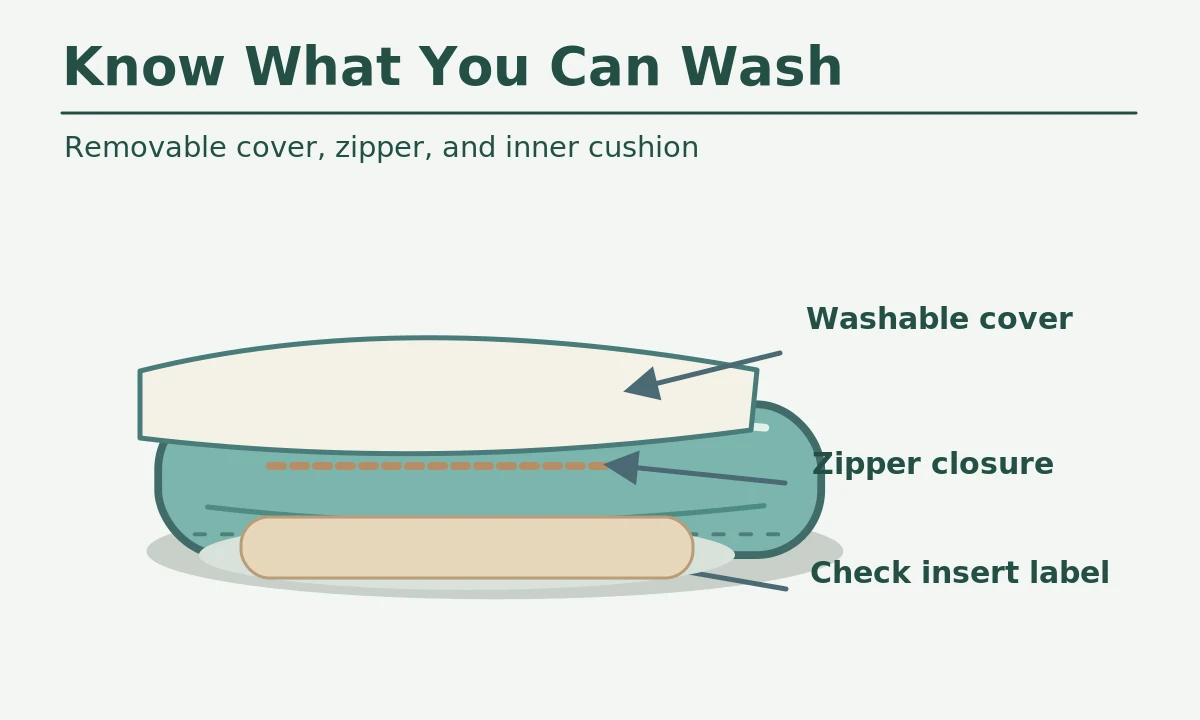
Look for a care label that identifies the washable component, wash cycle, water temperature, and drying method. “Washable cover” does not mean a foam core or stuffed interior can go into the drum. A care label may permit machine washing for a one-piece fiberfill mat. Thick molded foam often requires a different approach. Instructions may be missing, or a seller may offer only vague “easy care” language. Ask for the actual product manual. Check whether washing voids a warranty or requires a laundry bag. Plan for the least convenient part, not just the attractive cover photo.
Check the full laundry path before buying
Measure the washer door, usable drum, and drying space. A cushion that barely enters the machine may not move freely enough to clean and rinse properly. Consider whether you can lift the wet bed, hang it flat, and allow air to circulate on every side. Do not compress a large foam slab into a small washer just because the fabric folds. A removable insert makes everyday care easier for some households. A thin one-piece pad may suit households with a larger machine. When in doubt, choose a design whose individual washable components fit comfortably.
Match the bed to the dog’s actual sleeping shape
Measure your dog in a stretched-out resting position. Compare this with the usable flat surface rather than the outside size. Bolsters, thick piping, and sewn edges can subtract room. A curled sleeper may accept a different footprint than a stretched-out dog. Both need room to shift positions. Check entry height for a puppy, senior dog, or animal that hesitates to climb. Avoid buying a bed that forces a larger dog to hang its hips off the support simply because the label says extra large.
Inspect the zipper, seams, and internal layers
Run your fingers along the zipper path and look for a flap that shields teeth and fabric from snags. Examine the reverse side for loose threads or accessible stuffing. Look for decorative buttons and vulnerable corners too. A water-resistant inner liner can help protect foam from some spills, but it is not proof against every accident or a license to skip cleaning. The cushion should lie flat when assembled and stay inside the cover without bunching. For a dog that tears textiles, do not depend on a “chew-proof” marketing claim; use appropriate supervision.
Separate ordinary cleaning from disinfection
Remove hair and visible debris before laundering. Follow the maker’s fabric-care directions and use a detergent your household can tolerate; a fragrance-free, dye-free option may be useful for pets with sensitive skin. The CDC recommends cleaning pet bedding about weekly, and sooner when visibly dirty. Cleaning with detergent removes dirt and germs. Disinfection is a separate process for specific circumstances, such as illness. It requires an approved method compatible with the product. Never improvise mixtures of cleaning chemicals. Keep pets away from wet cleaning products and wait until the bedding is clean and fully dry.

Protect inserts that cannot go in the machine
If the insert must stay dry, unzip and remove its cover before washing. Follow the manufacturer’s guidance for handling stains on foam; do not saturate an unapproved insert with water because thick foam can dry slowly. Air out components separately in a clean place inaccessible to the dog. Replace damaged foam or persistent contamination rather than concealing a problem beneath another cover. A spare cover can reduce the time without a usable bed, but confirm the spare actually fits the product’s shape and zipper. The goal is a repeatable method that caregivers can follow without guesswork.
Dry the bed all the way through
An outside surface can feel dry while seams or thick fill retain moisture. After washing, reshape any approved fiberfill according to care instructions and check the center, corners, and underside before returning the bed. If the label permits tumble drying, observe its heat and load limits. Otherwise, use a well-ventilated drying area. Do not place the dog on damp bedding or leave wet cushions folded in a basket. Avoid high heat on foam, waterproof coatings, or non-slip backing unless the label permits it. Keep a separate clean resting place ready during the drying interval.
Watch backing grip and floor protection
A comfortable bed is less useful when it slides as a dog steps on it. Test the non-slip backing on your actual floor after washing and drying; rubberized surfaces can change with care or wear. On wood or laminate, also check whether moisture collects underneath. A thin, washable rug pad may help only if it is compatible with the floor finish, cannot bunch up, and stays out of the dog’s mouth. Avoid routing the bed across a walking path. The placement should let the dog enter or exit without stepping over clutter or slipping near stairs.

Make a realistic maintenance budget
Compare the replacement cost of a cover, insert, and entire bed, not merely the purchase price. Ask whether the zipper and cushion shape are common enough for replacement components to be available. A muddy dog may benefit from a thin washable top layer. It can be easier to clean than a heavy sofa-style mattress. In a multi-dog home, rotate usable clean resting places rather than leaving everyone waiting for one oversized cushion to dry. Do not buy extra covers until you have checked the model and dimensions in person.
Use a short pre-purchase and wash-day check
Before ordering, confirm interior sleeping space, exact washable components, care symbols, washer fit, zipper protection, and whether the backing can tolerate the recommended cycle. On wash day, remove the cover if required, brush away hair, launder according to the tag, and inspect every seam before reassembly. Check for trapped moisture, loose stuffing, and changes in grip. Return the bed only after it is completely dry. If a dog persistently eats fabric or stuffing, remove the damaged bed. Discuss the behavior and possible ingestion with your veterinarian.
How We Research
We review care principles from the CDC, veterinary hospitals, and animal-welfare organizations, then apply those principles to actual bed construction, cleanability, placement, and behavioral safety. For product-specific dimensions, laundering temperatures, load limits, and material contents, consult the current manufacturer instructions. We do not claim product laboratory testing, independent certification, or a veterinary diagnosis. Follow our editorial approach and confirm what applies to your own pet.
Sources
CDC, Cleaning and Disinfecting Pet Supplies (2026). Read the guidance.
VCA, Toy or Toxin: Safe Products for Pets. Read the guidance.
Safety note: Inspect bedding, zippers, liners, and any filling before use, and supervise equipment the pet has not used before. Remove damaged or swallowable parts. Suspected ingestion, new pain, or signs of overheating require prompt veterinary care. Product shopping advice does not replace medical assessment.
Only if the manufacturer expressly permits washing that specific foam insert. Many beds allow washing the cover but not the interior cushion.
The CDC provides a weekly example for pet beds and blankets, with more frequent cleaning when visibly dirty or when someone is ill.
No. It describes the ability to remove the cover, not the approved cleaning method for every component of the bed.
Check whether the insert holds contamination or dampness. Follow the care guidance and replace pieces that resist adequate cleaning and drying.
Use a dryer only when the sewn-in care instructions allow it. Heat may damage some coatings, foam parts, and grip surfaces.