
A safety-first guide to cordless clipper batteries, blade heat, guards and the limits of home trimming. These are general pet-care selection criteria, not veterinary advice. For painful skin, significant irritation or other health concerns, consult your veterinarian and read our veterinary information disclaimer.
What cordless really changes
A cordless clipper replaces a power cord with a battery and motor inside the handle. That may simplify movement around a calm dog, but it does not make blade handling automatically safer or quieter. Compare cutting power under coat resistance, balance in your hand, guards and blade compatibility rather than focusing on advertised minutes alone. An exhausted battery can make a clipper pull hair instead of cutting evenly. Beginners should distinguish light coat touch-ups from full-body clipping, which requires skill and may be unsuitable for many double-coated dogs.
Check battery runtime against the real job
Marketing runtime often reflects particular blade settings and light use; thick coat resistance may shorten it. Read the maker’s conditions and assess whether the tool maintains steady speed near the end of a charge. An interchangeable battery may allow charging separately but adds contacts and a second item to maintain. Choose visible charge indicators and a predictable power button, not an ambiguous control that could start in a bag. Never let a partly charged tool become a reason to rush and drag blades through a dog’s coat.
Inspect blade mounting before turning on power
A removable blade should click securely into place with no wobble. Verify the product uses compatible dog-grooming blades and that guards lock fully. The blade teeth must be straight, clean and free of rust or chips. A dull or poorly seated blade may snag hair, leaving uneven patches and discomfort. The supplied plastic comb guide does not eliminate all risk from the cutting edge. If the cutter chatters, heats abnormally or vibrates excessively after maintenance, stop using it and ask a professional about servicing.

Treat blade heat as a serious limit
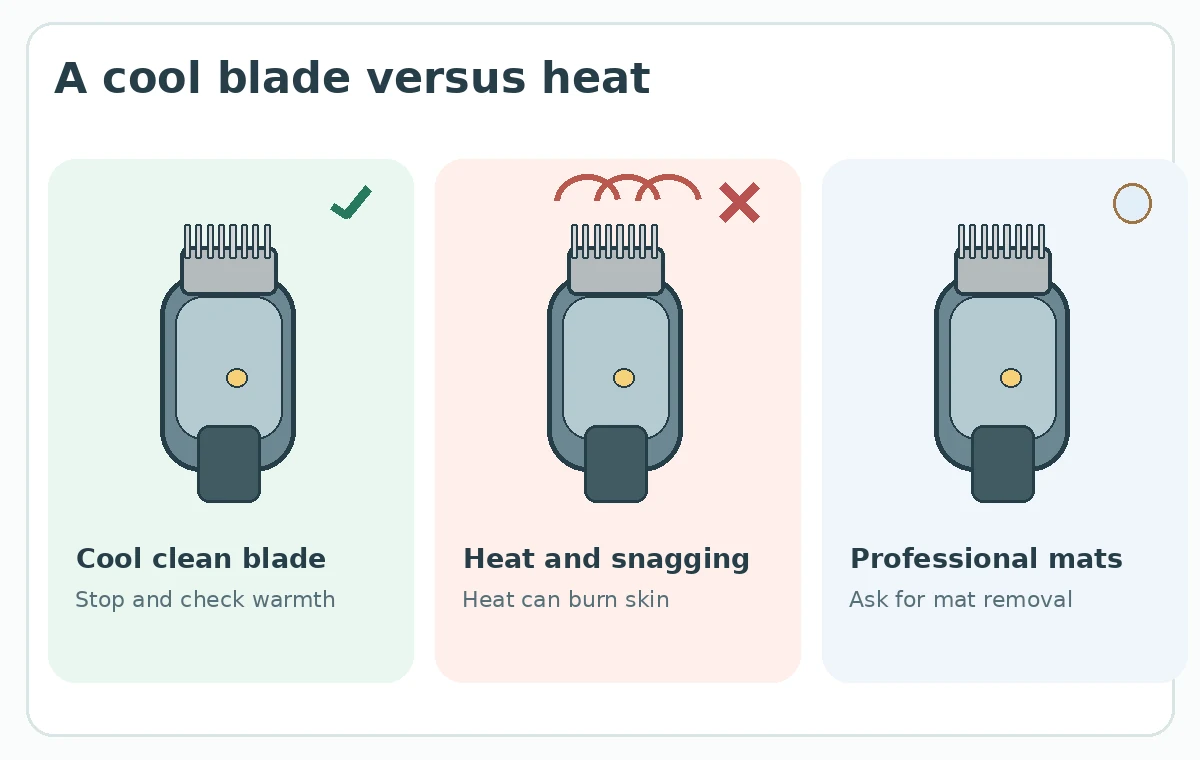
Metal cutting assemblies warm during use, sometimes faster when dirty or poorly lubricated. Pause frequently, switch the motor off and check the blade temperature against a safe part of your own skin before bringing it near a dog again. Follow blade-oiling and cooling instructions from the manufacturer; avoid improvising sprays or chilling methods around the animal. Never press a warm blade against sensitive regions. AKC professional grooming standards specifically emphasize clipper sensitivity and burn prevention. A hot blade means stop, not finish one more strip.
Match clipper performance to coat texture
Fine, clean hair may pass through a light clipper head, while dense, curly or dirty coats can overwhelm it. A longer coat requires proper preparation with brushing, comb checks and thorough drying. Do not clip compacted mats yourself without training. VCA warns that close mat removal risks accidental skin cuts and recommends professional help when matting is extensive. The correct decision for a dense coat may be a groomer appointment, not a more aggressive blade. Do not shave a double coat simply because weather is warm without expert advice.
Reduce noise and vibration fear gradually
Switch the clipper on several feet from the dog and pair the sound with a treat while the animal remains relaxed. Gradually move closer during later sessions; keep the blade turned away from the pet until handling is comfortable. An advertised quiet motor can still have a sharp frequency or vibration a dog dislikes. Watch posture, breathing and attempts to leave. Never pin down a frightened dog to complete the cut. Use short practice sessions and stop while the dog still trusts the process. Professional help is appropriate for serious fear.
Use guards only after checking their fit
A clip-on guide determines a nominal length, but it can pop loose or fail to lift a compacted coat evenly. Test the lock with the device switched off. Keep the blade flat and move in short passes with gentle contact, following trained technique on an appropriate body area. Avoid ears, eyes, folds, genitals, paws and other high-risk regions without professional instruction. A dog moving suddenly changes the blade angle. If the tool snags, turn it off and reassess; never pull harder to drag through resistance.
Maintain the clipper between sessions
Brush loose hair from the blade only after switching off power and removing the battery when possible. Follow instructions for approved blade wash, drying and lubricating; not every motor housing can tolerate water. Check the charger, cable sheath and contacts for damage. Store the battery away from excessive heat and curious pets, and never use a swollen or leaking pack. Replace worn cutting parts with compatible components. Cleaning the coat and blade reduces buildup, but no maintenance routine makes unsafe handling acceptable.
Know when to call a professional
A badly matted coat, extremely reactive dog, skin inflammation or clipper work close to delicate body parts requires professional assessment. A veterinarian should review painful or unexpected skin changes; a trained groomer can choose an appropriate clipping approach. Avoid cutting around an unidentified lump or raw patch. Do not substitute clipper use for wound care or medical advice. If you cannot observe the blade edge clearly or keep the dog comfortably still without force, stop and schedule help. The pause is a successful safety decision.

Use a pre-trim decision card
Before starting, confirm that the coat is clean and free of tight mats, the blade is secure and cool, the battery is sufficient, and the dog accepts the sound. Lay out the brush, comb, towels and rewards. Start in a low-risk area only if you already know the safe technique. Stop for blade heat, pulling, skin redness, fatigue or fear. Record the blade size and what worked, but do not treat one short successful pass as permission for a full haircut. Reassess fit and comfort every few minutes.
How We Research
We evaluated cordless dog grooming clippers using veterinary coat-care guidance, humane handling standards and practical inspections of material, fit, surface safety, maintenance and situations that call for professional help. We do not claim to have tested specific products in a laboratory or examined each dog individually. Our recommendations prioritize observable features over marketing scores, with our editorial approach explaining our research practice. Sources reviewed October 28, 2026.
Sources
AKC, Dog Brushes: How to Choose the Right Dog Brush. Read source guidance. Reviewed October 28, 2026.
VCA Animal Hospitals, Grooming and Coat Care for Your Dog. Read source guidance. Reviewed October 28, 2026.
AKC, Dog Grooming at Home: The Dos and Don’ts. Read source guidance. Reviewed October 28, 2026.
AKC, National Core Professional Dog Grooming Educational Standards. Read source guidance. Reviewed October 28, 2026.
Safety note: Stop grooming when your dog shows pain or intense distress. Seek a veterinarian for new or persistent skin changes; ask a qualified groomer for dense mats and high-risk coat removal. Never use equipment as a substitute for gentle handling.
They remove a dangling power cord but still carry blade, heat, pinch and handling risks.
A dirty or dull blade, weak power or insufficient coat preparation may cause grabbing. Stop and inspect.
Extensive or close-to-skin mats are a professional task because the blade can cut hidden skin folds.
Pause often, switch off and check blade temperature; follow manufacturer cleaning and oiling guidance.
Do not assume shaving helps. Ask a veterinarian or experienced groomer about your dog’s coat and situation.