
Waterproof Dog Car Seat Covers solve a specific car-travel problem, but appearance can hide limits. The most useful questions concern fit, access to vehicle safety equipment, everyday comfort, and how the product behaves after cleaning. This guide explains what to measure and what to inspect before a trip. A cover, padded seat, or accessory is not automatically a collision restraint. Keep dogs safely secured using appropriate equipment and follow the instructions for both the vehicle and the restraint. For health concerns rather than equipment selection, see our veterinary disclaimer.
Read waterproof claims as construction details
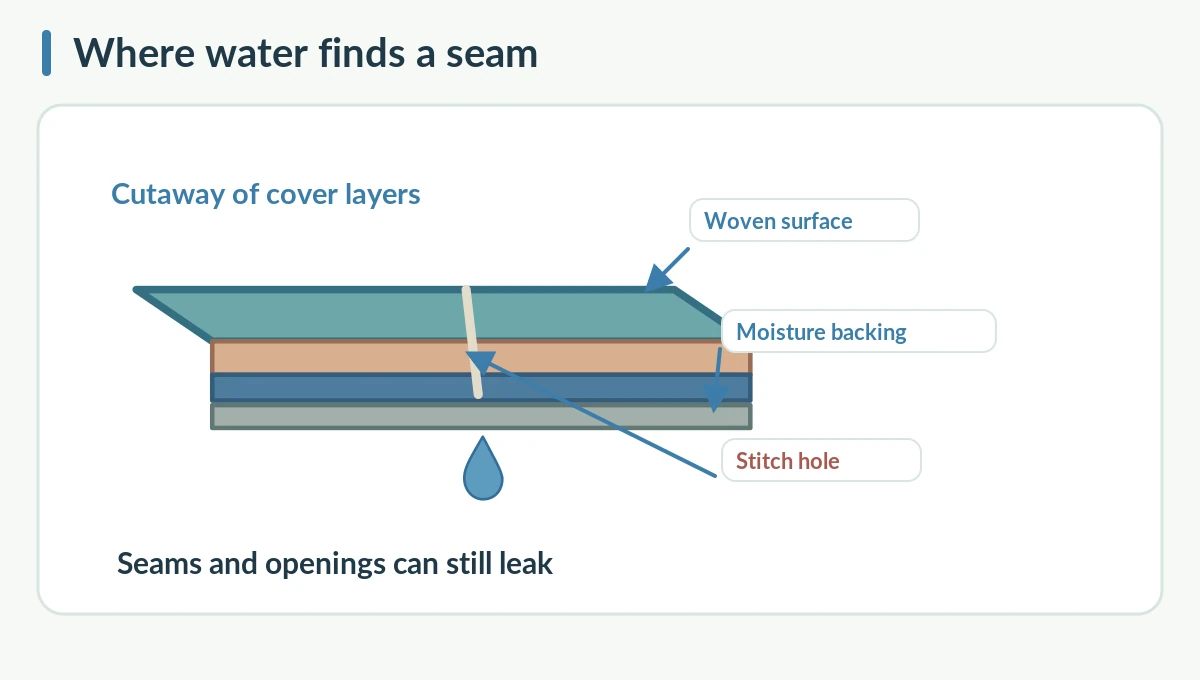
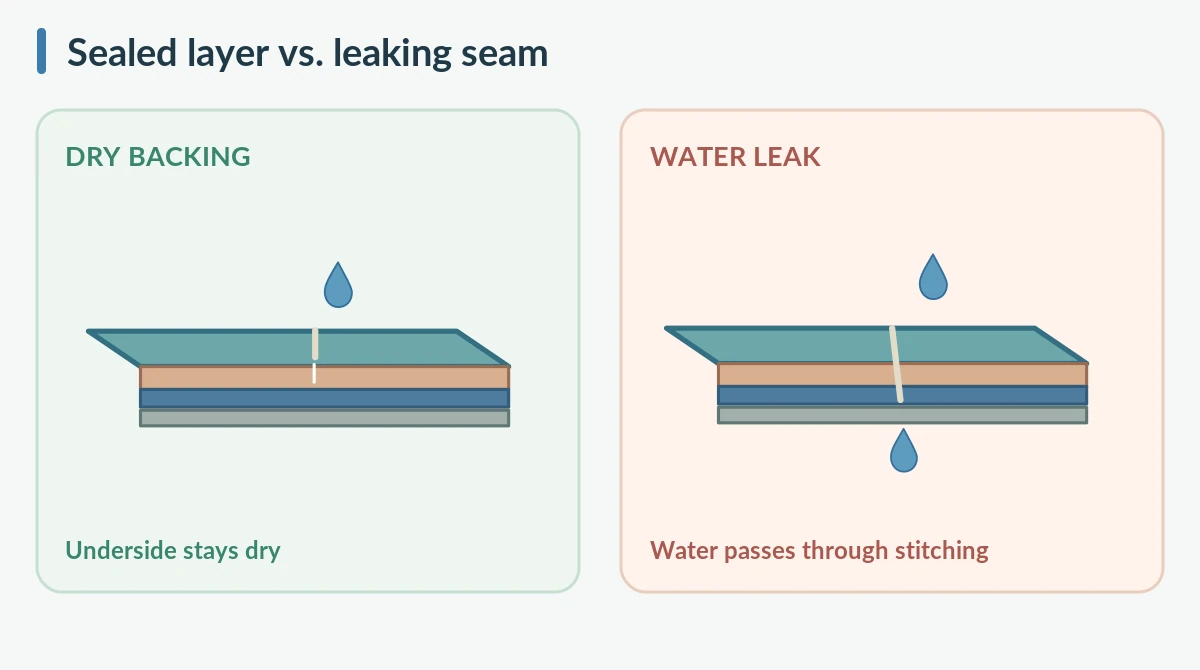
“Waterproof” is a marketing word unless the maker explains the cover’s layers, seams, and expected exposure. A coated upper fabric may resist wet paws while stitched channels still admit water. A thick quilted cover can hold moisture against the vehicle seat even when its surface looks dry. Ask which layer forms the barrier and whether the seams have any sealing treatment. For muddy walks, short-lived splashes may be the main challenge; for a soaked dog or spilled water bowl, pooling at the edges becomes more important. Choose the limitation you can manage.
Study the layers from top to bottom
A typical protector has an outer woven surface, padding, a moisture-blocking film or backing, and a grippy underside. Draw these layers in order before comparing products. The top should be comfortable under a dog’s paws, while the bottom should not shed particles or stain leather and vinyl. Confirm that any laminate survives the manufacturer’s recommended wash cycle. A product might feel thick yet leak through needle holes. When spills occur, clean and dry the underlying vehicle upholstery too, even if you used a protective cover.
Look at stitched seams and belt slots
Sewing needle holes can create paths for liquid. Check corners, seat-belt cutouts, pocket attachments, and quilting rows. Even a sealed panel needs openings for a working vehicle belt and a correctly fitted pet restraint. Never tape a belt slot shut or route a belt around the outside of an unapproved fabric sleeve to keep water out. Instead, keep the required opening accessible and plan a separate absorbent towel at the cleaning stage if appropriate. The restraint connection takes priority over uninterrupted coverage.
Compare coated fabric and absorbent toppers
A slick coated surface may shed water but feel unstable to a standing dog. An absorbent washable topper is often more comfortable for wet paws, but it must not introduce a thick unstable layer beneath a safety device. Treat an absorbent layer as a removable cleaning aid, not as a substitute for the cover’s leak barrier. Check that the topper cannot bunch around the dog’s paws or seat-belt buckle. A gentle nonslip texture can help in ordinary travel; it does not prove crash performance or make an unsecured dog safe.
Test compatibility without flooding the vehicle
If you want to inspect seam behavior, do a controlled test with the cover removed from the car and follow the care label. Use a small amount of plain water on an inconspicuous part of the material and check the underside on a washable surface. Do not soak electrical seats, seat heaters, or vehicle airbags as a home experiment. Check the manufacturer’s warranty and care directions first. A test can reveal an obvious leak, but passing it once cannot certify waterproofing after repeated washings or years of wear.
Keep foam, seat sensors, and electronics dry
Modern seats may contain heating elements, occupancy sensors, power adjustments, or other wiring. Water should not reach these components. If liquid passes through a cover, stop using that seating position until you clean and thoroughly dry the interior as the vehicle maker recommends. Avoid spraying cleaners into belt buckles or seat mechanisms. Consult the vehicle handbook for affected electronics and use a qualified detailer where necessary. The cost of trapped moisture may exceed the cost of replacing a washable protector.
Remove wet fabric promptly after outings
Do not leave a soaked dog-seat protector folded over the bench for days. Remove loose debris first, wipe puddles, then lift out the cover without dumping water into the buckle slots. Inspect the upholstery underneath and dry any affected surfaces. Wash or rinse according to the label, paying attention to detergent restrictions. Hang the cover in a ventilated place until both the top and backing feel dry. Heat that damages a waterproof film can make future leaks more likely; avoid an unapproved hot dryer setting.
Watch for deterioration in the backing
Small blisters, peeling film, cracked fold lines, and powdery underside material can mean the moisture barrier is failing. Also inspect the seams around hook-and-loop openings and anchor loops. If a cutout stretches, it may no longer align with the buckle. Do not repair a damaged barrier with household adhesive near a restraint pathway. Replace the protector when damage compromises the fit or material integrity. Keep the dog’s restraint system independent of the cover so changing the fabric does not require redesigning the safety setup.
Pack a practical wet-dog cleanup kit
Keep a clean towel, waste bag for muddy wipes, and a waterproof storage bag where they cannot become loose projectiles. Dry the dog’s feet before loading when possible; this reduces wet fabric and slippery pawprints. Carry a water bowl to use at stops, rather than letting an unrestrained animal drink from a rolling bowl while driving. Keep the pet secured for travel and avoid distracting the driver with cleanup tasks on the move. A sensible system combines safe restraint, manageable moisture, and a quick drying routine.

Separate leak protection from collision safety
No moisture-proof layer makes a crash-tested restraint unnecessary. A hammock shape can hold debris, yet it does not by itself secure a dog. Cornell and the ASPCA recommend appropriately securing dogs in vehicles, and the CDC emphasizes that pets should not roam loose. Check the selected harness or carrier instructions before using any thick cover under it. If the safety system requires direct contact with a seat surface, follow that requirement rather than putting a waterproof accessory in the load path. Clean upholstery is useful; safer travel is essential.
How We Research
We reviewed veterinary school and animal welfare guidance on car travel, plus research-led pet restraint information. We distinguished manufacturer fit claims from independent crash-safety evidence. No product featured here was independently crash-tested or certified by HubPet, and we do not present comfort features as safety ratings. Vehicle and product instructions take priority whenever a generic drawing cannot show a specific model. We checked the sources in October 2026; learn more about our editorial approach on the About HubPet page.
Sources
ASPCA — Travel Safety Tips (accessed October 2026).
CDC — Pet Travel Safety (accessed October 2026).
Cornell Veterinary Medicine — Traveling Safely With Your Dog (accessed October 2026).
Travel safety note: Never leave a dog unattended in a parked vehicle. Avoid front airbags, loose pets, open pickup beds, unsecured cargo, and improvised tether extensions. Look for testing of the exact model and configuration before trusting any crash-safety claim. Ask your veterinarian about travel sickness, pain, or distress instead of forcing equipment use.
Some have waterproof backing, but stitching and openings can still leak. Read the construction details and care label.
No. Keep access to the vehicle buckle and the approved pet restraint fully clear; never improvise belt routing.
Only test removable fabric in a safe washable location when the manufacturer permits it. Do not pour water onto an installed vehicle seat.
Not automatically. The carrier may require a specific anchoring surface. Follow the carrier and vehicle manuals.
Replace it when the backing peels, seams split, openings distort, or it no longer stays fitted or dries properly.