
Pet hair can collect on a sofa seat, hide in the cushion gap, and lodge in sturdy carpet pile. Those are three different cleaning tasks. Choosing the correct vacuum attachment begins with the surface, the connector, and whether a spinning brush is appropriate. A powerful tool can still damage delicate fabric or fail to fit the machine. This guide explains upholstery nozzles, crevice tools, and small brush heads, including safe handling and maintenance checks that work across different vacuum designs.
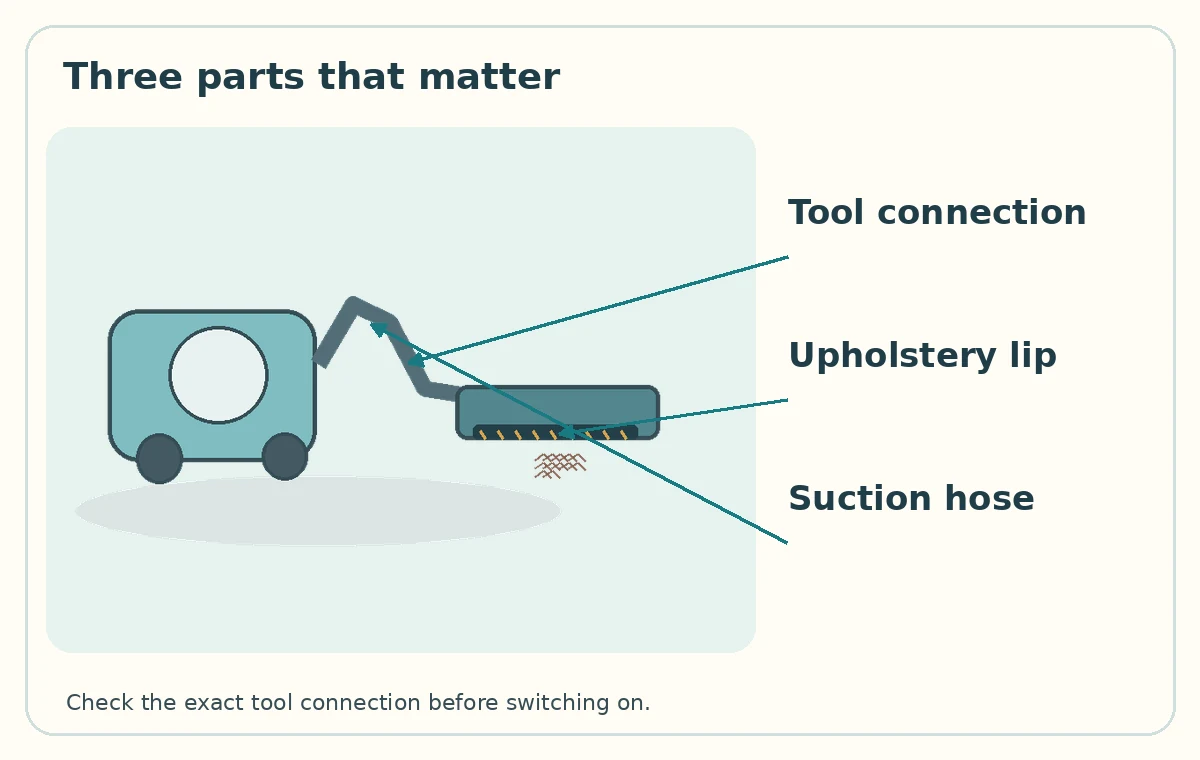
Match the attachment to the surface first
A wide carpet floorhead cannot reach every sofa fold, and a narrow crevice nozzle is too slow for a broad seat cushion. Start with the job: surface fur, embedded fur in durable pile, or debris along seams. The plain upholstery nozzle provides suction without a spinning brush. Where the material allows it, a mini powered or turbine tool adds agitation. Narrow crevice attachments focus the airflow at edges. These tools have different limits, so buying an entire new vacuum may be unnecessary when a compatible attachment solves the real gap.
Check the connector, not just the product photo
Vacuum attachment compatibility depends on the connection diameter, release mechanism, model family, and sometimes electrical contacts. A mini motorized brush cannot operate from a hose that lacks the required power connection. Do not force a close-looking fitting, wrap a joint in tape, or assume a brand name guarantees compatibility. Find the exact model number and read the official accessory list. Check that a fitted tool locks securely without wobbling. If a tool slips during a stroke, switch off the vacuum and replace it with the correct part.
Use a plain upholstery nozzle for delicate areas
A broad, smooth-edged upholstery nozzle can lift loose fur from a supported seat cushion with relatively little abrasion. Some nozzles include short lint strips or soft brushes, which also need a hidden-area test. Keep the nozzle flat; avoid scraping a hard rim along a seam. Work in the direction the furniture maker recommends, particularly on velvet or direction-sensitive pile. If the suction puckers a loose cover, reduce airflow if your machine allows it or use a gentler method. Stronger suction is not always safer.
Know the limits of small rotating tools
A mini motorized head or an air-driven turbine may help pull hair from sturdy stair carpet and durable upholstery. It can also snag loops, fringes, loose piping, and fragile textures. Check whether the brushroll can be cleaned or replaced without exposing fingers to moving parts. Some rollers wind long hair around a spindle despite anti-tangle marketing. Turn the machine off and disconnect power before opening a head. Use powered agitation only on a surface that permits it, not on every piece of fabric.
Use the crevice tool for real gaps
A narrow nozzle reaches the line between cushions, the back-seat junction, and the corners near stair risers. The tip should remain slightly above delicate fabric rather than stabbing into seams. If a flexible extension is offered for your vacuum model, it may reduce awkward wrist angles. Avoid tugging on the hose to reach one last corner. The attachment must guide suction into the gap without dragging or tipping the vacuum body. Remove any large objects manually before they block the passage.
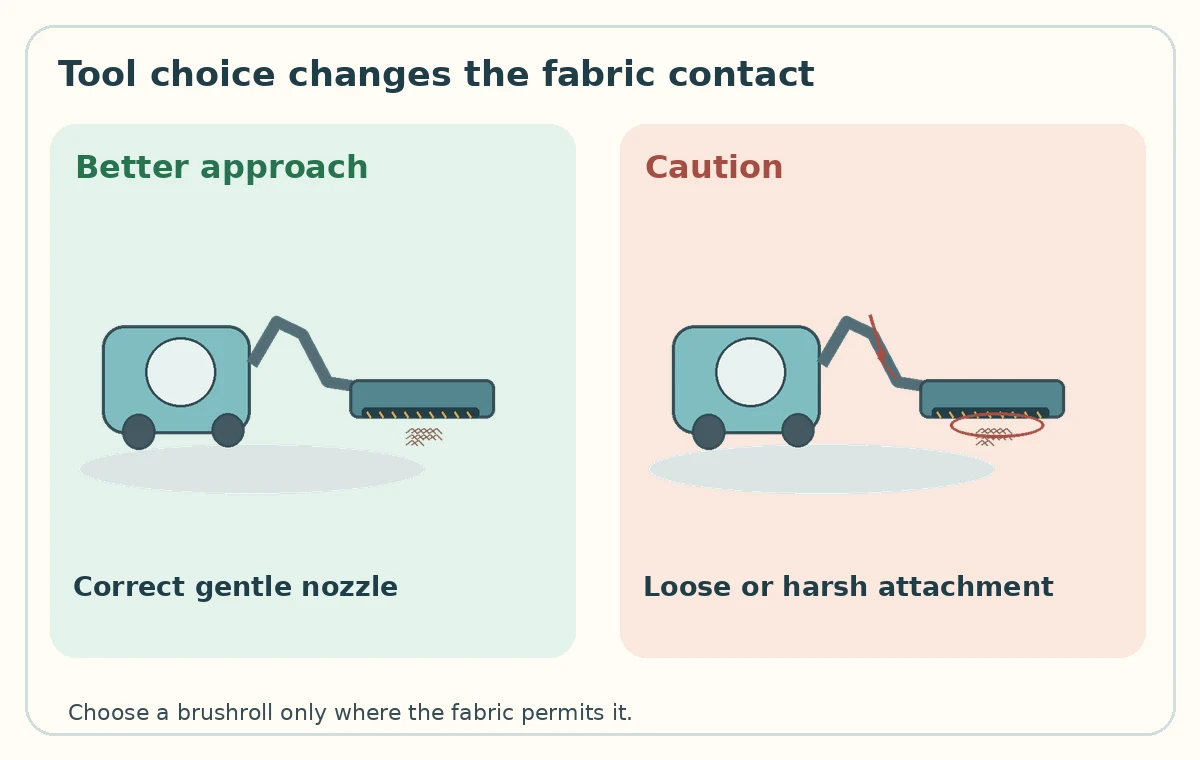
Compare the right tool with an overpowered choice
For loose fur on a soft seat, a plain nozzle often gives more control than a stiff rotating brush. For hair set into robust carpet pile, a compatible small brush may make sense after testing. The warning example is a powered tool catching decorative loops or a poorly seated adapter pulling off mid-use. Compare how the head contacts the actual surface, not only a list of promised hair-removal results. If resistance suddenly changes, stop before a snag becomes damage.
Maintain the brushroll and airway
Hair can wrap around a small roller, clog the throat of a nozzle, or lodge behind lint strips. Read the maintenance section of the precise tool manual. Disconnect the power source before opening a head, and use only the permitted cleaning method. Never wash electrical contacts or a motorized unit unless the maker explicitly instructs it. Check air passages and reassemble every latch before restarting. A clean attachment works more consistently and reduces the temptation to press harder against upholstery.
Test a short cleaning route
Begin with the easiest accessible cushion and inspect the result. Then use the crevice tool along the seam and the right small head on any carpeted step. Put the vacuum body on a stable surface, not on a narrow stair edge. Manage the cord and hose so no person or animal can trip. If the tool hums but fails to pick up fur, check blockage, filter maintenance, and head fit before increasing pressure. A useful routine is repeatable without wrestling the machine.
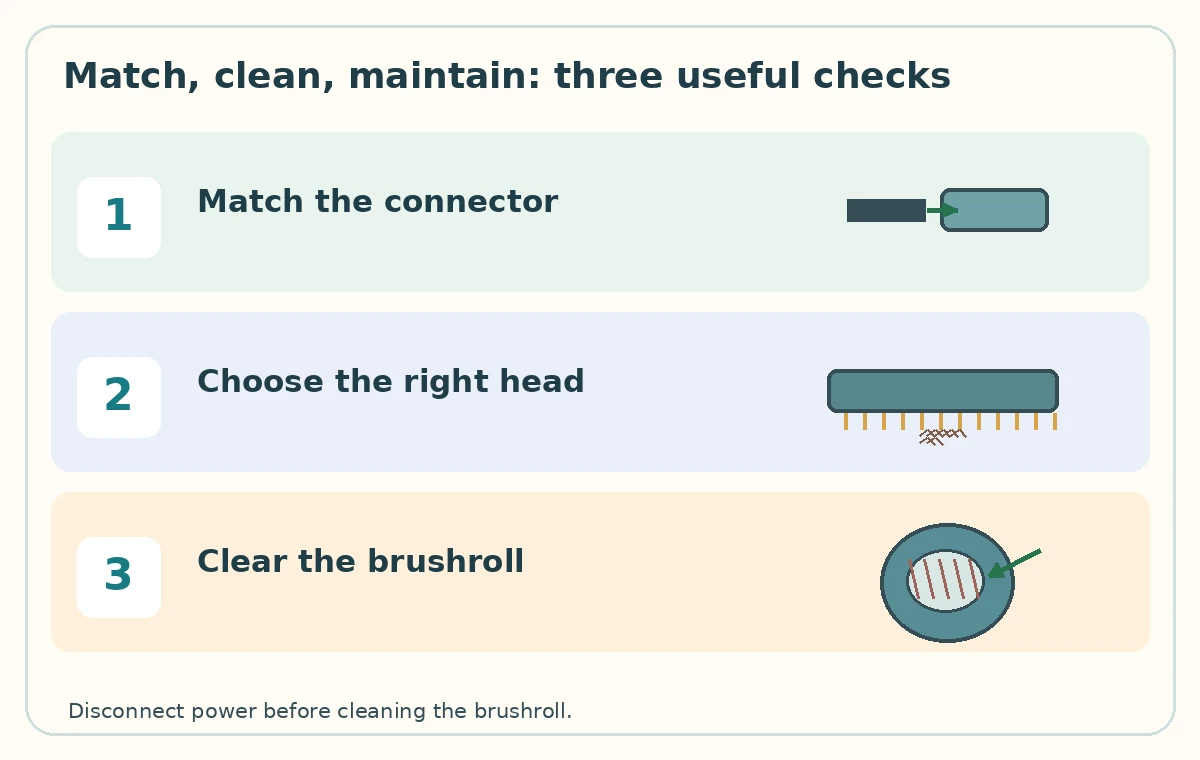
Buying and storage checklist
Record the model number, attachment connector, width, brushroll type, care instructions, and replacement-part cost. Choose the simplest tool that matches your most common surface and is easy to clean. Store tips where they will not crush bristles or collect moisture. A third-party adapter might fit mechanically but may not support electrical or safety features; require explicit compatibility. Do not treat a powerful motor as a substitute for furniture care guidance, a stable work position, or routine pet grooming.
A repeatable cleanup and maintenance checklist
Before each session, identify the material, confirm that your equipment is suitable, and start with the gentlest method. Inspect the result under good light before moving across the whole surface. Stop if you notice a snag, a change in finish, abnormal noise, unstable equipment, or discomfort in the pet. Keep cords and small loose tool pieces away from animals. Collect gathered fur into the trash and clean or store the device using the maker’s instructions. These checks matter more than a product claim that any one tool removes all pet hair.
How We Research
HubPet reviewed manufacturer guidance for upholstery, vacuum attachments, and carpet-cleaning tools, along with established humane pet-grooming information. We distinguished instructions for one manufacturer’s product from general safety principles; not every material accepts identical pressure, moisture, or brushroll use. We did not conduct independent laboratory comparisons or test removal percentages. Recommendations prioritize a visible hidden-area test, appropriate equipment fit, gentle technique, and realistic limitations. For unusual skin shedding, painful coat changes, or persistent bald patches, contact a veterinarian. See our editorial method and veterinary disclaimer.
Sources
Dyson — How to Use Vacuum Cleaner Attachments. Reviewed for material-care precautions, specific tool use, and stated limitations.
BISSELL — How to Clean Upholstery. Reviewed for material-care precautions, specific tool use, and stated limitations.
Electrolux — How to Clean a Fabric Sofa With a Vacuum. Reviewed for material-care precautions, specific tool use, and stated limitations.
No. Connection geometry, locks, and electrical requirements vary. Verify the exact vacuum and accessory model.
A compatible crevice tool usually gives better access than a wide upholstery nozzle. Keep its edge gentle.
Only if the furniture maker permits that contact. Delicate pile often requires a non-rotating gentle attachment.
It may have a clog, wrapped hair, or a compatibility problem. Disconnect power and follow the model manual.
Use a wide upholstery nozzle for open surfaces and a narrow tool for gaps; neither covers every job well.