
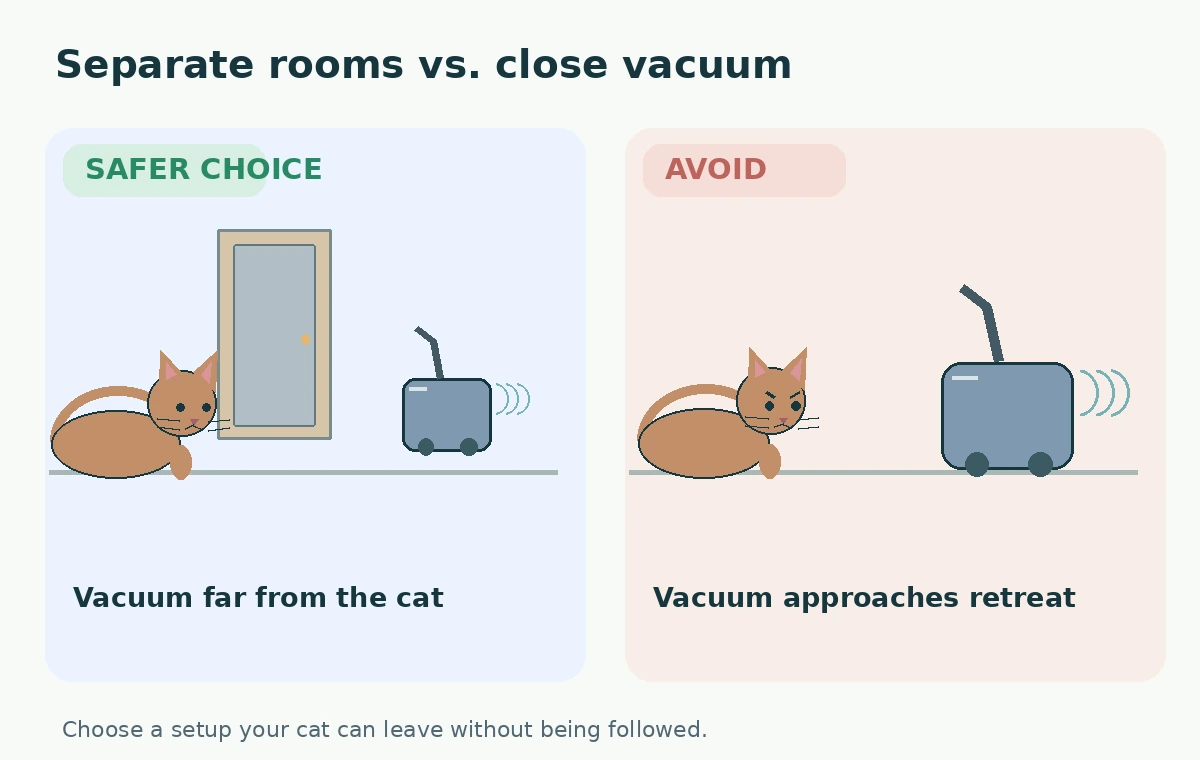
A vacuum brings several surprises at once: motor noise, vibration, moving parts, and a large object approaching across the floor. A cat may flee before the machine even turns on. The goal is not to make the cat sit next to it. A safer cleaning plan starts with a separate quiet area and a predictable route for the cleaner. If the cat remains comfortable, you can introduce parts of the experience gradually. Never trap a frightened cat with running equipment or mistake freezing for calm.
Plan the route while the vacuum is off
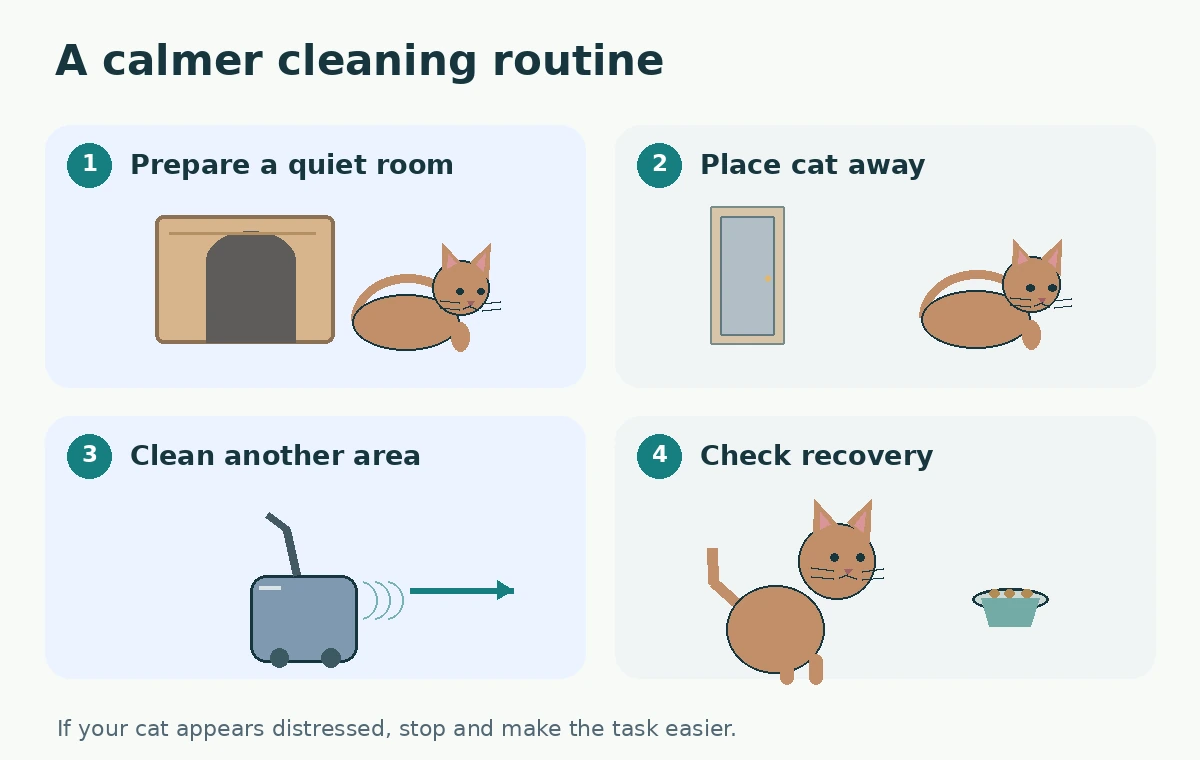
Decide which rooms you will clean and which closed room can serve as a retreat. Move bowls and the litter box only if needed and keep essential access predictable. Check that the quiet area has water, a bed, and a place to hide. Close external doors and windows so a startled cat cannot bolt outside. Do not drag the vacuum across the cat’s normal hiding place. Instead, begin in the farthest practical room, with the cat settled elsewhere.
Understand why this machine feels threatening
The motor produces unfamiliar sound while the hose and floorhead move toward the animal. Vibration through hard floors can add another sensation. Cats differ in how strongly they respond; a reaction does not mean the pet is stubborn. A cat may also remember a previous frightening encounter. Watch for a low body, flat ears, rapid retreat, or refusal to leave a hiding place. These signs indicate that distance matters. Turning the machine off often provides the clearest immediate relief.
Keep an actual quiet refuge available
Place a covered bed or sturdy box in a room away from vacuuming. The cat should be able to choose the retreat before the noise begins. A closed door can reduce sound, but do not lock a cat away without water or litter access for extended periods. If the cat becomes distressed behind the door, review the setup. Avoid confining the cat beside another pet or an appliance that starts unexpectedly. The retreat should be a familiar, usable space on ordinary days too.
Introduce the silent vacuum without a confrontation
Leave the powered-off machine at a distance for a brief period while the cat has access to another room. Never push it toward the cat or place it at the doorway of the hide. If the cat stays relaxed, offer a small reward or gentle play at the cat’s chosen location. Remove the machine after the session. On later days, change only one detail, such as its position. If the cat avoids the room or freezes, increase distance and return to the easier stage.

Separate the sound step from the movement step
A vacuum that starts across a closed door may be easier for some cats than a vacuum rolling nearby. First, keep the cat in its normal quiet space and start the machine briefly far away. Do not assume this is suitable for every cat; skip training and use management if distress appears. Later, if the cat remains calm, you may practice a little movement while the motor is off. Mixing full volume with close motion too early makes it hard to know which part caused the reaction.
Avoid rushing to get the job done
Do not chase the cat out of a room with a running vacuum. Also, do not point the hose toward the cat to encourage it to move. Pause cleaning if you accidentally block its exit. Guide household members to keep the retreat door closed to visitors, children, and other pets as appropriate. You can clean one area at a time, allowing the cat access to its usual spaces between sessions. A shorter session that preserves safety is better than a long forced exposure.
Choose maintenance that reduces surprises
Empty and maintain the vacuum according to its manual so it does not rattle or squeal unexpectedly. Keep cables out of the cat’s reach, and unplug the unit before inspecting parts. Never leave a powered machine unattended near a kitten. Robot vacuums add unpredictable movement, so use similar separation rules and check rooms before scheduling a run. Even a quiet model can alarm an individual cat. Device features do not replace a safe retreat or supervision.
Use calm rewards only below the stress threshold
If the cat eats normally, moves loosely, and can leave, you can pair a distant sound with a suitable reward. Stop before the animal feels pressured. Never withhold food to make a frightened cat approach equipment. Avoid using hands to hold the cat still during a noise test. If the cat refuses treats or freezes, the exercise has become too difficult. Return to distance, quiet, and normal routines instead. Progress is optional; reliable management may be enough.
Track distance and recovery rather than bravery
Write down where the vacuum was, whether the door was open, the noise duration, and how the cat behaved afterward. Watch for ordinary grooming, eating, and movement. A cat that hides briefly and then returns to normal may need only a good retreat. A cat that remains tense for hours needs a more conservative plan. Do not compare your pet with a neighbor’s cat. Each household layout and animal response creates different limits.
Ask for help when fear spreads or behavior changes
If the cat starts avoiding rooms, stops eating, soils outside the litter box, or shows unexplained sensitivity, contact the veterinarian. A qualified feline behavior professional can help create gradual training after a medical check. Do not try to overpower severe fear with prolonged sound exposure. If the cat has respiratory distress, collapse, or another urgent sign, seek immediate care. This article addresses routine noise management and cannot assess a particular cat’s physical or emotional condition.
How We Research
We reviewed guidance from veterinary and animal welfare organizations, compared the recommended body-language signs and environmental changes, and separated common management from issues that call for a veterinary exam. Our about page describes the project. Behavior varies between cats; this guide is educational and not a diagnosis. For new illness or safety concerns, see our veterinary disclaimer.
Sources
AAHA: Behavior and Environmental Needs — evidence-based background on feline comfort, body language, and supportive management.
VCA Animal Hospitals: Fears and Phobias in Cats — evidence-based background on feline comfort, body language, and supportive management.
Cats Protection: Bringing a Cat Home — evidence-based background on feline comfort, body language, and supportive management.
For a fearful cat, give access to a separate quiet refuge first. Do not roll a powered vacuum toward a hiding animal.
Some cats improve with gradual, voluntary exposure at a comfortable distance. Others benefit most from a dependable separation routine.
Only at a distance where the cat remains relaxed and willing to eat. Refusal, freezing, or retreat means the task is too difficult.
Not necessarily. Their unexpected movement can alarm some cats, so check rooms and provide a retreat before a scheduled run.
Seek help if the fear becomes widespread, the cat avoids essentials, or appetite, litter use, activity, or comfort changes abruptly.