
A robot vacuum may collect daily shedding between full cleans, but it cannot supervise a pet or recognize every hazard. Toys, tangled cables, loose litter, and indoor accidents can interrupt or spread a mess. The buying decision should start with your floor plan and your animals’ habits, not a promise of fully hands-free cleaning. Read the HubPet veterinary disclaimer for limits on health-related guidance.
Consumer Reports describes robots as useful helpers for routine surface dirt while noting limitations on deeper carpet cleaning. That distinction matters in homes with shedding pets. The most useful robot is the one you can run safely, maintain easily, and restrict from risky rooms without trusting its sensors blindly.
Decide what a robot should and should not replace
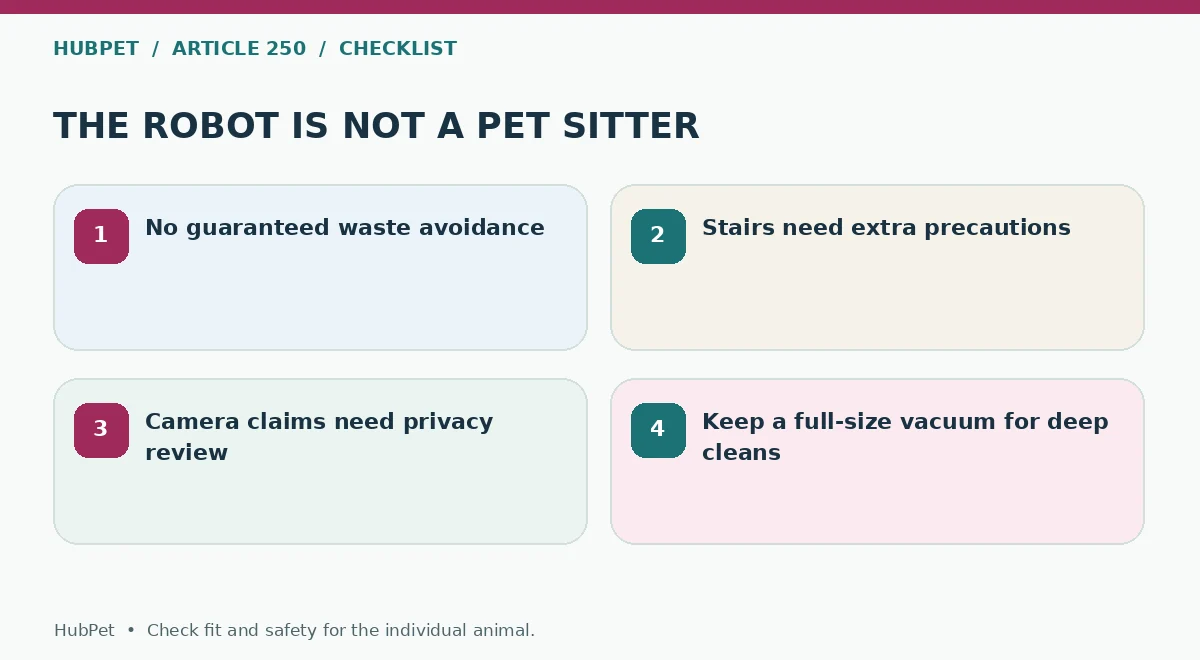
Robots can help with light, frequent pickup on accessible floors. They may struggle with deep carpet fibers, high thresholds, dense debris piles, and tight areas behind furniture. Keep an upright, stick, or canister vacuum available for thorough carpet cleaning, upholstery, stairs, and accidental messes.
Write down whether your goal is everyday visible fur or a complete weekly clean. If the latter, plan a hybrid system rather than expecting one device to manage everything. The pet-friendly floor cleaning guide provides a realistic companion routine.
Map floors, thresholds, rugs, and stairs
Measure the narrow routes and furniture clearance the robot would travel through. Check listed maximum threshold height and whether it can negotiate your rug edges without getting stuck. A model that crosses a showroom floor easily may behave differently around chairs, litter mats, and raised door tracks.
Stair sensors are useful but should not replace physical precautions. Review the maker’s instructions for drop-offs, dark or reflective flooring, and mapping limits. Block hazardous spaces if you cannot confirm safe operation, especially near open stairs or rooms with fragile objects.
Treat pet-waste avoidance as a limited feature
Some manufacturers promote cameras or obstacle recognition for pet accidents, but these features vary by model, software, lighting, and the objects the device recognizes. No claim should be taken as a guarantee that a robot will avoid vomit, feces, or urine. A missed accident can spread contamination.
Before every scheduled run, inspect accessible rooms for pet waste and other hazards. If accidents are unpredictable, keep the robot out of those rooms or run it only after a human checks the floor. The home pet-proofing checklist helps identify other preventable hazards.
Check hair pickup and brush maintenance separately
A brush that collects short fur may still tangle with long hair, thread, or tassels. Look for accessible rollers and documented maintenance steps. An anti-tangle design can reduce effort in some homes, but it does not eliminate the need to inspect the roller, wheels, side brushes, and intake.
Consider the height of the carpet pile and whether brushes lift fur or push it aside on bare floors. Independent pet-hair and bare-floor testing provides more information than a suction figure alone. If a robot has trouble with a large clump, remove that debris manually instead of commanding repeated passes.
Choose navigation and boundaries for safety
Mapping can help assign no-go zones near water bowls, fragile furniture, litter areas, and pet sleeping spaces. Virtual boundaries depend on software and the robot’s localization, so verify behavior before relying on them. A closed door or physical barrier offers a clearer safeguard when an area must stay off-limits.
Review setup requirements and whether normal operation needs an account or internet connection. Consider what happens when a map resets or software updates. Always confirm important exclusions after changes and never assume an obstacle detector sees thin cables or a small cat toy.
Plan for bins, filters, and self-emptying docks
Pet hair can fill a small onboard bin quickly. Compare bin access, filter replacement cost, and the emptying process. Self-emptying docks reduce some daily handling but introduce bags, seals, power use, noise, and another location that curious pets may investigate.
The term self-emptying does not mean maintenance-free. Hair can still wrap around the brush and clog passages, and a dock cannot clean every corner. Keep the docking station on a stable surface where an animal cannot chew its cable or interfere with the charging contacts.

Consider noise, motion, and pet stress
A roaming machine may bother a dog that follows moving objects or a cat that guards a resting area. Give animals a quiet refuge and allow them to observe from a distance. Never chase, corner, or deliberately tease a pet with a robot vacuum.
Start with a supervised short run, then watch for tense posture, hiding, barking, or repeated chasing. Change the schedule or separate the animal if needed. Reward-based calm-space training is more useful than expecting a frightened pet to get used to constant motion.
Review privacy and network settings
Some mapping robots use cameras, microphones, or cloud services. Check the manufacturer’s current privacy policy and app permissions before connecting the device. Ask what data leaves the home, how long it is retained, and whether useful cleaning modes work offline.
Install security updates according to the maker’s instructions and use an appropriate network password. A smart-home feature has value only if you want to maintain it. Do not purchase a camera-equipped model solely because its marketing mentions artificial intelligence or pet recognition.
Compare the total cost and cleaning workload
Add replacement filters, bags, brushes, batteries, and any ongoing subscription charges to the headline price. Examine whether you can order these parts and clean the sensor windows yourself. A premium dock may save time while creating additional consumable costs.
Compare realistic cleaning schedules: a brief daily run plus occasional deep cleaning may work better than long unattended sessions. Consumer Reports cautions that robots are not a complete substitute for conventional floor cleaning. Look for independent results relevant to your rugs and household.
Make a supervised first-week test plan
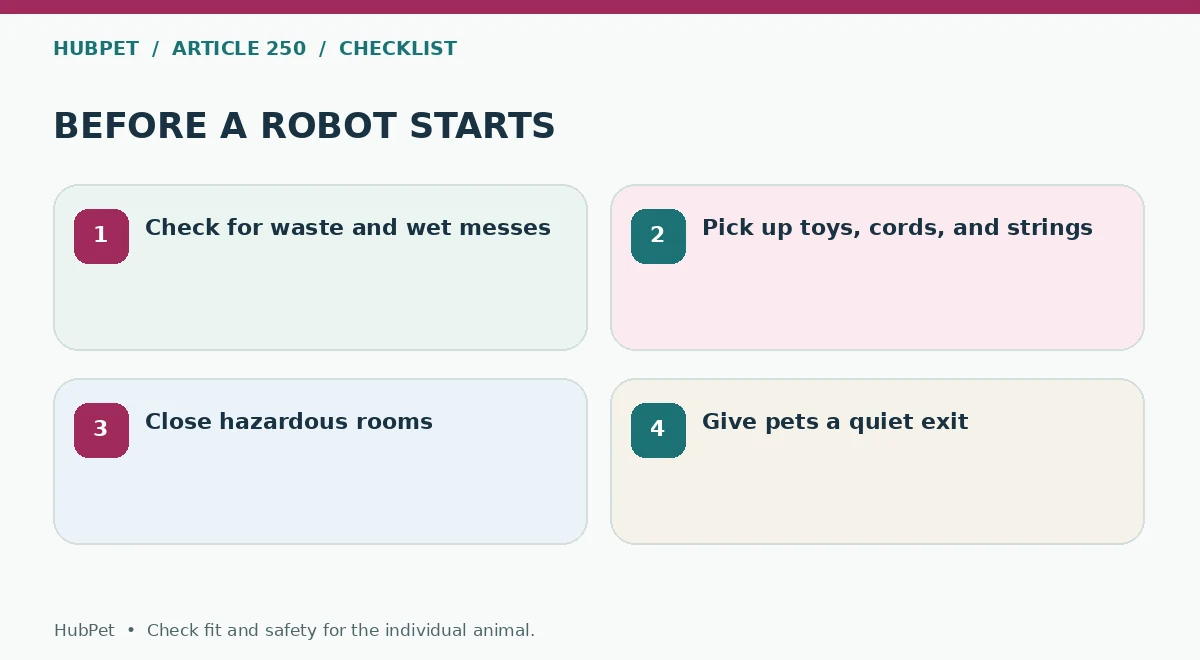
Before running, pick up toys, check for accidents, secure cords, and close doors to areas the robot should avoid. Supervise initial routes so you can identify stuck points and stressed pets. Review whether the map respects prohibited zones, then repeat checks after updates.
Inspect brushes, bin, and charging area after the first few sessions. Use the weekly pet care checklist to coordinate vacuuming with grooming, laundry, and inspection of pet rest areas. Treat automation as assistance to attentive care, not a replacement for it.
How We Research
We checked this guide against the authoritative sources listed below on October 26, 2026. We reviewed practical differences, safety limits, and relevant home conditions rather than drawing conclusions from brand advertising. Specifications, warranty policies, and device capabilities change; check the manufacturer’s current manual. We did not purchase, laboratory-test, rank, or endorse individual products. Where a pet has pain, skin concerns, or fear, seek individual veterinary advice. See our approach at About HubPet.
Sources
Consumer Reports: How to Choose the Right Vacuum for the Job. Accessed October 26, 2026.
Consumer Reports: Robotic Vacuum Cleaners Ratings & Reviews. Accessed October 26, 2026.
ASPCA: Poisonous Household Products. Accessed October 26, 2026.
American Academy of Allergy, Asthma & Immunology: Managing Indoor Allergen Culprits. Accessed October 26, 2026.
No. Pickup varies by floor, brush, and fur type. Robots help with light surface debris but do not replace periodic deep cleaning or upholstery tools.
Do not assume so. Obstacle recognition differs between models and situations. Check floors before running and exclude rooms where accidents may occur.
Not necessarily. Docks can reduce bin-emptying frequency, but add cost, noise, bags, and cleaning tasks. Choose based on the hair volume and your routine.
Review the current device privacy policy, app permissions, account requirements, and update practices. No camera feature is automatically risk-free.
Prefer supervised initial runs and reliable room exclusions. If your pet fears the device or accidents are possible, schedule cleaning only after checking the space.