
General pet-care information, not veterinary advice. Special diets, allergies, chronic illness, puppies and kittens may require individualized guidance from your veterinarian. If your pet swallows a foreign object, seems unwell or may have eaten a toxic ingredient, contact a veterinarian promptly. Read our veterinary disclaimer. Homemade chicken cat treats can be as simple as a few tiny pieces of thoroughly cooked, unseasoned, boneless chicken. The advantage is knowing what is in the piece your cat gets; the limit is that chicken alone is not a nutritionally complete cat food. Do not turn a snack into a meal replacement. This guide focuses on safe handling, easy portioning, a short ingredient decision chart and how to spot a recipe that is better skipped.
For a generally healthy adult cat, cook plain chicken thoroughly, remove every bone and the skin, cool it, then offer only a small, soft, manageable piece as an occasional reward. Skip garlic, onion, seasoning, butter, sauces, breading and raw meat. Set aside the portion before preparing the family meal, because a pan containing onions or seasoning cannot be made pet-safe by removing the visible pieces afterward.
Choose the simplest possible chicken treat
The safest baseline has one ingredient: cooked chicken. You can poach or bake a plain boneless piece without oil or salt, following ordinary food-safety practices. Inspect it after cooking for bones, cartilage, skin and hard or chewy edges, and shred into tiny pieces rather than presenting an entire strip. Let the meat cool before serving. Some cats prefer a slightly moist shred, while another cat may ignore it; appetite is individual. Stop offering a new snack if it causes vomiting, diarrhea or obvious discomfort.
| Treat idea | Use it? | Why or why not |
|---|---|---|
| Plain, fully cooked chicken, boneless and soft | Possible occasional treat | Simple ingredient; easy to portion |
| Leftover rotisserie or seasoned chicken | Avoid | May contain salt, onion, garlic or added fats |
| Raw chicken or raw freeze-dried poultry | Avoid | Infection hazards for pets and people |
| Cooked bones or skin attached | Avoid | Injury and excess-fat concerns |
| Chicken-flavored packaged snacks | Read every label | Flavor name does not reveal whole ingredient list |
Prepare, portion and store without guesswork
Clean hands, boards and counters before and after handling uncooked poultry, and keep it away from ready-to-eat food. Cook meat all the way through using a food-safe thermometer and ordinary poultry safety practices rather than judging doneness by color. Refrigerate promptly in a clean covered container, or freeze individual portions if not using soon. Treat moist cooked meat as perishable food: discard anything left at room temperature too long or with an unusual smell or appearance. Homemade snacks are not shelf-stable jerky.
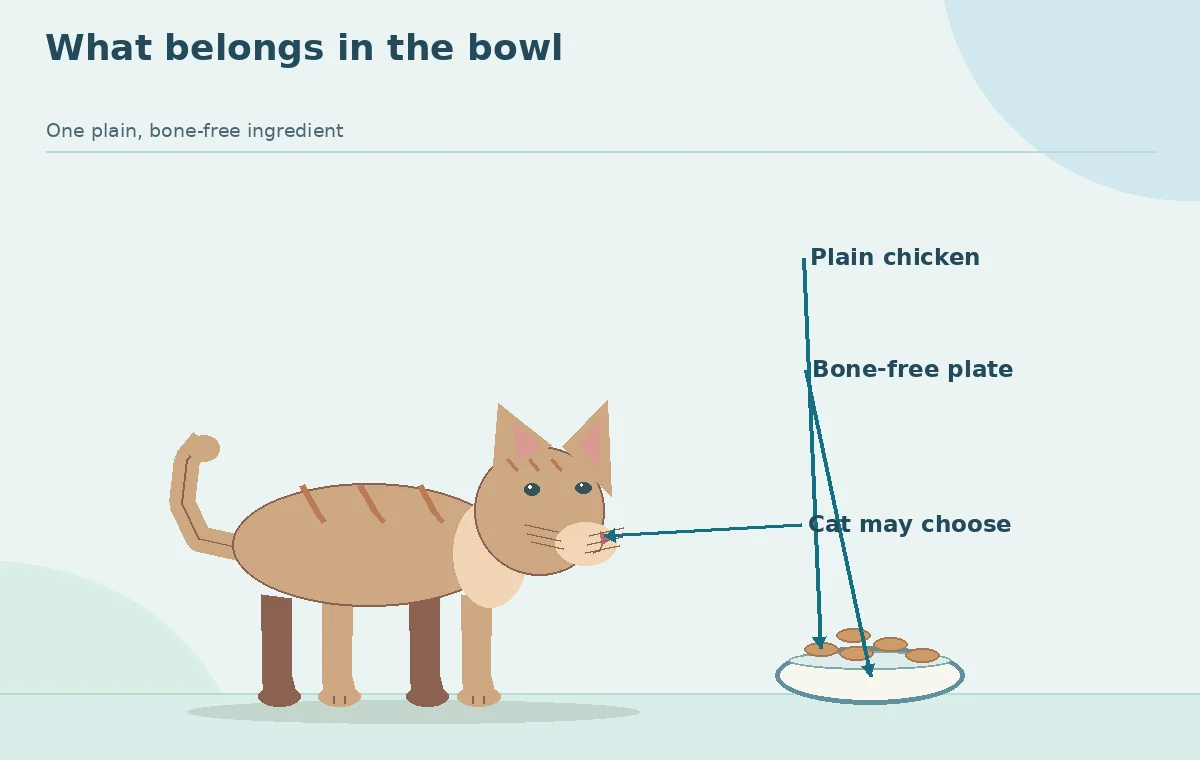
A six-step kitchen-to-cat routine
- Start with a small, plain, boneless piece of chicken set aside before anyone adds seasoning.
- Cook it fully using a safe poultry temperature; keep raw poultry and utensils separate from cat bowls.
- Cool, remove any bone, skin, cartilage or tough fragments, and shred into tiny soft bites.
- Offer one small taste while observing normal chewing and swallowing rather than coaxing a reluctant cat.
- Measure all daily extras together with the regular meal; freeze or refrigerate the remaining cooked pieces promptly.
- Stop if your cat develops digestive signs; contact your veterinarian about possible food allergies or prescription diets.

Do not make a stack of chicken and waffle bites, pastry snacks or seasoned biscuits because they sound appealing to a person. Cats need a balanced feline diet, not an attractive baked dessert. Commercial treats marketed with a chicken name may include other proteins, starches or flavorings; an exclusion diet should use veterinary instructions rather than internet ingredient swaps. For the closely related issue of biting and chewing toys—not food—see cat chew-toy safety and detachable parts.
How much and which cat should not get it?
AAHA advises that all treats, toppers and table scraps together should make up no more than about 10% of daily calories for a typical pet. That is a ceiling, not a target, and many cats have a lower allowance. A cat with kidney disease, pancreatitis, obesity, food sensitivity or a veterinary elimination diet may need a different plan or no chicken extras at all. Ask a vet before introducing treats to a very young kitten, a cat on a prescription diet or one that has had a reaction to poultry.
| Cat or situation | Better approach | Watch for |
|---|---|---|
| Healthy adult eating balanced food | One small taste within treat allowance | Displacing normal meals |
| Kitten or small cat | Ask veterinarian about suitability first | Treats replacing growth nutrition |
| Prescription or elimination diet | Do not add chicken without veterinary approval | Interfering with the diet trial |
| Cat with dental difficulty | Speak to vet; do not force hard food | Dropping food, drooling, pain |
| Cat with suspected chicken intolerance | Avoid trial-and-error treats | Itching, vomiting or digestive upset |

Common recipe traps that are easy to miss
If a recipe combines chicken with onions, garlic powder, bouillon, heavily salted broth or flavored oil, it is not appropriate. A thick, chewy piece may be harder for a cat to manage than several tiny moist shreds. Treat powders and homemade dehydrated meat as food-safety decisions, not simply ways to extend shelf life. If your cat unexpectedly refuses usual food but demands snacks, do not disguise an appetite problem with rich extras. The published guide foods toxic to cats helps identify common household hazards before you cook.
When to Call Your Vet
Call your veterinarian about persistent vomiting, diarrhea, coughing after eating, swallowing trouble or a significant change in appetite. If a cat may have eaten onion, garlic, bones or another toxic or obstructive ingredient, seek veterinary or animal poison-control advice promptly; do not induce vomiting without instructions. New swelling, breathing problems or collapse warrants emergency care. If you are unsure how chicken fits a medical diet, ask the prescribing veterinarian before serving it.
How We Research
We compared pet-specific treat advice from Banfield and RSPCA with AAHA guidance on the proportion of daily calories from extras, then checked ASPCA, AVMA and CDC safety material for toxic ingredients and raw-meat risks. We deliberately offer a one-ingredient preparation rather than claiming a complete recipe or precise serving size. Actual portions must fit each cat’s veterinarian-approved diet. Learn about our research approach on About HubPet.
Sources
Banfield Pet Hospital — Choosing Cat Treats; RSPCA Pet Insurance — A Simple Guide to Homemade Cat Treats; AAHA — Prevention of Obesity; ASPCA — People Foods to Avoid Feeding Your Pets; AVMA — Raw Diets for Dogs and Cats; CDC — About Pet Food Safety.
Many healthy cats can have occasional tiny pieces of plain cooked boneless chicken, but it is not a substitute for complete cat food.
Ask the veterinarian who prescribed the diet first; even a single-ingredient extra may interfere with its intended purpose.
A sweet or seasoned human-style waffle is not a good cat treat. Stick to appropriate pet-safe ingredients and tiny amounts.
Avoid raw animal-protein treats because pathogens can threaten the cat and people handling food or litter.
Stop offering chicken and discuss a veterinary plan; do not use trial-and-error swaps to diagnose food allergy.