
A couch-corner scratching panel can put an acceptable surface at the exact target, but must not damage upholstery or shift. The goal is to support ordinary scratching without fear, punishment or forced paw handling. For animal comfort and safety boundaries, see our veterinary information disclaimer.
Identify the exact corner your cat chooses
A cat scratching a sofa arm may favor a vertical edge, while one pulling at the seat base might want a low horizontal surface. Observe the direction and location before buying a couch-corner scratcher. The accessory should meet the cat at the actual target rather than just cover visible damage. A wraparound post, hanging sisal panel and freestanding corner guard fit different furniture shapes. Do not assume every sofa has square arms or space for straps. Measure the furniture’s usable flat face and the cat’s preferred reach without moving the cat’s paws.
Measure the panel and the upholstered surface separately
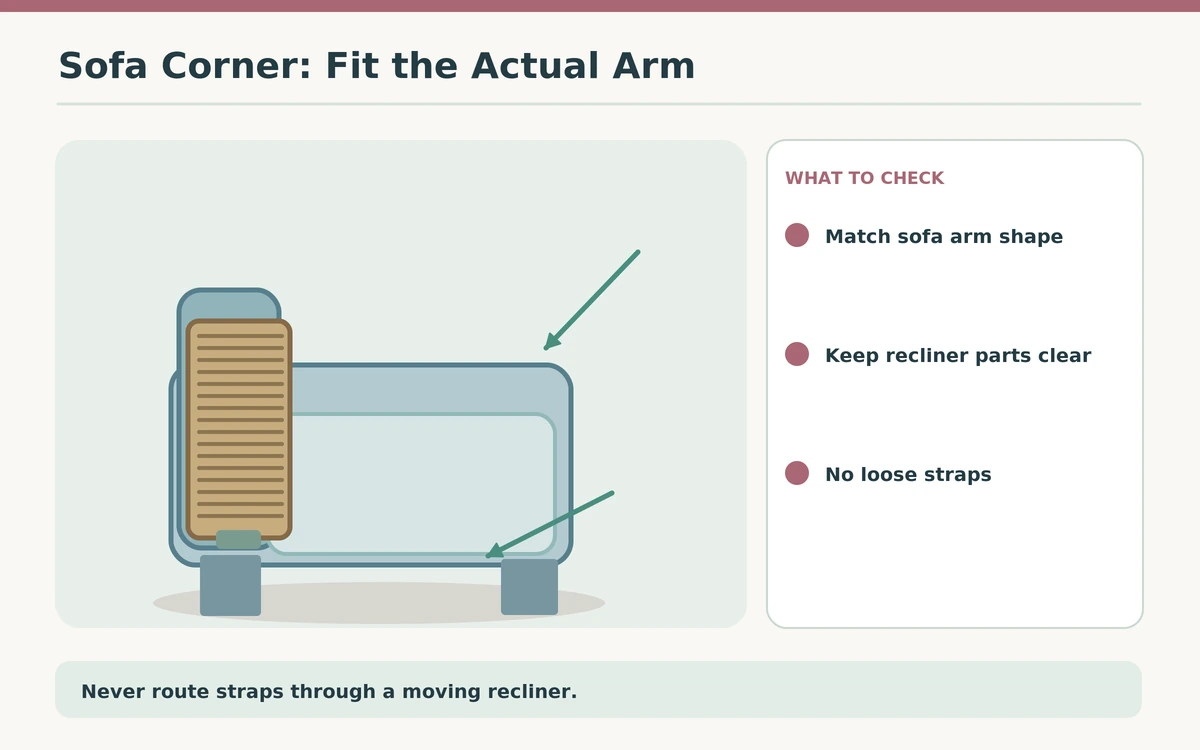
Record sofa arm height, width and curvature, then compare the scratcher’s actual contact face. A narrow panel may leave the favorite edge uncovered, while a rigid board can rock against a rounded arm. A protective cover also needs enough clearance for the cat to stand and stretch. Check for seams, piping, decorative buttons and exposed wood beneath the proposed mount. Some sofa corners have recliner mechanisms or moving panels that must remain unobstructed. A photograph from both the front and side helps you judge the match before ordering.
Avoid fasteners that puncture valuable fabric
Some couch-corner accessories rely on straps, compression, furniture-leg anchors or screws. A product that asks for permanent staples may damage upholstery even when the scratcher fits. Read the attachment instructions and verify whether the manufacturer allows use on your material. Leather, velvet and delicate woven fabric can respond differently to rubbing and adhesives. Never attach unknown sticky sheets directly to a finish without checking a hidden test area and maker guidance. Choose a separate nearby post when the furniture cannot tolerate the proposed fixing. Pet safety does not require sacrificing the sofa’s structure.
Check that the scratcher will not shift under a pull
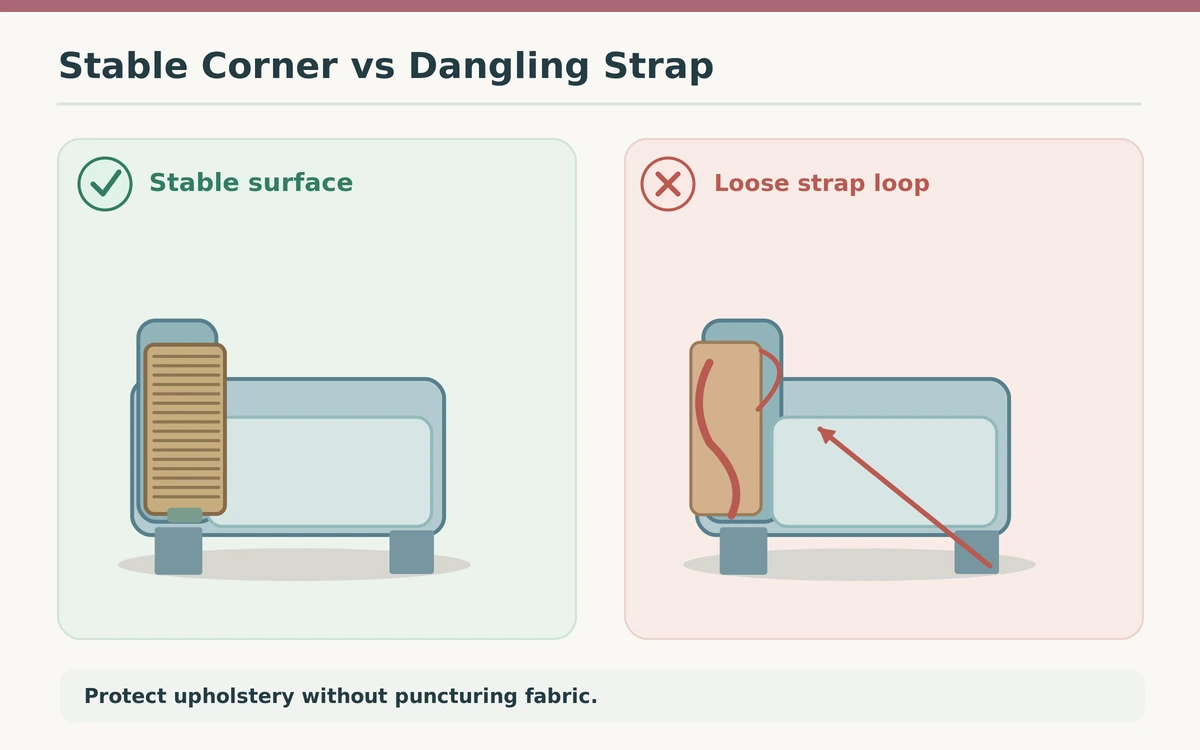
A loose panel can swing into the cat’s face or slide across the sofa, exposing corners and fasteners. Hold the accessory in position and test the maker-approved mount before the cat approaches. Look for rotating brackets, sharp screw heads and straps that form loops around paws or children. If the product needs a sofa leg to anchor it, make sure that leg is stationary and properly supported. Do not route straps through a powered recliner. A sturdy freestanding post directly beside the sofa may be a safer and simpler choice.
Choose an inviting surface rather than only a shield
Clear plastic guards can protect fabric, but it is not necessarily an appealing scratching outlet. Textured corner panels add a place for normal claw maintenance and stretching. Cats differ in preferences for rope, woven sisal, wood and cardboard. Match the preferred direction and grain where possible. If your cat scratches horizontally, add a nearby flat pad instead of expecting a vertical arm guard to solve every scratch. The SF SPCA recommends stable surfaces and placement near the original target. A good setup gives the cat a choice rather than only blocking the furniture.
Use a furniture cover during the transition
Protect the damaged area with a removable, material-safe cover while the cat learns the new surface. Check that the cover cannot tangle paws, trap a claw or slide off as the cat walks. Keep the scratcher right next to the original target and offer play or a small reward for voluntary contact. Avoid sprays that startle the animal, essential oils or water squirts. Scratching is normal behavior; the task is redirection, not suppression. Remove temporary covers only after reliable use and keep a scratching option in that room.
Inspect the protected sofa edge after play
Lift a removable guard regularly and look for rubbed fabric, loose stitching, discoloration or new snag marks. A mounted product can damage upholstery through movement even if claws never touch the sofa. Recheck straps, attachment points and the stability of the adjacent furniture. If the guard leaves impressions or causes scratches, stop using that method. A floor-standing post beside the corner lets you redirect behavior without attaching hardware to the couch. Keep cables, reclining controls and cushions clear so the animal can leave freely after scratching.
Plan around cats who scratch several pieces of furniture
One corner panel may suit a favorite sofa but not the cat’s entire daily routine. Cats often scratch near sleeping spots and in prominent shared areas. Provide several options when the cat uses different rooms or when multiple cats share the home. Offer a tall post for upward stretches and a horizontal pad for low scratching. A cat that moves from one sofa to another may be asking for another location, not trying to be difficult. Provide accessible choices without punishing mistakes. If conflict between cats contributes to scratching, review resources and room routes.
Keep the accessory easy to clean and replace
Textured furniture guards collect hair, dust and torn fibers. Choose an arrangement you can inspect without dismantling the couch. Follow instructions for removing debris and replacing worn contact material. Watch for unraveling rope, sharp staples and small detached pieces near the floor. The familiar scent of a worn scratcher can be attractive, so replace it based on safety rather than cosmetic fuzz alone. Never cover a broken attachment with layers of tape and assume the problem is fixed. Repair the correct component or move to a separate scratching station.
A seven-day couch-corner trial
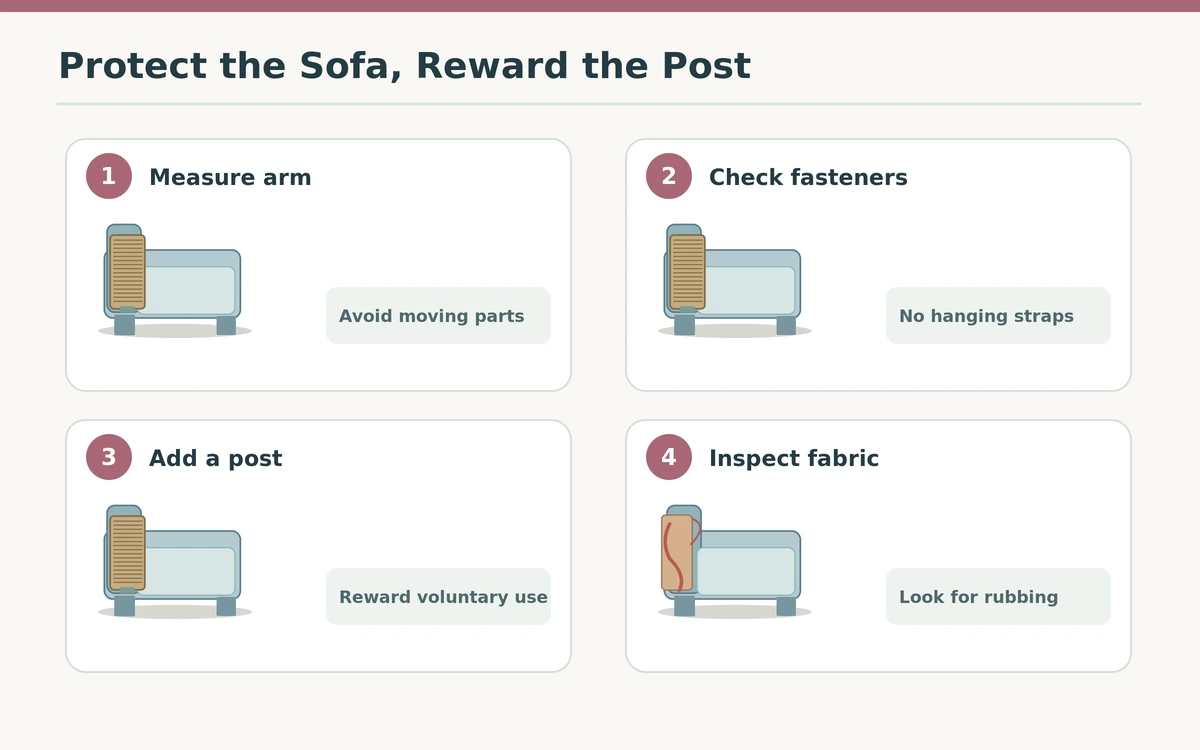
Start by positioning the scratcher at the cat’s preferred corner. Check stable fit and upholstery compatibility, then offer an alternative flat or upright surface nearby. Note whether the cat reaches comfortably and uses the new face without snagging. Reward voluntary contact and keep sofa access calm. Recheck the furniture after several days for rubbing or attachment damage. Move the new surface slowly if you eventually want it farther from the sofa. If the cat ignores it, reassess height, texture and position before purchasing another guard.
How We Research
We reviewed the feline welfare and veterinary behavior sources linked below for sofa corner cat scratcher. This guide compares observable scratching preferences, construction details, safety checks, and owner-managed setup choices. We did not run laboratory abrasion tests, measure brand durability, certify mounts, endorse an individual product, or diagnose a cat from a single behavior. Follow maker instructions and an individual cat’s comfort, and consult an appropriate veterinary professional for sudden behavioral change or injury. See our editorial approach. Reviewed October 28, 2026.
Sources
Humane World for Animals, How to Help Your Cat Scratch in the Right Places. Read the original guidance. Accessed October 28, 2026.
ASPCA, Destructive Scratching. Read the original guidance. Accessed October 28, 2026.
Cornell Feline Health Center, Feline Behavior Problems: Destructive Behavior. Read the original guidance. Accessed October 28, 2026.
San Francisco SPCA, Scratching Posts. Read the original guidance. Accessed October 28, 2026.
Safety note: Stop use when a scratcher tips, shifts, exposes sharp hardware, traps claws or sheds pieces that the cat chews. For bleeding, persistent limping, possible swallowed objects or a sudden change in scratching with other symptoms, seek veterinary guidance. Never declaw a cat to solve furniture scratching.
No. Measure curvature, arm height, contact area and the mounting clearance. A rigid corner product may sit poorly against rounded or reclining furniture.
Not automatically. Straps can shift or form loops, while screws can puncture fabric. Follow the specific design instructions and protect moving furniture mechanisms.
It can cover a vulnerable surface, but cats still need an appealing scratching outlet. Put a suitable post or pad close to the protected spot.
Offer a low or horizontal pad beside the seat base rather than relying on a high vertical corner panel.
Remove it if the panel moves, scratches upholstery, exposes hardware, traps loose strands or interferes with a reclining mechanism.